
What Doximity's AI Earnings Say About Healthcare Ad Spend
Doximity's Q1 FY2027 earnings (reported Aug 6, 2026) give healthcare media buyers a dated benchmark for H2 2026 planning: revenue up 7% YoY to $156.6M, retention holding, and AI Search revenue still ahead. The read is a soft-but-stabilizing HCP ad market — flat-to-low-single-digit budget expectations, not an AI-driven spend surge.
- Platform
- Doximity
- Campaign type
- AI Search
- Spend range
- $0K+ TTM customer spend
- Timeframe
- Q0 FY2027 (Apr-Jun 2026)
- YoY revenue growth
- 0%
- Verdict
- mixed result
- Industry vertical
- HCP pharma
- Last reviewed
- 0-08-26
| Planning signal | Dated readout | What it means for H2 2026 healthcare advertising |
|---|---|---|
| Quarter | Doximity Q1 FY2027, quarter ended June 30, 2026; reported Aug. 6, 2026 [1] | This is an Apr-Jun 2026 signal, not a late-2026 spend readout. |
| Revenue | $156.6 million, up 7% year over year [1] | Company growth looks stable, but not like a sudden AI-led pharma budget breakout. |
| Retention | Trailing-12-month net revenue retention was 107%; top-20 customer NRR was 112% [2] | Large pharma accounts are not broadly pulling back, which supports a stabilization read. |
| Market commentary | Management described the HCP market as “stable in the mid-single digits” on the Aug. 6, 2026 call [2] | Use as a directional management estimate, not audited market growth. |
| FY2027 guidance | Full-year revenue guidance raised to $671 million-$681 million; Q2 FY2027 guided to $170 million-$171 million [1] | The midpoint points to modest growth, with Q2 only about 1% year over year against a difficult comp. |
| AI Search revenue | Commercial launch was in late April 2026; no AI Search revenue was recognized in Q1 FY2027, with most contracted revenue expected in fiscal Q3 [2] | Treat AI Search as a pilot and measurement line for now, not a major H2 budget reset. |
The practical read on Doximity’s AI-era earnings is narrower than the market reaction suggests: Q1 FY2027 points to a soft-but-stabilizing HCP pharma ad market. The numbers support flat-to-low-single-digit planning assumptions for H2 2026, room for midyear unlocks if brand teams regain confidence, and small AI Search tests tied to real performance evidence.

The earnings signal is stabilization, not a spend surge
Doximity’s $156.6 million in Q1 FY2027 revenue matters because it was earned during Apr-Jun 2026, a planning window when pharma buyers were still dealing with uncertainty rather than racing into new annual commitments. Seven percent year-over-year growth is not weak. It is also not the kind of acceleration that should cause an HCP media plan to be rewritten around AI inventory in late August.
The retention data are the cleaner spend signal. Trailing-12-month NRR held at 107%, while the top 20 customers were stronger at 112%; Doximity also reported 127 customers over $500,000 in trailing-12-month revenue, up 7% year over year, and said those customers represented 83% of revenue [2]. That combination says the larger advertiser base is still renewing and expanding enough to keep the platform moving, even if the broader category is not accelerating.
Customer concentration cuts both ways. For a media buyer, 83% of revenue coming from $500,000-plus customers means the signal is meaningfully tied to larger pharma and healthcare advertisers, not just long-tail platform activity. It also means a few large budget decisions can shape reported growth. That makes retention useful, but it should not be treated as a perfect proxy for the entire HCP media market.
Management’s own market language keeps the ceiling low. On the Aug. 6 Q1 FY2027 call, the HCP market was described as stable in the mid-single digits [2]. On the May 13 Q4 FY2026 call, management had described the market as “likely at or below 5%” [3]. Those are management estimates, not audited market data, but they are still useful guardrails: if the company most associated with digital HCP reach is talking mid-single digits, a planning model that assumes a broad AI-driven ad surge is doing more work than the transcript supports.
Guidance caps the near-term ad-spend story
The raised FY2027 guide is easy to overread. Doximity lifted full-year revenue guidance to $671 million-$681 million for fiscal 2027 [1]. At the midpoint, that implies roughly 5% growth. That is consistent with stabilization and retention; it is not evidence that pharma advertisers have suddenly opened large new digital HCP budgets because of AI.
The Q2 FY2027 guide is even more sobering for anyone trying to turn the quarter into a momentum story. Revenue guidance of $170 million-$171 million implies about 1% year-over-year growth at the midpoint against a difficult comparison period [1][2]. A tough comp can make a healthy business look temporarily slower, but buyers do not reserve budget against excuses; they reserve against expected demand, inventory fit, and confidence that dollars will clear.
A reasonable H2 2026 planning stance is therefore not “cut HCP,” and it is not “chase AI.” It is to keep base HCP digital budgets roughly flat to low-single-digit up, maintain enough flexibility for midyear unlocks, and avoid treating one platform’s product narrative as market-level spend confirmation.
For teams already revisiting healthcare budget allocation, this is the same discipline behind a broader healthcare paid-ad budget recalculation: separate channel confidence from channel enthusiasm, and keep the calendar attached to the metric.
The H2 budget pattern is shorter commitments first, possible unlocks later
The useful budget detail actually came one quarter earlier. On the May 13, 2026 Q4 FY2026 call, management tied policy uncertainty, including MFN pricing delays, to pharma buyers making shorter 3-6 month commitments at higher prices [3]. That is a planning signal, not just a sales-color footnote.
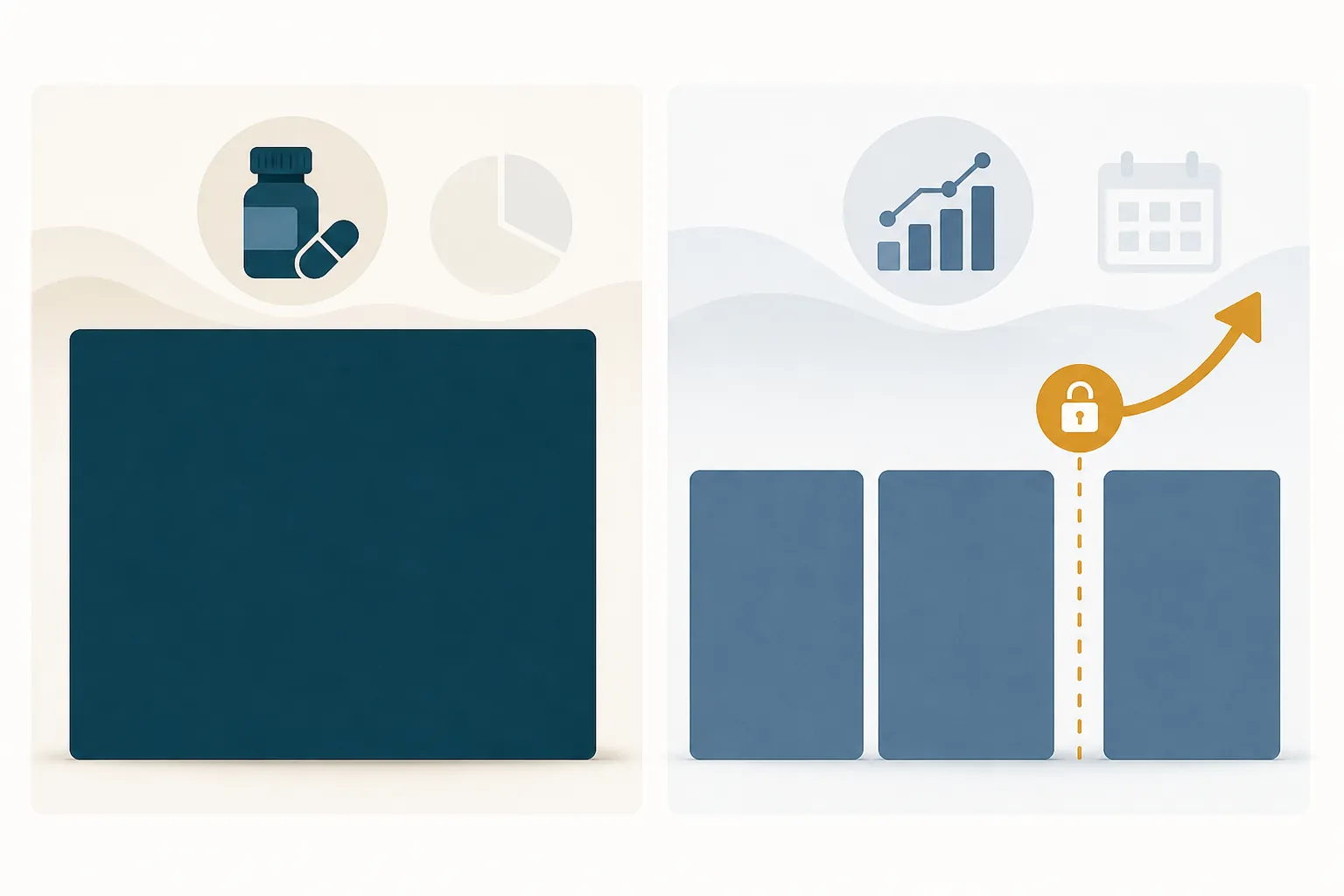
Shorter commitments change how H2 money appears. A brand that would normally commit a larger annual or upfront amount may instead book a smaller tranche, wait for policy clarity, then reopen funds after internal reviews. To an earnings reader, that can look like softness. To a planner, it means the dollars may still exist, but the decision point has moved closer to campaign launch.
That matters for HCP inventory negotiations. If buyers are moving in 3-6 month blocks, sellers with scarce physician reach can hold price while advertisers hold back volume. The result is a market where budgets are cautious, not absent. For H2 2026 plans, the practical move is to protect proven HCP reach, keep optional budget in reserve, and set internal dates for reassessment rather than assuming all delayed spend is lost.
| Budget decision | What the Doximity readout supports | What it does not support |
|---|---|---|
| Base HCP media reservation | Flat to low-single-digit growth assumptions for H2 2026 | A broad category-wide acceleration case |
| Large pharma account planning | Confidence that major customers are still spending and expanding selectively | An assumption that every therapeutic area is unlocking equally |
| Midyear budget reserve | Holding flexible dollars for late Q3/Q4 activation if shorter commitments loosen | Treating delayed upfront dollars as guaranteed later spend |
| AI Search testing | Small tests with defined measurement and renewal thresholds | Large commitments before recognized revenue and performance evidence catch up |
AI Search belongs in the test budget, not the base plan yet
Doximity’s AI Search is worth watching because the use case is not abstract. Search behavior near a clinical question can be valuable if it reaches verified physicians with the right context and if the advertiser can measure incremental impact without crossing compliance lines. That is a very different proposition from generic AI branding inventory.
The timing, however, is decisive. Management said AI Search commercially launched in late April 2026, that no AI Search revenue was recognized in Q1 FY2027, and that the majority of contracted revenue was expected in fiscal Q3 [2]. Fiscal Q3 means Oct-Dec 2026. So as of the Aug. 6 earnings report, the product may have contracted interest, but it had not yet shown up as recognized Q1 revenue.
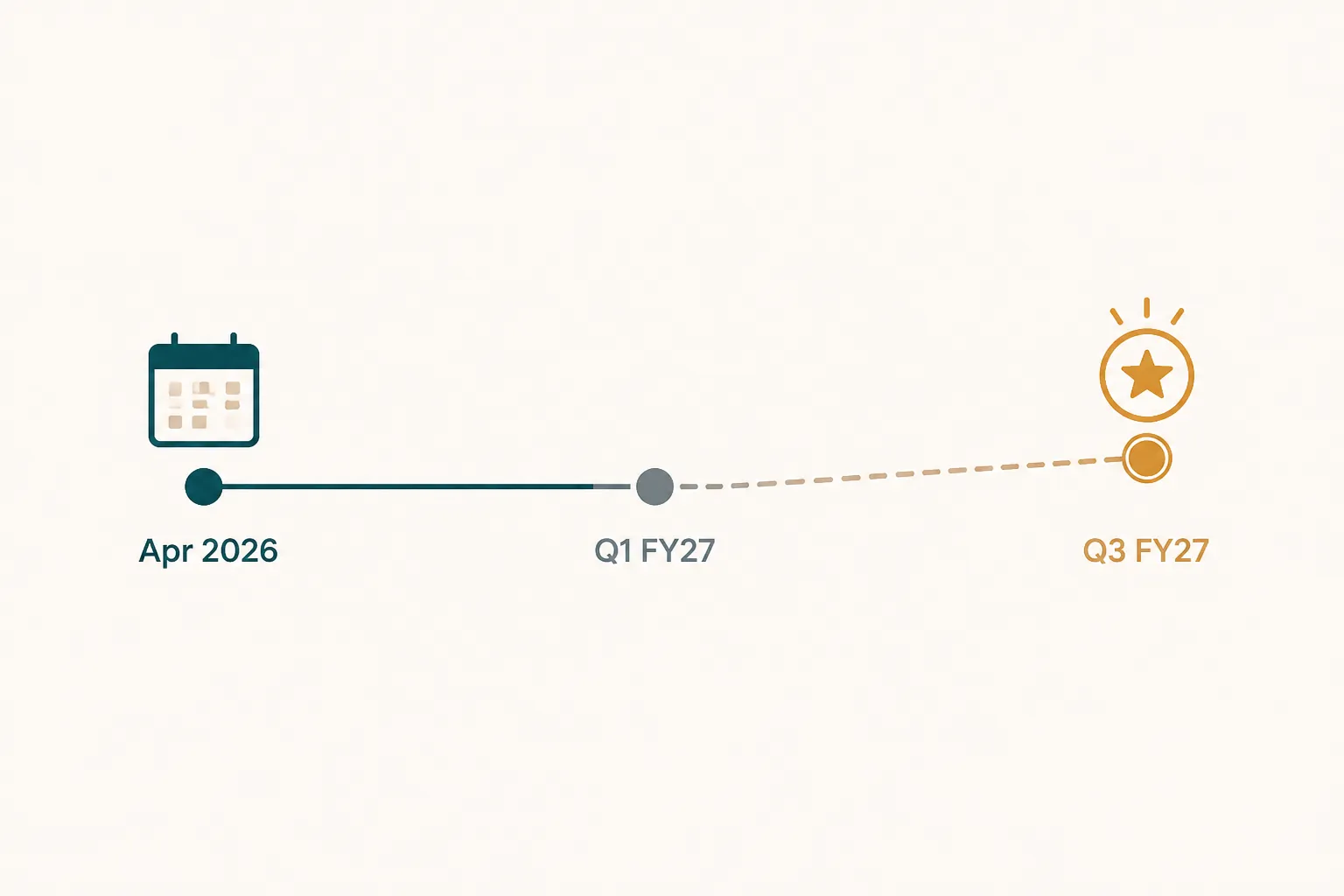
That distinction matters in budget rooms. A contracted product can justify a pilot allocation. Recognized revenue and repeat performance help justify a line-item expansion. Until fiscal Q3 evidence arrives, the cleaner H2 stance is to test AI Search with capped spend, pre-agreed measurement windows, and clear separation from the core HCP reach plan.
The pilot should answer operational questions before it answers strategic ones: what query environments are eligible, how targeting is controlled, what engagement metric matters, how lift is evaluated, whether there is duplication with existing endemic HCP placements, and what compliance review requires. If AI bidding or automation is part of the buy, teams should also pressure-test cost assumptions against healthcare-specific auction dynamics rather than importing general search expectations; the same caution applies when evaluating healthcare AI bidding costs.
There is also a market-sizing trap here. On the Q1 FY2027 call, management referenced an approximately $14 billion pharma Google paid-search opportunity [2]. That may be useful as a management framing device for why search-like clinical intent is attractive. It should not be promoted into an independent estimate of immediately addressable Doximity ad spend, and it certainly should not be used to resize a 2026 HCP plan without adoption, pricing, and performance evidence.
AI costs are already showing up somewhere real
The margin line is a useful caveat because it keeps the AI discussion grounded. Doximity reported non-GAAP gross margin of 87.5% in Q1 FY2027, down from 91.2% a year earlier; adjusted EBITDA was $74.8 million, or a 47.7% margin [1]. GAAP net income fell to $24.3 million from $53.3 million a year earlier [1]. Management also tied about 90% of AI expenses to cost of revenue [2].
For advertisers, that is not a reason to reject the product. It is a reason to ask sharper pricing and delivery questions. If AI costs are landing in cost of revenue, then inventory economics are not imaginary. Buyers should expect the usual platform tension: the seller needs to fund compute, product development, and support, while the advertiser needs evidence that a premium unit is improving business outcomes rather than simply carrying a newer label.
This is where verification becomes more valuable than adjectives. An AI ad product does not need to reveal every internal model detail to be usable, but it does need enough transparency for buyers to judge placement, eligibility, measurement, and repeatability. That is the same premium described in the AI ad platform transparency benchmark: claims become budgetable only when they can be checked.
Stock reaction is noisy context, not media evidence
The stock-market reaction can explain why the earnings story traveled quickly, but it should not set the media-spend read. Investing.com reported an after-hours surge after the Aug. 6 release [2]. That tells buyers that outsiders were excited by the print and the AI narrative. It does not tell a brand team how much HCP budget has been committed, recognized, or renewed.
A media plan needs dated operating signals. For Q1 FY2027, those signals are: revenue up 7% year over year, retention still positive, top customers expanding faster than the average, market commentary in the mid-single digits, a Q2 guide that stays modest, and AI Search revenue recognition mostly still ahead. That is enough to keep Doximity and similar HCP inventory in the plan. It is not enough to move a large amount of money from proven channels into AI Search before fiscal Q3 evidence arrives.
The planning answer for H2 2026
Use Doximity’s Aug. 6 Q1 FY2027 report as a benchmark for a cautious H2 plan. The HCP pharma ad market looks soft but stabilizing. Large customers are still present. Retention is holding. Management’s market commentary and guidance keep expectations in the mid-single-digit range rather than pointing to a step-change in spend.
- Set H2 2026 HCP budget assumptions at flat to low-single-digit growth unless a specific brand, therapeutic area, or launch plan has stronger committed funding.
- Keep a midyear reserve for shorter 3-6 month commitments that may unlock later, especially if policy uncertainty eases or internal brand reviews clear.
- Treat Doximity AI Search as a capped pilot until fiscal Q3 recognition and campaign-level performance evidence are available.
- Separate management claims and contracted interest from audited results, recognized revenue, and repeatable media outcomes.
References
- Doximity Announces Fiscal 2027 First Quarter Financial Results, Doximity, Aug. 6, 2026
- Earnings call transcript: Doximity tops revenue in Q1 2027 as shares surge, Investing.com, Aug. 6, 2026
- Doximity (DOCS) Q4 2026 Earnings Call Transcript, The Motley Fool, May 13, 2026
Built on this evidence
No Bidding tactic or Creative record currently cites this case file. Compare it against other results in Benchmarks.
Related benchmark reading
Report a corroborating or contradicting result
Seeing something different in your own account? Feed the data-integrity loop instead of leaving an open comment.