
How Claude outages broke paid-ad workflows in 2026
An analysis of Claude's seven documented 2026 outages and how each disruption hit specific paid-ad workflows — from copy generation to MCP-connected campaign audits — with practical risk assessment for media buyers who have embedded Claude into daily operations.
- Platform
- Meta Ads
- Campaign type
- Performance Max
- Spend range
- All budgets
- Timeframe
- 2026-03-02 to 2026-07-30
- Outage count
- 7
- Verdict
- mixed
- Last reviewed
- 2026-07-30
As of July 30, 2026, Claude’s July 29-30 “elevated errors” incident was still unresolved. That matters less as another AI-status-page annoyance than as a live operations problem: the year already contains at least seven documented Claude disruptions, and paid-ad teams have spent the past year moving copy drafts, CSV audits, MCP-connected account checks, Claude Code jobs, competitor scans, and report narratives into the same service layer.[1]
For paid-media operations, the useful question is not whether Claude is good. It often is. The sharper question is what breaks in paid-ad work when the assistant has become part of the campaign-management path. A buyer with six to eight accounts does not need an abstract reliability debate on reporting morning. They need to know which work stops, which work can fall back to exports and templates, and which work was quietly built with no second path.
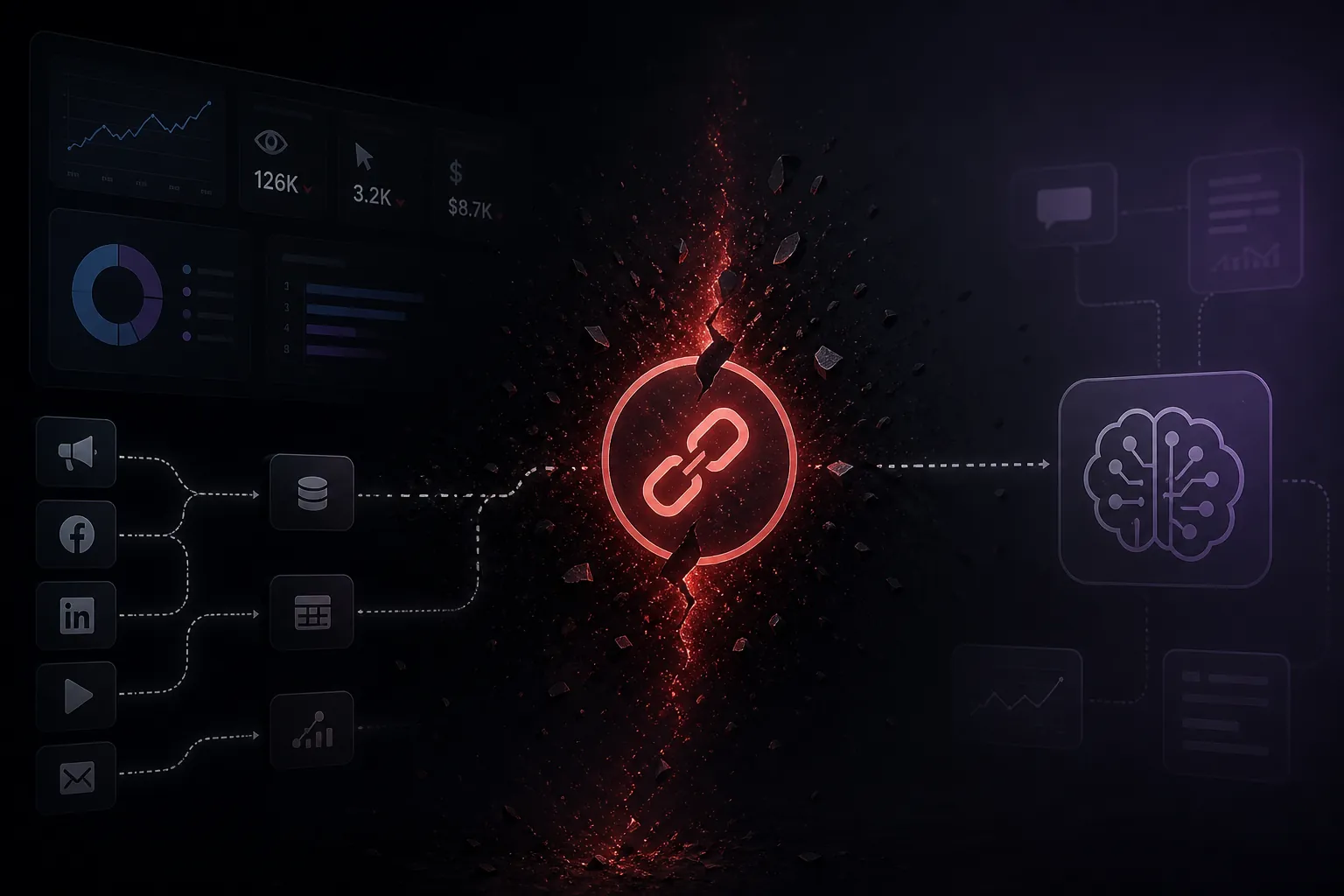
The 2026 Incident Map, In Workflow Terms
The seven incidents should not be flattened into one scare statistic. A 10-hour cascading failure, a 90-minute outage, and an unresolved elevated-error window do not carry the same operational weight. What they do share is more uncomfortable: each exposes a different place where teams have started treating Claude as infrastructure.
| Date | What was documented | Cause or status | Paid-ad workflow most exposed |
|---|---|---|---|
| March 2, 2026 | A roughly 10-hour instability window, with login paths restored at 15:47 UTC, Opus 4.6 failing by 17:09 UTC, and Haiku 4.5 failing by 17:56 UTC.[2][3] | Anthropic communications cited unprecedented demand; no public RCA in the materials reviewed.[4] | Login-dependent copy production, model-specific audit prompts, and reporting workflows queued for the same day. |
| June 2, 2026 | Claude Code users saw Pro and Max usage quotas drain in minutes because a sub-agent bug caused exponential token consumption.[5] | A specific sub-agent system bug was identified in coverage of the incident.[5] | Autonomous campaign checks, code-assisted report assembly, and any paid workflow assuming available quota meant usable capacity. |
| June 18, 2026 | A documented disruption, with fewer public details in the provided materials. | Cause not established in the available research. | General fallback pressure on copy generation, audits, and reporting if teams were scheduled around Claude availability. |
| June 22, 2026 | A roughly 90-minute outage documented in the incident set. | Cause not established in the available research. | Time-sensitive draft generation, QA checks, and pacing-note preparation. |
| June 23, 2026 | A larger user-visible outage, with Downdetector reports cited in coverage ranging from about 2,500 to 7,119 reports.[6][7] | Anthropic acknowledged service trouble in public coverage, but the provided materials do not include a technical RCA.[7] | Any workflow requiring live Claude access during work hours: copy revisions, CSV interpretation, competitor summaries, and client-report language. |
| July 6, 2026 | An outage affecting multiple Claude models, reported as lasting about 1.5 hours.[8] | Cause not established in the available research. | Model-routed workflows where teams expected to switch between Claude variants for drafting or analysis. |
| July 22, 2026 | A documented disruption in the incident set. | Cause not established in the available research. | Routine dependency checks: scheduled automations, recurring report drafts, and analysis jobs that fail quietly if no one watches them. |
| July 29-30, 2026 | Elevated errors were still unresolved as of July 30, 2026.[1] | Final resolution and root cause were not available as of the current date.[1] | The most awkward category: partial availability, where the team may not know whether to wait, retry, reroute, or start manual work. |
That last column is where the status page becomes operationally useful. “Down” is not the only failure mode. Elevated errors can be worse for planning because the tool appears near enough to usable that people keep retrying. A campaign audit that never completes, a report narrative that times out after the CSV has been uploaded, or an MCP-connected query that returns intermittent failures can consume the same hour twice: once waiting for automation, once rebuilding the work manually.
March 2 Showed Cascading Instability, Not A Clean Outage
The March 2 incident is the one paid-ad teams should study because it did not behave like a neat light switch. The documented timeline shows login problems, then model-specific failures, then additional model-path trouble. Login paths were reported restored at 15:47 UTC, but Opus 4.6 was failing by 17:09 UTC and Haiku 4.5 by 17:56 UTC during the broader instability window.[2][3]
In an ad-ops day, that sequence creates bad assumptions. One person gets back into Claude and tells the team it is working. Another person’s model-specific workflow fails. A third person’s saved prompt chain depends on a model path that is still unstable. The team does not experience one outage; it experiences scattered exceptions across tasks that were supposed to be standardized.
The available material attributes the demand pressure around this period to “unprecedented demand,” including migration from ChatGPT after the Pentagon deal, but it does not provide a public technical RCA for March 2.[4] That distinction matters. “Unprecedented demand” is a real operational signal, especially for a service growing into enterprise and developer workflows. It is not the same thing as knowing which subsystem failed, how capacity planning was adjusted, or whether the same pattern could recur.
For paid ads, March 2 maps most directly to workflows that are both login-dependent and time-boxed: morning copy variants, post-weekend pacing notes, client-report drafts, and campaign QA prompts tied to a specific Claude model. If those prompts live only in Claude Projects or a team member’s chat history, the fallback starts with scavenging.
June 2 Broke The “Available Means Usable” Assumption
The June 2 incident was not a classic access outage. Claude Code was available enough for users to run work, but a sub-agent system bug caused exponential token consumption that burned through Pro and Max quotas intended to last hours or days in minutes.[5]
That is a different kind of failure for a media team. A status-light mindset says the tool is up. A quota-aware workflow says the team’s paid capacity has disappeared. The buyer trying to run account diagnostics is now blocked not by Meta Ads, Google Ads, or the warehouse, but by the AI layer consuming its own allowance.
This incident deserves more weight than its shape might suggest because it sits exactly where agencies are experimenting: semi-autonomous work. Claude Code-style jobs can inspect files, update scripts, summarize logs, and chain sub-tasks without a person writing every instruction. That is useful for report assembly, landing-page QA, naming-convention cleanup, feed-check helpers, and recurring audit scripts. It is also where a runaway process can turn a normal work session into a quota event before the operator understands what happened.
The lesson is narrower than “never automate with Claude.” It is that quota and automation failure need their own controls. A manual prompt failing is visible. A sub-agent loop burning paid capacity is less visible until the account says the work cannot continue.
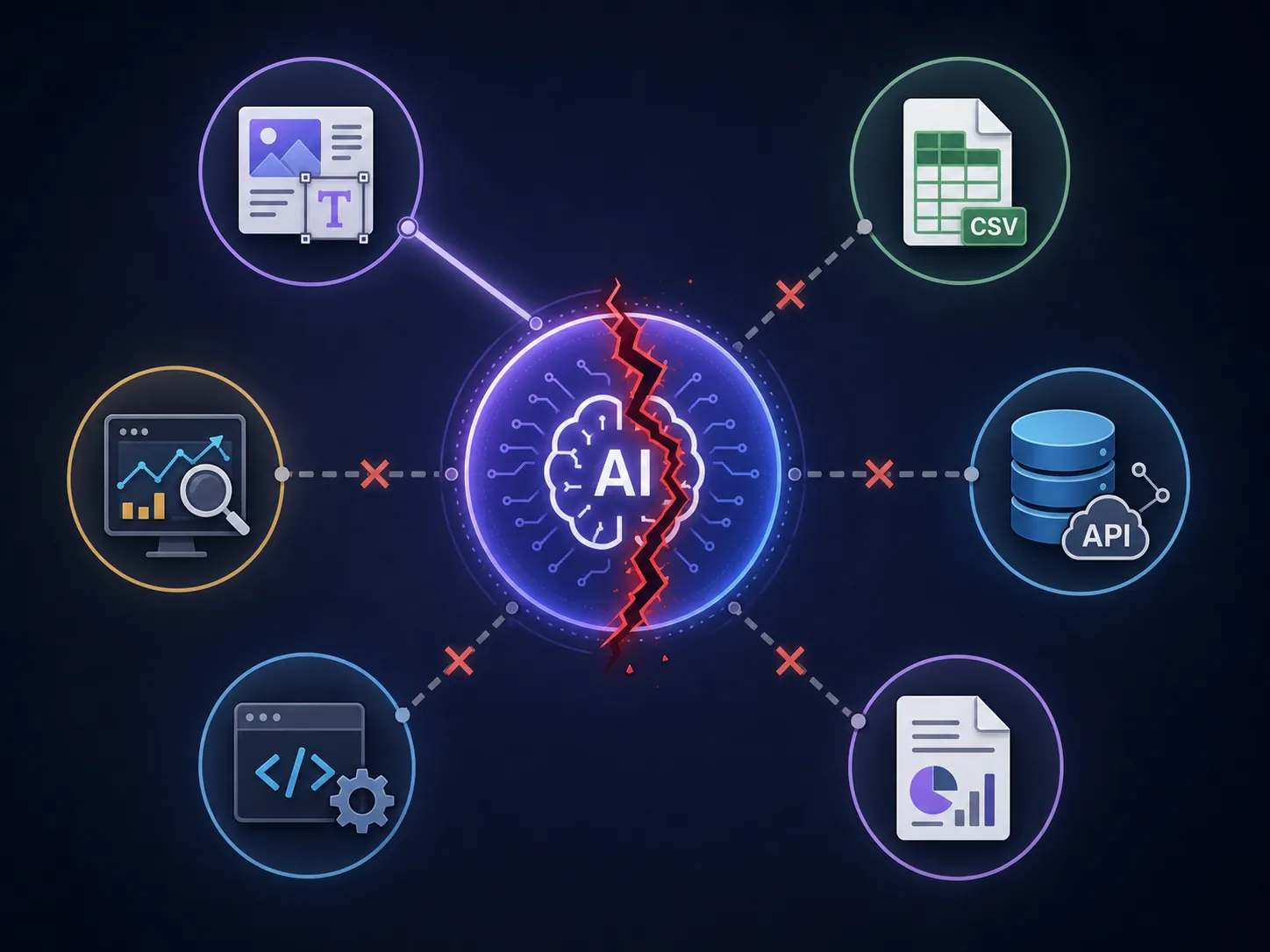
Where Paid-Ad Workflows Actually Stall
Claude became embedded because it saved real effort. It can turn messy notes into readable client language, compare campaign exports without complaining, draft variants quickly, and hold enough context to keep a review from becoming a tab-hopping exercise. That usefulness is why the dependency exists. The risk starts when the team forgets to decide which uses are convenience and which uses are production paths.
MCP-Connected Campaign Analysis
The highest-risk workflow is not ordinary chat. It is live account analysis through connectors. Meta launched an official Ads MCP server on April 29, 2026, with 29 tools and write access, moving AI-assisted analysis closer to the account itself rather than a detached spreadsheet.[9]
That changes the failure surface. If Claude is only helping rewrite copy, an outage delays language. If Claude is the interface through which a buyer pulls Meta Ads data, checks campaign structure, or prepares changes, an outage interrupts the diagnostic path. The person does not simply open a different chat window; they must return to Ads Manager, export data, rebuild the query logic, and recreate whatever context the MCP session held.
Write access raises the standard further. The provided materials support the existence of write-capable MCP tooling, not a measured failure rate or a confirmed Meta enforcement pattern.[9] So the responsible conclusion is not that Claude outages will corrupt campaigns. It is that teams using Claude as a live control surface need a non-Claude operating path for reviewing, approving, and applying changes.
CSV Audits And Campaign QA
CSV audits are where the fallback burden becomes obvious. A buyer exports campaigns, ad groups, search terms, placements, product data, or creative performance, then asks Claude to find naming drift, budget anomalies, weak segments, or reportable patterns. When Claude is unavailable, the platform data still exists. The lost layer is the interpretation shortcut.
The practical consequence is not mysterious. Someone rebuilds filters in spreadsheets, reopens saved pivot tables, copies notes into a doc, and decides how much depth the audit can afford before the client call. If the original Claude prompt included business context that was never stored elsewhere, the team also loses the assumptions behind the audit: margin constraints, exclusions, naming exceptions, recent promotion windows, and account-specific “do not touch” areas.
Copy Generation
Copy generation is usually the most visible Claude use case and often the easiest to reroute. A team can move a brief to another model, return to older templates, or write the final set by hand. The pain is in throughput and consistency: one person now has to remember the brand constraints, offer hierarchy, compliance notes, and previous learning that Claude had been carrying in a long-context thread.
There is also an economics wrinkle for scaled generation. Claude API marketing workflows may use the Batch API because it offers a 50% discount for asynchronous jobs.[9] During an outage, that cheaper bulk path is not the same as a resilient path. If the launch calendar depends on overnight batch copy variants, the backup cannot be “try the same batch later” unless the media schedule can wait.
Claude Code And Autonomous Jobs
Claude Code-style workflows deserve a stricter standard than chat because they can touch files, scripts, and multi-step processes. The June 2 quota-drain bug showed that a tool can remain active while becoming operationally unusable through runaway consumption.[5] For ad teams, that maps to jobs such as scheduled report assembly, script maintenance, automated account checks, creative-feed transformations, or QA routines around tracking parameters.
The control question is simple: if the job stops halfway through, can a human see what changed, what did not change, and what needs to be rerun? If the answer is buried inside a Claude session, the workflow is not just AI-assisted. It is AI-dependent.
Competitor Monitoring
Competitor monitoring usually fails more quietly. A missed scan rarely blocks a launch at 9 a.m. It does, however, weaken the inputs for creative refreshes, offer comparisons, and weekly market notes. If the team has a scheduled process that gathers competitor ads, summarizes changes, and routes observations through Claude, an outage turns the monitor into a blind spot until someone checks the job log.
This is a good place to separate urgency from importance. Competitor monitoring does not need the same real-time fallback as budget pacing. It does need failure notification and a way to preserve raw captures so the summary can be regenerated later.
Weekly Report Narratives
Report narrative generation is where Claude’s quality gains are easy to understate. A good long-context thread can hold the client’s tone, prior objections, channel mix, testing plan, and last week’s caveats. It can turn a pile of metrics into a readable account story faster than most teams can do from scratch.
When Claude fails, the deck can still go out. The cost is remedial work: re-exporting figures, re-reading the prior narrative, rebuilding the “what changed” section, and stripping out analysis the team cannot defend under time pressure. If the outage hits during a partial-error window, teams may lose even more time deciding whether to wait for the model or start the manual version.
Downtime Cost Numbers Are A Pressure Frame, Not An Ad-Ops Calculator
Splunk’s 2026 downtime analysis puts the aggregate annual cost of downtime across Global 2000 companies at $600 billion, with an average cost of $15,000 per minute and 60 disruptions per organization per year.[10] Those numbers are useful as context for why resilience conversations have moved beyond IT. They should not be pasted into a media plan as if a boutique agency loses $15,000 every minute Claude has elevated errors.
Paid-ad impact depends on account size, spend velocity, contractual reporting expectations, and what the AI layer controls. A delayed copy brainstorm is an inconvenience. A blocked pacing review before a budget reallocation can carry more consequence. An MCP-connected audit that no one knows how to reproduce manually is a process failure waiting for the wrong morning.
What Needs A Backup Before The Next Incident
The 2026 record does not support a blanket claim that Claude is uniquely unreliable or unsuitable for paid media. It supports a more operational conclusion: teams have built real campaign work on a single AI service without always naming it as infrastructure.
| Workflow | Failure mode to plan for | Reasonable backup path |
|---|---|---|
| Ad copy generation | Claude unavailable, delayed, or batch jobs blocked. | Keep reusable brand prompts, offer notes, and copy templates outside Claude; maintain at least one alternate model path for draft volume. |
| CSV campaign audits | Analysis prompt cannot run or loses account context. | Store audit logic in documented checklists and spreadsheet templates; keep raw exports accessible. |
| MCP-connected account analysis | Live data pull or write-capable workflow fails. | Preserve manual Ads Manager and export procedures; separate recommendation drafting from approval and execution. |
| Claude Code or autonomous jobs | Runaway token use, partial completion, or silent job failure. | Use logs, checkpoints, quota limits, and human review before changes affect reporting or account operations. |
| Competitor monitoring | Scheduled summaries fail without immediate visibility. | Save raw captures independently and alert on missed runs. |
| Weekly report narratives | Narrative generation stalls close to delivery. | Keep non-Claude report outlines, prior-week notes, and standard explanation blocks ready for manual assembly. |
The backup does not need to be equally elegant. It needs to be known before the incident starts. A manual export path, cached prompts, an alternate model for draft work, and a non-Claude reporting process are not signs that a team distrusts AI. They are signs that the team understands which parts of campaign operations can tolerate waiting and which parts cannot.
References
- Claude Status, Anthropic status site, https://status.claude.com
- Claude & Anthropic Outage: How to Protect Your Claude Infrastructure, Deployflow, https://deployflow.co/blog/claude-anthropic-outage-protect-claude-infrastructure/
- Anthropic Claude service disruptions worldwide, Help Net Security, 2026-03-02, https://www.helpnetsecurity.com/2026/03/02/anthropic-claude-service-disruptions-worldwide/
- Claude outages surge as Anthropic chases 2026 revenue lead over OpenAI, TrendingTopics.eu, https://www.trendingtopics.eu/claude-outages-surge-as-anthropic-chases-2026-revenue-lead-over-openai/
- Claude outage June 2026, ThoughtWorks, June 2026, https://www.thoughtworks.com/en-us/insights/blog/generative-ai/claude-outage-june-2026
- Claude down June 23 2026, TechRadar, 2026-06-23, https://www.techradar.com/news/live/claude-down-june-23-2026
- Claude down: Anthropic outage statement, Mashable, https://mashable.com/article/claude-down-anthropic-outage-statement
- Claude Outage Currently Affecting Multiple Models, MacRumors, 2026-07-06, https://www.macrumors.com/2026/07/06/claude-outage-currently-affecting-multiple-models/
- Claude API for marketing automation workflows, AdLibrary, https://adlibrary.com/posts/claude-api-for-marketing-automation
- Beyond the $600 Billion Cost of Downtime, Splunk, https://www.splunk.com/en_us/blog/cio-office/ai-downtime-risks-resilience.html
Built on this evidence
No Bidding tactic or Creative record currently cites this case file. Compare it against other results in Benchmarks.
Related benchmark reading
Report a corroborating or contradicting result
Seeing something different in your own account? Feed the data-integrity loop instead of leaving an open comment.