
When to Use Claude Opus 5 vs GPT-5.6 Sol for Ad Creative
A task-level comparison of Claude Opus 5 and GPT-5.6 Sol for ad creative, with routing rules based on verified benchmarks and capability patterns rather than overall scores.
- Platform
- Google Ads
- Campaign type
- Performance Max
- Spend range
- All tiers
- Timeframe
- 0-07
- ARC-AGI 3
- 0x higher than next-best
- Verdict
- mixed
- Industry vertical
- B0B
- Last reviewed
- 0-07-25
Claude Opus 5 launched on July 24, 2026, so the honest answer for anyone asking whether to use Claude Opus 5 for ad creative is still provisional: there are no independent, ad-creative-specific Opus 5 vs GPT-5.6 Sol campaign benchmarks yet. The routing rule below uses Anthropic’s verified launch benchmarks, published pricing, and older marketing-workflow comparisons from prior Claude and GPT generations; it does not pretend to be a fresh paid-social split test that nobody has had time to run.[1]
The useful answer is not “pick the smarter model.” Route concept ideation, long-form creative strategy, and compliance-sensitive copy toward Claude Opus 5. Route high-volume structured variants, character-limited assets, and YouTube-to-short-form repurposing toward GPT-5.6 Sol. Near-parity pricing makes this less about token cost than about who has to clean up the output before launch: the buyer, the designer, legal, or the trafficking person staring at broken assets on a Friday afternoon.[1][2]

The Routing Matrix
| Ad creative job | Better first-route model | Why |
|---|---|---|
| Novel campaign angles for a fatigued account | Claude Opus 5 | Its ARC-AGI 3 result is a useful novelty signal, though not a direct ad-performance benchmark. |
| Long-form creative strategy, offer framing, and message architecture | Claude Opus 5 | The model is better suited to judgment-heavy synthesis before assets are broken into platform formats. |
| Regulated or brand-sensitive copy drafts | Claude Opus 5 | Anthropic reports a 2.3 misaligned-behavior score, its lowest for any Anthropic model, plus self-verification behavior. |
| 50-plus headline or primary-text sessions | GPT-5.6 Sol | Older GPT-vs-Claude marketing comparisons point to stronger structured-output consistency at volume. |
| Platform-ready character-limited assets | GPT-5.6 Sol | Historical comparison patterns favor GPT models when the output must arrive in clean fields and fixed formats. |
| YouTube-to-short-form repurposing | GPT-5.6 Sol | The video pipeline is closer to an immediate production workflow and has no Opus 5 equivalent in the launch materials. |
That table is the whole point. A model that gives you one excellent concept and ten messy variants is useful in one part of the workflow and expensive in another. A model that fills every field correctly can still be the wrong first stop if all it does is restack familiar angles from the last three swipe-file sessions.
What the Opus 5 Benchmarks Actually Prove
The Opus 5 launch number that matters for creative work is its ARC-AGI 3 result: Anthropic says Opus 5 scored three times higher than the next-best model on that benchmark.[1] That is not a paid-social benchmark. It does not mean Opus 5 will beat GPT-5.6 Sol on CTR, thumb-stop rate, conversion rate, or incrementality. ARC-AGI 3 measures novel visual puzzle solving, so the safer translation is narrower: Opus 5 looks promising when the creative task requires escaping a familiar pattern.
That narrower translation still matters. Mature accounts rarely need another lightly reworded “save time and money” angle. They need a model to find a different way into the buyer’s problem without wandering into claims the brand cannot support. For a campaign stuck in fatigue, Opus 5 is the better first pass for concept territories: new objections, unusual comparisons, fresh audience tensions, and campaign platforms that a team can later turn into ads.
The second useful Opus 5 signal is safety-related. Anthropic reports a 2.3 score on misaligned behavior, the lowest of any Anthropic model at launch.[1] Again, that is not the same as saying every finance, healthcare, or legal ad will clear review. It does suggest fewer wild-card outputs in the part of the workflow where wild cards are expensive: implied guarantees, unapproved superlatives, unsupported efficacy language, or copy that creates a compliance review loop before the media buyer has even built the ad set.
Self-verification is the other practical reason to route sensitive work there. Anthropic describes Opus 5 checking its own work and fixing errors before returning output, including in a wind-tunnel interactive ad demo.[1] Treat that as a proof of concept, not a guarantee of legal clearance. The workflow benefit is more modest and more useful: the first draft should arrive with fewer obvious contradictions, missing constraints, and claim-format mistakes for a reviewer to catch.
Where Opus 5 Belongs in the Ad Workflow
Use Opus 5 before the asset factory starts. Feed it the offer, audience research, rejected angles, legal constraints, brand voice rules, and past winners. Ask for campaign territories, claim-safe message frames, negative space in competitor positioning, and the “why this might fail review” notes alongside the copy. That last part matters: the model is more valuable when it exposes judgment calls than when it simply writes prettier ads.
- Good Opus 5 job: “Give me five campaign angles for a saturated B2B demo offer, each with the buyer tension, proof needed, compliance risk, and three ad concepts.”
- Good Opus 5 job: “Rewrite this healthcare ad copy so it avoids implied outcomes, keeps the offer clear, and flags any language a reviewer may challenge.”
- Weak Opus 5 job: “Generate 80 Meta headlines under the limit in a spreadsheet-ready format.”
That weak job is not beneath Opus 5. It is just a poor use of the model if the next person has to count characters, split fields, rename variants, and fix inconsistent labels. Creative intelligence that does not survive trafficking becomes cleanup work.
Why GPT-5.6 Sol Still Wins the Production Lane
The strongest GPT-5.6 Sol case is not that it is more imaginative. It is that it fits the ugly, repetitive parts of paid social better: fixed fields, variant naming, character limits, platform-specific formatting, and turning one source asset into many usable derivatives. Historical comparisons from GrowthOS and IMS nHance used earlier model versions, so they cannot prove GPT-5.6 Sol beats Opus 5 head-to-head. They do, however, support a recurring pattern: GPT-family models have been stronger at structured marketing output and production-ready formatting, while Claude has been stronger at deeper copy reasoning and strategy work.[3][4]
That distinction becomes expensive at scale. In a 10-ad test, a few malformed headlines are annoying. In an Advantage+ or Performance Max build, they become QA drag. Platform automation also changes the creative requirement: teams often need enough variety for the system to test combinations, not just one polished hero ad. That is why a creative-volume workflow should look different from a brand-campaign writing workflow.
If you are already using a Performance Max creative variety benchmark internally, this is where it should influence the routing rule. PMax and social-heavy accounts punish underproduction differently than a single landing-page test does. A model that can reliably output complete variant sets in the requested structure may save more money than a model that writes the best individual line.

The Character-Limit Problem Is Not Cosmetic
Character-limit compliance sounds small until it hits the build. If a model gives you 50 headlines and 14 are over the limit, the failure is not just those 14 lines. Someone now has to check every line, decide whether trimming changed the claim, preserve naming logic, and possibly send the set back through review. GrowthOS and IMS nHance both describe prior-version patterns where GPT outputs were more consistent for structured marketing deliverables and Claude outputs required more handling when the task became rigidly formatted.[3][4]
So for production requests, GPT-5.6 Sol should usually get the job after the strategy is set: “Create 60 headlines, 30 primary text variants, 15 descriptions, and 10 short hooks from these approved angles. Keep each field inside the stated limit. Return a table with platform, asset type, angle, character count, and compliance note.” That is not glamorous creative work, but it is the work that decides whether the campaign launches cleanly.
Video Repurposing Is the Clearest GPT-5.6 Sol Advantage
The video lane is less ambiguous. IMS nHance’s comparison work describes a GPT-side workflow that can take a YouTube link, identify timestamped clips, and turn those into vertical short-form video assets; the research brief treats GPT-5.6 Sol as extending that capability pattern.[4] Opus 5’s launch materials do not show an equivalent video-repurposing pipeline.[1]
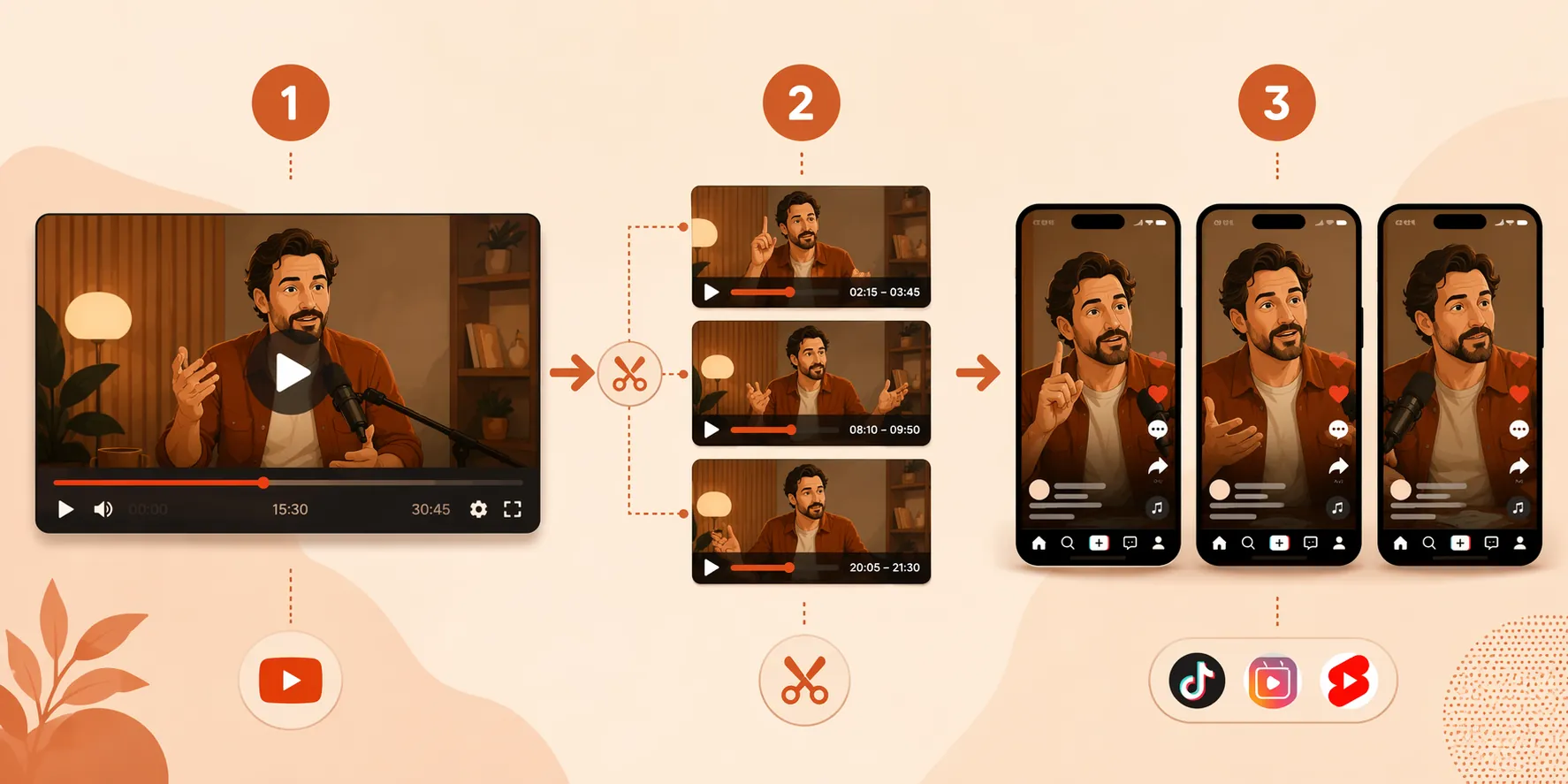
For social-heavy teams, that may decide the routing rule by itself. A webinar, founder interview, customer story, or product walkthrough is rarely one asset. It is a source file waiting to become hooks, cutdowns, captions, thumbnails, opening frames, and paid-social variants. If GPT-5.6 Sol can move from source video to timestamped short-form candidates with less manual handling, it belongs in that lane even when Opus 5 is the better model for the campaign idea.
The practical split is simple: use Opus 5 to decide which story is worth extracting, which claims are safe, and which audience tension the clip should serve. Use GPT-5.6 Sol to produce the clip map, variant hooks, short-form captions, and platform-ready derivative set.
Pricing Is Close Enough to Be the Wrong Tie-Breaker
Opus 5 is listed at $5 per million input tokens and $25 per million output tokens. GPT-5.6 Sol is listed at $5 per million input tokens and $30 per million output tokens in the pricing comparison cited here.[1][2] That gap is not where most teams will win or lose money.
The larger cost is review time. A cheap model output that creates another legal cycle is expensive. A slightly more expensive output that arrives in clean upload columns may be cheaper by the time it reaches the account. Token cost matters at very high volume, but for most ad-creative teams the real comparison is unused assets, delayed launches, inconsistent naming, claim risk, and QA labor.
A Practical Two-Model Workflow
The cleanest setup is not alternating models randomly. Give each one a lane, and make the handoff explicit.
- Start in Opus 5 for strategy: audience tension, offer angle, claim boundaries, concept territories, proof requirements, and likely compliance objections.
- Approve the angles before scaling: remove anything legal, brand, or product cannot support.
- Move approved angles into GPT-5.6 Sol for production: headlines, descriptions, primary text, hooks, labels, character counts, and upload-ready tables.
- Use GPT-5.6 Sol for video derivatives when the source is a long-form YouTube, webinar, demo, or interview asset.
- Send any questionable claims or sensitive variants back through Opus 5 for a second-pass compliance and brand-safety review.
That workflow avoids the two common mistakes: asking GPT-5.6 Sol to invent the whole strategic frame from scratch, then wondering why the angles feel familiar; or asking Opus 5 to behave like a bulk asset formatter, then burning time fixing fields.
Where the Evidence Is Still Thin
The comparison has three important limits. First, Opus 5 is too new for independent ad-creative benchmarks. Second, ARC-AGI 3 is a novelty and reasoning signal, not a campaign-performance metric. Third, the GPT production advantage is based partly on patterns from older comparisons: GrowthOS compared Claude Opus 4.6 with ChatGPT 5.2, and IMS nHance compared GPT-5.5 with Claude Opus 4.7.[3][4]
Those limits do not make the routing rule useless. They just keep it in the right category: a working operating policy, not a final leaderboard. If independent Opus 5 vs GPT-5.6 Sol ad tests show different behavior on structured output, video repurposing, or compliance review cycles, the rule should change.
The Operating Policy
Use Claude Opus 5 when the failure cost is bad judgment, stale concepts, unsupported claims, or compliance risk. Use GPT-5.6 Sol when the failure cost is slow formatting, insufficient variant volume, messy character limits, or unrepurposed video inventory. Retest the split when independent Opus 5 vs GPT-5.6 Sol ad-creative benchmarks are available.
References
Built on this evidence
No Bidding tactic or Creative record currently cites this case file. Compare it against other results in Benchmarks.
Related benchmark reading
Report a corroborating or contradicting result
Seeing something different in your own account? Feed the data-integrity loop instead of leaving an open comment.