
Did Burger King's Paw Patrol Promotion Drive Real Traffic?
Burger King's July 2026 Paw Patrol promotion follows a playbook established by SpongeBob and other movie tie-ins that produced verified traffic spikes and same-store sales lifts. This article triangulates available data from Placer.ai, earnings calls, and industry reports to assess whether the family-first strategy is a repeatable promotional engine.
- Platform
- Google Ads
- Campaign type
- Performance Max
- Spend range
- Under $0k
- Timeframe
- July 0
- Foot traffic
- 0%
- Verdict
- mixed
- Industry vertical
- QSR
- Last reviewed
- 0-07-25
Burger King’s Paw Patrol promotion is easy to like and too early to score. The July 2026 King Jr. Meal tie-in puts six collectible toys into restaurants ahead of “PAW Patrol: The Dino Movie,” which is scheduled for theatrical release on August 14, 2026.[1] That is a clean family traffic prompt: a parent understands the offer, a child understands the reason to ask, and the restaurant gets a visit occasion that does not depend on discounting alone.
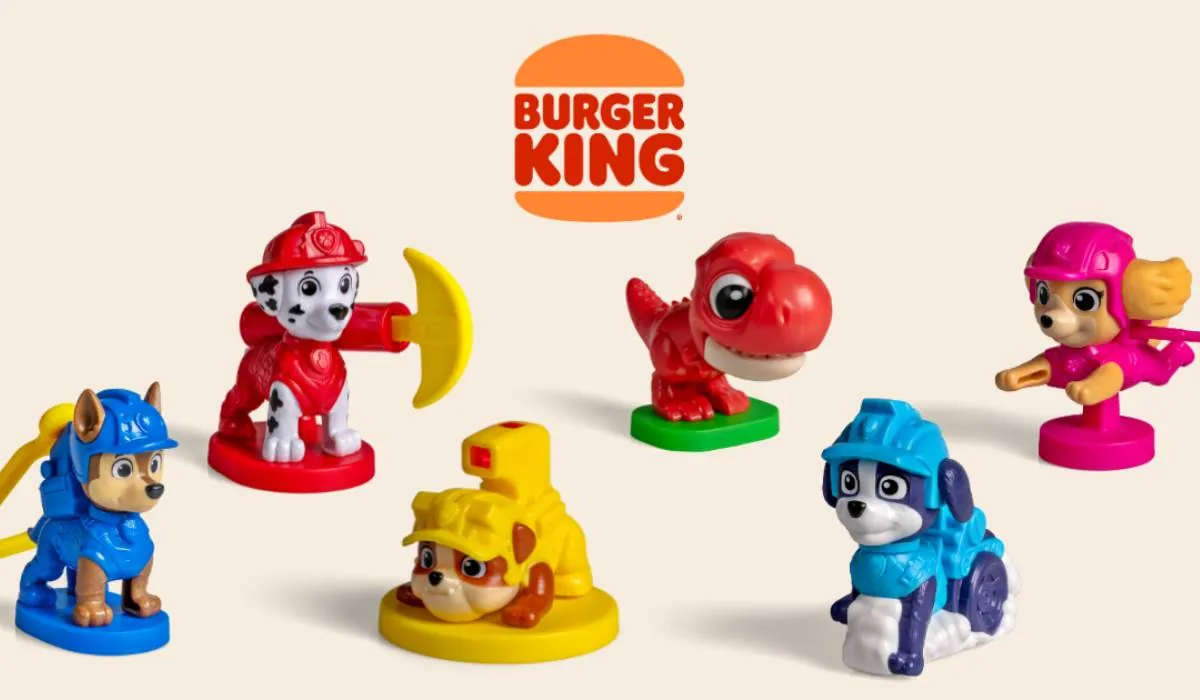
What it does not have yet, as of July 25, 2026, is verified performance evidence. There is no published Paw Patrol traffic read, no disclosed campaign-level sales lift, no franchisee economics, and no credible repeat-visit data. So the useful question is not whether the Burger King Paw Patrol promotion marketing strategy has already worked. The useful question is what would count as evidence, and whether Burger King’s recent family movie playbook has earned the benefit of close measurement.
The answer starts with SpongeBob, not Paw Patrol. SpongeBob is the campaign with a real evidence stack: third-party visit data, reported sales lift, executive commentary on kids meal behavior, a retention signal, and a messy but useful operational clue in the form of toy shortages.
What Would Count as Proof for Paw Patrol?
A toy launch can create several kinds of lift, and they are not interchangeable. A traffic spike means more people came through the door or drive-thru. A same-restaurant-sales lift means restaurants sold more compared with a relevant baseline. Kids meal incidence means the kids platform took a larger share of transactions or occasions. Repeat behavior means the campaign did not merely pull forward one novelty visit. Franchisee economics ask whether the traffic arrived with enough margin to justify the operational work.
For Paw Patrol, the cleanest early read would be a launch-week visit comparison from a third-party location panel, followed by a sales or same-store-sales indication from Burger King or Restaurant Brands International. Better still would be a read on King Jr. Meal incidence, attach rates, and whether families came back after the initial toy hunt. The hard version would include food cost, licensing cost, toy cost, local labor friction, and franchisee margin. Burger King does not publish that level of campaign P&L, so the realistic standard is triangulation.
| Signal | What it can show | What it cannot prove by itself |
|---|---|---|
| Foot traffic | Whether more visits occurred around launch | Revenue, check size, margin, or incrementality |
| Same-restaurant sales | Whether comparable restaurants sold more | Whether the promotion alone caused the lift |
| Kids meal incidence | Whether the family platform became more important in the mix | Profitability or long-term retention |
| Toy shortages | Whether demand exceeded supply planning | Whether the campaign generated profitable ROI |
| Executive commentary | How management frames internal performance | A fully audited campaign result |
That distinction matters because a packed lobby can still hide a weak margin story. A family promotion that fills restaurants with low-margin, operationally awkward transactions is not the same thing as one that grows profitable occasions. The evidence available for SpongeBob does not solve every piece of that equation, but it gives Burger King more than a brand-love anecdote.
The SpongeBob Campaign Is the Benchmark
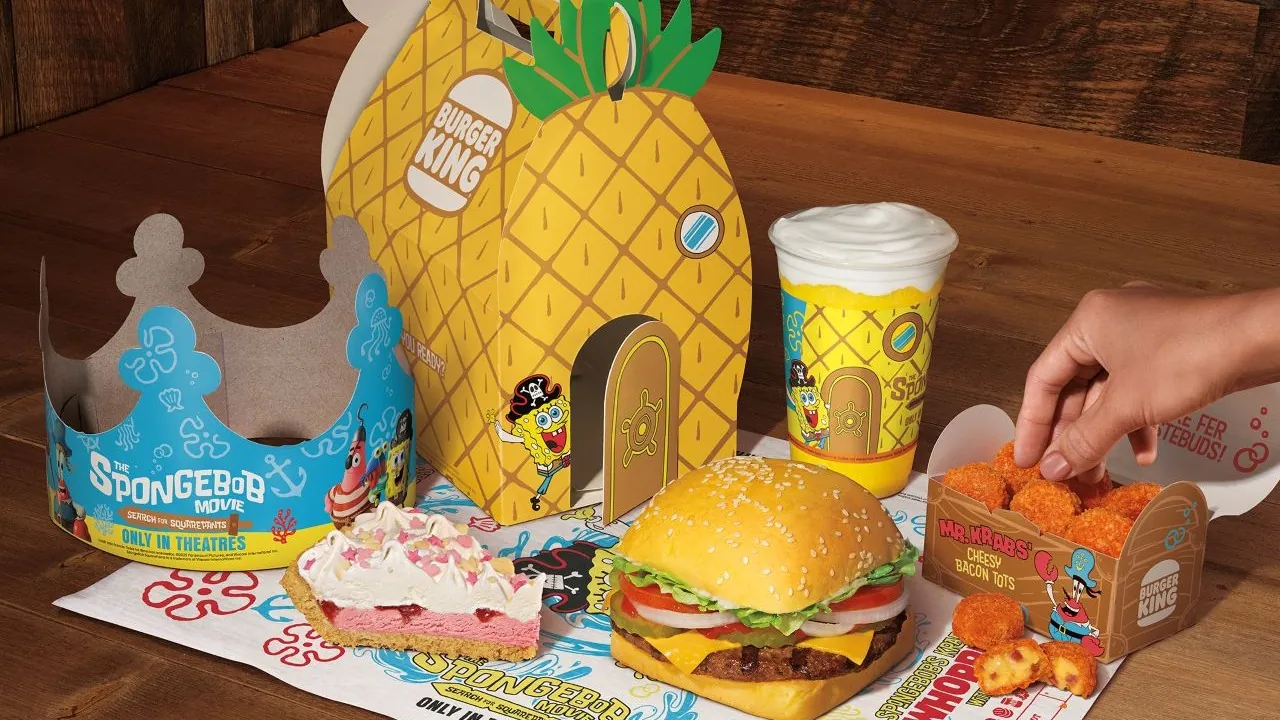
Placer.ai reported that Burger King’s SpongeBob launch week produced an 18.4% year-over-year traffic spike in December 2025, the chain’s largest weekly visit spike of that year.[2] That is the strongest independent signal in the set because it does not come from Burger King’s own earnings script or brand team. It is still panel-based foot-traffic data, not Burger King’s transaction file, and it does not say what each party ordered. But for a multi-location restaurant campaign, a launch-week visit surge is a real store-behavior signal.
Ad Age reported a 20% same-restaurant-sales lift at the campaign’s peak.[3] That number is commercially meaningful, but it needs a tighter caveat than a sizzle reel would give it. The publicly available claim does not provide a full measurement window or baseline methodology. Peak lift is not the same as campaign-period lift, and campaign-period lift is not the same as incremental profit. Still, paired with the Placer.ai traffic spike, it suggests SpongeBob did not merely create social chatter around a novelty Whopper. Restaurants appear to have felt it in both visits and sales.
The kids meal evidence is directional but important. Burger King President Tom Curtis said kids meal sales rose about 40% over six months through Q1 2026, in the context of the chain’s family-focused movie partnership strategy.[4] Restaurant Brands International CEO Josh Kobza also said kids meals reached their highest incidence in 10 years and described SpongeBob retention as “very encouraging progress versus prior partnerships” on the company’s Q4 2025 earnings call, as reported by NRN.[5]
Those comments do not isolate SpongeBob with the neatness a performance marketer would want. They are management-sourced, they aggregate behavior across a period, and they do not publish the denominator behind incidence. But they answer a different question than Placer.ai answers. The third-party traffic read says visits rose around launch. The sales-lift claim says comparable restaurants had a peak revenue response. The kids meal comments say the family platform itself was becoming more prominent, not just that Burger King had a good week.
Then there is the least elegant signal, which is sometimes the most revealing inside a restaurant system: supply. QSR Magazine reported that SpongeBob demand led Burger King to issue a public restocking statement after shortages.[6] A shortage does not calculate ROI. It can reflect conservative forecasting as much as runaway demand. But it does tell the operator something that a brand-tracking slide cannot: guests were asking for the thing, restaurants ran out of the thing, and the company had to say when more of the thing would arrive.
The Evidence Stack Is Strongest When It Is Not Overstated
The SpongeBob case works as a benchmark because the signals point in the same direction while measuring different layers of behavior. Placer.ai measures visits. Ad Age’s reported lift points to sales. Burger King and RBI executives describe kids meal mix and retention. QSR’s shortage report shows operational demand. None of those sources alone proves campaign-level profitability. Together, they make it hard to dismiss the campaign as a soft equity play.
That is the bar Paw Patrol has not cleared yet. The July activation has the same visible ingredients: movie timing, collectible characters, King Jr. Meal placement, and a parent-child purchase occasion. It does not yet have the post-launch data that would let anyone say it drove real traffic.
Repeatable Engine or One-Off Cultural Hit?
SpongeBob had unusual cultural range. Parents knew it, children knew it, and the product translation was obvious enough to travel through packaging, toys, and the Krabby Whopper without a long explanation. Paw Patrol is more purely a family-and-kids property. That may make it cleaner for King Jr. Meals, but it also means the adult novelty layer may be thinner.
Burger King’s argument for repeatability is not that every property has the same fan base. It is that the chain has built a cadence around family entertainment properties under its broader Reclaim the Flame turnaround. From mid-2023 through mid-2026, the chain’s movie-tie-in run included Spider-Verse, Addams Family, How to Train Your Dragon, SpongeBob, Mandalorian, and now Paw Patrol. The Mandalorian kids meal launch on April 28, 2026, ahead of the movie release, was described by Wolfe Research as an “incremental tailwind” for family traffic.[7]
That phrase is useful because it is modest. An incremental tailwind is not a standalone turnaround claim. It means the promotion may have helped an existing business trajectory. That is probably the right way to read the movie-tie-in machine: not as a magic lever, but as a repeatable visit occasion layered onto operations, remodels, value, and media.
The broader business context supports that more disciplined reading. Restaurant Brands International reported that Burger King U.S. same-store sales grew 5.8% in Q1 2026, outperforming the burger QSR segment by more than 5 percentage points.[8] That result cannot be assigned to SpongeBob alone. Burger King was also running value offers and other turnaround initiatives. But it shows the family strategy was operating inside a system that was gaining share, not one trying to make a weak base look exciting with toys.
The cost side is not optional. NRN reported that Burger King franchisee profitability was about $185,000 in 2025, down from $205,000, with 20% beef cost inflation pressuring operators.[9] That is the part national campaign coverage tends to flatten. A franchisee does not fund labor, inventory, and service complexity with “brand momentum.” The campaign has to bring visits that convert into profitable checks, or at least support a broader economics case strong enough to justify the disruption.
This is also why attribution needs discipline. A guest may arrive for SpongeBob, trade into a value meal, add a side, or come back later for an unrelated occasion. A same-store-sales comp may reflect remodels, media weight, menu pricing, value platforms, digital behavior, and local execution. Movie partnerships can be part of the machine without being the whole machine.
How to Read Paw Patrol Without Pretending the Results Are In
For Paw Patrol, the first honest read should be launch-week traffic against both the prior year and the weeks immediately before the activation. The second should be whether the lift shows up in sales, not just visits. The third should be whether King Jr. Meal incidence rises enough to suggest the toy platform did the work, rather than Burger King simply benefiting from unrelated traffic or value messaging.
The fourth read belongs to operators: Were toys stocked correctly? Did the drive-thru slow down? Did employees have to manage substitutions, disappointed children, or collector behavior? A shortage can be a demand signal, but it can also create guest friction. SpongeBob’s restocking moment was useful evidence because it showed real demand. It was also a reminder that successful family promotions touch restaurant operations quickly.
The fifth read is repeat behavior. A one-time family visit can be worth buying if the check is healthy enough, but the better version is a campaign that reintroduces Burger King into the family consideration set. RBI’s SpongeBob retention comment matters for that reason. It suggests management was not only watching the launch pop, but also whether the campaign performed better than prior partnerships after the first wave.[5]
Until those reads exist, Paw Patrol should be treated as the latest execution of a proven-looking playbook, not as a proven campaign. The distinction is small in a headline and large in a budget review.
The Practical Benchmark
Burger King’s family-first movie-tie-in strategy has produced measurable traffic and sales gains in the SpongeBob case. The strongest public proof is the 18.4% launch-week traffic spike from Placer.ai, reinforced by the reported 20% peak same-restaurant-sales lift, kids meal growth commentary, highest-incidence language, retention comments, and a public restocking signal.[2][3][4][5][6]
That is enough to make SpongeBob a serious benchmark for QSR family promotions. It is not enough to declare every movie tie-in profitable, and it is not enough to claim Paw Patrol has already driven traffic. The current evidence supports a narrower, more useful conclusion: Burger King appears to have built an operationally repeatable family promotion cadence, but campaign ROI remains something outsiders can only triangulate unless Burger King discloses promotion-level economics.
References
- PAW Patrol Toys Arrive at Burger King, QSR Magazine, July 2026
- What 2025's Biggest QSR Traffic Surges Reveal, Placer.ai
- Burger King's Joel Yashinsky on winning back families, Ad Age, December 2025
- Burger King targets families through movie partnerships, CNBC via NBC Bay Area, May 2025
- Burger King U.S. Q4 lifted by SpongeBob meal, value offerings, NRN
- Burger King's Journey to Empower Customers Continues with SpongeBob, QSR Magazine, December 2025
- Burger King Wins Market Momentum, TIKR/Wolfe Research, May 2026
- Restaurant Brands beats quarterly estimates, Reuters, May 2026
- NRN quick-service coverage, NRN, February 2026
Built on this evidence
No Bidding tactic or Creative record currently cites this case file. Compare it against other results in Benchmarks.
Related benchmark reading
Report a corroborating or contradicting result
Seeing something different in your own account? Feed the data-integrity loop instead of leaving an open comment.