
What Burger King's Paw Patrol Promo Means for Media Buyers
This post-mortem examines Burger King's 2025 Paw Patrol Dino Movie promotion and what it reveals about the paid-media system behind QSR licensing campaigns, including the measurable outcomes and structural lessons for media buyers.
- Platform
- Television
- Campaign type
- National TV
- Spend range
- Multi-million
- Timeframe
- 0
- Same-store sales growth
- 0%
- Verdict
- win
- Industry vertical
- QSR
- Last reviewed
- 0-07-25
Anyone searching for “burger king paw patrol meal price 2025 marketing” is probably looking for the price of a King Jr. Meal or a quick read on whether the Paw Patrol toys moved families. The more useful benchmark is bigger than that. Burger King’s Paw Patrol Dino Movie promotion sits inside an 18-month licensing cadence that helped push kids meal sales up about 40% over the six months ending May 2026, while U.S. same-store sales accelerated from 1.6% for full-year 2025 to 5.8% in Q1 2026.[1][2] That kids meal lift should not be credited to Paw Patrol alone. The measured period included multiple promotions, including SpongeBob, Star Wars, and Paw Patrol.
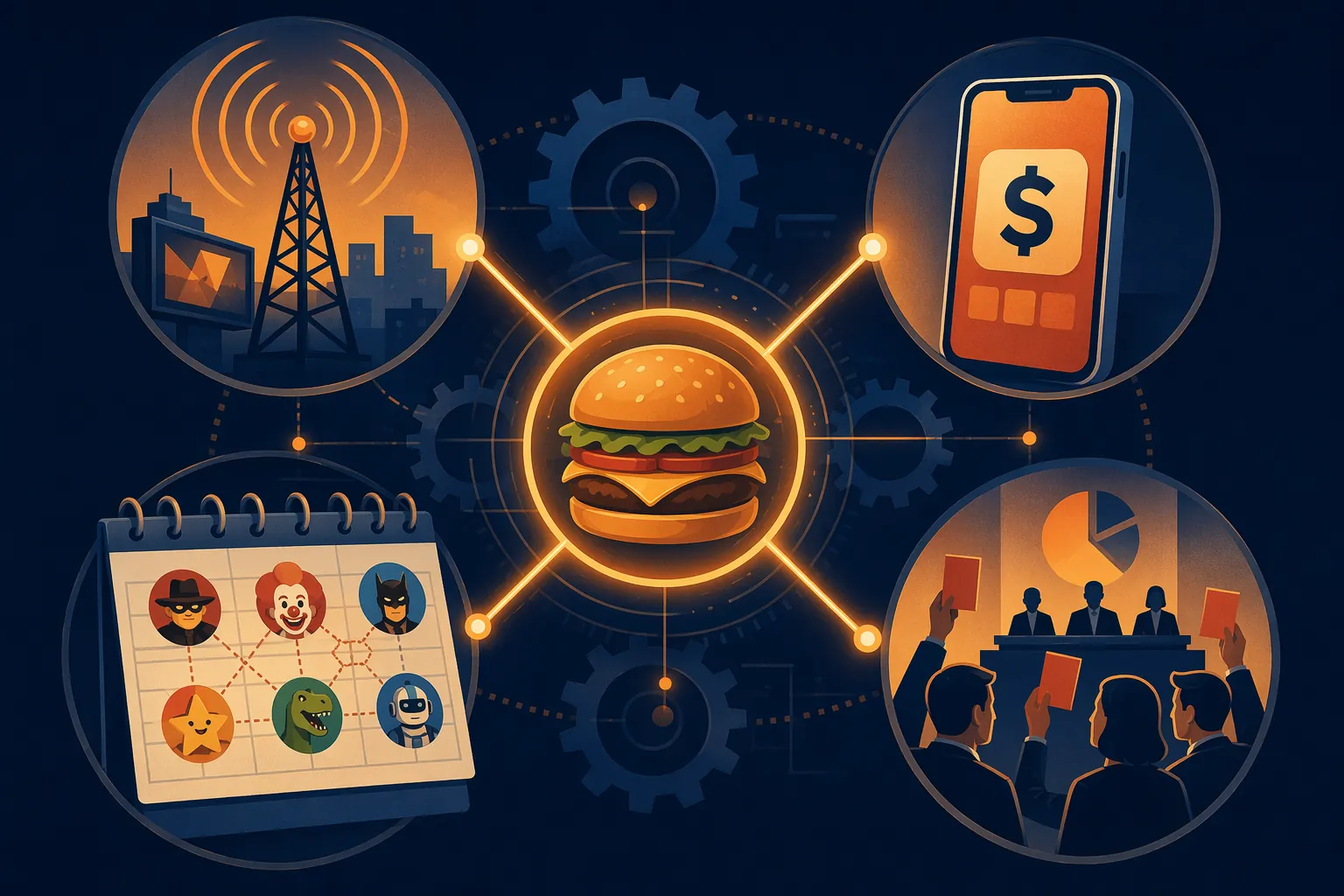
The campaign is still worth studying because the surrounding system is unusually legible. As of July 2026, Burger King ranked No. 4 in national TV ad spend among QSR brands and No. 2 in airing volume, according to iSpot.tv’s brand profile.[3] Franchisees also voted 97% in favor of keeping advertising contributions at 4.5% through at least 2027.[2] That is the signal a recap deck cannot fake: operators closest to restaurant economics agreed to keep funding the machine.
The Price Question Is Smaller Than the Media Question
The exact 2025 Paw Patrol King Jr. Meal price is not publicly confirmed in official and trade sources. That matters because a precise price claim would be easy to overstate. Burger King has used different value structures around kids meals and licensed promos, and the more important mechanic for media buyers is not the shelf price of the toy meal by itself. It is where paid reach was routed after attention was created.
Burger King had previously used an app-based Paw Patrol offer: a free King Jr. Meal with a $15-plus purchase tied to the 2023 theatrical release of PAW Patrol: The Mighty Movie.[4] That kind of mechanic changes the planning question. The campaign is no longer only “Can a character sell a kids meal?” It becomes “Can national awareness move a family order into an app or loyalty environment where the check clears a higher threshold?”
For operators, that distinction is not cosmetic. A low advertised kids meal price can drive traffic and still leave weak unit economics if the adult order does not come along. A free-with-minimum-purchase mechanic can make the toy feel like the visible hook while the actual commercial target is the bundled family occasion.
Paw Patrol Was One Node in a Licensing Cadence
Burger King did not arrive at Paw Patrol as a one-off character bet. The brand’s recent licensing run included Spider-Verse, Addams Family, How to Train Your Dragon, SpongeBob, and Paw Patrol across roughly 18 months.[1][5] That cadence is the part media buyers should care about, because repeat drops create something a single promo cannot: a basis for reallocating budget after seeing how prior licensing traffic, order mix, app behavior, and check averages behaved.
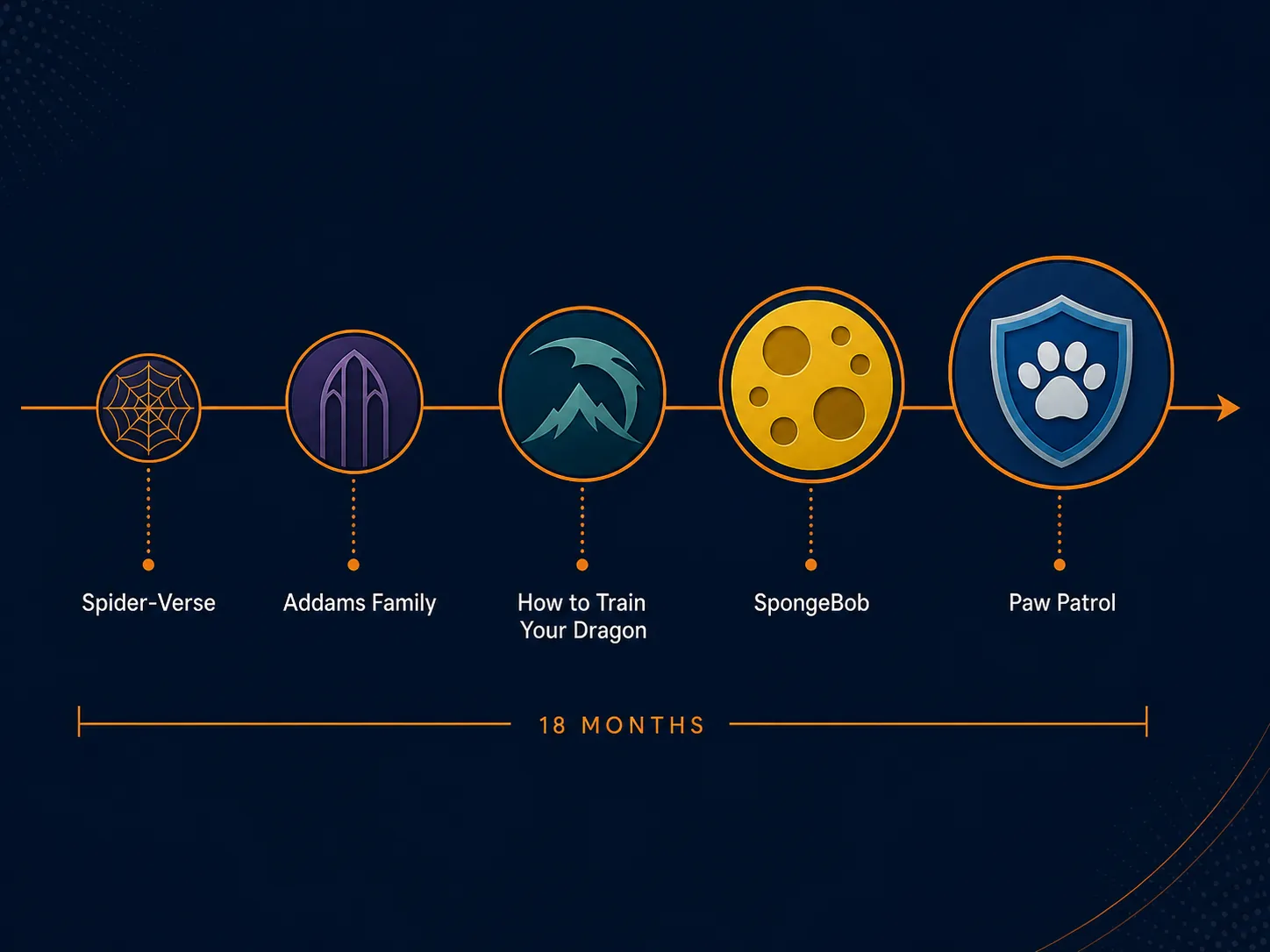
The earlier campaigns produced the kind of mixed but useful operating signals that tend to matter more than earned-media enthusiasm. CNBC reported that the Addams Family promotion increased sales even when traffic was flat, with the lift attributed to higher check averages from family parties.[5] The How to Train Your Dragon budget was then increased “dramatically” based on prior licensing ROI.[5] That is a cleaner story than “movie tie-ins are back.” It suggests Burger King saw enough in previous results to put more paid weight behind the next drop.
SpongeBob added another signal. QSR Magazine reported that the collaboration brought back lapsed customers and generated strong repeat visitation rates.[2] That does not prove Paw Patrol did the same thing, and it should not be used as a Paw Patrol performance proxy. It does show why a planner would keep a licensing calendar warm: each drop can be evaluated not only on immediate sales, but on whether it reactivates customers the brand had lost.
| Licensing Drop | Media-Buyer Signal |
|---|---|
| Spider-Verse | Part of the licensing run that helped establish Burger King's repeatable promo playbook |
| Addams Family | Sales rose despite flat traffic, pointing to higher check averages from family parties |
| How to Train Your Dragon | Budget was increased dramatically after prior licensing ROI |
| SpongeBob | Reportedly brought back lapsed customers with strong repeat visitation |
| Paw Patrol | Extended the family/kids-meal push inside a broader six-month lift period |
The Family Segment Had Room to Move
Burger King’s family traffic base was small entering this push. CNBC reported that families represented only 10% of Burger King traffic going into 2025.[5] That is both the opportunity and the caveat. A brand with a smaller family base can show sharper growth rates if it gives families a better reason to come in, but the same growth rate would be harder to replicate for a chain already dominant in kids meals.
That starting point makes the Paw Patrol promo easier to understand. The characters and toys were the visible demand trigger, but the growth vector was structural: Burger King had underdeveloped family traffic, national media scale, and a sequence of licensed reasons for parents to reconsider the restaurant. A kids meal campaign is more valuable when it can attach to adult meals, app orders, and repeat family occasions instead of stopping at toy redemption.
Burger King also had a product template ready. QSR Magazine noted that prior Spider-Verse and Addams Family collaborations were among Burger King’s top-selling Whopper innovations by unit volume, and the brand applied a similar colored-bun and natural-dye playbook to the kids entree line for Paw Patrol.[6] The toy line itself was not irrelevant. It gave the offer recognizability. But the stronger benchmark is how the licensed product idea was connected to order behavior.
The Measurement Chain: TV, App, Check, Franchisee Vote
The cleanest way to read the campaign is as a chain, not as a toy launch. National TV creates broad family reach. App and loyalty mechanics convert attention into an owned environment. Minimum-purchase or bundle logic protects the check. Restaurant-level sales and repeat behavior decide whether the next licensing drop deserves more budget. Franchisees then vote with their ad contributions.
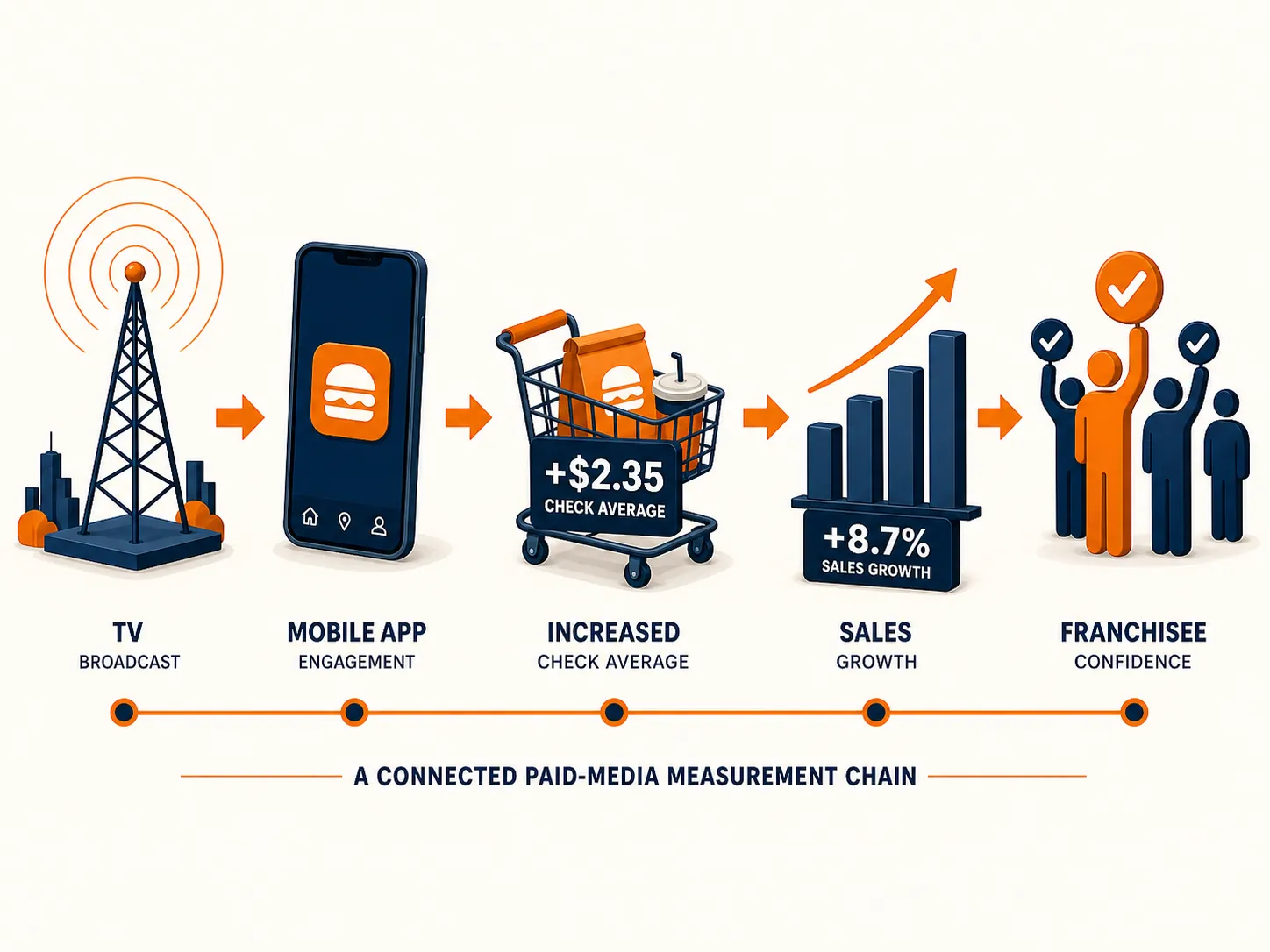
That last step is easy to underweight from the outside. A national brand can always make a licensing campaign sound busy. Franchisees have to live with the invoice. The 97% vote to maintain 4.5% ad contributions through at least 2027 is therefore more persuasive than a social clip or toy-unboxing spike.[2] It does not prove that Paw Patrol alone paid back. It does suggest the broader media system was convincing enough for operators to keep participating.
The same-store sales number supports that confidence, though it should be read at the brand level rather than the campaign level. Burger King’s U.S. same-store sales rose 5.8% in Q1 2026, compared with 1.6% for full-year 2025, and QSR Magazine reported that the brand outperformed the burger QSR segment by more than five points.[2] Licensing was not the only factor inside that result. It sat inside Burger King’s broader “Reclaim the Flame” operating program, which also included restaurant investment and product work. For media buyers, the useful point is narrower: the licensing media did not operate in isolation from operations.
What the Public Data Does Not Prove
There is no public Paw Patrol-specific paid-media spend, impression total, reach curve, app download count, or campaign-level incrementality study in public sources. iSpot.tv supports Burger King’s aggregate national TV standing, not a public campaign-level breakdown for the Paw Patrol Dino Movie promotion.[3] That matters because the campaign is easy to over-credit if the 40% kids meal lift is treated as a single-IP result.
A disciplined read keeps the attribution wide enough to fit the evidence. Kids meal sales rose about 40% over a six-month promotional span ending May 2026, and that span included several campaigns.[1] Paw Patrol was part of the machine, not the whole machine. The same caution applies to same-store sales. A 5.8% Q1 2026 comp is a useful outcome marker, but it reflects the total brand system, not just licensed kids meals.[2]
This is also why the absence of an exact confirmed 2025 Paw Patrol meal price is less damaging than it first appears. If the task is a consumer price guide, the answer is incomplete. If the task is a media benchmark, the better question is whether paid reach had somewhere measurable to land. In this case, the evidence points to a brand using licensing drops to create demand, then trying to capture that demand through app, loyalty, family-party, and check-average mechanics.
What Transfers to Other QSR Campaigns
The transferable lesson is not “buy Paw Patrol” or “make better toys.” Most QSR brands can license a recognizable property. Fewer can connect that property to a funded national media plan, a reason to use the app, a check-protecting value mechanic, and an operator base willing to fund the next cycle.
- Use licensing as a cadence, not a one-off stunt, so each drop informs the next budget decision.
- Separate adoption metrics from effectiveness metrics: toy interest, app activity, order value, repeat visitation, and franchisee support are different signals.
- Route broad media into a measurable conversion environment instead of relying only on in-store redemption.
- Treat family traffic growth differently when the brand starts from a low base.
- Avoid single-campaign attribution when the reported lift comes from a multi-promotion window.
Burger King’s Paw Patrol Dino Movie promotion is a useful benchmark because it shows what QSR licensing can look like when the commercial plumbing is stronger than the nostalgia discourse around it. National TV supplied scale. The app and value mechanics gave demand a place to land. Repeated licensing drops created a reallocation loop. Franchisees kept funding the system.
That is enough to study. It is not enough to claim that one Paw Patrol meal price, toy line, or movie tie-in independently drove the reported lift. The stronger read is more useful anyway: study the structure, respect the attribution limits, and treat the franchisee funding vote and multi-campaign sales movement as stronger evidence than earned-media buzz.
References
- Burger King fixed the Whopper — calls from customers helped — CNBC, May 2026
- Burger King Sees U.S. Sales Surge as 'Reclaim the Flame' Strategy Takes Hold — QSR Magazine
- Burger King TV Commercials — iSpot.tv
- Burger King and PAW Patrol Are 'On a Roll' With King Jr. Meal Toys — BK Official Press Release
- Burger King targets families with 'How to Train Your Dragon' team-up — CNBC, May 2025
- Burger King's Revival Strategy Shows Notable Results — QSR Magazine
Built on this evidence
No Bidding tactic or Creative record currently cites this case file. Compare it against other results in Benchmarks.
Related benchmark reading
Report a corroborating or contradicting result
Seeing something different in your own account? Feed the data-integrity loop instead of leaving an open comment.