
How Burger King's Guarantee Campaign Turned Complaints Into Growth
Burger King's 2026 turnaround wasn't a single ad—it was a sequenced campaign that listened first, confessed publicly, then backed promises with operational teeth. This case study unpacks the mechanics and results of that playbook for marketers building trust-based campaigns.
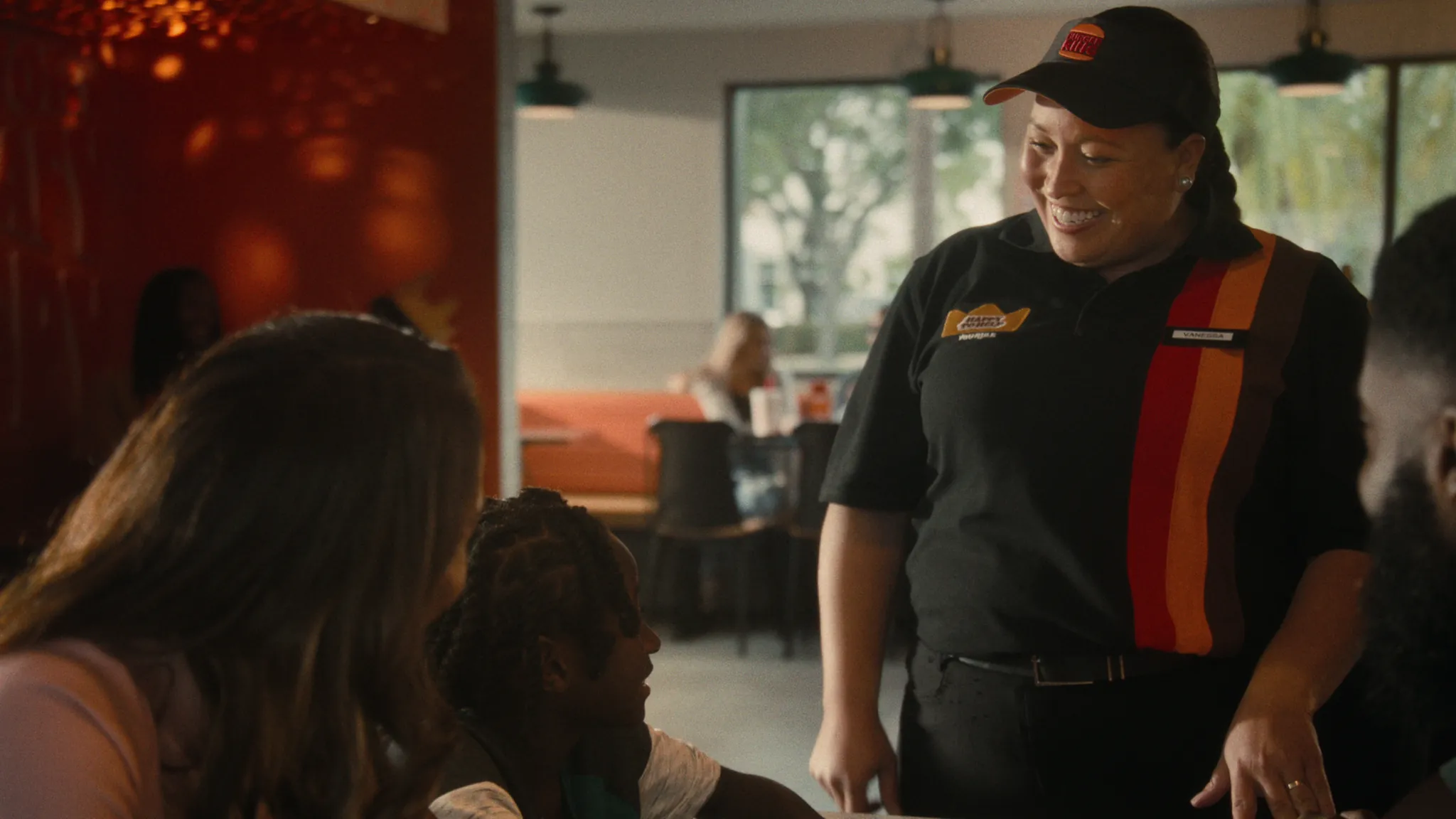
Burger King’s guarantee marketing campaign becomes interesting at the point where a complaint stops being a comment card and starts becoming inventory, labor, a remake, a QR code, and a second visit. The brand did not merely say it wanted to make Whoppers “your way.” In July 2026, it attached that promise to a specific service-recovery sequence: if a guest’s Whopper was not right, participating U.S. restaurants would remake it immediately and give the guest a free Whopper for a future visit through a unique code generated from a QR code inside the Whopper box.[1]
That is the campaign’s real center of gravity. The visible promise is customer generosity. The business mechanism is retention. A wrong order becomes an occasion to fix the current meal and create a reason to return, with a 14-day redemption window and a six-digit code that turns dissatisfaction into a trackable next action.[1][2]
The Guarantee Made the Promise Operational
The Whopper Guarantee was not announced as a permanent policy. As described in Burger King’s July 2026 announcement, it runs through August 31, 2026, at participating U.S. locations. The limit matters because it keeps the campaign from being mistaken for a forever service standard. It is a timed market intervention, built to dramatize a turnaround promise and move guests back into restaurants while the offer is live.[1]
The mechanics are unusually concrete for a brand-trust campaign. A guest with an incorrect Whopper receives an immediate remake. Inside the Whopper box, a QR code leads to a unique six-digit code. That code can be redeemed for a free Whopper on a future visit within 14 days. The store also has a named “Your Way Champion,” an in-restaurant role meant to own the issue when a guest says the order is wrong.[1]
| Campaign mechanic | What it changes |
|---|---|
| Immediate remake | The guest does not have to wait for a corporate apology to fix the current meal. |
| QR code inside the Whopper box | The recovery moment becomes a measurable redemption path. |
| Unique six-digit code | The next-visit offer is tied to a specific service incident rather than a generic coupon. |
| 14-day redemption window | The brand creates urgency without treating the guarantee as open-ended. |
| Your Way Champion | The campaign names the person expected to translate the promise at store level. |
The “Your Way Champion” detail is easy to treat as campaign color, but it carries the operational burden. Brand campaigns often announce a higher standard while leaving the counter team to improvise when a customer is angry, the line is building, and the order screen says one thing while the sandwich says another. Naming a role does not guarantee perfect execution, but it does make the handoff less vague. Someone in the restaurant is being positioned as the resolver, not just another employee caught between the guest and the ad.
The QR-code loop is equally important. A no-questions remake would have been service recovery. A free next-visit Whopper makes it a retention device. EngagePositive described the secondary benefit plainly: the guarantee extends the turnaround push by converting a dissatisfaction moment into a reason to come back.[2] That does not make the offer cynical. It makes it commercially honest. The customer gets a remedy; Burger King gets another chance to prove that the issue was not the norm.
The July Offer Worked Because the Brand Had Already Exposed Itself
By the time the Whopper Guarantee arrived, Burger King had already spent months making the same argument in riskier ways. In February 2026, U.S. President Tom Curtis gave out his personal phone number and invited guests to contact him directly with feedback. Burger King said thousands of calls and texts came in.[3]
The number mattered because it was specific. “We listened” is a low-cost sentence. A phone number is more exposed. It gives unhappy guests a direction for their frustration and gives the company less room to pretend that complaints are abstract sentiment. The brand did not need every call to be profound for the move to work. It needed the market to see that the listening channel was personal, public, and slightly uncomfortable.
Then came the March 2026 Oscars campaign, “There’s A New King And It’s You,” created by BarkleyOKRP. The 90-second spot formally fired the King mascot, put the crown on guests, and showed Curtis on camera acknowledging that Burger King had failed to deliver consistently.[4]
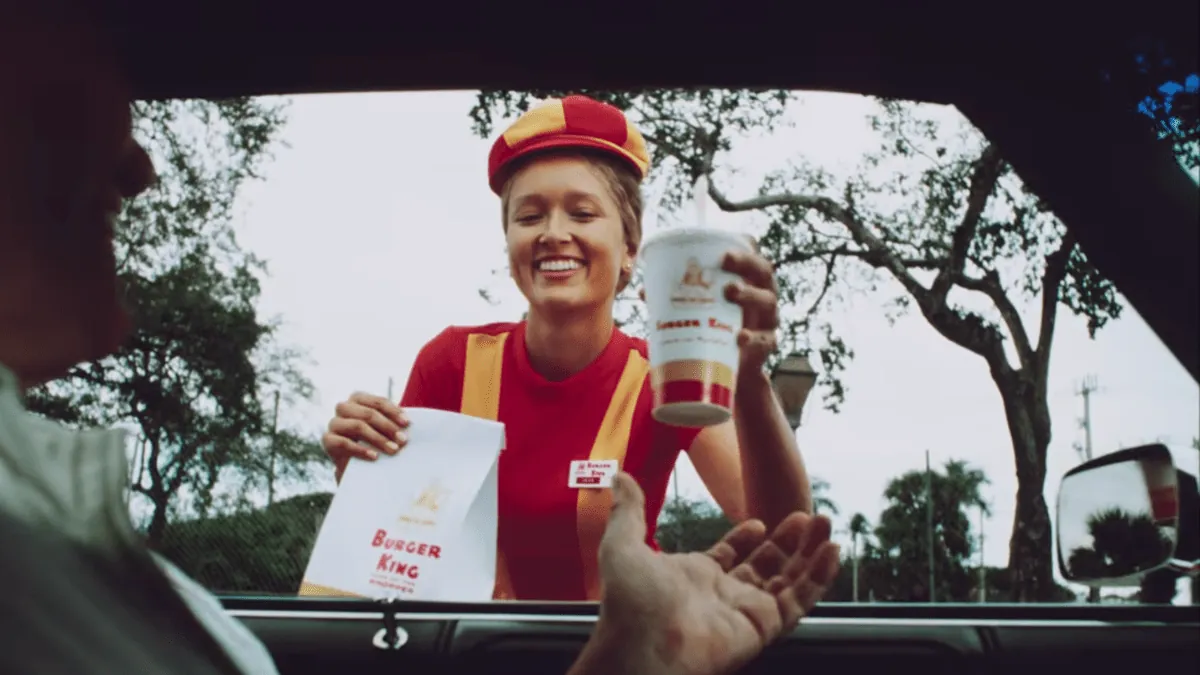
That is the kind of theatrical humility fast-food brands are built to perform. The mascot firing was vivid, useful, and easy to cover. It also would have been thin if the sequence had stopped there. A confession campaign can reset permission for the next message, but it does not fix a wrong sandwich. Its value was in clearing the ground for a later promise that store teams could actually act on.
Seen in order, the campaign has a sturdier architecture than a one-off stunt:
- February: open a public listening channel by putting the president’s phone number into market.[3]
- March: admit the consistency problem on a national stage and symbolically move authority from mascot to guest.[4]
- July: give the guest a store-level remedy and a second-visit incentive through the Whopper Guarantee.[1]
The sequence is what gives the guarantee credibility. If Burger King had launched the July offer cold, it could have looked like another traffic-driving coupon. Coming after the phone-number stunt and the Oscars confession, it reads more like the operational endpoint of a public feedback cycle.
The Paid Media Supported the System, Not the Other Way Around
Burger King still used conventional media weight to make the July mechanism visible. The “We’re Here to Help” 60-second spot, also by BarkleyOKRP, ran across linear TV, connected TV, YouTube, and social. MediaPost reported that CMO Joel Yashinsky, who joined Burger King in 2025, led the strategy around the guarantee and the guest-focused champion role.[5]
That distribution matters, but it is not the lesson. Media can spread the promise; it cannot absorb the promise. Once a guest has seen the spot, the decisive moment moves to the restaurant. The campaign becomes real when a cashier, manager, or Your Way Champion decides whether the guest experiences a clean fix or another small argument.
This is where many trust campaigns weaken. They spend heavily to announce that the customer is in charge, then give store teams little more than a line of copy and a headache. Burger King’s stronger move was to attach the message to a defined recovery path: remake now, code for later, return within a set window.
The Results Show Momentum, Not a Single-Campaign Miracle
The campaign did not arrive in a vacuum. Burger King’s U.S. business had already been moving through a broader turnaround. QSR Magazine reported that Burger King U.S. comparable sales rose 5.8% in Q1 2026, reversing a 1.1% decline from Q1 2025. Reuters also reported that parent company Restaurant Brands International beat quarterly same-store sales estimates, with Burger King’s U.S. performance outpacing RBI’s overall 3.2% comparable sales growth.[6][7]
Those numbers should not be credited to the Whopper Guarantee itself. The guarantee launched in July 2026; the 5.8% comparable sales figure belongs to Q1 2026 and was reported before the July offer. As of July 23, 2026, RBI’s Q2 2026 results had not yet been published. The fair conclusion is narrower and more useful: Burger King entered the guarantee phase with measurable turnaround momentum already in place.
That distinction matters for marketers trying to learn from the case. A guarantee can sharpen a turnaround, dramatize confidence, and create a return-visit loop. It is not proof by itself that a brand has fixed product consistency, franchise economics, operations, media effectiveness, and guest experience. Burger King had been laying groundwork before the 2026 campaign sequence became visible.
The Foundation Was Built Before the Apology
In 2022, Burger King announced its “Reclaim the Flame” plan, a $400 million U.S. investment that included $150 million for advertising and digital and $250 million for restaurant upgrades.[8] That foundation matters because a guarantee campaign asks the system to bear more pressure. If restaurants look tired, equipment is unreliable, staffing is strained, or digital redemption is clumsy, the public promise does not create trust; it creates more visible failure.
QSR Magazine’s coverage of RBI’s investor materials reported several signs of system progress: 97% of franchisees voted to continue an elevated 4.5% advertising fund contribution through at least 2027; average franchisee profitability per unit rose from a $125,000 baseline to a peak of $205,000 in 2023-2024 before dipping to about $185,000 in 2025 because of beef costs; modern image penetration increased from 37% in 2021 to 58% in 2025; and the brand moved from 10th to 6th in guest experience rankings.[6]
These are not small details behind the campaign. They are the conditions that make the campaign less reckless. Franchisee support helps fund the message. Restaurant modernization helps the in-store experience keep up with the promise. Improved guest-experience rankings make the guarantee feel like a push from a brand already improving, rather than a last-minute attempt to paper over weak operations.
What Marketers Can Actually Borrow
The transferable part of the Burger King guarantee marketing campaign is not “fire your mascot” or “give away the product.” Those are surface choices. The useful pattern is the sequence: gather complaint data in public, acknowledge the failure in public, then make the next customer interaction easier to resolve and worth repeating.
That sequence forces a brand to answer practical questions before the campaign launches. What happens when the customer says the promise was not met? Who has authority to fix it? Is the remedy immediate, delayed, or both? Can the brand measure whether the disappointed customer returns? Does the offer help the customer without quietly punishing the store team that has to deliver it?
Burger King’s answer was a limited-time guarantee with an immediate remake, a next-visit Whopper, a QR-code redemption path, and a named in-store role. The cleverness is not just in the humility of the campaign. It is in the fact that the customer’s complaint creates an operational obligation and a measurable chance to win the next visit.
Complaint-based growth only works when the complaint is allowed to travel somewhere useful. Public listening creates attention. Public confession creates permission. Public accountability, backed by an offer the restaurant can actually execute, is what gives the customer a reason to test the brand again.
References
- Burger King Continues Turning Guest Feedback into Action with the 'Your Way Champion' and Whopper Guarantee — PRNewswire
- Burger King Launches Whopper Guarantee to Extend Turnaround Push — EngagePositive
- Burger King Puts Its President on the Line, Giving Guests Direct Access to Share Feedback — Burger King Newsroom
- Fresh off its president's viral moment, Burger King kicks off a big, new ad campaign — Restaurant Business Online
- Burger King Launches Whopper Guarantee, Guest-Focused 'Champion' Role — MediaPost
- Burger King's Revival Strategy Shows Notable Results — QSR Magazine
- Burger King-parent Restaurant Brands beats quarterly same-store sales estimates — Reuters — May 6, 2026
- Burger King Announces 'Reclaim the Flame' Plan to Accelerate Growth in the U.S. — PRNewswire
Built on this evidence
No Bidding tactic or Creative record currently cites this case file. Compare it against other results in Benchmarks.
Related benchmark reading
Report a corroborating or contradicting result
Seeing something different in your own account? Feed the data-integrity loop instead of leaving an open comment.