
Nothing Bundt Cakes Uses Data to Drive Gluten-Free Growth
Nothing Bundt Cakes used first-party demand data from its Zeta personalization platform to select the Lemon Raspberry as its second-ever gluten-free flavor, de-risking the launch with proven customer preferences. This case shows how occasion-based segmentation can turn a niche dietary-restriction line into a growth category.
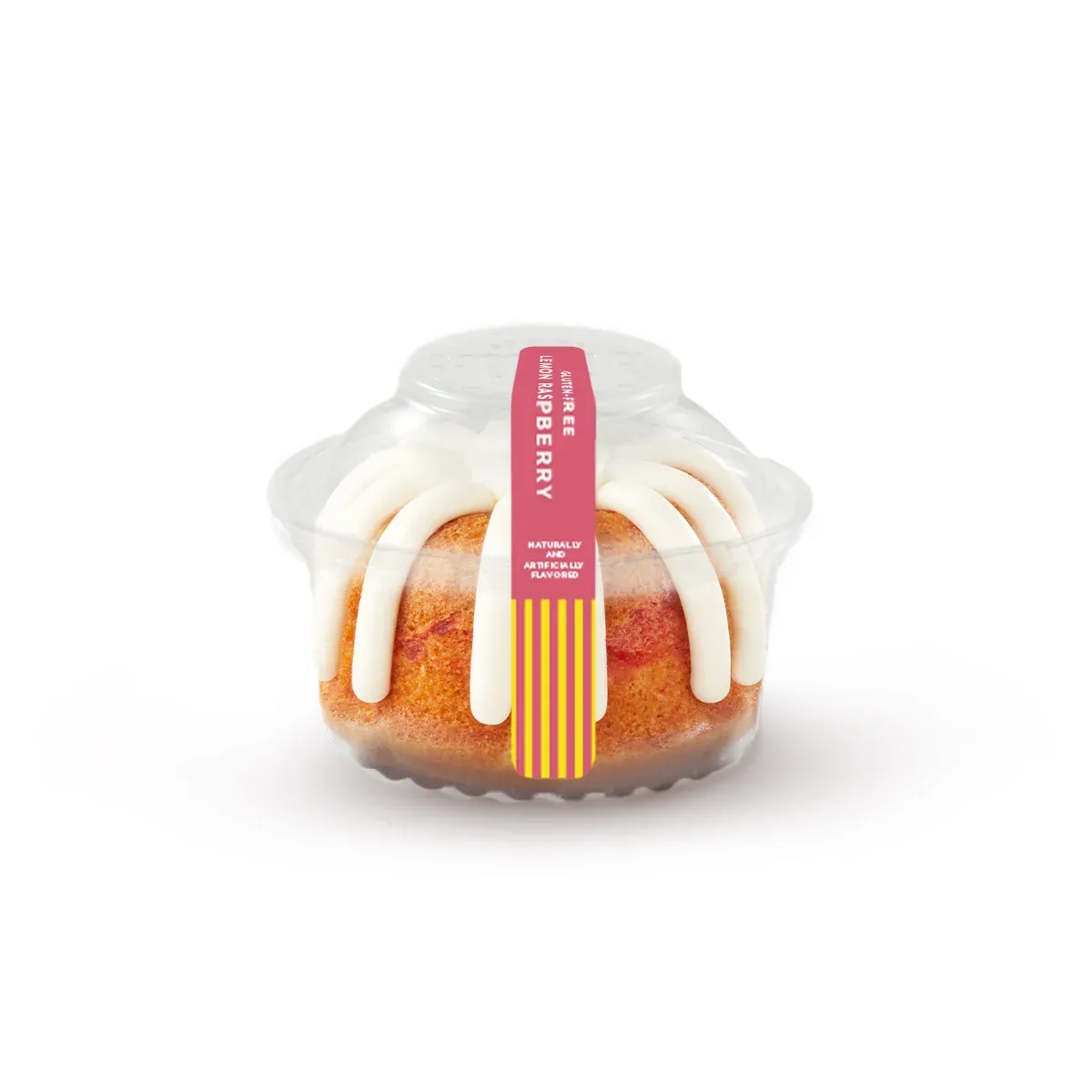
Nothing Bundt Cakes did not treat gluten-free Lemon Raspberry as a blank-slate “free-from” idea. It arrived in 2024 as the brand’s first new gluten-free flavor since 2018, after Chocolate Chip Cookie had spent years as the only gluten-free option. The important detail is what happened before the launch: Lemon Raspberry had already proven itself as a top-performing Featured Flavor with the broader customer base, giving the brand a demand signal before translating it into a gluten-free format. [1]
That is the useful lesson inside the Nothing Bundt Cakes gluten-free marketing story. The safer dietary-restriction launch is not necessarily the flavor that sounds most “gluten-free,” the one competitors are chasing, or the one that best fits a category trend deck. It is the one customers have already shown they want, preferably through first-party behavior and preference data rather than broad market enthusiasm alone.
The Flavor Choice Was the Marketing Decision
The launch language from Nothing Bundt Cakes was deliberately inclusive. Vice President of Culinary Alton Johnson said the gluten-free Lemon Raspberry flavor was created “for all our guests,” while CEO Dolf Berle tied the decision to a personal mission, noting family members who are gluten-free. [1]
That matters, especially in a category where customers often want a celebration product without being treated like an exception. But the more commercially durable part of the story is that the brand did not lead with a flavor that only made sense inside a gluten-free aisle. It chose a flavor that already had mainstream evidence behind it.
This is where the case fits with the broader Nothing Bundt Cakes personalization system. Zeta Global’s materials describe an occasion-based marketing framework that uses customer signals to shape who receives which message, when, and for what event. The reported system captured 41,000 flavor preference responses and 28,000 special-day responses, giving the brand more than generic demographic segments to work with. [2]
Zeta’s case studies do not report gluten-free-specific sales, ROAS, or traffic. That boundary is important. What they do show is the operating logic behind the decision: Nothing Bundt Cakes had a personalization engine capable of reading flavor interest and occasion intent across the customer base, then using those signals to reduce guesswork around product messaging. For the broader launch mechanics behind that system, Signal & Convert’s AI product-launch breakdown is the companion case.
A Niche Line Borrowed Confidence From Mainstream Demand
Gluten-free bakery is not a tiny opportunity. Fortune Business Insights values the gluten-free bakery market at $2.92 billion in 2026 and projects it will reach $7.38 billion by 2034. [3] But market size is a weak shield against a bad SKU. A large category can still punish a product that tastes like a compromise, confuses store teams, or gives marketing too little to say beyond “now available gluten-free.”
Lemon Raspberry gave Nothing Bundt Cakes a cleaner route. The company could present the gluten-free version as a celebratory flavor first and a dietary accommodation second. That framing is not cosmetic. In bakery, the buyer is often purchasing for a birthday, office event, holiday gathering, thank-you gift, or family celebration. If the gluten-free option feels like a separate product for a separate person, the host carries the social awkwardness. If it feels like a flavor people already like, the dietary need becomes easier to include without making it the whole occasion.
| Decision Layer | What the Nothing Bundt Cakes Case Shows | What It Does Not Prove |
|---|---|---|
| Flavor selection | Lemon Raspberry had already performed well as a Featured Flavor before becoming the second gluten-free flavor. | It does not prove every mainstream favorite will translate successfully into gluten-free. |
| Audience targeting | Zeta materials describe occasion-based segmentation and large volumes of flavor and special-day responses. | They do not isolate gluten-free customers as a separate reported performance segment. |
| Commercial impact | Zeta reports overall improvements including 4x-6x ROAS, shorter conversion lag, and higher in-store traffic. | Those results should not be described as gluten-free-specific outcomes. |
| Customer trust | Independent Nima tests offer limited third-party reassurance at specific locations and times. | They cannot guarantee conditions across the full bakery system. |
That distinction keeps the case useful. The claim is not that Nothing Bundt Cakes proved gluten-free Lemon Raspberry drove a certain return by itself. The claim is narrower and stronger: the brand used a system built around first-party demand signals, and that system made the gluten-free flavor choice less speculative than a typical dietary-restriction launch.

The Segmentation System Made the Launch Less Wasteful
The strongest evidence in the case is not the existence of a gluten-free product. It is the machinery around customer intent. Zeta describes Nothing Bundt Cakes using occasion-based segmentation to understand why someone is buying, not just who they are. Birthdays, gifting moments, celebrations, and personal special days give the brand a more useful planning unit than a static profile. [2]
That matters for gluten-free because dietary need does not behave like a normal interest category. A customer may be gluten-free, buying for someone gluten-free, trying to serve a mixed group, or simply open to the flavor. Those are different jobs. A broad “gluten-free audience” segment risks either under-serving the person who actually needs clarity or overexposing customers who do not care.
Zeta’s reported outcomes show why the system would be attractive to a brand with hundreds of bakeries. Its case study reports 4x-6x ROAS, a reduction in conversion lag from 9 days to 6 days, and doubled in-store traffic within Nothing Bundt Cakes’ broader marketing program. [2] Another Zeta case study describes the brand’s loyalty and personalization work, including the use of customer data to support more relevant messaging. [4]
Those numbers should stay in their lane. They support the performance of the broader Nothing Bundt Cakes-Zeta marketing system, not the isolated performance of the gluten-free Lemon Raspberry line. Still, they help explain why the brand could make a niche product feel less niche. If the system already knows which customers express flavor interest, which customers disclose celebration dates, and which occasions tend to convert, the gluten-free launch does not have to rely on one undifferentiated announcement.
Colleen Glendinning, Nothing Bundt Cakes’ vice president of marketing, is quoted in Zeta’s materials crediting occasion-based segmentation with helping reduce media waste. [2] That is the practical advantage here. A gluten-free-interested buyer can receive a relevant message without forcing the whole audience into a dietary-restriction campaign. A customer shopping for a birthday can be reached in the context of the occasion. A customer who has already indicated flavor preference does not need a generic education message.
The Two-Week Bundtlet Window Was a Mainstream Launch Move
The gluten-free Lemon Raspberry flavor first appeared as a two-week Bundtlet-only offering. [1] That choice deserves attention because it treated the product like a limited-time flavor, not a quiet menu footnote. Scarcity gave the launch a reason to act now. The Bundtlet format lowered the commitment for trial. The existing flavor familiarity reduced the perceived risk of trying the gluten-free version.
This is one of the cleaner pieces of launch design in the case. The brand did not need to educate the entire market on gluten-free bakery. It needed to get the right customers to try a flavor that already had broader appeal, while giving stores a focused product window to execute. For a franchise system, that matters. Limited-time demand can be useful; vague demand is what creates confusion at the counter. The operational side of that pressure is easier to see in Signal & Convert’s Nothing Bundt Cakes grand opening playbook, where local execution turns brand messaging into store-level behavior.
Personalization Can Find the Buyer; Transparency Has to Keep Them
Gluten-free marketing has a trust boundary that ordinary flavor marketing does not. A customer choosing Lemon Raspberry because it sounds good may be disappointed if the cake misses expectations. A customer choosing it because of celiac disease, gluten sensitivity, or a household dietary restriction is making a different kind of decision. Relevance helps the message reach them, but it does not answer every question they bring to the purchase.
Good For You Gluten Free offers a useful but limited outside check. The site reports Nima Sensor tests at Nothing Bundt Cakes in 2017 and 2024, with both testing negative for gluten at under 20 ppm. [5] That is reassuring as a point-in-time result. It is not a systemwide guarantee. The testing sampled specific cakes at specific locations and times, so it cannot prove conditions across more than 540 bakeries or across every production day.
This is where a brand promise becomes operational. Store staff need to know what they can say, what they cannot say, and how to handle questions about preparation, cross-contact, packaging, and suitability for different dietary needs. Marketing can create demand faster than operations can repair trust if the answer at the counter is inconsistent.
Customer conversation around the brand shows why that boundary matters. An April 2026 Tasting Table report described a split Reddit reaction: some users said they had no issues with Nothing Bundt Cakes’ gluten-free options, while others reported illness, creating a “Russian roulette” perception around the experience. [6] That kind of anecdotal discussion is not a controlled safety study, and it should not be treated like one. It is still a real marketing problem because it shapes whether gluten-free customers believe the promise enough to buy.
The split also shows why inclusive language cannot carry the whole launch. “For all our guests” is a strong positioning line when the customer feels seen and safe. It becomes fragile when the customer hears enthusiasm but cannot find enough practical information to decide whether the product fits their risk tolerance. That is the trust gap explored more broadly in Signal & Convert’s Nothing Bundt Cakes brand-risk analysis.
What Marketers Should Take From the Case
The useful move is not “launch more gluten-free products.” It is “use the demand signals you already have before deciding which dietary-restriction product deserves operational attention.” Nothing Bundt Cakes had flavor preference data, special-day data, occasion segments, and a mainstream flavor winner. That is a better starting point than assuming gluten-free buyers want a product that looks separate from the rest of the menu.
A simple version of the decision path looks like this:
- Start with flavors, formats, or occasions that already show demand in first-party data.
- Check whether the product can be translated into the dietary-restriction format without making it feel like a lesser substitute.
- Use occasion-based segments to reach people with a reason to care instead of broadcasting the same dietary message to everyone.
- Keep performance claims tied to the data actually reported; do not turn overall campaign ROAS into product-line proof.
- Treat safety, preparation, and cross-contact questions as part of the marketing experience, not as after-sale support.
The restraint is as important as the ambition. Zeta’s reported ROAS, traffic, conversion-lag, and response-volume figures make the Nothing Bundt Cakes system look commercially disciplined. [2][4] They do not let us say gluten-free Lemon Raspberry alone produced those outcomes. PRNewswire’s launch release supports the product timeline, positioning, and limited-time Bundtlet mechanic. [1] It does not reveal a complete gluten-free marketing strategy. Independent Nima tests and Reddit reactions help define the trust environment, but neither can stand in for a full systemwide assessment. [5][6]
That is still enough to make the case valuable. Nothing Bundt Cakes’ gluten-free growth story shows how a niche product line can borrow confidence from mainstream demand data, provided the marketer keeps the evidence clean. The flavor can come from the broad audience. The message can be routed through occasion-based segments. The trust still has to be earned at the product, store, and disclosure level.
References
- Nothing Bundt Cakes Debuts First New Gluten-Free Flavor Since 2018, PRNewswire
- Nothing Bundt Cakes Marketing Strategy, Zeta Global
- Gluten-Free Bakery Market Size, Share & Industry Analysis, Fortune Business Insights
- Nothing Bundt Cakes Sweetens Loyalty with Zeta, Zeta Global
- Gluten-Free at Nothing Bundt Cakes, Good For You Gluten Free
- Tasting Table report on Reddit reactions to Nothing Bundt Cakes gluten-free options, Tasting Table, April 2026
Built on this evidence
No Bidding tactic or Creative record currently cites this case file. Compare it against other results in Benchmarks.
Related benchmark reading
Report a corroborating or contradicting result
Seeing something different in your own account? Feed the data-integrity loop instead of leaving an open comment.