
YouTube TV Local Channels Ad Targeting in 2025
A practical guide to what YouTube TV's local ad targeting can and cannot do for advertisers buying into live broadcast inventory — covering geo-level targeting, the key restrictions Google imposes, and the actual buying paths available for local and regional campaigns.
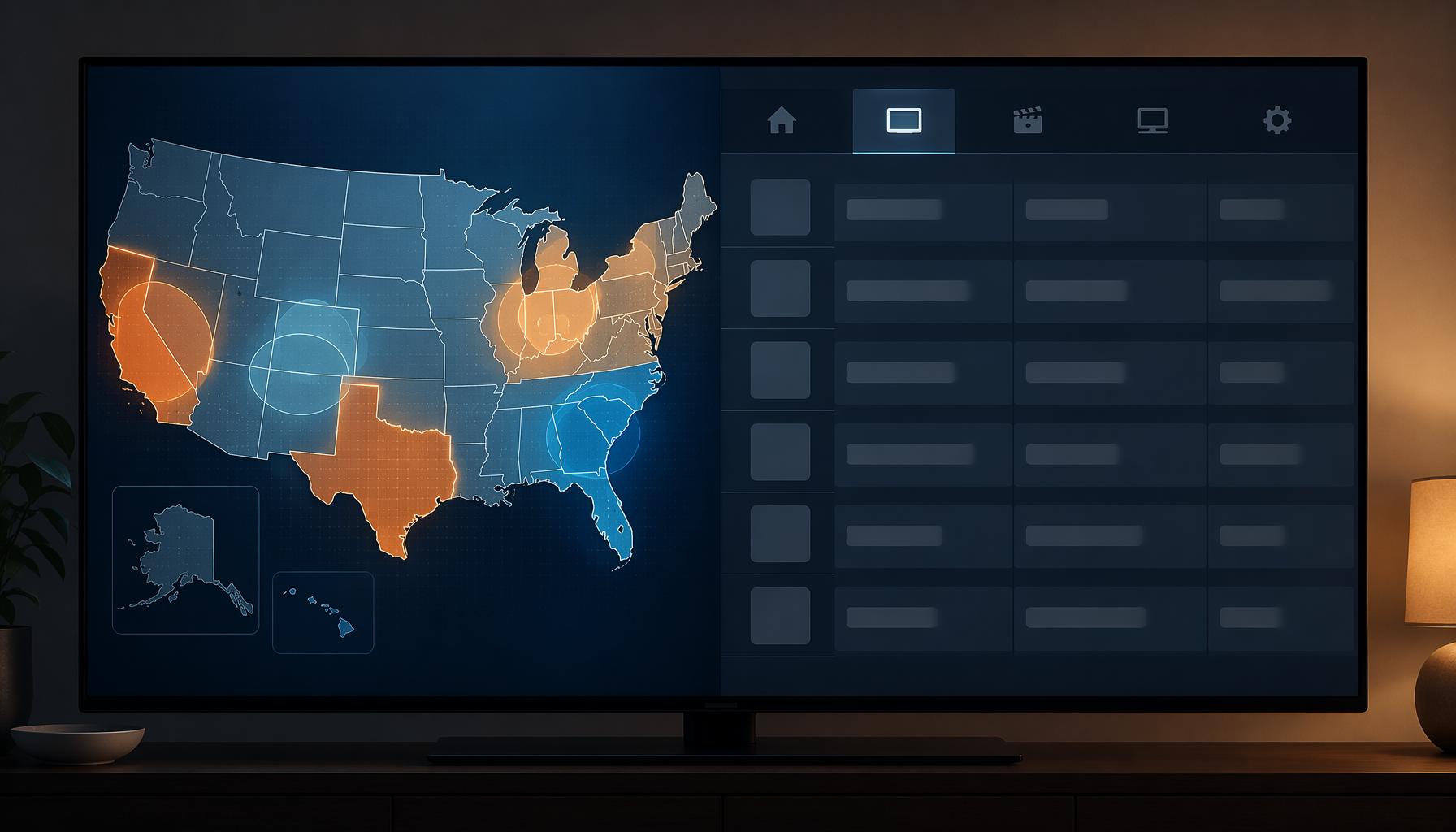
Marketers often come to YouTube TV local channel targeting expecting a familiar station buy: pick the ABC affiliate in one market, choose the 6 p.m. news or a local game, and narrow delivery to the exact audience they had in mind. As of July 19, 2026, Google still draws a harder line than that. YouTube TV carries local ABC, CBS, NBC, and Fox affiliates in each DMA, and ads are inserted into live, authenticated, non-skippable inventory through dynamic ad insertion.[1][2]
What You Can Actually Target
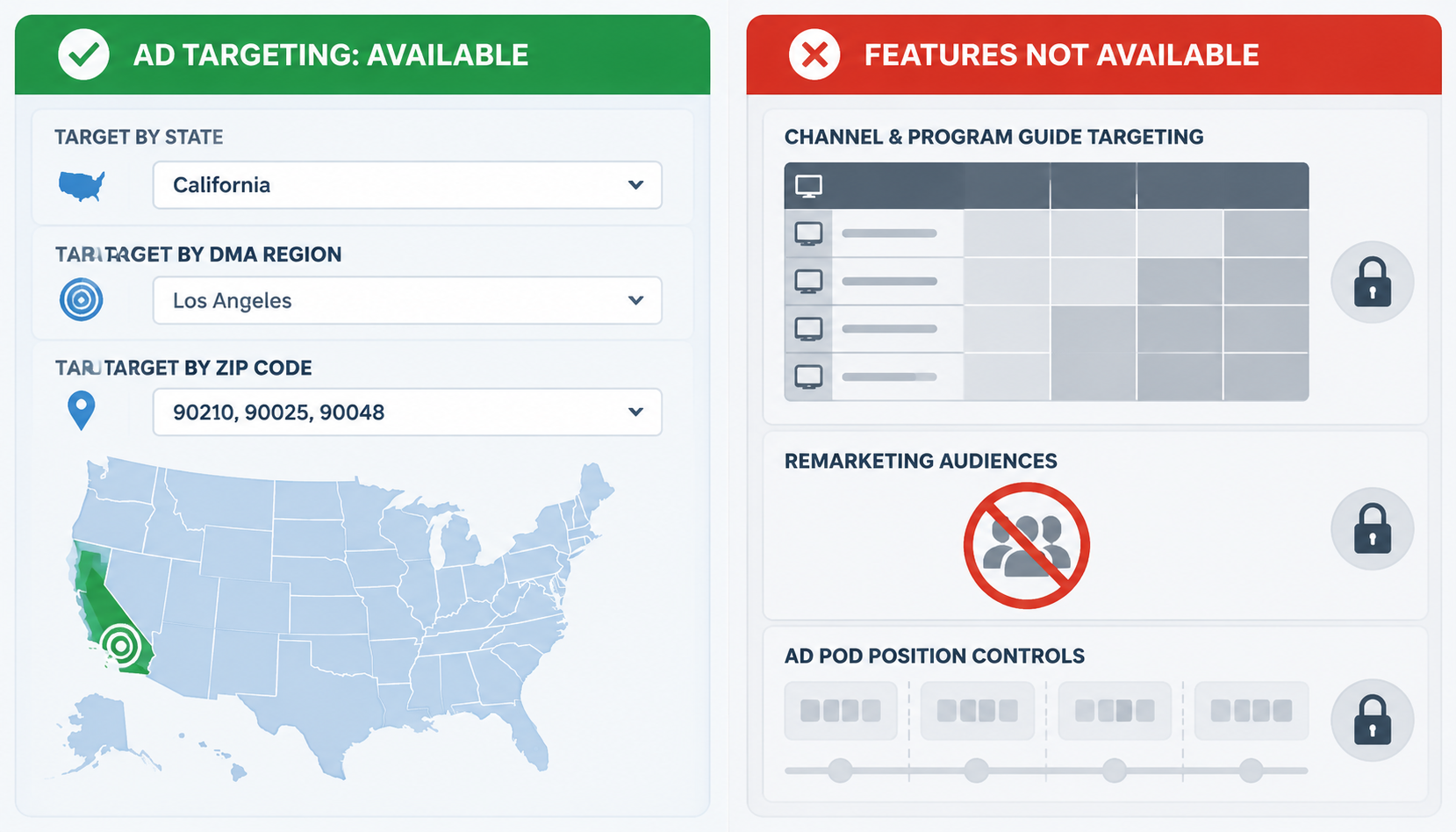
The usable control set is geographic first. Google documents state, DMA, and ZIP targeting for YouTube TV, and the platform is explicit that geography is the main way to buy into local inventory.[2]
| Control | What it means in practice |
|---|---|
| State, DMA, or ZIP targeting [2] | You buy into a defined geography, not into one station or one show. |
| Local broadcast affiliate inventory [1] | The ads land in live local avail slots across ABC, CBS, NBC, and Fox inventory in that market. |
| Broad demographic layering [2] | This is the companion layer Google recommends when geography is already doing the heavy lifting. |
| Specific channels or programs [1][3] | Not targetable in the core local buy; you can only exclude up to 10 channels. |
| Remarketing lists and ad pod position control [2] | Not available in the core YouTube TV local setup. |
Google also recommends pairing geography with broad demographics, not narrow affinity or in-market audiences. That caution matters because each extra constraint reduces the amount of eligible live-TV inventory the system can find, and a ZIP-level campaign with a tight audience segment can run out of impressions faster than a buyer expects.[2]
What You Cannot Ask For
The part many buyers want but do not get is station-level or show-level control. Google does not let you target a specific YouTube TV channel or program in the core local buy, and ad pod position control is not available either; you can exclude up to 10 channels, but that is a safety valve, not a targeting system.[1][3]
Remarketing lists are also off the table in the local YouTube TV setup, so this is not a clean place to extend a site visitor pool or run a sequential retargeting story.[2]
The practical result is that local YouTube TV behaves more like pooled premium reach inside a geography than a digital version of a local broadcast schedule.
If the question has shifted from ad mechanics to how YouTube TV audiences themselves are fragmenting, that is a different issue; see YouTube TV's Genre Plans Reshape Marketing Reach.
When The Buying Path Changes The Deal
The access path matters almost as much as the targeting rules. Direct or enterprise buying usually runs through DV360 or a managed-service setup, and Adwave, citing Gupta Media, describes an approximate $35,000 quarterly managed-service threshold for that route; Google does not publish that minimum in its own docs, so treat it as a practitioner benchmark rather than a hard universal rule.[4]
For smaller tests, Adwave describes programmatic access that can start at $50 with no minimum, which is why many regional advertisers look at aggregators before they ever ask for a direct seat.[4]
Some third-party paths may expose broader content-category filters, but that is not the same thing as choosing a specific affiliate or program in Google’s core local buy.
What The Pricing Is Telling You
Pricing reinforces the same point. Practitioner guides typically place direct or enterprise YouTube TV CPMs around $20-$35 and programmatic aggregator CPMs around $15-$25, versus roughly $4-$10 for standard YouTube ads; Adwave also cites completion rates above 90% for YouTube TV compared with roughly 30%-40% for regular skippable YouTube inventory.[4]
Adwave also summarizes a V Digital Services view that untargeted national YouTube TV buys can be 30%-50% cheaper per impression than DMA- or ZIP-targeted buys, which is another sign that geography is the cost driver, not a free add-on.[4]
That leaves the planning judgment: use YouTube TV local channels ad targeting 2025 when the brief calls for broad, premium reach in a defined geography, and skip it when the client expects a specific station, show, pod position, remarketing pool, or heavily layered audience segment.
References
- About YouTube TV ads. Google Ads Help
- About YouTube TV targeting. Google Ads Help
- YouTube TV Advertising. Tinuiti
- YouTube TV. Adwave
Comments
Join the discussion with an anonymous comment.