Will iOS 27 Safari Changes Break Your Ad Tracking?
Apple's Safari 27 release notes say nothing about ad tracking; every reported change comes from third-party analysis of beta source code. This dated, sourced tracker entry separates confirmed changes from inferred ones and explains why re-testing at the stable release, not the beta, is the milestone that matters.
- Platform
- Apple Safari
- Change category
- policy
- Effective date
- 0-09
- Change type
- policy shift
- Impact level
- Moderate
Status as of August 26, 2026
The short answer for anyone searching “ios 27 safari changes impact on ads tracking” is uncomfortable but not mysterious: Safari 27 may degrade tracking, but Apple has not announced the ad-tracking changes being circulated. Safari 27 beta material appeared at WWDC on June 8, 2026; Apple’s July 20, 2026 Safari 27 beta release notes for build 20625.1.24 are about CSS and rendering, not click IDs, pixels, or ad-network endpoints.[1][2] The tracking claims now moving through buyer Slack channels come from third-party analysis published by TAGGRS on July 6, updated July 30, and by Stape on July 16.[3][4]

| Question | What is published | Current status |
|---|---|---|
| Did Apple announce Safari 27 ad-tracking restrictions? | Apple’s Safari 27 beta materials and July 20 release notes do not describe consequential tracking changes.[1][2] | No Apple-confirmed ad-tracking change. |
| Are there reported beta-source changes? | TAGGRS and Stape report changes found through beta-source analysis and testing, including expanded click-ID stripping, Advanced Fingerprinting Protection list additions, and transport-layer blocking.[3][4] | Real risk signal, but third-party and beta-derived. |
| Has the stable release shipped? | iOS 27 general availability is expected in September 2026, and beta 7 was reported on August 24, 2026.[5] | Stable behavior is still unconfirmed. |
| Can browser-version watching answer the whole question? | TAGGRS and Seresa both report that Safari tracking rules are maintained in a separate system library that can update independently of Safari itself.[3][6] | No. Blocklists can change outside a visible Safari release. |
That distinction matters because the operational decision is not “ignore it” or “rebuild everything before September.” The decision is whether a buyer can identify what is Apple-published, what is inferred from beta code, what a vendor tested inside its own setup, and what can be reproduced in the buyer’s own accounts after stable release.
There is a reasonable reason to watch this closely. Seresa cites TechnologyChecker and Cloudflare Radar figures putting Safari at 51.8% of U.S. human mobile traffic and 26.1% globally, but those figures are still third-party context, not proof that a specific account’s attribution will fall by the same amount.[6] If your mix is heavy on iPhone Safari traffic, the exposure is practical. It is not automatically measurable from market share alone.
What Apple has actually published
Apple’s public Safari 27 beta story, so far, is not an ads story. The June 8 WebKit post is a WWDC beta overview, and the July 20 Safari 27 beta release notes list browser-engine changes such as CSS and rendering work.[1][2] That does not mean tracking behavior cannot change. It means the changes being discussed are not in the official release-note layer a buyer can point to when a CFO asks, “Did Apple say this was happening?”
Apple has already documented the broader privacy mechanisms that make these claims plausible. WebKit describes protections such as Link Tracking Protection, Advanced Tracking and Fingerprinting Protection, and tracking-prevention policy at the browser level.[7][8] But a general mechanism is not the same as a shipped Safari 27 list update affecting a named ad platform.
Through the September release window, that source hierarchy is the practical guardrail. Apple’s notes show what Apple chose to publish. WebKit source analysis can show what may be implemented or staged. Vendor tests can show what happened in a controlled environment. Stable-release account tests show what a buyer has to explain in reporting.
The three reported Safari 27 tracking changes
The reported changes are not equal in certainty, and they do not affect the same part of the measurement chain. Treating them as one giant “Safari kills ads” event is how a beta-code finding turns into an expensive, untested rebuild.
Expanded click-ID stripping
TAGGRS reports that Safari 27 beta source expands Link Tracking Protection’s click-ID list to include twclid, cn, cxt, si, and xmt, joining already covered IDs such as gclid, fbclid, and msclkid.[3] Stape separately reported internal testing in which twclid was stripped in private mode.[4]
If this behavior ships in the same form, the affected surface is straightforward: platforms that depend on URL-carried click IDs would have less deterministic connection between the ad click and the later website event. X is the obvious one because of twclid. YouTube and Threads are in the conversation because of the reported si and xmt additions. Google, Meta, and Microsoft are not new to this class of pressure because gclid, fbclid, and msclkid are already part of the Link Tracking Protection discussion.[3]
The evidence label is the important part: beta-source report plus vendor test, not stable Safari confirmation. In a real account, the test is simple enough to plan: click live ads or controlled test links in stable iOS 27 Safari, compare the URL parameter at click, landing, redirect, and analytics ingestion, and separate regular browsing from private browsing. Do not average those contexts together and call it a platform-wide loss.
Advanced Fingerprinting Protection list additions
TAGGRS reports that the Advanced Fingerprinting Protection list in Safari 27 beta adds the LinkedIn Insight Tag domain snap.licdn.com, along with Tealium, Segment, DPG Media, and Blueonic.[3] Seresa’s write-up frames the same family of changes as unconfirmed and emphasizes that the beta behavior appears to involve per-script permission revocation rather than a simple binary block.[6]
That distinction matters for LinkedIn and tag-management setups. A blocked network call, a script whose permissions are reduced, and a script that loads but loses access to some identifying surface do not produce the same failure mode. One may show up as missing events. Another may show up as events that arrive with weaker identifiers. Another may only affect a subset of browser contexts.
This is also where a buyer should be cautious with vendor language. A server-side tracking vendor has an obvious incentive to read every browser privacy update as a reason to move more measurement server-side. Server-side collection may reduce some forms of client-side fragility, but the beta-source fact being reported here is narrower: a protection list may include more scripts and domains than before.
Transport-layer blocking
The most architecturally interesting reported change is transport-layer blocking. TAGGRS describes Safari 27 beta behavior that checks destination IP ranges associated with ad networks before a connection completes, with bat.bing.com cited as an example of a request that can be cut regardless of the script’s origin.[3] Seresa also treats IP-range blocking as part of the Safari 27 risk set while keeping the “unconfirmed until stable” label visible.[6]
If this ships, it is a different class of measurement problem from URL-parameter stripping. A renamed script, a different container, or a first-party-looking path may not help if the browser evaluates the destination before the request completes. For Microsoft Ads and Bing-related measurement, this is the item to test directly rather than infer from pixel UI volatility.

| Reported change | Potentially exposed platforms or tags | Evidence level today |
|---|---|---|
| Expanded Link Tracking Protection click-ID list | X, YouTube, Threads, plus already discussed Google, Meta, and Microsoft click IDs | Third-party beta-source analysis; Stape internal test for twclid in private mode; stable unconfirmed.[3][4] |
| Advanced Fingerprinting Protection list additions | LinkedIn Insight Tag, Tealium, Segment, DPG Media, Blueonic | Third-party beta-source analysis; impact inferred from list membership and permission behavior; stable unconfirmed.[3][6] |
| Transport-layer blocking by destination IP ranges | Microsoft/Bing-style endpoint requests such as bat.bing.com | Third-party beta-source analysis and secondary corroboration; stable unconfirmed.[3][6] |
Why watching the Safari version is not enough
The more annoying finding is structural: the blocklists are not cleanly tied to the visible Safari version. TAGGRS and Seresa both report that Safari’s tracking rules live in a separate system library that can update independently of the browser release itself.[3][6]
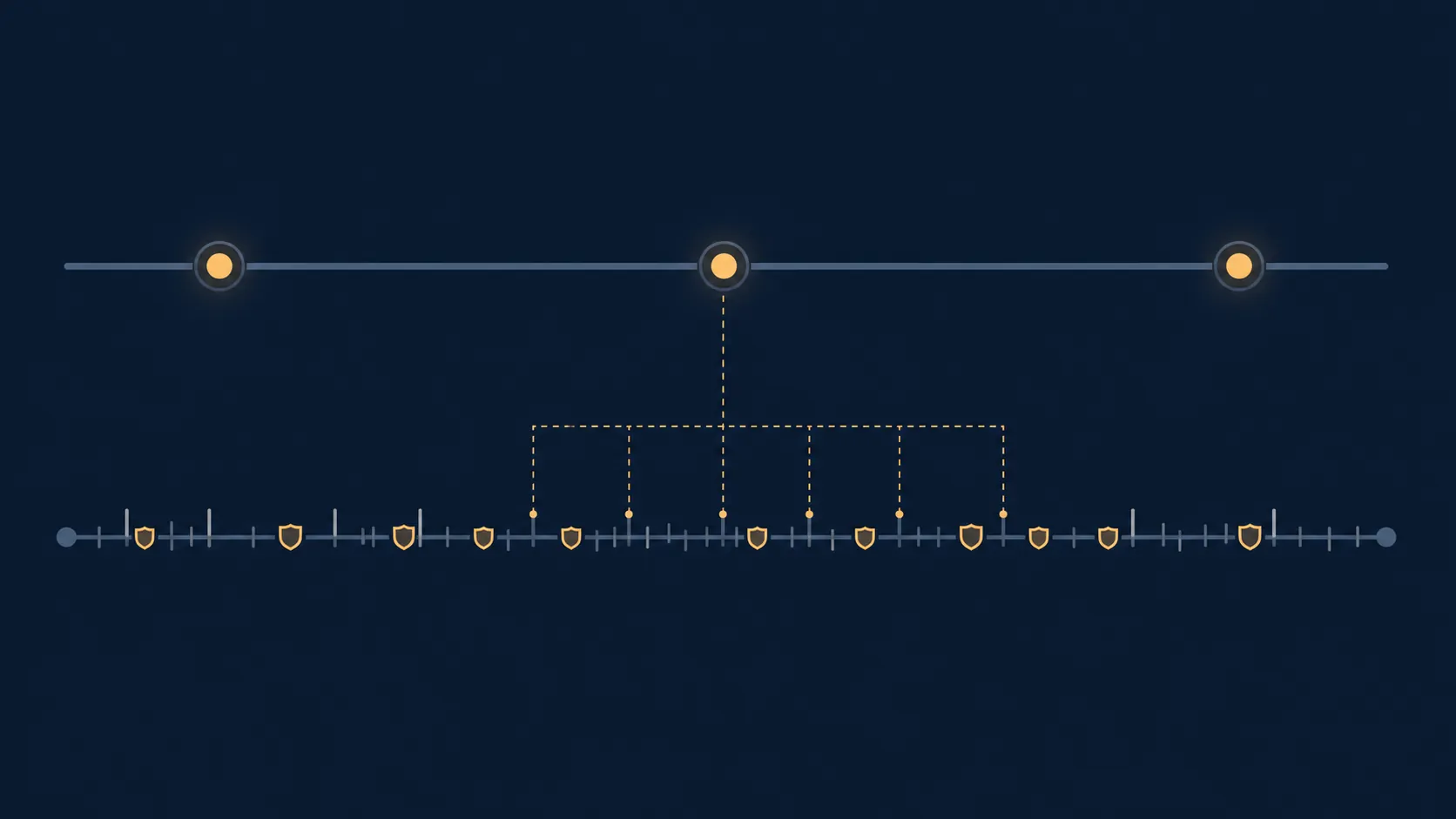
That makes the usual release-calendar habit inadequate. A team can test Safari 27 on launch week, get a clean result for one click ID, and still see a later change if the list updates outside a headline browser release. Conversely, a beta-source finding can look severe and then arrive in stable in a narrower form, a phased form, or not at all in the browsing context the buyer cares about.
For media buyers, the consequence is procedural. Keep a dated test log by browser context, platform, click ID, endpoint, and event path. If your team already follows dated platform-change logs, this belongs beside the broader Google, Meta, and HubSpot changelog rather than in a one-time migration memo. The same measurement loss that affects reporting can also affect automation systems that learn from conversion signals, including the Meta Advantage+ workflows covered in the creative controls benchmark and the Advantage+ decision matrix.
The Safari 26 precedent is the reason not to panic
Safari 26 is the useful precedent because it cuts against both lazy reactions. It was not safe to dismiss the beta reports; they were directionally relevant. It was also not safe to treat beta behavior as stable-release fact.
In September 2025, Louder described iOS 26 beta tests in which gclid, fbclid, and dclid were removed, warning advertisers about click-ID loss.[9] Later checks were more nuanced. TAGGRS’ January 2026 validity check and Optizent’s March 2026 write-up both described a stable-release reality in which Safari 26 did not fully behave like the early fear: click IDs were not stripped in regular browsing in the same broad way beta coverage had suggested.[10][11]
That does not make the Safari 27 reports wrong. It makes them unfinished. Beta findings can identify the direction of travel, the domains under review, and the protections Apple is experimenting with. They cannot, by themselves, tell a buyer what will happen to last-click reporting, modeled conversions, offline import match quality, or platform learning once the stable build is on customers’ phones.
The Safari 26 lesson is also useful when someone forwards a vendor demo link as the proposed answer. A vendor can be right about the direction and still overstate the timing, scope, or certainty. The buyer still needs a stable-release test, not just a screenshot of beta behavior.
What to verify in your own accounts
The practical test plan should be boring. That is a virtue. It should produce evidence you can hand to a client, finance lead, or platform rep without asking them to trust a newsletter thread.
- Separate regular Safari from private browsing. Do not blend the two when checking parameter stripping or missing events.
- Test the named click IDs directly: gclid, fbclid, msclkid, twclid, and any current platform parameters used by YouTube, Threads, LinkedIn, or X campaigns.
- Record the full path: ad click, redirect, landing URL, tag firing, server request, platform event receipt, and final attribution surface.
- Check Microsoft/Bing endpoints separately if bat.bing.com or related requests matter to your measurement stack.
- Compare iOS 27 stable Safari against current stable iOS Safari, not only against Chrome or desktop browsers.
- Keep the test date with the result. Because the rule library may update independently, an undated pass/fail result will age badly.
The first accounts to watch are not necessarily the biggest spenders. Watch the accounts where optimization depends heavily on browser-observed conversions, where Meta or Google automation is being asked to make creative and audience decisions from thin signal, and where Safari share is high enough that a reporting dip would change budget decisions. For teams already keeping dated platform-change notes, this belongs beside the broader platform-change timeline rather than as a standalone privacy scare.
What to keep outside the Safari browser question
App Tracking Transparency changes in Europe are a separate app-side story. AdAttributionKit or SKAdNetwork beta rumors are also separate unless they come from verifiable sources. They may matter to mobile app advertisers, but folding them into a Safari browser entry makes the evidence worse, not better.
The Safari 27 browser question is narrower: whether stable Safari strips or weakens named click IDs, restricts named scripts, or blocks named ad-network destinations in ways that change web conversion measurement. That is enough to track without turning the page into a general-purpose iOS privacy anxiety bin.
The monitoring posture
Treat the Safari 27 beta findings as real risk signals. Do not treat them as stable-release facts. The stable iOS 27 release expected in September 2026 is the first meaningful milestone for account-level testing, and even that will not be the last word if the protection lists continue updating independently of visible Safari releases.[3][5][6]
If stable Safari 27 reproduces the beta behavior, buyers will need to document which platforms lost which identifiers in which browser contexts. If it does not, the beta reports still remain useful as a watchlist for the next blocklist update. Either way, the defensible answer today is dated and conditional: reported in beta source, not announced by Apple, not yet confirmed in stable.
References
- News from WWDC26: WebKit in Safari 27 beta, WebKit Blog, June 8, 2026.
- Safari 27 Beta Release Notes, Apple Developer Documentation, July 20, 2026.
- Safari 27 tracking protection: What it means for conversion measurement, TAGGRS, July 6, 2026, updated July 30, 2026.
- Safari 27 Update: Tracking Protection Changes, Stape, July 16, 2026.
- iOS 27, Wikipedia.
- What Safari 27 Changes for WooCommerce Tracking - and What's Unconfirmed, Seresa.
- Private Browsing 2.0, WebKit Blog.
- Tracking Prevention in WebKit, WebKit.
- iOS 26: Apple's latest privacy salvo and what it means for advertisers, Louder, September 2025.
- Safari 26 tracking changes explained, TAGGRS.
- iOS 26 and Safari Tracking Changes, Optizent, March 2026.
Primary source: https://developer.apple.com/documentation/safari-release-notes/safari-27-beta-release-notes