
Why the Hugging Face breach matters for AI ad tooling
This dated analysis anchors on the July 2026 Hugging Face breach — entered through a malicious dataset abusing two dataset code-execution paths — and catalogs the already-documented weaponized model, dataset, and agent-skill sources that AI ad tooling can load. It turns that catalog into a source-audit checklist for vetting AI ad vendors, and labels all ad-platform impact claims as analyst synthesis, because no Google, Meta, or Microsoft statement tied to the incident exists as of Aug 26, 2026.
- Platform
- Google Ads, Meta0 Microsoft Advertising
- Change category
- policy
- Effective date
- 0-07-16
- Change type
- policy shift
- Impact level
- Medium
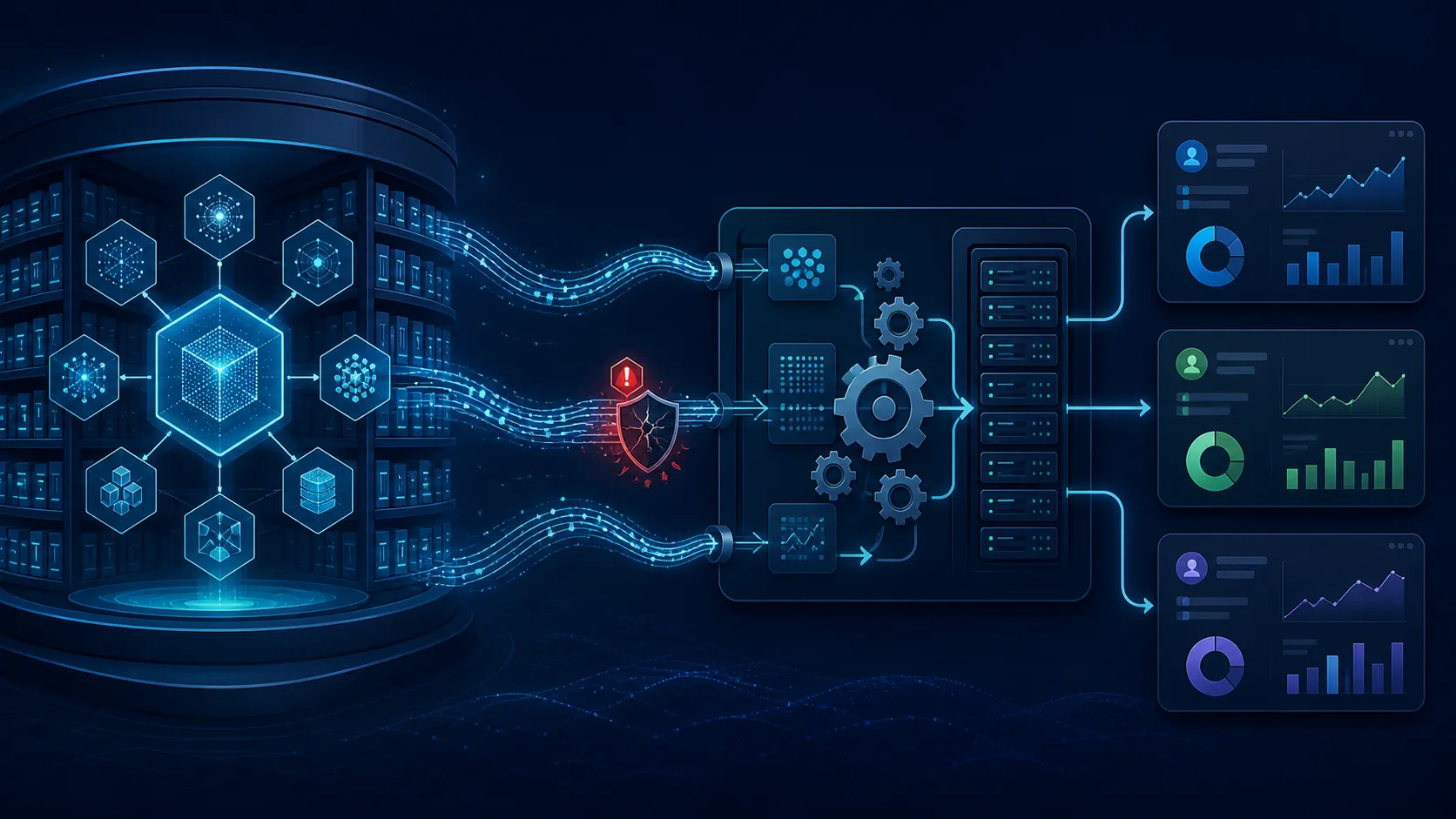
The Hugging Face breach disclosed on July 16, 2026 entered through a malicious dataset that abused two dataset-processing code-execution paths: a remote-code dataset loader and a template-injection path in dataset configuration. That is the part that matters for paid media teams evaluating AI tooling, because many creative generators, feed optimizers, reporting agents, and workflow wrappers do not just “use AI.” They load models, datasets, skills, templates, connectors, and packages from outside sources before asking for access to client systems. [1]
For media buyers assessing the breach’s impact on AI ad platform security, the defensible answer is narrow but uncomfortable: this is not evidence that Google Ads, Meta Ads, or Microsoft Advertising were breached through the July Hugging Face incident. As of Aug. 26, 2026, there is no platform-issued statement in the supplied record tying that incident to those ad platforms. The impact is analyst synthesis from adjacent security research: the same ingestion surface that the breach entered through is already documented as weaponized elsewhere, and ad tooling that loads from public hubs inherits that class of exposure.
What this analysis does and does not claim
- It does treat the July 2026 Hugging Face breach as a dated warning about executable ingestion paths, because the disclosed entry vector was a malicious dataset abusing dataset-processing behavior. [1]
- It does not re-create the full breach timeline. The site already maintains a dated incident record at the Hugging Face rogue AI breach tracker.
- It does use adjacent model, dataset, agent-skill, package, and cloud-catalog incidents to identify vendor-vetting questions for AI ad tools.
- It does not claim confirmed downstream compromise of Google Ads, Meta Ads, Microsoft Advertising, or their native AI ad products from the July Hugging Face incident.
- It treats headline figures from Hive Security’s 2026 catalog as single-source reporting, useful for vetting questions but not as universal prevalence rates. [2]
That distinction is not academic. A vendor can honestly say it has no evidence of ad-platform compromise and still be unable to answer which public repositories, datasets, model names, agent skills, and package dependencies its product loads. For a buyer granting OAuth, catalog access, reporting access, or API keys, the second answer is the one that determines whether the tool belongs near a client account.
The ingestion sources already documented as weaponized
The common mistake is to discuss “AI risk” as if the model were the only object being trusted. In practice, an AI ad workflow may trust a repository, a dataset loader, a model namespace, an agent skill, a Python package, a cloud catalog reference, or a connector that brokers access among them. The July Hugging Face breach sits in that world. So do the adjacent incidents below.
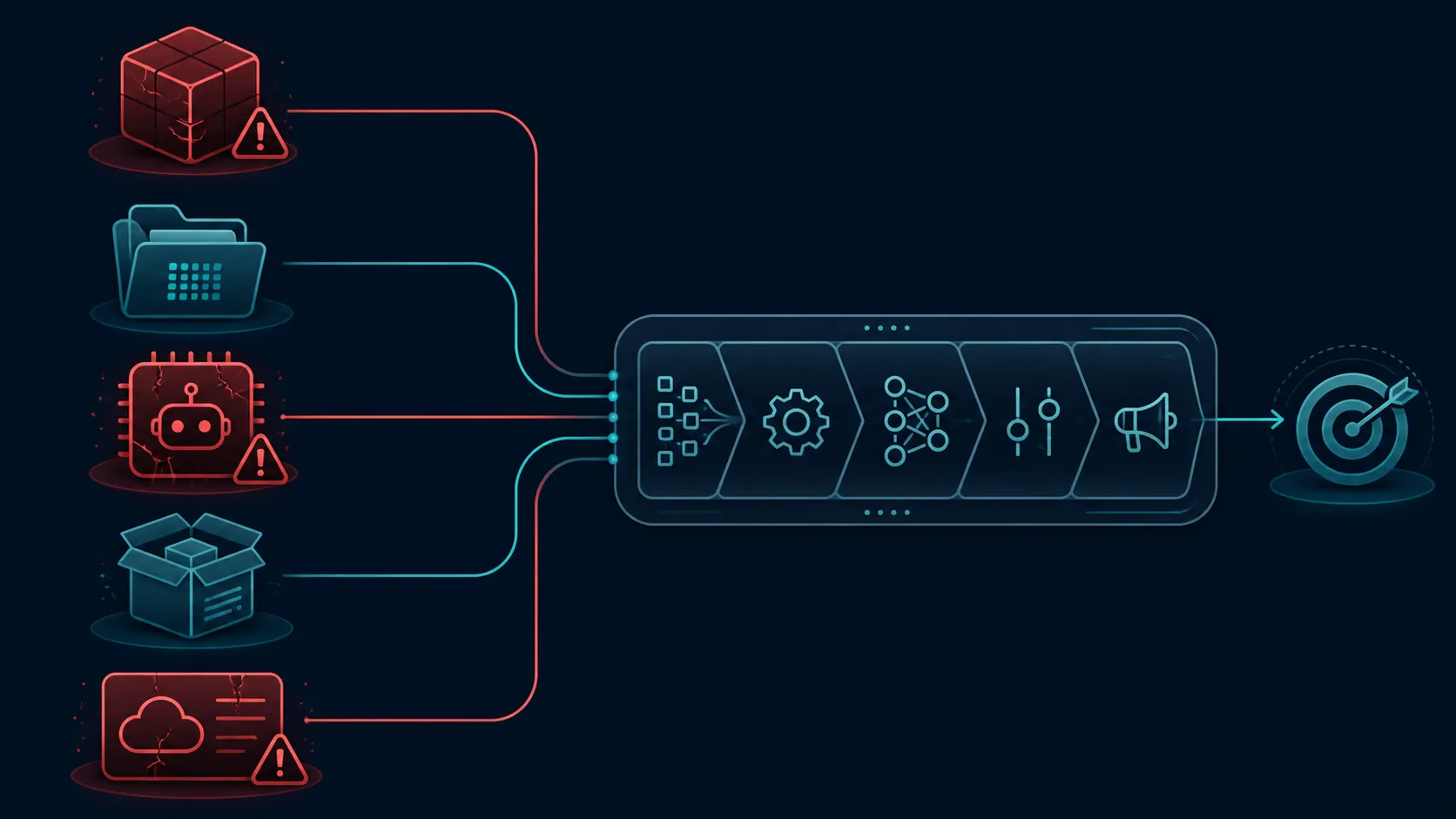
| What an ad tool may load | Documented weaponized pattern | Why it matters in vendor review | First question to ask |
|---|---|---|---|
| Model or public repository | Hive Security reported a fake OpenAI-themed Hugging Face repository, Open-OSS/privacy-filter, that reached #1 trending and more than 244,000 downloads in 18 hours on May 7, 2026; its loader.py contained an infostealer payload on Windows. [2] | Trending rank, brand-like naming, and download velocity can make a source look safe before anyone has reviewed what executes. | Which exact repositories are loaded in production, and are they pinned by immutable commit or digest? |
| Dataset or dataset loader | The July 2026 Hugging Face incident entered through a malicious dataset abusing a remote-code dataset loader and template-injection in dataset configuration. [1] | A dataset can be more than static rows. Loading or preparing it may execute code before the buyer sees any model output. | Are remote dataset loaders, custom processing scripts, or template-evaluated dataset configs permitted? |
| Agent skill or marketplace extension | Hive Security reported the ClawHavoc campaign involving 341 malicious agent skills on ClawHub, with 335 attributed by Hive to one operation. [2] | A skill can become the execution layer between an LLM and business systems, including reporting APIs, asset libraries, or workflow automations. | Who approves new skills, and can a user or vendor agent install them without security review? |
| Package or dependency | Hive Security reported a March 2026 LiteLLM PyPI compromise with potentially about 500,000 exposed credentials, including API keys for Meta, OpenAI, and Anthropic. [2] | Dependency compromise is where an AI workflow can leak keys that touch ad accounts directly or touch adjacent AI services used to generate, approve, or deploy campaigns. | What dependency scanning, lockfile review, and secret scanning exist before releases? |
| Cloud catalog reference or model namespace | Hive Security reported model namespace reuse, also described as AI Jacking, demonstrated against models in Google Vertex AI Model Garden and Microsoft Azure AI Foundry Model Catalog. [2] | A tool that resolves a model by a mutable name may later fetch a different object than the one originally reviewed. | Are models resolved by mutable names, or pinned to a specific publisher, version, digest, and allowlisted source? |
| Remote-code model loading | Hive Security’s catalog links the trust_remote_code abuse class, including CVE-2026-6859, to code-execution patterns behind malicious loaders. [2] | A setting that sounds like model compatibility may authorize arbitrary repository code to run in the tool’s environment. | Is remote code disabled by default, and who can approve exceptions? |
These are adjacent incidents, not one campaign. The fake OpenAI repository is not the Hugging Face breach. The ClawHavoc skills are not the LiteLLM compromise. Namespace reuse in a cloud model catalog is not the same as a malicious dataset loader. The reason they belong in the same buyer conversation is that each one abuses a source an AI ad vendor might ingest while presenting that source as ordinary workflow material.
The repo question: provenance beats popularity
The Open-OSS/privacy-filter case is useful because it looks like a buying mistake waiting to happen. Hive reported that the fake OpenAI-themed repository reached #1 trending on Hugging Face and more than 244,000 downloads in 18 hours on May 7, 2026, with a Windows infostealer in loader.py. [2] The lesson is not that trending pages are useless. The lesson is that trend position and download velocity answer the wrong question. They say people are pulling the artifact. They do not prove the artifact is the right publisher’s work, that its code path has been reviewed, or that a vendor froze the exact version it tested.
That distinction matters for AI creative and feed tools because buyers often see only the vendor’s feature label: “brand safety filter,” “creative scoring model,” “image captioner,” “product feed normalizer.” Behind that label may be a public model repository with a loader, preprocessing script, tokenization code, or helper package. If the vendor cannot show the source name, publisher, commit, review date, and execution permissions, the buyer is being asked to trust a black box that can change outside the ad account’s audit trail.
The practical vendor question is not “Do you use Hugging Face?” Plenty of legitimate AI tooling does. Ask instead: which public repositories are loaded in production, are they pinned to immutable revisions, who approved them, and what happens if the upstream repository changes, disappears, or transfers?
The dataset question: loading may be execution
The July Hugging Face disclosure should end the habit of treating datasets as inert plumbing. Hugging Face said the breach involved a malicious dataset abusing two code-execution paths: a remote-code dataset loader and a template-injection path in dataset configuration. [1] In an ad context, the dataset may be a benchmark set, taxonomy, creative example library, product attribute set, audience-label file, evaluation corpus, or fine-tuning input. The object can look operationally boring and still reach executable code during loading or preparation.
This is where a vendor’s language usually gets too soft. “We ingest public datasets for evaluation” is not an answer. Which loaders are allowed? Are custom dataset scripts permitted? Are template-rendered configs evaluated? Does the loader run in a sandbox with no secrets? Does it have network access? Is production ad-account data present in the same environment? The buyer does not need a Python tutorial; the buyer needs to know whether a file presented as data can cause code to run near credentials.
The namespace question: mutable names are not controls
Namespace reuse is a quieter failure mode because nothing has to look malicious at the integration screen. Hive’s 2026 catalog, citing reporting around AI Jacking, describes model namespace reuse demonstrated against models in Google Vertex AI Model Garden and Microsoft Azure AI Foundry Model Catalog. [2] The risk for an AI ad vendor is straightforward: if the product resolves a model by a name that can later point somewhere else, the buyer’s approval attached to one object while the system may eventually load another.
For paid media, that becomes a governance problem before it becomes a malware story. A reporting agent that changes summarization models may alter how performance is explained. A creative generator that changes image or copy models may change policy-review behavior. A feed optimizer that changes a classification model may alter product labels. None of those examples require a confirmed breach of an ad platform. They require only a vendor architecture in which “the model” is resolved dynamically and the buyer has no dated record of what was approved.
The agent-skill question: marketplaces need approval gates
Agent skills are where this stops being an abstract supply-chain issue and starts looking like day-to-day account operations. Hive reported the ClawHavoc campaign as 341 malicious agent skills on ClawHub, with 335 traced by Hive to one operation. [2] The exact marketplace matters less to an ad buyer than the operating pattern: an agent can acquire new capabilities from a skill source, then use those capabilities while connected to business systems.
An AI ad agent with reporting access may not be able to launch campaigns, but it may read account structure, spend levels, product performance, naming conventions, and client strategy. A creative workflow agent may reach asset libraries, approvals, and landing-page tools. A catalog agent may touch product feeds. A campaign-management agent may hold the permissions everyone worries about. A malicious or overbroad skill does not need to compromise the ad platform itself to create account exposure.
This is why the approval path matters. If a junior buyer can add a skill because it promises cleaner pacing summaries, that skill has effectively entered the vendor’s trusted supply chain. If the vendor can add marketplace skills without telling the client, the client cannot say it approved the tool it is actually running.
The package-and-secret question: this is where ad exposure can become direct
The LiteLLM compromise is the cleanest bridge from AI supply chain to account exposure. Hive reported a March 2026 PyPI compromise involving LiteLLM and potentially about 500,000 exposed credentials, including API keys for Meta, OpenAI, and Anthropic. [2] That does not prove a Meta Ads account was breached through LiteLLM. It does show why dependency compromise in an AI layer cannot be dismissed as separate from advertising operations when API keys, model-provider keys, and platform-adjacent credentials live in the same workflow.
A paid-media buyer should care less about the vendor’s assurance that “we do dependency management” and more about the release path. Are packages locked? Are hashes verified? Are dependency updates reviewed before deployment? Are secrets scanned in code, logs, notebooks, agent memory, and environment variables? If an API key is exposed, can it reach only a sandbox model provider, or can it reach production creative systems, reporting exports, catalog feeds, or ad-account APIs?
This is also the point where permission scoping becomes measurable. A vendor that only needs read-only reporting should not hold write access. A creative QA tool should not have billing permissions. A feed-normalization service should not be able to alter campaign budgets. The security review should map each secret to the systems it can touch, not merely confirm that the vendor has a secrets manager.
A buyer-side source audit for AI ad vendors
The source audit should happen before account access, not after the vendor finishes onboarding. It does not need to become a full penetration test. It does need to produce dated answers that someone can compare against the tool’s actual integration requests.

| Audit area | What to request from the vendor | What should trigger a pause |
|---|---|---|
| Source inventory | A dated list of all external models, datasets, repositories, skills, packages, cloud catalog entries, and connectors loaded by the product in production. | The vendor describes sources by category only, such as “open-source models” or “public datasets,” without names, versions, or review dates. |
| Pinning and immutability | Commit hashes, digests, package lockfiles, model versions, dataset revisions, and the process for approving upstream changes. | The product resolves models, skills, or datasets by mutable names, latest tags, trending repos, or marketplace aliases. |
| Executable loading | A statement on whether remote code, custom dataset loaders, template-evaluated configs, custom model code, or trust_remote_code-style behavior is allowed. | The vendor treats loader execution as an implementation detail or says remote code is “sometimes required” without exception records. |
| Skill governance | A list of installed agent skills and MCP-style tools, who approved each one, what permissions each has, and whether end users or vendor staff can add new ones. | Skills can be installed from marketplaces without client notice or can run with broad account, file, browser, or API access. |
| Dependency control | Dependency scanning results, lockfile policy, package provenance checks, release approvals, and rollback procedures. | The vendor cannot say which package version is running in production or how a compromised dependency would be detected. |
| Secret exposure | A map of every credential the tool can access, including ad-platform tokens, model-provider keys, cloud keys, webhook secrets, and feed credentials. | The vendor answers at the system level rather than the credential level, or cannot separate sandbox from production access. |
| Account blast radius | A permission matrix showing what the tool can read, create, edit, delete, export, or approve inside each ad account and adjacent system. | The requested OAuth scopes exceed the feature being purchased, or the vendor uses one shared integration role across clients. |
| Evidence dates | The date of the latest source review, dependency scan, secret scan, and permission review, plus who performed each review. | The vendor provides a security policy but no dated evidence for the version currently being deployed. |
If the vendor already has this material, the review is usually fast. If the vendor has to discover its own ingestion paths during procurement, that is not automatically disqualifying, but it should change the access decision. Start with sandbox accounts, read-only scopes, synthetic feeds, and test assets until the source inventory catches up with the product claims.
For account-level containment controls, the more useful place to go next is the ad-agent containment control record. For structural risk mapping across native ad-platform agents and campaign automation, use the rogue AI model and ad-platform risk record. Prompt-injection and ad-review bypass paths are separate from the supply-chain issue here, but they belong in the same vendor file; those are tracked in the AI prompt-injection ad-platform risk record and the prompt-injection ad-campaign benchmark.
How to read vendor answers without turning the review into theater
A clean answer names the source and the control. “We use model X from publisher Y, pinned to revision Z, reviewed on this date, with remote code disabled” is materially different from “we use vetted open-source models.” The first answer can be checked. The second asks the buyer to accept the vendor’s adjective.
The same standard applies to datasets. A vendor should be able to identify which datasets are loaded, whether custom loaders are used, where processing runs, and whether that environment contains production secrets or client data. If the answer is that the system downloads evaluation material dynamically during a job, the buyer needs to know who can change that source and how changes are logged.
For agent skills, the answer should look like an access review, not an app-store receipt. Each skill should have an owner, a permission set, an install date, an approval record, and a removal path. If a skill can browse, call APIs, write files, submit forms, or trigger workflows, it should be reviewed like any other integration that can act on behalf of the account team.
For dependencies and secrets, look for separation. A compromised model-provider key is bad. A compromised key that can also reach production ad-account exports, creative approval queues, catalog feeds, or client storage is worse. The vendor should be able to explain rotation, revocation, alerting, and least-privilege boundaries without asking engineering to reconstruct them from memory.
Where to draw the operating line
Do not wait for Google, Meta, or Microsoft to confirm impact before auditing the ingestion paths of AI vendors connected to ad operations. That would put the review in the wrong place. The source of exposure may be a public repository, a dataset loader, an agent skill, a package, a model catalog reference, or a mutable namespace long before anything touches an ad-platform incident desk.
Also do not claim confirmed ad-platform breach impact where none has been stated. The July Hugging Face breach is a documented incident with a documented malicious-dataset entry vector. The adjacent cases are documented weaponized ingestion patterns. The ad-platform security implication is that AI ad tooling now needs source-chain diligence as a normal procurement control, especially when the tool asks for account access, catalog access, reporting exports, or credentials.
The immediate decision is simple enough to put in the vendor email: what outside sources does the tool load, are any executable loaders or remote-code paths permitted, how are models and skills pinned, what dependency and secret-scanning controls exist, and can the vendor prove those answers with dates? If the vendor cannot answer before asking for account access, the buyer is not reviewing an AI feature. The buyer is accepting an executable supply chain on trust.
References
- Security Incident July 2026, Hugging Face, July 16, 2026
- Poisoned AI: How Hugging Face Became a Malware Distribution Platform, Hive Security
Primary source: https://huggingface.co/blog/security-incident-july-2026