
Is AI data center power demand raising ad costs?
A dated evidence ledger showing whether AI data center power demand is actually raising CPMs, CPCs, and platform fees in 2026. Each signal is labeled proven, inferred, or not yet visible, so media buyers can re-forecast budgets on checkable evidence rather than vendor claims.
- Platform
- Google Ads0 Meta
- Change category
- bidding
- Effective date
- 0-08-25
- Change type
- default-on change
- Impact level
- Moderate
The Q3 2026 answer: real cost layer, wrong default explanation
AI data center power demand is now large enough to belong in ad-tech cost monitoring. It is visible in 2026 electricity consumption, hyperscaler capex, free-cash-flow strain, and at least one major platform’s price-per-ad disclosure. It is not yet the main explanation for the CPM or CPC inflation most buyers are dealing with this quarter. Gartner’s June 2026 data center electricity numbers, CNBC’s hyperscaler capex picture, Meta’s Q2 2026 ad-price and cost disclosures, and Digiday’s buyer-reported AI Max search CPC pressure all point in the same direction: the infrastructure cost is real, but the current ad-cost surface is still mostly showing auction pressure, not a clean electricity pass-through [1][2][3][4].
For the keyword-level question — ai data center power demand impact on ad tech costs — the useful split is between two channels. The first is fast and already visible: AI-search changes, fewer easy clicks, more automated bidding, and more advertisers crowding the same auctions. The second is slower: electricity, GPUs, cooling, cloud capacity, and inference workloads pressing on platform and ad-tech margins before they show up as fees, take rates, or platform pricing.
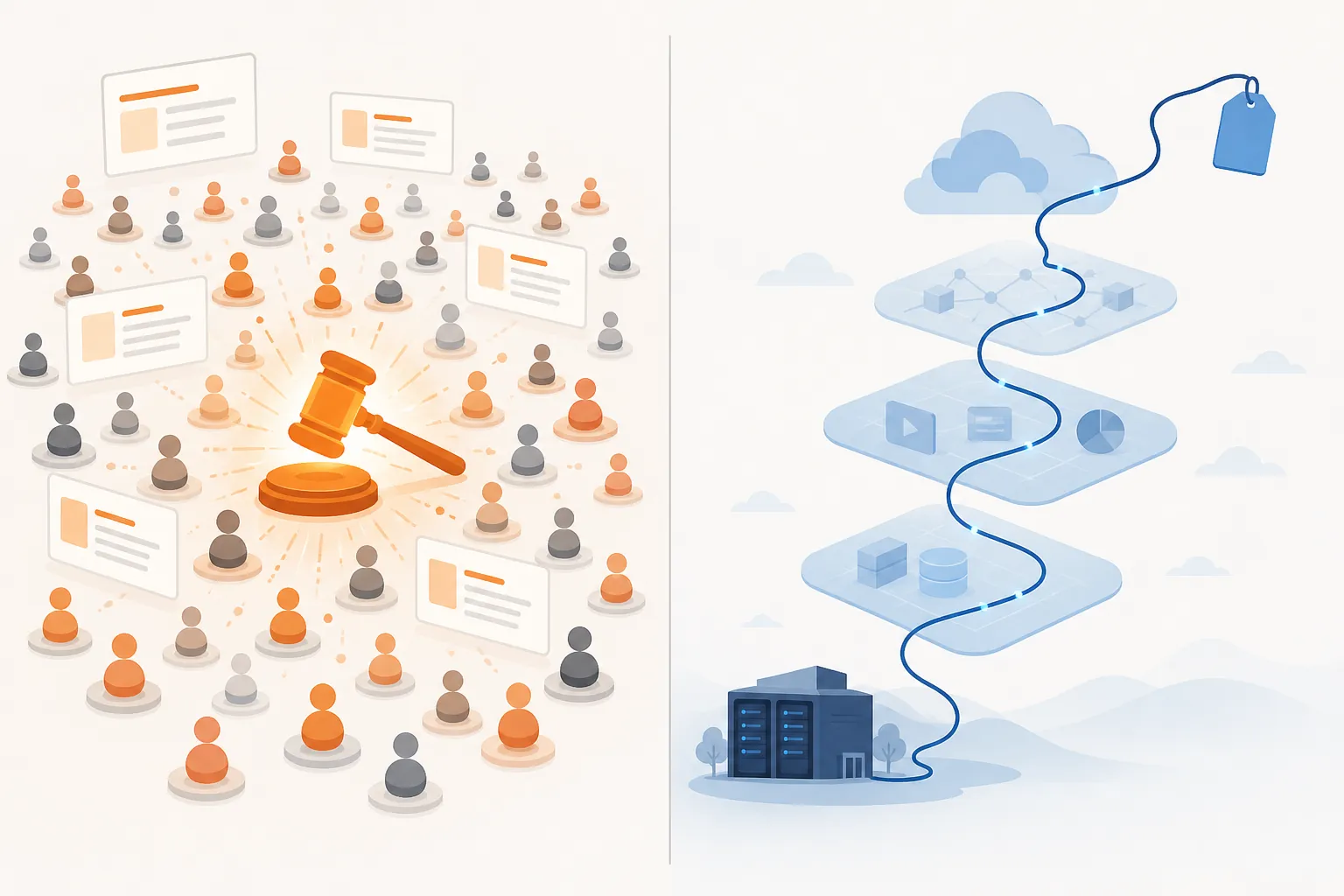
Those channels should not be blended just because both contain the word AI. A buyer can re-forecast next month’s search budget from auction crowding evidence. Power-cost pass-through needs a different treatment: watch it as a lagged risk line until platform disclosures, cloud contracts, SSP fees, DSP fees, or CPM/CPC movement make it closer to the account.
Evidence ledger, last reviewed August 25, 2026
| Date | Source | Observed signal | Ad-cost relevance | Label |
|---|---|---|---|---|
| June 10, 2026 | Gartner | Data center electricity consumption grew about 26% in 2026 to 565 TWh. AI-optimized servers used 175 TWh, or 31% of data center power, and that AI-optimized server power grew 84%. Gartner expects AI-optimized servers to surpass conventional servers in 2027 [1]. | Proves the power-demand layer is no longer abstract. It does not prove that a buyer’s CPM or CPC rose because of electricity. | Proven for power demand; inferred for ad costs |
| Feb. 6, 2026 | CNBC | The four hyperscalers were projected to spend nearly $700 billion combined on 2026 capex, up more than 60% from 2025, with free cash flow falling sharply across the group [2]. | Shows AI infrastructure is pressuring platform economics before any direct media-price proof. Relevant because the largest ad platforms and cloud providers sit inside this capex cycle. | Proven for capex and cash-flow strain; inferred for ad-cost pass-through |
| July 29, 2026 | Meta | Meta reported Q2 2026 average price per ad up 12% year over year on 14% higher impressions. Ad revenue was $59.36 billion, up 27%; total costs rose 55%; free cash flow was $784 million versus $8.55 billion in Q2 2025; full-year capex guidance rose to $130 billion to $145 billion [3]. | This is the cleanest dated platform-price datapoint in the record. It proves Meta ad prices rose while Meta’s cost and capex pressure intensified. It does not isolate electricity as the cause. | Proven for Meta ad-price increase and platform cost pressure; inferred on power-cost causality |
| May 6, 2026 | Digiday | One year after Google AI Max launched, buyers reported search CPC increases of 10% to 15% typically and up to 25% for some clients. Clients raised search budgets 7% to 15% year over year, and Adthena counted 35% growth in search auction participants [4]. | This is closest to what paid-search buyers are feeling in accounts. The reported mechanism is auction crowding in the AI-search environment, not electricity. | Proven for buyer-reported CPC pressure and auction-participant growth; not proof of power pass-through |
| May 20, 2025 | MIT Technology Review | Inference accounts for 80% to 90% of AI computing power [5]. | Matters because inference is the recurring workload layer behind AI bidding, targeting, creative generation, and auction systems. It makes the cost channel more plausible than a one-time training-cost story. | Proven for inference share; inferred for ad-tech fee pressure |
| 2025 executive summary | IEA | The IEA describes AI server electricity demand as growing about 30% per year through 2030 and gives wide forecast ranges for future data center power use, including 700 TWh to 1,700 TWh by 2035 across IEA cases [6]. | Useful for direction and range discipline. It should not be converted into a single CPM forecast. | Proven forecast range; not an ad-cost datapoint |
| Oct. 2, 2025 | The Verge summary of Bloomberg analysis | Wholesale electricity prices were up to 267% higher over five years in areas with high data center concentration. The Verge also noted other contributors, including grid aging and climate recovery [7]. | Shows local power-market stress near data center hubs. It is a vendor-power-cost signal, not an auction-price driver. | Proven for local wholesale power pressure; not yet visible as ad-cost causality |
| April 1, 2025 | IAB | IAB warned that rising energy costs and cloud pricing increases could push CPMs higher as infrastructure costs trickle down through ad tech [8]. | Useful industry warning, but the language is conditional. It identifies a pass-through path; it does not measure one. | Inferred industry risk |
| Undated explainer | Index Exchange | Index Exchange says AI-era compute and storage have become meaningfully more expensive as electricity, GPU, and cooling costs rise, and argues that multiplied across hundreds of billions of auctions a day, the cost is not a rounding error [9]. | Helpful vendor view from inside programmatic infrastructure. It should be treated as operating context, not independent proof that CPMs have risen because of power demand. | Vendor perspective; inferred cost pressure |
The strongest bridge: power demand, inference, capex, and Meta’s price-per-ad disclosure
The power-cost argument is no longer just a chart about future electricity demand. Gartner’s 2026 numbers put AI-optimized servers at 175 TWh and 31% of data center electricity consumption, with that slice growing 84% [1]. MIT Technology Review’s inference-share point then matters because inference is the repeated, always-on work, not only the model-training event that gets the press attention [5]. Ad platforms do not just use AI once and put it on a shelf. They run prediction, ranking, bidding, measurement, creative assembly, and fraud or quality checks continuously.
That does not turn every auction into a power-bill line item. It does make the cost base harder to dismiss. When inference-heavy systems sit on the fastest-growing slice of data center power, and the same companies are raising infrastructure spending at hyperscaler scale, the question becomes where the cost is absorbed first: margin, cloud pricing, platform fees, auction take rates, or media prices.
CNBC’s February 2026 hyperscaler record is useful because it does not ask anyone to believe a vendor’s efficiency deck. The projected nearly $700 billion in combined 2026 capex, more than 60% above 2025, came with falling free cash flow across the group [2]. That is not a CPM number. It is still an economic constraint sitting above the platforms and clouds that run a large share of modern advertising infrastructure.
Meta is the closest the record gets to a pass-through surface. In Q2 2026, Meta disclosed average price per ad up 12% year over year, impressions up 14%, ad revenue of $59.36 billion, total costs up 55%, free cash flow down to $784 million from $8.55 billion a year earlier, and full-year capex guidance raised to $130 billion to $145 billion [3]. A paid-social buyer can care about that without pretending the 12% price increase was caused by a substation.
The careful read is narrower: Meta’s ad prices rose while Meta’s infrastructure and cost burden intensified. That is a platform-economics signal, not a solved causal chain. The same discipline is why the site’s Microsoft-specific tracker treats Q2 2026 paid-search CPC movement as the closest surface signal without claiming AI capex caused it. The Cuban warning entry is also the better place for the broader platform cash-flow alarm; this ledger uses that same caution but applies it cross-platform.
The CPC pressure buyers are actually reporting looks like auction crowding
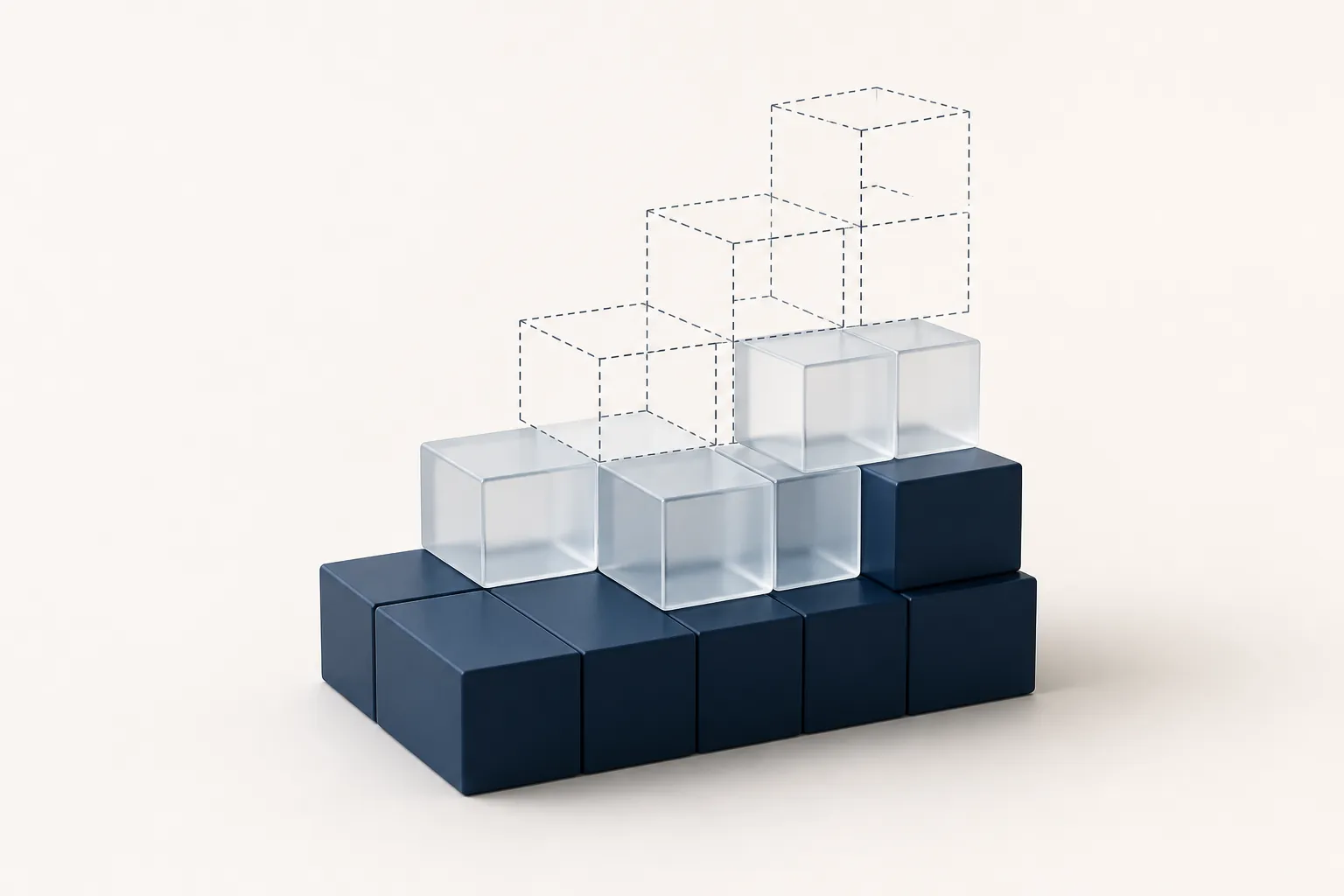
Search is where the current pain is easiest to see and easiest to mislabel. Digiday’s May 2026 buyer reporting tied one year of Google AI Max to typical CPC increases of 10% to 15%, with some clients up to 25%. The same report said clients raised search budgets 7% to 15% year over year, while Adthena counted 35% growth in search auction participants [4].
That combination looks like a crowded auction before it looks like an electricity surcharge. More participants, more automated coverage, more budget chasing fewer or differently distributed clicks — that is enough to move CPCs without needing a power-cost theory. If a client asks why search CPCs are up in Q3 2026, the first forecast adjustment should still be built around competition, query coverage, match behavior, automation, and conversion-rate movement.
This is also where cross-platform shortcuts get expensive. Meta disclosed an average price-per-ad metric; Google does not disclose the same kind of platform-wide price-per-ad figure. Buyer-reported search CPC increases and Meta’s average price-per-ad increase are both ad-cost surfaces, but they are not the same measurement and should not be pasted into one blended “AI raised ads by X%” claim.
Why wholesale power spikes still matter, even if they are not your CPM
The 267% electricity figure is attention-grabbing and easy to abuse. The Verge’s October 2025 summary of Bloomberg analysis described wholesale electricity prices up to 267% higher over five years in areas with high data center concentration, while also noting that grid aging and climate recovery contributed to the increase [7]. That is not a media-buying metric. It does not say “CPMs rose 267%.” It says some power markets around dense data center activity are under pressure.
For ad tech, that matters in the same way rent, bandwidth, cloud commitments, and support costs matter. It can change the operating cost of the vendors between a bid request and an impression. It can make margin promises harder. It can affect how aggressively a platform discounts, bundles, or prices AI-heavy features. But until a DSP, SSP, cloud provider, or platform ties a fee change to those costs, the honest label remains indirect.
IAB’s 2025 warning and Index Exchange’s programmatic explainer both point to the same possible path: rising energy, cloud, GPU, and cooling costs can work their way through infrastructure-heavy advertising systems [8][9]. Those are useful operating perspectives. They are not independent proof that the buyer’s August CPC jump came from electricity.
How to classify the next signal before it gets folded into a pitch deck
- Proven: a dated disclosure or measurement directly states the thing being claimed. Gartner’s 565 TWh data center electricity figure is proven for electricity demand. Meta’s 12% average price-per-ad increase is proven for Meta’s disclosed ad-price movement.
- Inferred: two verified signals sit close enough in the cost chain to justify monitoring, but the source does not prove causality. Hyperscaler capex pressure plus higher platform ad prices belongs here unless the platform identifies the cost driver.
- Not yet visible: the claim may be plausible, but the ad-cost surface is missing. Wholesale power spikes near data center hubs are not, by themselves, CPM or CPC evidence.
That classification is not academic tidiness. It changes the budget conversation. Proven CPC pressure can go into next month’s pacing and forecast. Inferred infrastructure pressure belongs in risk notes, fee negotiations, and margin assumptions. Not-yet-visible claims should stay out of client-facing explanations unless they are clearly labeled.
Monitoring protocol for Q3 2026 media budgets
| Monitor | Trigger that should change the budget view | What not to infer yet |
|---|---|---|
| Hyperscaler capex and free cash flow | Infrastructure spending keeps rising while free cash flow weakens, especially at companies that own major ad platforms or cloud layers. | Do not translate capex directly into CPM inflation. |
| Platform price-per-ad disclosures | A platform reports higher ad prices alongside heavier cost, capex, or AI infrastructure language. | Do not generalize one platform’s price metric across Google, Meta, retail media, and open-web programmatic. |
| Cloud, DSP, SSP, and measurement-vendor fee language | Fee changes are explicitly tied to compute, storage, inference, energy, or AI workload costs. | Do not treat generic “efficiency” messaging as proof of a cost pass-through. |
| Wholesale power prices near data center hubs | Local power spikes coincide with vendor or platform comments about higher infrastructure operating costs. | Do not call a regional electricity spike an auction-price driver without a fee or platform-pricing bridge. |
| Buyer-reported CPM and CPC movement by platform | Account-level increases line up with auction-participant growth, budget shifts, match expansion, AI-search changes, or platform-disclosed price movement. | Do not collapse auction crowding and infrastructure pass-through into one AI-cost bucket. |
For Q3 2026, the working stance is straightforward: re-forecast current search CPC pressure mainly around auction crowding and AI-search behavior. Carry AI infrastructure power demand as a lagged risk line that could become more visible later in platform pricing, ad-tech fees, cloud commitments, or margin pressure. If the account is bad this week, electricity is probably not the first explanation. If the platform economy keeps absorbing this much inference, power, cooling, and capex, it should stay on the pacing sheet.
References
- Gartner Says Data Center Electricity Demand to Grow 26 Percent in 2026 — Gartner, June 10, 2026
- Google, Microsoft, Meta, Amazon AI cash — CNBC, Feb. 6, 2026
- Meta Reports Second Quarter 2026 Results — Meta Investor Relations, July 29, 2026
- CPC pain is real: one year on, Google’s AI Max has pushed up search budgets and costs — Digiday, May 6, 2026
- AI energy usage climate footprint big tech — MIT Technology Review, May 20, 2025
- Energy and AI: Executive summary — IEA
- Electricity bills rise data centers — The Verge, Oct. 2, 2025
- Ad Tech Economic Uncertainty — IAB, April 1, 2025
- Why programmatic efficiency matters in the age of AI — Index Exchange
Primary source: https://investor.atmeta.com/investor-news/press-release-details/2026/Meta-Reports-Second-Quarter-2026-Results/default.aspx