
How Supermicro's AI Server Demand Drives Martech Price Hikes
Supermicro's $12.68B AI server quarter signals a structural cost pass-through chain that will raise martech prices by H2 2026. This article explains the transmission mechanism and what marketing teams can do before increases hit their budgets.
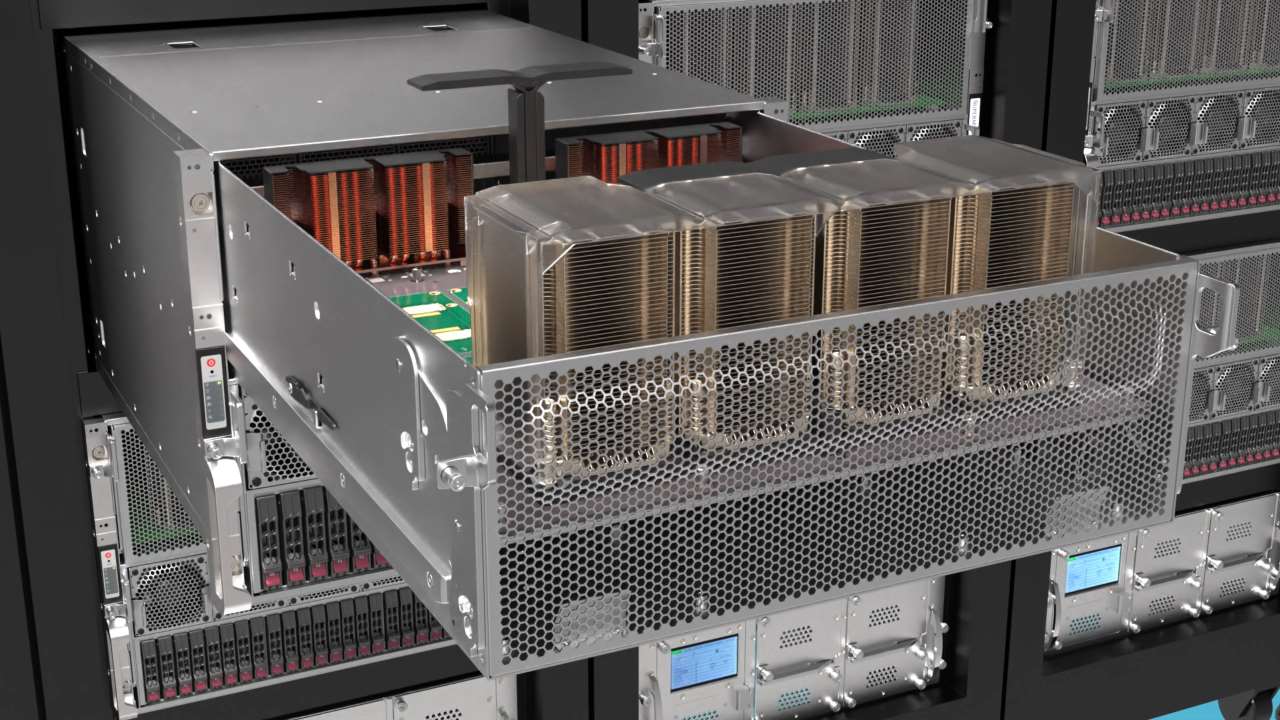
Supermicro's AI server surge matters to martech because it is a clear sign that infrastructure costs are still moving, and those costs tend to show up later in cloud bills and software renewals. The company reported $12.68 billion in quarterly revenue in Q2 FY2026, up 123% year over year, guided to more than $40 billion for FY2026, and then sought $7 billion in equity to secure components. [1][2]
The signal is the supply chain, not the stock chart
The equity raise is the tell. A company selling the hardware for AI workloads does not dilute shareholders for supply-chain theater; it does it because parts are tight enough that cash on hand is not enough to keep up with demand. That lines up with the price data downstream: Hostkey cites server DRAM up 60% to 70% versus Q4 2025 and GPU server prices up 30% to 50%, while Network World says Counterpoint Research sees server memory prices potentially doubling by the end of 2026. The exact percentage shifts by source and window, but the direction is the same. [3][4]
How it reaches a martech budget
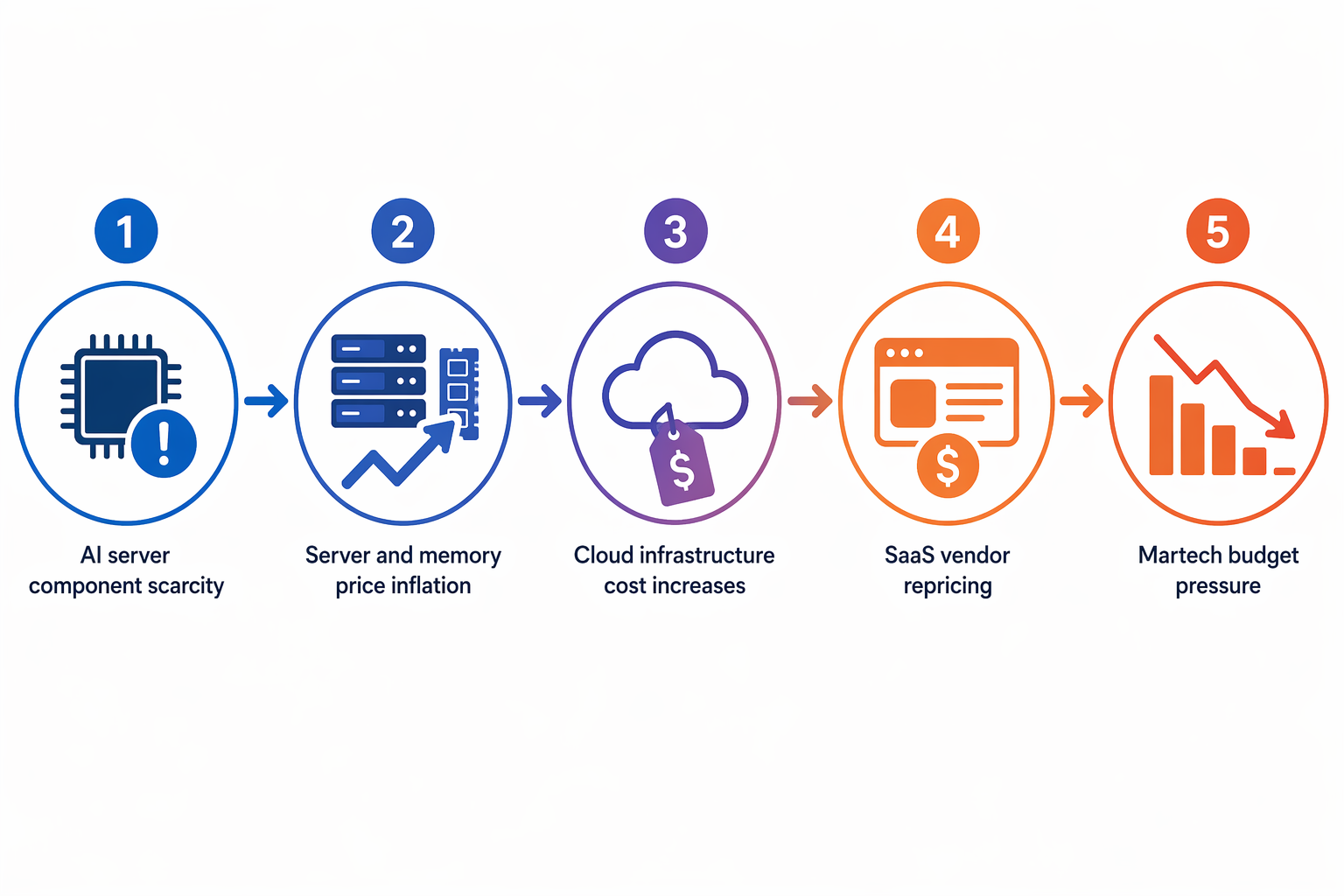
The pass-through chain is straightforward: scarcer components raise build costs, higher server prices flow into cloud providers, cloud providers adjust pricing or compress margins, and SaaS vendors then protect their own margins with AI surcharges, tier changes, or usage-based pricing. Hostkey says OVHcloud has already announced 5% to 10% price increases for April through September 2026, while AWS, Azure, and GCP are expected to follow with a 3- to 6-month lag. [3]
That is why this does not stay an infrastructure story for long. MarTech.org cites a 2025 Mavvrik survey in which 84% of companies reported measurable gross-margin erosion from AI infrastructure costs and 80% said they missed AI infrastructure forecasts by more than 25%. By the time those costs surface inside a vendor's pricing model, the budget owner is already dealing with a renewal, not a forecast exercise. [5]
Why the timing matters
The broader market numbers support the same read: this is structural, not temporary. Gartner projects $2.52 trillion in worldwide AI spending in 2026, and Morgan Stanley projects about $2.9 trillion in data center construction through 2028, with more than 80% still ahead. [6][7] That does not mean every SaaS vendor will reprice immediately, but it does mean the pressure is likely to arrive unevenly across the stack and then keep showing up as contracts reset.
Before H2 pricing catches up
The useful move now is to treat renewals as the point where the infrastructure story becomes your budget story. Review which vendors are exposed to cloud or AI inference costs, ask how any surcharge or tier change is being calculated, compare committed spend with current usage, and leave room in H2 2026 budgets before the invoice arrives. The teams that start that conversation early will have more leverage than the ones waiting to explain a variance afterward.
References
- Futurum Group: Supermicro Q2 FY2026 Delivers Breakout AI GPU Platform Revenue
- Yahoo Finance: Supermicro Seeks $7B to Support AI Server Demand
- Hostkey: Server Price Increases in 2026: Causes, Forecasts, and Actionable Advice
- Network World: Server memory prices could double by 2026 as AI demand strains supply
- MarTech.org: Why AI is the most unpredictable cost in the martech stack
- Gartner: Worldwide AI Spending Will Total $2.5 Trillion in 2026
- Morgan Stanley: AI Market Trends 2026: Global Investment, Risks, and Buildout
Comments
Join the discussion with an anonymous comment.