
5 Tactics from Delta's 2026 New Route Marketing Playbook
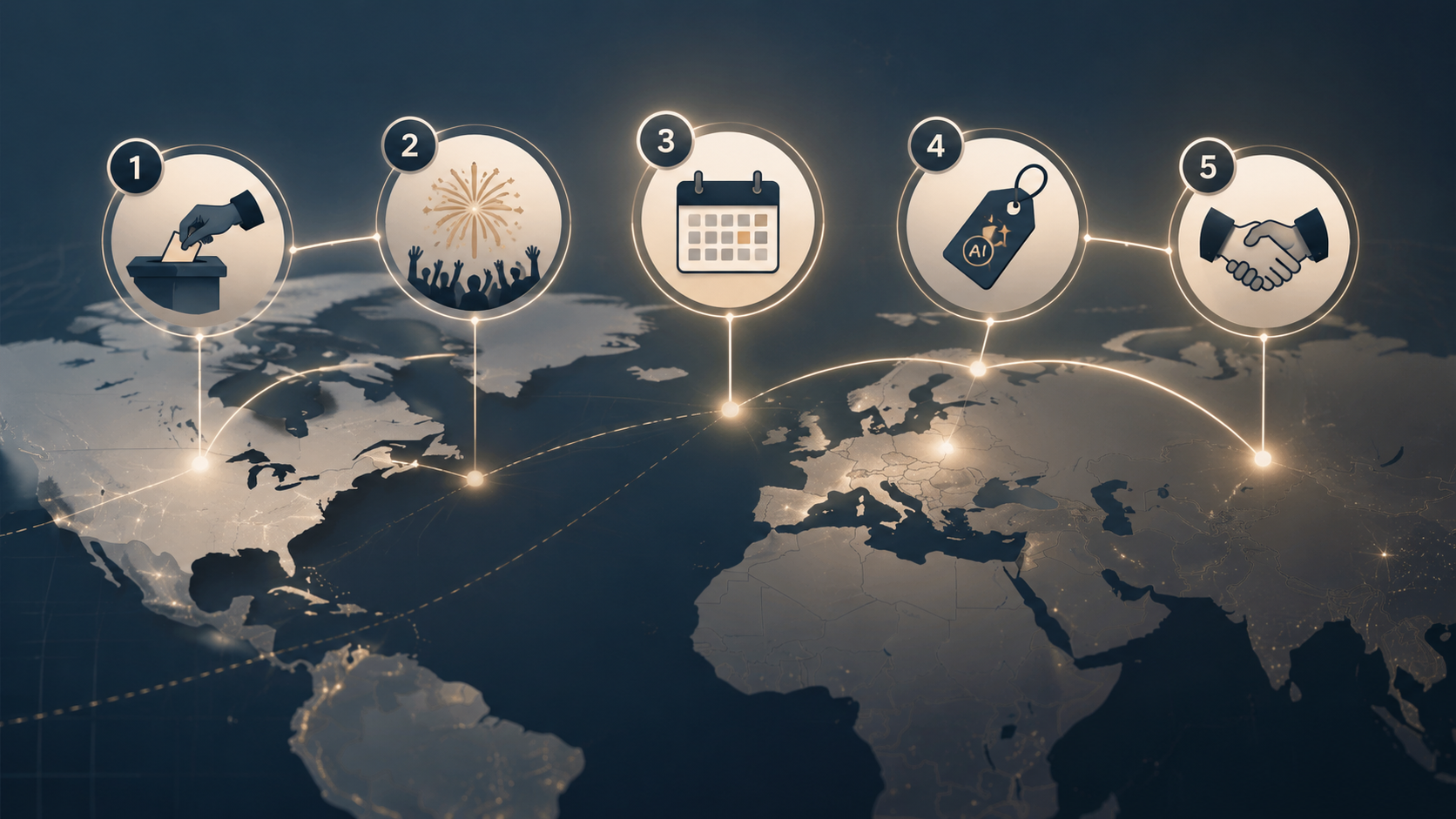
Delta's 2026 route expansion reveals a five-tactic marketing playbook any brand with a physical expansion can adapt — from crowdsourcing demand and inaugural-flight events to Saturday-only market tests, AI personalization, and destination-side cost sharing.
The sharpest part of Delta’s 2026 expansion was not the route map. It was the way the airline made a new route feel partly validated before the route fully existed. For anyone studying Delta’s new route marketing strategy, the useful lesson starts there: Delta did not only announce new supply. It created public demand signals, launch-day inventory for media, lower-commitment market tests, personalized offer economics, and partner-backed market entry.
That distinction matters because a physical expansion always asks someone to commit before the market has fully answered. Aircraft, stores, showrooms, clinics, pop-ups, regional service teams, and launch staff all move ahead of certainty. The better playbook is not “make the launch louder.” It is to ask what uncertainty each marketing move reduces.
Delta turned demand validation into a public asset
Route Race was the cleanest move in the 2026 playbook because it gave customers one concrete job before the product was available: vote. From Aug. 25 to Aug. 29, 2025, Delta asked SkyMiles members in the Fly Delta app to choose among Sardinia, Malta, and Ibiza. Nearly 150,000 votes were cast in five days; Sardinia won the member vote, Malta won the employee vote, and Delta ultimately launched both destinations for summer 2026.[1]
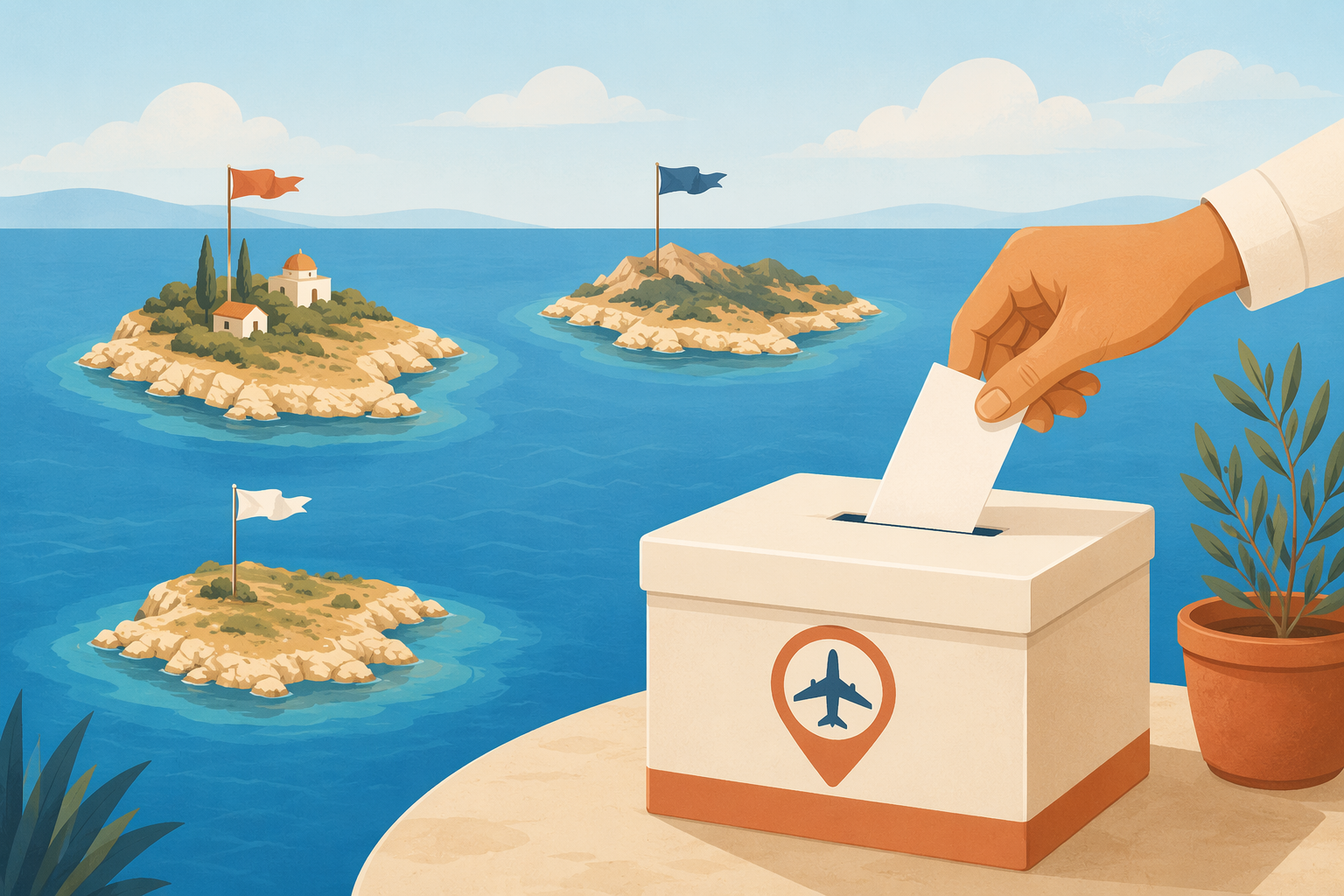
The appeal is obvious, but the operational value is better than the gimmick. A vote inside the app is not the same as a booking, and Delta did not publish the vote split by destination. Still, it created a first-party signal from known members, not anonymous social chatter. It also gave those members a reason to pay attention before flights opened for sale.
Bookings opened on Sept. 16, 2025, with SkyMiles redemptions starting at 70,000 to 80,000 miles round-trip, depending on the destination. Both Sardinia and Malta had also been unserved from the U.S. by any airline, which made the announcement easy for travel media to repeat: Delta was not simply adding another seasonal European route; it was creating the first U.S. nonstop access to two island markets.[1][2]
That is the difference between crowdsourcing as engagement bait and crowdsourcing as expansion marketing. Engagement bait asks for a reaction, then moves on. Delta’s version tied the reaction to an addressable audience, a booking window, a media hook, and an internal employee signal. The vote did not prove route profitability, but it made the capital decision less blind and the launch story easier to distribute.
| Lifecycle problem | Delta move | Transferable version for a non-airline brand |
|---|---|---|
| Demand is uncertain before launch | Route Race voting in the Fly Delta app | Let existing customers vote on the next city, product format, service area, or opening weekend perk |
| The announcement needs a repeatable story | First U.S. nonstop service to Sardinia and Malta | Frame the expansion around a specific market gap, not only a new address |
| Launch attention fades quickly | Gate activations, keepsakes, postcards, and water cannon salutes | Design opening day so customers, partners, employees, and local media each have something to use |
| Full-scale rollout is risky | Saturday-only leisure routes | Constrain days, inventory, appointment slots, or locations before adding capacity |
| Margins vary by customer and timing | AI-personalized route offers and trip bundles | Personalize bundles, timing, incentives, and add-ons where economics differ |
The inaugural flight became more than a ribbon cutting
The first flight is where many launches waste their best physical proof. A few executives gather, someone cuts something, photos are posted, and the market is expected to care. Delta’s Sardinia and Malta launches did more work than that.
For the new European routes, Delta staged gate activations, handed out destination-themed keepsakes, and used local food and drink as small, tangible cues: Pan di Stelle cookies, Sardinian myrtle liquor, Maltese pastizzi, and Cisk beer. Travelers could also write postcards to mail from the destination. At both origin and arrival airports, aircraft passed through ceremonial water cannon salutes.[3]
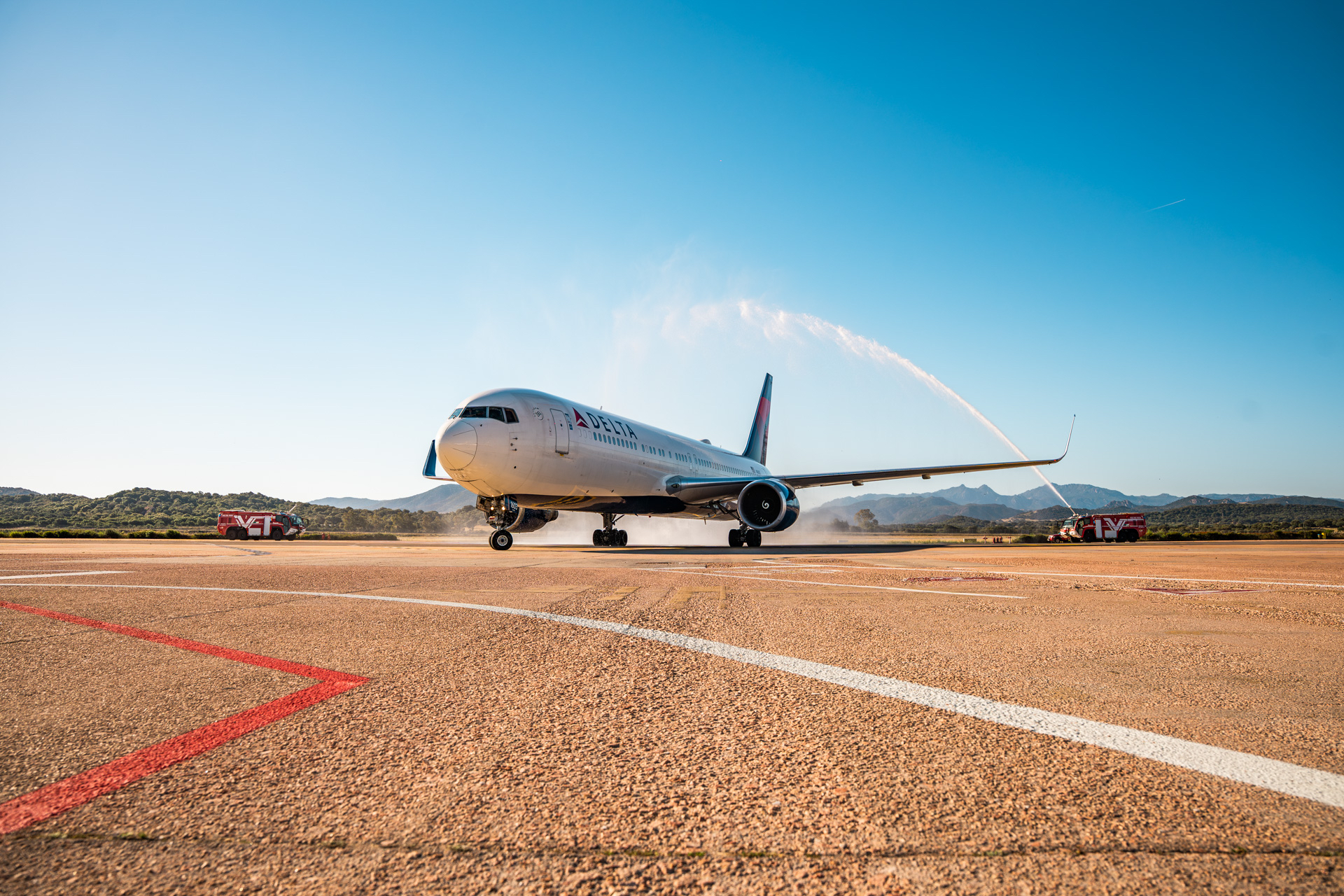
None of those details should be dismissed as cute airport theater. Each one gave a different constituency something useful. Passengers received a trip-starting moment, not just a boarding pass. Employees had a reason to participate in the launch instead of merely operating it. Airports gained a visual story. Destination partners gained proof that the route was being introduced with cultural specificity, not dropped onto a schedule grid.
The official participation mattered too. Delta’s launch coverage included statements from airport executives and Malta’s Deputy Prime Minister, creating earned-media material in both the origin and destination markets.[3] That is often the quiet advantage in a physical expansion: the brand’s own audience is rarely the only audience that matters. Local officials, landlords, tourism boards, chambers of commerce, neighborhood groups, and venue partners may all need public evidence that the launch has momentum.
For a retailer, restaurant group, fitness studio, healthcare provider, or hospitality brand, the adaptation is not to imitate the water cannon. It is to design the first day as a content system. Give customers a reason to show up, give local partners a reason to promote, give employees a visible role, and give press a story that can be explained in one sentence.
Saturday-only service reduced the size of the first bet
Not every new market needs to open with maximum availability. For summer 2026, Delta launched or resumed more than 20 Saturday-only nonstop leisure routes, generally starting in May or June and operating through September or October. Examples included Los Angeles to Jackson Hole, Boston to Aruba, Atlanta to Grenada, and three Austin leisure routes to Bozeman, Kalispell, and Destin.[4]
Delta framed the move around convenience and spontaneous leisure demand. Amy Martin, Delta’s vice president of network planning, described the additions as a way to make it easier for customers to get to top vacation destinations with nonstop service.[4] From a launch-marketing perspective, the more interesting part is the constraint. Saturday-only flying lets the airline test a market at a frequency that matches leisure patterns without immediately behaving as if weekday demand has been proved.
This is not a results story yet. As of July 2026, these routes are still in or near their first operating season, and Delta has not disclosed load factors, booking curves, or profitability for the Saturday-only routes. The tactic should be read as a structural risk control, not as evidence that the markets have worked.
The contrast is useful because major international airline routes can involve a one-to-five-year planning cycle, according to Simple Flying’s discussion of Delta’s point-to-point strategy.[5] A Saturday-only leisure route is a different kind of commitment. It lets marketing, revenue management, airport operations, and partner teams observe real behavior under a narrower promise.
The non-airline version is straightforward. A brand expanding into a new region can start with weekend-only appointments, a seasonal kiosk, limited delivery ZIP codes, a rotating showroom, a pop-up class schedule, or a constrained service menu. Scarcity is not the point. The point is to learn whether demand appears when the offer is real enough to require action.
Personalization helped protect the economics after attention was won
Launch marketing can create attention and early demand, but it does not automatically protect margin. Airlines know this more painfully than most categories because the same seat changes value as departure approaches, demand shifts, and customer intent becomes clearer. That is where Delta’s AI personalization story enters the playbook, with an important sourcing caveat.
An IIDE case study says Delta’s AI dynamic pricing engine scaled from 3% of flights in Q1 2025 to 20% by year-end and delivered a 5% to 8% increase in per-flight yield.[6] Those figures should not be treated with the same confidence as Delta’s own press materials. IIDE is an education platform, and the numbers should be checked against Delta earnings calls or investor materials before being used as primary proof. They are useful here as directional context, not as independently verified performance data.
The more transferable idea is not the exact yield lift. It is the logic of matching the offer to the traveler once a route exists. The same IIDE case study describes Delta Concierge, an AI-powered travel assistant launched in 2026, as recommending personalized travel packages that can include flights, hotels, and ground transportation.[6] In a route launch, that matters because the customer is not only buying transportation. They are buying confidence around an unfamiliar trip.
For a physical expansion outside aviation, personalization should be aimed where the economics actually vary. A new clinic might personalize appointment reminders and add-on services by patient need. A retailer might bundle launch offers differently for loyalty members, tourists, and nearby residents. A fitness brand might change trial offers based on class time, capacity, and prior behavior. The risky version is using personalization as a discount machine. The better version uses it to package value without flattening margin.
Some market-entry costs were shared with the ecosystem
The last tactic is less glamorous, but it may be the one expansion teams underuse most: find the parties who also benefit from the new traffic, then make the launch bigger than the brand’s own budget.
Delta’s announced Atlanta-to-Riyadh route involved the Saudi Air Connectivity Program, a Saudia codeshare, and the Riyadh Air alliance.[7] That combination illustrates a broader route-development reality: new service can be supported by destination-side priorities, not only carrier-side demand. Tourism boards, airports, economic development organizations, and adjacent operators all have reasons to help a route succeed when it brings valuable visitors or business traffic.
Aviation Week’s broader discussion of new-route marketing describes airport subsidy and incentive structures, though the piece is from 2017 and reflects APG president Richard Burgess’s perspective rather than Delta-specific data.[8] The age and provenance matter. Still, the principle fits the 2026 playbook: expansion marketing is often ecosystem marketing. The destination wants arrivals. The airport wants traffic. The airline wants profitable demand. The launch gets stronger when those incentives are made visible.
The same pattern applies to brands opening physical locations or entering new regions. A restaurant may co-market with a local development district. A retail brand may partner with a hotel, venue, or tourism group. A wellness brand may launch with employers, residential buildings, or community organizations. The partner should not be decorative. It should have a measurable reason to bring people into the market.
What the playbook is really doing
Delta’s 2026 route expansion is useful because the tactics are not interchangeable. Route Race reduced guessing and created audience involvement before launch. The inaugural-flight celebrations turned a one-time operational moment into content, partner proof, and earned media. Saturday-only routes limited the first capacity bet. AI personalization, with the sourcing caveat noted, points to margin protection after demand is captured. Destination-side partnerships helped shift some launch burden onto the broader ecosystem.
Most B2C brands with physical expansion plans can adapt at least three of those moves without airline-scale budgets. Ask existing customers to help choose or shape the market entry. Make opening day locally useful instead of merely ceremonial. Test with constrained availability before scaling. Personalize offers where customer intent and margin differ. Bring in partners who gain from the new traffic.
The framework works because each move solves a different launch problem. It does not prove every new route will succeed, and it does not turn applause into profitability. It does show how a brand can make expansion feel public, participatory, and locally supported before the market has delivered its final answer.
References
- Isle take two: Sardinia and Malta chosen as Delta's newest island destinations, Delta News Hub
- Delta announces nonstop service to Sardinia, Malta for summer 2026, The Points Guy
- From gate to getaway: How Delta celebrated its newest European routes, Delta News Hub
- Saturday spontaneity: Delta adds new Saturday nonstop flights to top leisure destinations in 2026, Delta News Hub
- The Strategy Behind Delta Air Lines Launching New Point-To-Point Routes, Simple Flying
- Extensive Marketing Strategy Of Delta — 2026, IIDE
- Delta to launch nonstop service from Atlanta to Riyadh, Delta News Hub
- How to market new routes as an airline, Aviation Week
Comments
Join the discussion with an anonymous comment.