

Why Click-Based Attribution Doesn't Work in the AI Search Era
Traditional click-based models miss up to 52% of AI-influenced demand because AI search engines deliver answers without sending traffic. This article explains the measurement gap and offers a practical three-layer framework to replace broken attribution dashboards.
The awkward part of marketing attribution in the AI search era is not that dashboards are suddenly empty. It is that they can look clean while the story underneath them is getting less true.
A campaign can appear to be losing efficiency in GA4 while sales keeps hearing some version of, “We saw you everywhere,” “ChatGPT mentioned you,” or “We compared you with a few vendors before searching your name.” The buyer still arrived. Revenue still closed. But the route that made the buyer confident enough to search, book, or reply never became a referrer, a session, or a campaign touch.
That gap is no longer a fringe analytics complaint. Bain reported from a December 2024 consumer survey of 1,117 respondents that 80% said they get answers to at least 40% of their searches without clicking through, because AI-generated results answer the query on the results page itself.[1] SparkToro and Datos found that roughly 60% of Google searches in the US and EU end without a click.[2] McKinsey, looking at the commercial stakes of AI search, projected that $750 billion in revenue could be influenced by AI search by 2028, while noting that many brands still lack systematic visibility into how they appear in these environments.[3]
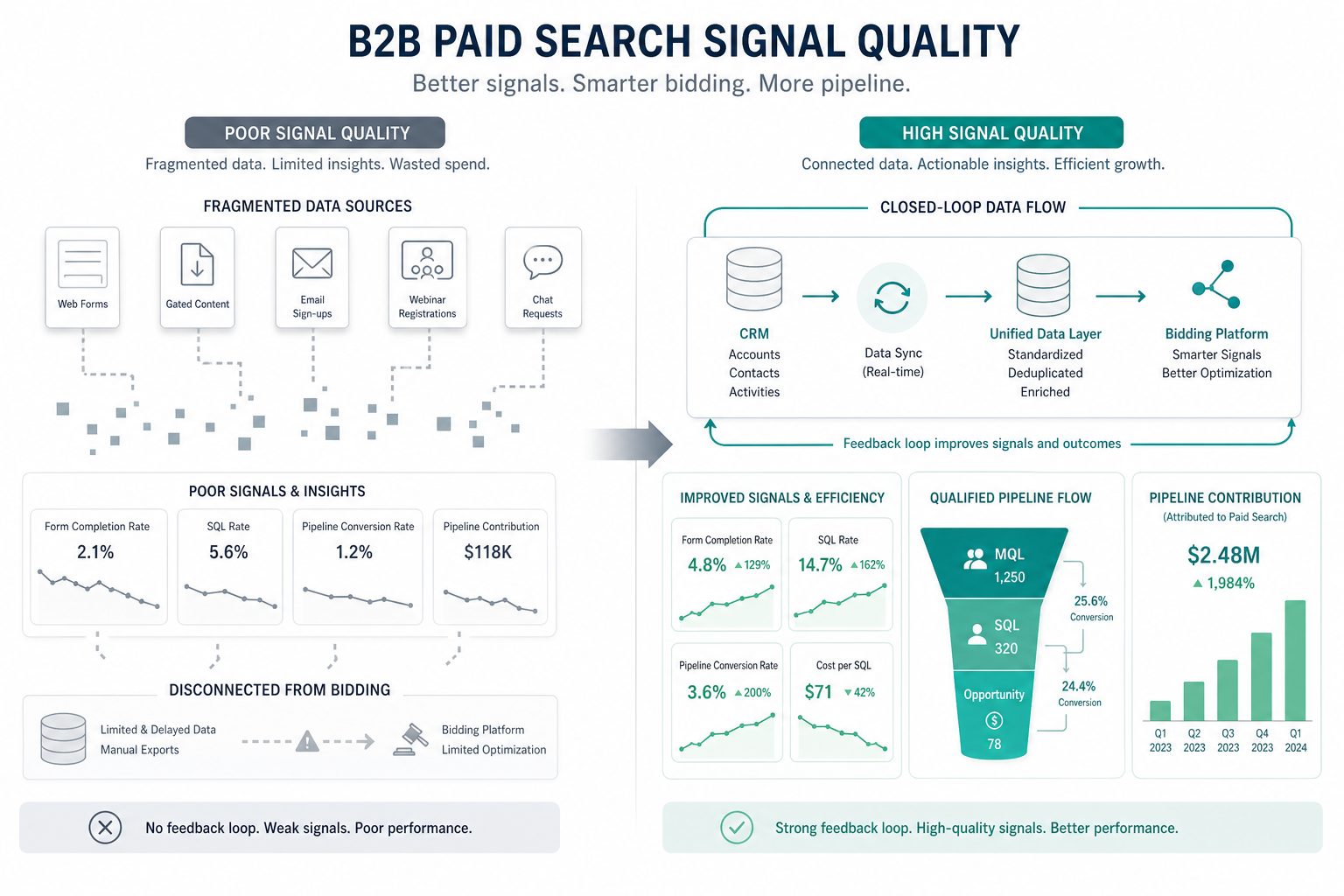
The point is not that every unclicked answer creates demand. It does not. The point is narrower and more useful: click-based attribution only records handoffs. AI search increasingly satisfies, frames, compares, and recommends before the handoff happens. If the handoff never happens, the dashboard does not see weak influence. It sees zero.
The Problem Is Detectability, Not Attribution Math
Last-touch, multi-touch, and data-driven attribution disagree about how to divide credit after a detectable interaction. One model gives the last click the crown. Another spreads credit across touches. Another lets an algorithm infer weight from observed paths. They are different arguments inside the same room.
AI search changes the room. The most important interaction may be an answer box that summarizes your category, a ChatGPT comparison that names three vendors, a Gemini response that defines the buying criteria, or a Perplexity result that cites a competitor but not you. None of those necessarily creates a visit. Some create preference. Some remove you from consideration. Some send the buyer to branded search later, stripped of the upstream influence that shaped the search.
That is why “just use a better attribution model” misses the break. Traditional models can reassign known touches. They cannot assign weight to an exposure they never captured.
This is also why “attribution is dead” is a lazy answer. Revenue still matters. Conversion paths still matter. Paid search efficiency still matters. The question is whether the organization is willing to add a measured influence layer for demand creation that now happens outside the clickstream.
Where the Click Disappears
The attribution gap is easier to defend in a revenue meeting when it is broken into mechanisms. “Dark funnel” is too vague. It can sound like a convenient place to hide underperforming spend. AI search decay is more specific: the click can disappear before the visit, inside the assistant, or before the branded search ever happens.

Pre-click decay
Pre-click decay happens when the search result answers enough of the query that no site visit is needed. A buyer asks for implementation considerations, pricing ranges, category differences, or vendor shortlists. The answer appears in the AI layer. The buyer learns, narrows, or excludes. No session fires.
Bain’s survey-based zero-click figure should not be treated as clickstream proof, but it is a strong signal that users are comfortable accepting answers without visiting the underlying source.[1] SparkToro’s zero-click work points in the same direction from a different angle: a large share of searches already end on the results page.[2] For attribution, the practical implication is blunt. If your content or brand shaped the answer, the dashboard may not see the influence. If a competitor shaped the answer, the dashboard may not explain why your downstream conversion rate softened.
Click-path decay
Click-path decay happens when the buyer uses an assistant rather than a search engine. In a normal search path, a query might produce an impression, then a click, then a landing page, then a retargeting audience or CRM touch. In an assistant path, the user asks follow-up questions inside the same interface. The assistant compares options, summarizes reviews, translates technical language, and may never send traffic anywhere.
McKinsey described AI search as a new front door to the internet and noted that brands’ own websites make up only a small share of the sources AI search systems use in responses.[3] That matters because the buyer can be influenced by an answer assembled from third-party sources, review pages, documentation, media coverage, forums, and partner content. Your owned website may still be important, but it is no longer the only surface where category meaning is formed.
Post-click decay
Post-click decay is the easiest to miss because a click eventually does happen. The buyer starts in ChatGPT, Claude, Gemini, or Perplexity, asks for options, reads comparisons, and only later searches the brand name in Google or types the URL directly. In the report, branded search, direct, or organic gets the visible credit. The AI-mediated consideration path vanishes.
This is the meeting-room problem. Paid search looks like it is harvesting. Organic looks volatile. Direct looks suspiciously large. Sales hears that buyers had already formed a preference before the first tracked visit. None of those observations alone proves AI influence, but together they are enough to challenge a dashboard that assumes unseen influence equals no influence.
The RADM Case: Why Reported ROAS Can Be Politically Dangerous
The most useful case is not useful because every company should copy its ratios. It is useful because it translates attribution decay into the language leadership already uses: pipeline, branded-query credit, and ROAS.
Digital Applied’s Revenue Attribution Decay Model, based on a B2B SaaS case study, estimated that 35% to 52% of branded-query attribution had decoupled from clicks. In the same case, reported ROAS moved from 2.1x to a decay-adjusted 3.8x when dark-funnel pipeline was credited back to the channels judged to have earned it.[4]
That does not mean every B2B SaaS company is undercounting by half. It certainly does not mean every content program deserves a 1.7-point ROAS upgrade. The case depends on the company’s category, deal cycle, CRM hygiene, branded-search behavior, and how rigorously the team connected exposure signals to pipeline.
But the directional lesson is hard to ignore. If branded demand is partly created in AI answers, review summaries, and unclicked comparisons, then a click-only ROAS report can punish the channels that created the search and reward only the channel that captured it. That is not a philosophical measurement flaw. It changes budget decisions.
The damage usually shows up quietly. A paid search manager gets asked why nonbrand is inefficient. A content team is told organic influenced fewer opportunities than last year. Brand investment gets treated as optional because direct and branded search appear to be doing the work by themselves. The dashboard is not lying on purpose. It is answering the only question it was built to answer: which tracked interaction preceded conversion?
What to Measure Instead
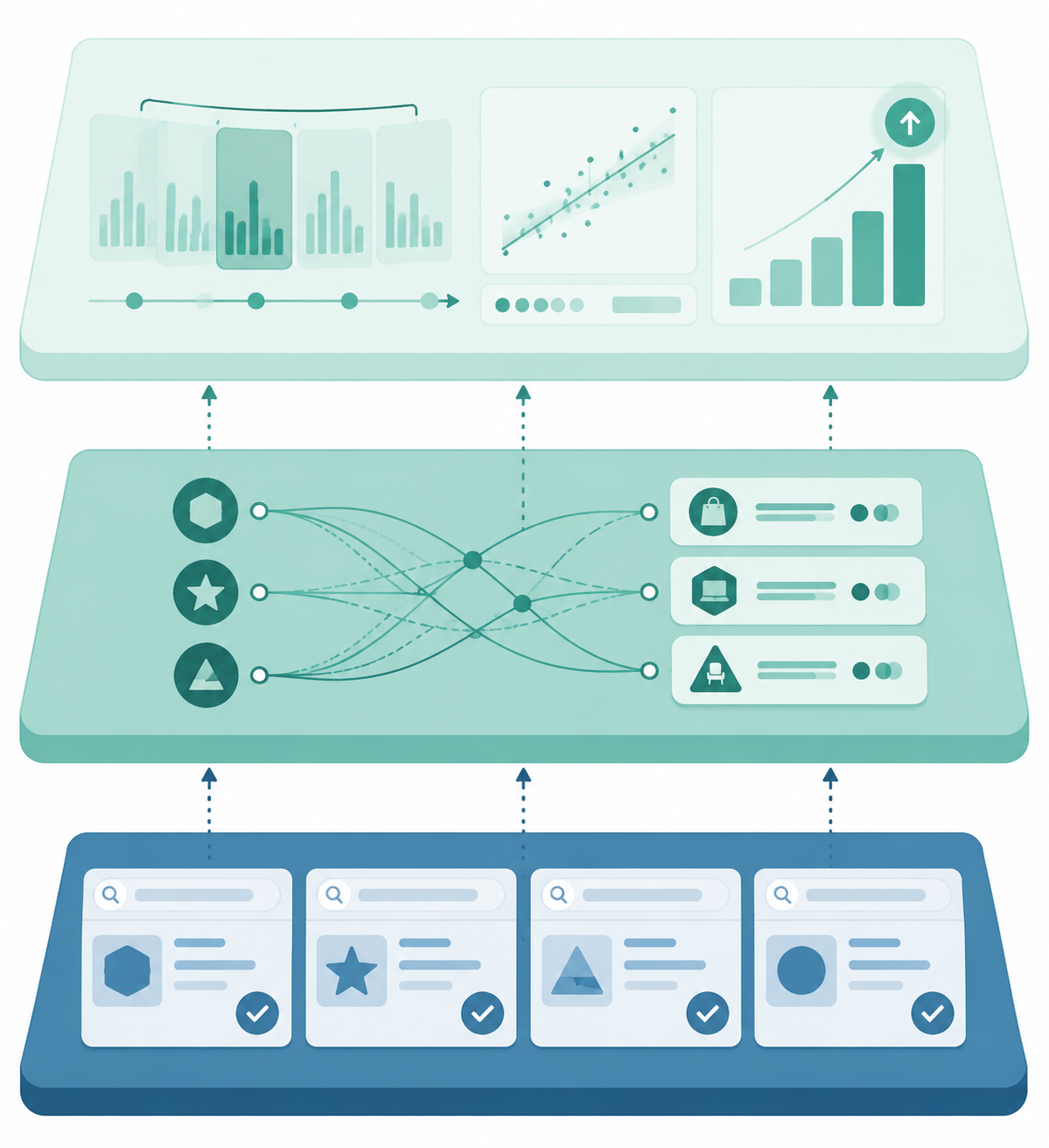
The replacement is not a single magic model. It is a measurement stack that separates three jobs: whether the brand appears in AI answers, whether the AI system understands the brand correctly, and whether changes in that visibility correlate with downstream demand.
Layer 1: Citation presence monitoring
Citation presence is the new visibility floor. Before arguing about revenue influence, a team needs to know whether AI answer engines mention the brand at all for the queries that matter.
This is not the same as rank tracking. A brand can rank well in Google and still be absent from an AI-generated shortlist. A page can earn traffic and still fail to become a cited source. A competitor with weaker SEO can appear more often if the model’s retrieval layer finds clearer third-party validation, better structured explanations, or stronger entity associations.
At minimum, track citation presence across ChatGPT, Perplexity, Gemini, and Claude for the category, comparison, problem, and brand-plus-category queries that match real buying research. The first output is a simple share-of-voice view: mentioned, cited, omitted, or replaced by competitors.
Teams working on answer-engine visibility can connect this layer to practical content work through AEO tactics for marketers, but the measurement point comes first. If the brand is not present in the answer set, downstream attribution will not rescue the missing influence.
Layer 2: Entity resolution tracking
Being mentioned is not enough. The next question is whether the AI system understands what the brand is, where it belongs, and why a buyer would include it in a shortlist.
Entity resolution tracking looks at the strength and accuracy of brand-to-category associations. Does the assistant connect the brand to the right product category? Does it describe the company as an enterprise platform when the pipeline target is mid-market? Does it frame the product around a legacy use case while the sales team is trying to sell a newer one? Does it mention the brand only when prompted by name, or does it appear in unbranded category discovery?
This layer matters because AI answers do not merely distribute links. They compress positioning. A weak or wrong association can reduce demand quality even when citation count looks healthy. If the answer says a product is best for one segment, another segment may never click, never search, and never become a visible lost opportunity.
The useful fields are simple enough to maintain in a spreadsheet at first: query, engine, date, mentioned competitors, cited sources, category label used, buying criteria emphasized, sentiment or framing, and whether the brand appeared without being named in the query. Over time, this creates a record of whether the market’s AI-mediated understanding of the brand is improving or drifting.
Layer 3: Influence-path attribution
Influence-path attribution is where teams need the most discipline. It should not pretend to identify the exact answer that caused a specific buyer to convert. In most cases, that level of determinism is gone. The better goal is probabilistic weighting: did improved AI visibility during a defined exposure window move in the same direction as branded search lift, assisted conversions, self-reported attribution, and pipeline quality?
The exposure window matters. A seven-day window may make sense for a low-consideration product. A complex B2B sale may need a longer view. The model should not be tuned to flatter marketing; it should be tuned to the buying cycle. If AI citation presence improves in March and branded search rises in April among the same category terms, that is a signal to investigate. If demo requests increase but opportunity quality falls, that is not a clean win. If self-reported attribution starts naming AI assistants but CRM source remains direct, that is a measurement conflict worth surfacing, not smoothing over.
Goodie’s discussion of AI search attribution makes the same practical point: marketers need to combine AI visibility signals with conventional conversion and pipeline data rather than replace revenue measurement outright.[5] That is the right posture. Conversion data remains the anchor. AI visibility becomes an upstream influence variable.
| Layer | What it answers | Useful signals | What it should not claim |
|---|---|---|---|
| Citation presence | Are we appearing in AI answers for buying-relevant prompts? | Mentions, citations, omissions, competitor presence by engine and prompt | That a mention caused revenue |
| Entity resolution | Are we being understood and framed correctly? | Category association, segment fit, buying criteria, sentiment, source quality | That all visibility is positive visibility |
| Influence-path attribution | Does AI visibility correlate with downstream demand movement? | Branded search lift, assisted conversions, self-reported attribution, pipeline quality | That one AI answer deterministically created one opportunity |
How This Changes the Revenue Conversation
The leadership conversation should not start with “AI search changed everything.” That claim is too broad and too easy to dismiss. It should start with the specific limitation: the current attribution model records tracked interactions, but a growing share of consideration now happens in environments that may not send a click.
McKinsey reported that only 16% of brands tracked AI search performance at the time of its analysis.[3] That figure will age, as all AI adoption figures do, but the underlying gap is visible in many reporting setups: the dashboard can show declining attributable performance while the market is still being shaped by search, content, review surfaces, and assistant answers.
The cleanest framing is this: the team is not replacing revenue measurement with vibes. It is adding probabilistic influence weighting because AI search has moved part of demand creation outside the clickstream.
That language matters. It protects the work from two bad extremes. One extreme says every untracked buyer came from brand, content, or AI visibility. The other says every untracked influence is worth zero. Neither position is serious enough for budget planning.
A Starting Operating Rhythm
A team does not need a fully automated AI attribution platform to begin. Automation helps later. The first useful version can be manual, small, and consistent.
- Run a two-hour weekly citation audit across ChatGPT, Perplexity, Gemini, and Claude.
- Use the top 10 brand-plus-category and category-comparison queries that reflect real buying research.
- Record whether the brand appears, which competitors appear, which sources are cited, and how the category is framed.
- Add self-reported attribution to high-intent forms with an option for AI assistants or answer engines.
- Segment branded search lift by geography, product line, campaign period, and category term where possible.
- Compare visibility changes against assisted conversions, opportunity creation, sales notes, and pipeline quality over the relevant buying window.
The first few weeks will be messy. AI responses vary. Citations shift. Some queries will be too broad. Some self-reported answers will be vague. That is acceptable as long as the team resists turning the data into false precision. The goal is to build a defensible influence record, not another dashboard that looks more certain than it is.
After a month or two, patterns become easier to discuss. If the brand is absent from unbranded category queries, that is a visibility problem. If it is mentioned but miscategorized, that is an entity problem. If visibility improves and branded search rises while assisted pipeline strengthens, that is an influence-path signal. If none of those downstream signals move, the team should not claim impact just because citations improved.
This is the practical reset. Click-based dashboards are still useful for the part of the journey they can observe. They are incomplete in a way that now materially distorts budget decisions. The work is to keep the revenue anchor, expose the missing influence, and stop treating an invisible click path as proof that no influence occurred.
References
- Goodbye Clicks, Hello AI: Zero-Click Search Redefines Marketing — Bain & Company
- 2024 Zero-Click Search Study — SparkToro
- Winning in the age of AI search — McKinsey
- Revenue Attribution Decay Model for AI Search 2026 — Digital Applied
- Measuring Marketing Attribution for AI Search — Goodie
Comments
Join the discussion with an anonymous comment.