
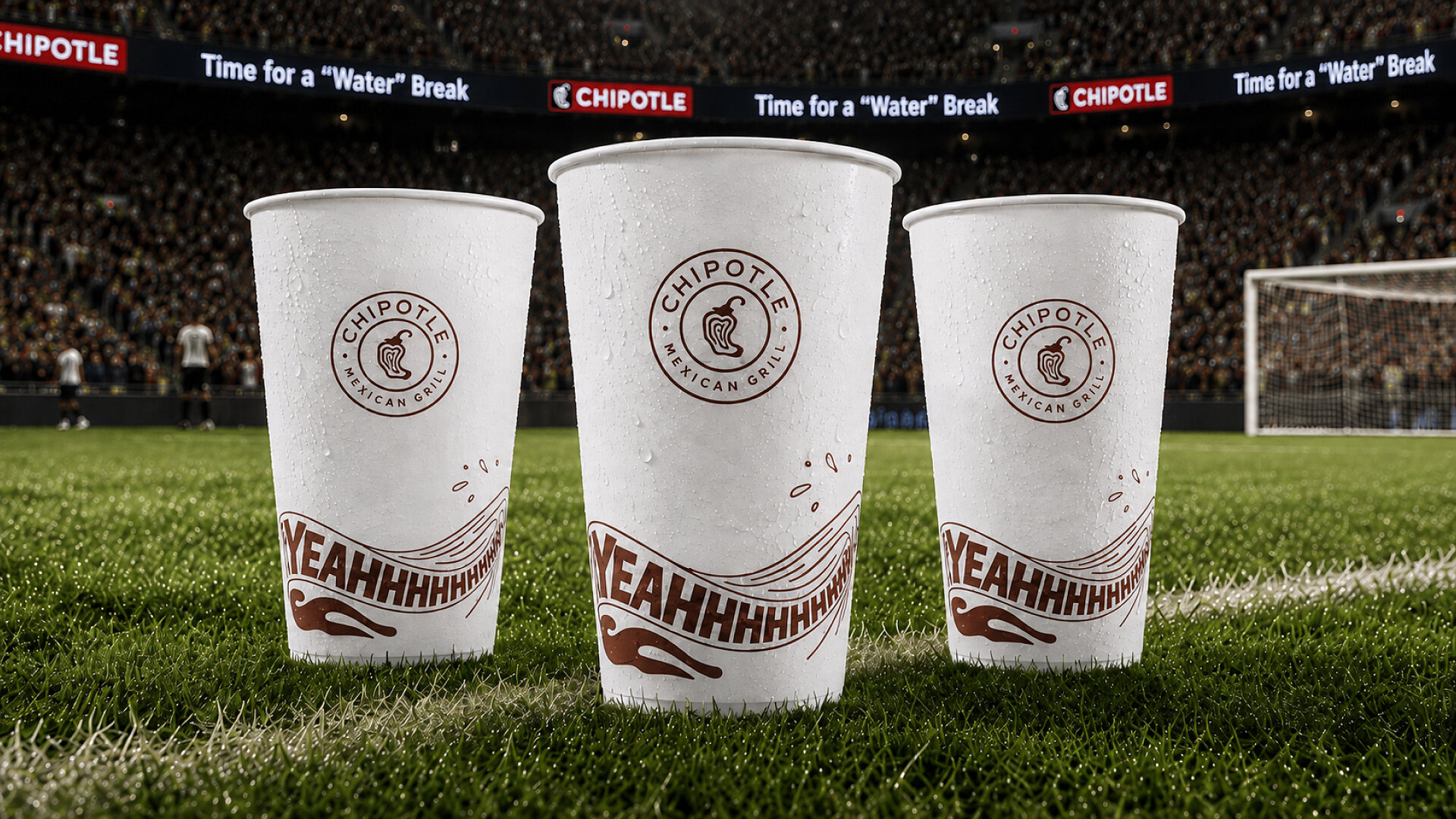
How Chipotle's World Cup Water Break Worked Without Sponsorship
Chipotle's two-part World Cup promotion — a Matchday BOGO that drove a 57% traffic spike and a Water Break giveaway — generated record customer engagement without official FIFA sponsorship. This case study breaks down the mechanics, the fan-culture insight that made it work, and what marketers can learn about non-sponsor event activation.
The interesting part of Chipotle’s World Cup hydration-break promotion is not that Chipotle gave away burritos during soccer season. Plenty of brands can rent attention with free food. The more useful case is how Chipotle used a tournament it did not officially sponsor to do two different jobs: first, push people into restaurants on opening day; then, use the final to collect direct customer contact through a digital giveaway.
The first job has a real result attached. On June 11, 2026, Chipotle’s Matchday BOGO drove visits 57.2% above the chain’s 2026 year-to-date daily average, making it the brand’s busiest day of the year, according to Placer.ai.[1] That matters because it gives the campaign a behavior-based anchor before anyone starts admiring the cleverness of the later hydration-break idea.
The BOGO Was the Store-Traffic Act
Chipotle’s opening-day move was not subtle: make a soccer-adjacent moment feel like a reason to visit a restaurant now. The Matchday BOGO gave customers a clear economic prompt, and the timing attached that prompt to the start of the tournament window. Placer.ai’s visit data is the strongest public evidence in the campaign because it measures a customer action, not social chatter or brand sentiment.[1]
That does not make the BOGO a complete ROI case. Publicly available data does not disclose incremental revenue, margin impact, check size, daypart distribution, or how many visits came from new versus existing customers. A buy-one-get-one offer can create a busy restaurant and still be expensive. But for a campaign built around a mega-event without sponsorship rights, the opening act did what a traffic-driving promotion is supposed to do: it changed footfall on a specific day.
That distinction is important because marketers often judge event activations by whether they appeared in the conversation. Chipotle’s first World Cup move can be judged more plainly. People showed up.
The Hydration Break Was Built for Capture, Not Just Reach
The second act, announced for the July 19, 2026 World Cup final, had a different shape. Chipotle said it would put “a new twist on soccer’s hydration break” with $1 million in free burritos. Fans could play an Instagram cup-shuffle game and enter through a text-to-win mechanic, with the giveaway capped at 100,000 redemptions.[2]
| Campaign act | Timing | Primary mechanic | Most visible business job | Public outcome status |
|---|---|---|---|---|
| Matchday BOGO | June 11, 2026 opening day | In-restaurant BOGO offer | Drive store visits | Placer.ai reported visits 57.2% above Chipotle’s 2026 YTD daily average |
| Water Break giveaway | July 19, 2026 final | Instagram game plus text-to-win entry | Turn event attention into direct customer contact | Mechanics announced; final redemption and CRM results not yet public |
That structure changes how the Water Break should be evaluated. A capped giveaway can produce lines, headlines, and social sharing, but the text-to-win layer points to customer acquisition. eMarketer framed the promotion as a customer-acquisition play because phone-number capture gives Chipotle a direct channel for future communication, separate from rented reach on social platforms.[3]
As of July 20, that part is still a design claim, not a proven result. Chipotle has disclosed the $1 million offer, the 100,000-redemption cap, and the entry mechanics.[2] It has not publicly disclosed how many people entered, how many redemptions were completed, how many usable customer records were captured, what the production costs were, or whether the final-day activation produced incremental restaurant traffic.
That is not a small footnote. It is the line between a smart acquisition mechanism and a completed performance story.
Why the Water-Cup Joke Belonged to Chipotle
The creative idea behind the Water Break did not start with soccer. It came from a long-running customer joke: people taking Chipotle water cups and filling them with lemonade. Chipotle had already played with that behavior across Instagram, TikTok, and X, and even productized it as a lemonade-scented “Water” Cup Candle.[2]
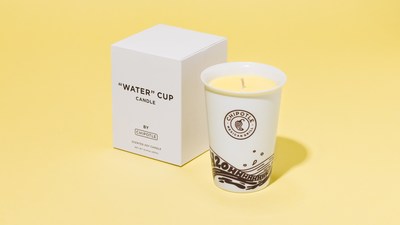
That history is what keeps the final-day activation from reading like a generic sweepstakes with soccer clip art. Stephanie Perdue, Chipotle’s SVP of marketing, put it directly in the brand’s announcement: “The best brand ideas start with a fan truth.”[2] In this case, the fan truth was not an abstract insight deck phrase. It was a behavior customers already recognized, joked about, and associated with the brand.
That also limits how neatly other brands can copy the move. A brand cannot simply decide, two weeks before a final, that it has a mischievous insider joke with fans. The joke either has been earned through repeated audience behavior, or it sounds manufactured when the brand tries to scale it. Chipotle’s advantage was not the cup-shuffle game by itself. It was the accumulated permission to make the cup the object of the game.
The Non-Sponsor Wrapper Stayed Generic
Chipotle’s campaign also worked because it did not need to pretend to be official. The public-facing language leaned on generic soccer and hydration-break cues rather than FIFA marks, tournament logos, or sponsorship claims. That is the practical center of many non-sponsor event activations: borrow the cultural calendar, not the protected property.
That does not mean “say soccer and you are safe.” Legal advisers at Stobbs have outlined how World Cup ambush-marketing risk can arise when brands create unauthorized associations with FIFA, teams, players, or protected tournament assets.[4] The CMO Brief has similarly described the difference between permissible contextual activation and risky attempts to imply official sponsorship around the 2026 World Cup.[5] Those are advisory interpretations, not permission slips, but they explain the lane Chipotle appeared to choose.
The safer creative wrapper mattered because the campaign’s real association did not depend on official language. The BOGO needed a matchday reason to visit. The Water Break needed a soccer moment when cups and hydration were already on-screen. Neither required Chipotle to say it was a FIFA sponsor.
What Marketers Should Actually Take From It
The useful lesson is not “ambush the biggest event you can find.” It is that Chipotle separated the jobs inside the campaign window. Opening day was built around restaurant visits. The final was built around attention capture and direct response. The same cultural season connected them, but the mechanics were not asked to prove the same thing.
- If the goal is traffic, the offer needs to be redeemable in a way that changes physical behavior on a defined day.
- If the goal is acquisition, the mechanic needs a direct-response layer that captures usable customer contact, not just engagement.
- If the brand is not a sponsor, the creative needs to live in generic event culture rather than imply official rights.
- If the idea depends on a fan joke, the brand needs evidence that the audience already recognizes the joke before the campaign asks it to carry a national moment.
That is a narrower but more useful standard than asking whether Chipotle “won” the World Cup. The Matchday BOGO has a sourced traffic result. The Water Break has smart mechanics, a real fan-culture basis, and acquisition potential, but not yet publicly verified performance. For a growth team looking at the next major event without sponsorship rights, that is the distinction worth keeping.
References
- Chipotle’s World Cup BOGO Becomes Its Busiest Day of 2026, Placer.ai
- CHIPOTLE PUTS A NEW TWIST ON SOCCER'S HYDRATION BREAK WITH $1 MILLION IN FREE BURRITOS, Chipotle Newsroom, July 16, 2026
- Chipotle World Cup burrito promotion customer acquisition, eMarketer
- FIFA World Cup 2026 and ambush marketing: what brands can and can't do, Stobbs
- World Cup 2026 brand activation without official sponsorship, The CMO Brief
Comments
Join the discussion with an anonymous comment.