
AI in Programmatic Display Advertising: A Channel Guide
A structured reference guide covering how AI is applied across the programmatic display channel — from audience modeling and bid optimization to dynamic creative and brand safety — with honest assessments of what's mature, what's still unreliable, and what marketers need to know before committing to AI-driven workflows.
Programmatic display is the channel where AI has the longest operational track record in marketing — and also where some of the most documented failures have occurred. Algorithmic bidding has been running since the early RTB era. Audience modeling predates the generative AI wave by a decade. Yet the channel is still producing brand safety incidents, wasted spend from low-quality inventory, and creative that never gets refreshed because no one has bandwidth to do it manually.
This guide maps what AI actually does in programmatic display today — not what vendors claim it will do. It separates capabilities that are mature and widely deployed from those that are experimental or platform-specific. It also covers the failure modes that practitioners encounter in practice, because those are the things you need to understand before you hand the channel over to automation.
What AI Does in Programmatic Display
The programmatic stack has multiple layers where AI has been integrated at different depths. Some of these — like bid optimization — are so thoroughly automated that most buyers never interact with the underlying logic. Others, like generative creative, are still being adopted cautiously.
Audience Modeling and Targeting
Lookalike modeling is the most established AI application in this channel. DSPs and data management platforms (DMPs) use machine learning to identify users who share behavioral and contextual patterns with a seed audience — typically converters or high-value customers. The models are trained on first-party signals where available, and supplemented with third-party data from exchanges.
The shift toward cookieless targeting has pushed more investment into contextual AI — systems that infer audience intent from page content rather than user-level identifiers. These models analyze text, semantic topics, and page structure to classify inventory and match it to campaign objectives. Vendors like Peer39, IAS, and DoubleVerify have expanded their contextual classification capabilities significantly over the past two years.
Predictive audience scoring — where AI assigns a probability score to each impression opportunity based on likelihood to convert — is now standard in most major DSPs including The Trade Desk, DV360, and Amazon DSP. The quality of these scores varies considerably depending on how much first-party data a buyer can feed into the model.
Bid Optimization
Automated bid optimization is the most mature AI application in programmatic. Every major DSP uses ML-based bidding algorithms that adjust CPM bids in real time based on predicted conversion probability, user signals, and campaign pacing. Marketers who set manual CPM floors and then walk away are effectively opting out of this — which is sometimes the right call, but usually not.
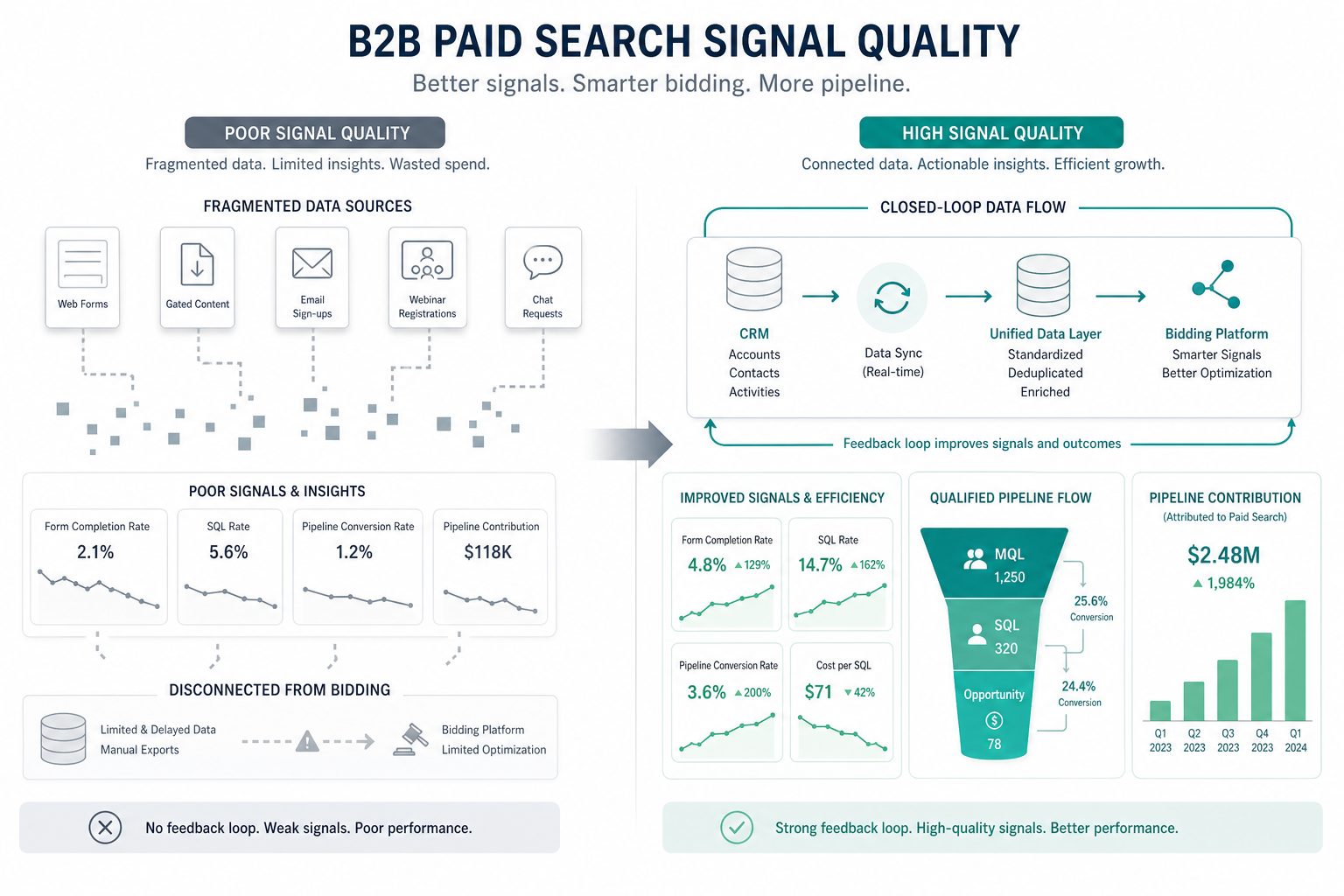
The practical decision here is which optimization objective to set. DSPs can optimize toward clicks, viewability, conversions, or custom events. The AI only performs as well as the signal it's given. A campaign optimizing toward "site visits" when the actual goal is qualified leads will learn the wrong thing quickly and spend accordingly.
Dynamic Creative Optimization (DCO)
DCO systems assemble ad creative from modular components — headlines, images, CTAs, offers — and use ML to determine which combination to serve to each user. This has been a core programmatic capability for years, but the AI layer has become more sophisticated: modern DCO can optimize across dozens of creative variables simultaneously and personalize based on contextual signals like weather, location, time of day, and device type.
Generative AI is now entering DCO workflows as a production tool. Some platforms allow copy variants and image backgrounds to be generated on-demand, reducing the manual effort of populating a DCO template with enough variants to be meaningful. This is still early-stage for most buyers — the creative quality controls and brand governance workflows haven't caught up with the generation speed.
Brand Safety and Inventory Quality
AI-powered brand safety tools classify inventory in real time to prevent ads from appearing alongside content that conflicts with brand guidelines or platform policies. This includes sentiment analysis, topic classification, and increasingly, image and video content analysis for pre-roll and CTV.
The challenge is that these systems operate probabilistically. A classifier that's 97% accurate still misclassifies 3% of impressions — and at programmatic scale, that's a significant absolute number. Documented brand safety incidents have continued to occur even with third-party verification layers in place. The tools reduce risk; they don't eliminate it.
Capability Maturity: What's Proven vs. What's Still Developing
Not all AI applications in programmatic are at the same stage. The table below reflects the current state as of Q2 2026, based on general industry deployment patterns rather than any single vendor's claims.
| Capability | Maturity Level | Widely Deployed? | Key Limitations |
|---|---|---|---|
| Algorithmic bid optimization | Mature | Yes — all major DSPs | Requires clean conversion signals; learns wrong objectives if misconfigured |
| Lookalike audience modeling | Mature | Yes — DSPs + DMPs | Degrades without quality seed data; cookie deprecation eroding signal |
| Contextual AI targeting | Mature–growing | Yes — multiple vendors | Classification accuracy varies by content type; niche verticals often miscategorized |
| Dynamic creative optimization | Mature | Yes — via DCO platforms | Needs sufficient variant volume to be meaningful; creative governance gaps |
| Predictive audience scoring | Established | Yes — major DSPs | Model quality tied to first-party data depth; black-box outputs |
| Generative creative for DCO | Early-stage | Partial — platform-specific | Brand consistency issues; requires human review layer; policy ambiguity |
| AI-powered brand safety classification | Established | Yes — IAS, DV, Peer39 | Probabilistic; documented false negatives at scale |
| Attention and viewability prediction | Emerging | Selective deployment | Measurement standards not yet unified across vendors |
| Supply path optimization (SPO) AI | Established | Yes — DSP-side | Limited buyer transparency into path selection logic |
Known Failure Modes
Programmatic AI fails in predictable ways. Most of these failures aren't new — they've been documented in industry post-mortems and audit reports for years. What changes is the specific trigger, not the category of failure.
Signal Contamination
Bid optimization AI learns from the signals you give it. If your conversion pixel fires on a micro-conversion (like a page scroll or video start) instead of a meaningful action, the algorithm optimizes toward users who scroll or watch — not users who buy. This is one of the most common causes of campaigns that show strong in-platform metrics but produce no business result.
The fix is straightforward in principle: audit your conversion events before launching any AI-optimized campaign. In practice, many teams inherit tracking setups from previous campaigns or agencies and never verify what the pixel is actually firing on.
Audience Segment Decay
Lookalike models built on stale seed audiences continue to spend against outdated user patterns. A lookalike built from customers who converted six months ago may not reflect your current buyer profile — especially in fast-moving categories. Most DSPs don't alert you when a lookalike segment has degraded; they just keep spending.
Creative Fatigue Without AI Intervention
DCO systems optimize across the variants they're given. If the creative set is thin — say, three headlines and two images — the algorithm converges on a "winner" quickly and the remaining variants receive negligible impressions. The result looks like optimization but is actually creative stagnation. Effective DCO requires ongoing creative input, not a one-time setup.
Brand Safety Classification Gaps
AI classifiers struggle with satire, irony, and emerging news topics that don't yet have enough training data. A page covering a breaking news event may be classified as safe because the classifier hasn't seen enough similar content to flag it. Conversely, legitimate editorial content about sensitive topics (health, politics, finance) can be over-blocked, reducing reach in high-value contexts.
Pacing Algorithm Overspend
DSP pacing algorithms sometimes front-load spend to hit delivery targets, particularly near the end of a flight. This can result in impressions being served at lower-quality times or on lower-quality inventory to clear budget. Campaigns with hard end dates are especially vulnerable. Setting a slightly conservative daily budget cap alongside flight-level budgets is a common mitigation.
What Marketers Need to Understand Before Adopting AI in This Channel
Programmatic AI is not a set-and-forget system. The automation handles execution speed and scale that no human team can match — but the quality of what it executes depends entirely on the inputs and constraints you define.
- Your conversion signal is the most important configuration decision. Every AI optimization layer in programmatic — bidding, audience scoring, DCO — learns from conversion events. Define these carefully, verify they're firing correctly, and revisit them when campaign goals change.
- First-party data quality determines model quality. DSP audience models and lookalikes perform significantly better when fed clean, recent first-party data. CRM uploads, pixel-based audiences, and customer match lists all degrade over time. Build a refresh cadence into your workflow.
- AI needs a learning period — and it costs money. Most DSP optimization algorithms require a minimum number of conversion events (often 30–50 per week) before they stabilize. Campaigns with tight budgets or niche audiences may never exit the learning phase, which means the AI is effectively guessing for the entire flight.
- Brand safety requires layered controls, not a single tool. Combine pre-bid contextual targeting, third-party verification (IAS or DoubleVerify), and a curated inclusion list for premium inventory. Any single layer will have gaps.
- Generative creative in DCO is not production-ready without governance. If your DSP or DCO platform offers AI-generated copy or image variants, treat every output as a draft requiring human review before it enters rotation. The generation speed is useful; the brand consistency is not guaranteed.
- Transparency into AI decisions varies by platform. Some DSPs provide detailed logs of why bids were placed or suppressed; others offer minimal visibility. Before committing significant budget to an AI-optimized campaign, understand what reporting your DSP provides and what remains a black box.
The Cookie Deprecation Complication
Google's eventual deprecation of third-party cookies in Chrome (still in progress as of Q2 2026, with the Privacy Sandbox APIs available but not universally adopted) has forced a significant rethink of how programmatic AI models are trained and what signals they rely on.
The practical effect for most buyers is that third-party audience segments — the kind you'd buy from a data broker or build using cross-site behavioral data — are becoming less reliable. AI models trained on these signals are degrading. The channels that perform best in a cookieless environment are those with strong first-party data programs: retail media, publisher direct deals, and CRM-anchored campaigns.
Contextual AI targeting has benefited from this shift. It doesn't depend on user-level identifiers at all — it classifies the content environment and infers intent from that. The signal is less precise than behavioral targeting, but it's stable, privacy-compliant, and not subject to identifier deprecation.
AI Across the Programmatic Stack: Where the Leverage Points Are
Not every AI application in programmatic deserves equal attention. Some are table stakes — you're already using them whether you know it or not. Others require deliberate configuration to unlock value. The distinction matters when you're deciding where to invest time.
| Layer | AI Application | Marketer Action Required | Where to Focus |
|---|---|---|---|
| Bidding | Automated CPM optimization | Set correct optimization objective; verify conversion signal | High — misconfiguration here affects everything |
| Audience | Lookalike + predictive scoring | Provide clean seed audience; refresh regularly | High — data quality determines model quality |
| Audience | Contextual classification | Select appropriate brand safety tiers; review blocked categories | Medium — often set and forgotten |
| Creative | DCO variant testing | Maintain sufficient variant volume; refresh creative quarterly | Medium — often under-resourced |
| Creative | Generative copy/image variants | Implement human review gate before variants go live | High risk if ungoverned |
| Inventory | Supply path optimization | Audit path quality; build curated PMP deals alongside open exchange | Medium — limited buyer control |
| Measurement | Attribution modeling | Align attribution window to actual purchase cycle | High — attribution drives optimization decisions |
Risks Specific to This Channel
Programmatic display has a set of AI-specific risks that don't apply the same way in other channels. These aren't hypothetical — they've produced documented incidents and wasted budgets at real organizations.
- Ad fraud amplification: Bid optimization AI can be gamed by sophisticated fraud operations that simulate the conversion signals the algorithm is trained to seek. Invalid traffic detection and AI-based fraud prevention are both necessary, but fraud operations adapt faster than most verification tools update their models.
- Exclusion list drift: Brand safety exclusion lists built months ago may not reflect current content categories. News topics, political categories, and emerging content types need to be reviewed and updated regularly — the AI classifier doesn't know what your brand now considers off-limits.
- Optimization toward proxy metrics: When campaigns can't generate enough true conversion events, teams often optimize toward proxy metrics like viewability or CTR. The AI performs well against those proxies — but the correlation between those proxies and actual business outcomes is often weaker than assumed.
- Generative creative policy violations: Ad exchanges have content policies that AI-generated creative can violate — particularly around claims, imagery, and sensitive categories. Generated copy that passes internal review may still be rejected by the exchange or trigger a policy flag mid-campaign.
What This Channel Guide Does Not Cover
Summary: What's Reliable, What Requires Caution
Programmatic display is a channel where AI genuinely reduces manual labor at scale — bid management, audience segmentation, and inventory classification would be operationally impossible without it at modern volumes. That's not a vendor claim; it's just how the channel works.
The risks are real and documented. Signal contamination, brand safety gaps, creative stagnation, and fraud exposure are not edge cases — they're recurring patterns that show up in campaign audits across organizations of all sizes. The AI doesn't eliminate these problems; it changes their shape and makes some of them harder to detect because the failure is buried inside an automated process.
The practical posture is: use the automation, configure it carefully, and build human checkpoints at the layers where AI failure has the most downstream impact — conversion signal definition, creative governance, and brand safety exclusion list maintenance. Those three areas account for the majority of preventable programmatic AI failures.

Comments
Join the discussion with an anonymous comment.