
Nike
This case study breaks down how Travis Scott and Nike adapted a streetwear scarcity model to market the Phantom 6 football cleat for the 2026 World Cup, revealing structural lessons for artist-brand crossovers in performance categories.
Outcome
Indoor version resold at $651 on StockX, indicating strong collector demand.
This outcome is independently verified via the primary source linked above.
The interesting part of the Travis Scott x Nike Phantom 6 launch is not that a musician sold another limited Nike product. That part is familiar. The interesting part is the category jump: a Cactus Jack collaboration moved from Air Force 1s, Jordans, Dunks, and collectible lifestyle footwear into a performance football boot at the edge of a World Cup cycle.
That changes the marketing problem. A sneaker drop can survive as an object of fandom. A football cleat has to pass through a narrower gate: players, surfaces, studs, touch, speed, national-team imagery, and the suspicion that a logo swap is being asked to do work the product has not earned.
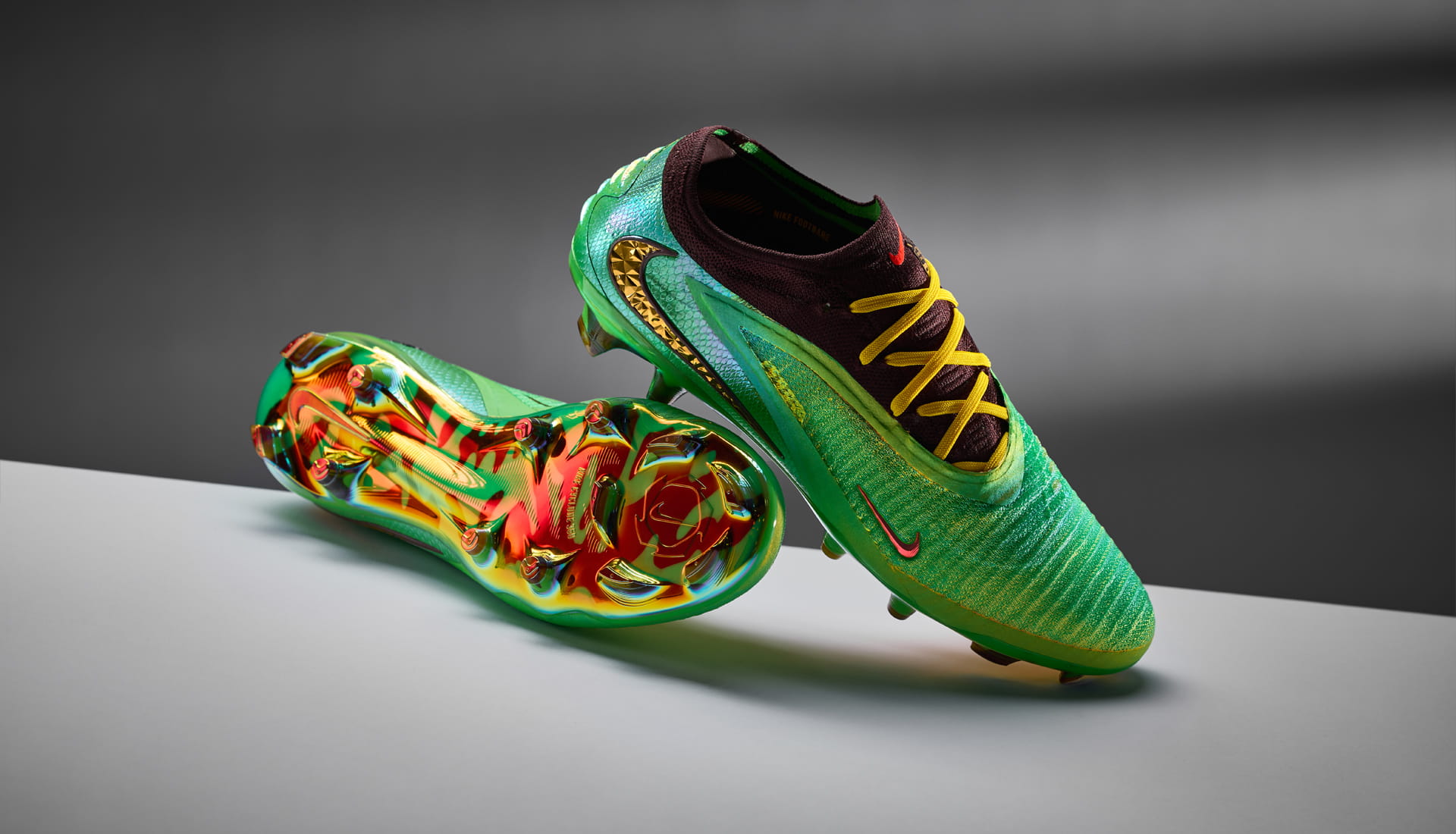
Nike and Scott did not abandon the streetwear playbook. They adapted it. The Phantom 6 Cactus Jack release used a shock drop, raffle controls, SNKRS availability, tight visual codes, and adjacent apparel. But the campaign only becomes useful as a marketing case because those scarcity mechanics were paired with football signals: FG and Indoor SKUs, player seeding, a Total 90 national-team bridge, and appearances by elite players rather than only product shots.
The Campaign Card
The product architecture was simple enough to read quickly and specific enough to matter. The collaboration centered on two versions of the Nike Phantom 6 Low Elite SE Cactus Jack: a firm-ground football boot listed around $310 to $320 and an Indoor/Court version listed around $200 to $210, depending on retailer and market coverage cited at launch.[1][2]
| Campaign Element | Confirmed Detail | Marketing Function |
|---|---|---|
| Product | Nike Phantom 6 Low Elite SE Cactus Jack in FG and Indoor/Court versions | Moves the collaboration from lifestyle footwear into football performance contexts |
| Retail pricing | FG around $310-$320; Indoor around $200-$210 | Separates the on-pitch SKU from the more collector-friendly indoor silhouette |
| Initial release | Shock drop on TravisScott.com on June 27, 2026 | Activates the Cactus Jack audience before broader platform release |
| Raffle layer | EQL-powered launch flow on Travis Scott's site | Adds demand control and anti-bot trust to a high-heat release |
| Nike release | SNKRS release on June 29, 2026 in select countries | Transfers the drop from artist-owned demand to Nike's sneaker-commerce infrastructure |
| Apparel bridge | 50-piece Total 90 collection covering 10 World Cup nations | Connects the boot to national-team football culture rather than leaving it as a standalone collab |
The launch sequencing mattered. Complex reported a June 27 shock drop through TravisScott.com followed by a June 29 SNKRS release in select countries, while EQL separately described its role in the Travis Scott launch flow and why some users could not enter launches through the platform.[2][3] That is not just a release-date footnote. It shows three different jobs being assigned to three different pieces of infrastructure.
The Drop Mechanics Did More Than Create Friction
The TravisScott.com shock drop did what artist-owned channels are supposed to do: reward the audience already trained to watch the source, move conversation before the mainstream release window, and preserve the feeling that the campaign begins inside the artist's world rather than inside a retail calendar.
EQL's role solved a different problem. In a high-demand collaboration, the issue is not only whether product sells out. It is whether buyers believe the process had any fairness once bots, duplicate entries, and automated checkout behavior enter the room. EQL described the Travis Scott launch access issue through its own anti-bot and fairness framework, which gives the campaign a useful trust layer without requiring Nike or Cactus Jack to turn the release into a tutorial on raffle technology.[3]
SNKRS then gave the boot a more conventional Nike release surface. That matters because the campaign was not only selling to Cactus Jack loyalists. It also had to be legible to Nike football consumers, sneaker collectors who watch SNKRS as a habit, and buyers in select markets who may not treat TravisScott.com as their default retail destination.[2]
None of this proves production quantity. Nike and Travis Scott did not publicly disclose exact unit counts in the materials available here. Scarcity is visible through the release method, platform controls, and resale behavior, but it should not be inflated into a precise supply claim. For marketers, that distinction is not pedantic. A campaign can be demonstrably constrained without anyone outside the companies knowing exactly how many pairs existed.
Why The Football Layer Had To Be Real
A lifestyle sneaker collaboration can live comfortably in staged imagery. A football boot cannot stop there. The moment the product uses Phantom tooling and arrives with an FG SKU, buyers are allowed to ask whether it belongs on a pitch or only on a shelf.
That is why the most important credibility signal was not the color palette, the Cactus Jack branding, or even the speed of the sell-through. It was player seeding. SoccerBible reported Erling Haaland and Alexis Vega wearing the Travis Scott x Nike Phantom 6 Cactus Jack boots on pitch, which gave the launch a kind of proof that campaign photography cannot substitute for.[1]
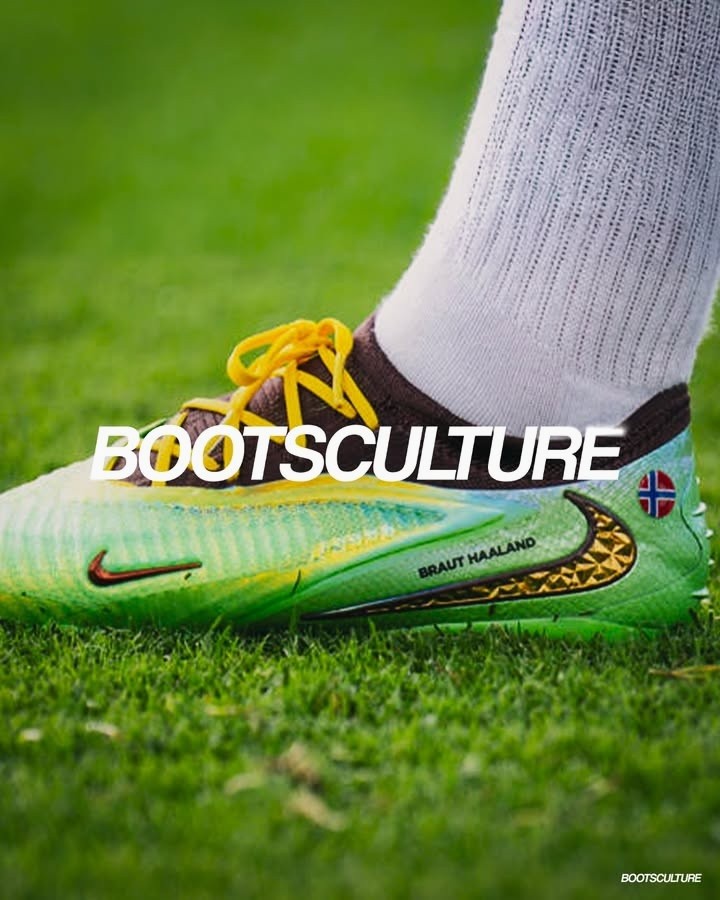
Haaland and Vega do not make the product objectively better by wearing it. That would be too easy a conclusion. What their appearances do is locate the product inside the sport's visual system: socks, grass, drills, match preparation, photographers, boot-spotting accounts, and fans who understand the difference between a sneaker collaboration and a boot an elite player is willing to put into a football environment.
The Total 90 Collection Made The World Cup Bridge Easier To Read
The boot did not have to carry the World Cup association alone. The supporting Cactus Jack x Nike Total 90 collection gave the collaboration a broader football wardrobe, with Complex reporting a 50-piece apparel collection across Argentina, Australia, Brazil, Croatia, England, France, South Korea, the Netherlands, Portugal, and the United States, priced from $52 to $168.[4]
That apparel layer does useful commercial work. A national-team-inspired jersey or Total 90 piece lets the campaign meet fans who may never buy a $300-plus FG boot but still want entry into the football world Cactus Jack is building. It also keeps the cleat from feeling isolated. Instead of one performance product trying to absorb the full burden of cultural meaning, Nike and Scott surrounded it with a collection that made the category shift easier to understand.
The choice of Total 90 is not neutral either. It gives the campaign a football-memory asset rather than a generic sportswear frame. For older football consumers, Total 90 carries boot-room and tournament associations. For younger buyers, it reads as a retro Nike code already primed for fashion circulation. That makes it a useful bridge between football specificity and streetwear wearability.
Secondary sources also placed the campaign near Nike football's broader "Rip the Script" visibility around the World Cup run-up, though the available research here does not support overclaiming Scott's exact role inside that Nike narrative. The safer read is that the Phantom 6 launch benefited from appearing during a period when Nike football was already trying to refresh attention around tournament-stage product and storytelling.
Cactus Jack Was Already A Collaboration Platform
The Phantom 6 campaign also worked because Travis Scott's commercial role had already been trained into the market. Cactus Jack is not a one-off celebrity endorsement wrapper; it has operated as a repeatable collaboration platform across footwear, gaming, food, apparel, and digital events.
Everything-PR described Scott's model with the line that "the collaboration is the platform, not the product," and cited his Fortnite Astronomical event as drawing about 45 million concurrent viewers, with Nielsen-estimated Nike brand exposure value of about $518,000.[7] Hollywood Branded, discussing the McDonald's Cactus Jack meal, cited a 4.6% same-store sales increase for McDonald's U.S. business in Q3 2020.[8]
Those examples do not prove that a football boot will perform. A digital concert and a fast-food meal are not the same purchase decision as an elite cleat. They do show why Nike could plausibly treat Cactus Jack as demand infrastructure rather than a decorative signature. Scott brings an audience that expects drops to become events, and that expectation is commercially valuable before the first product detail is explained.
The limitation is just as important. The stronger the artist platform, the more governance the brand has to bring with it. Astroworld, where 10 people died in November 2021, remains a permanent part of Scott's public narrative and a sober reminder that mass-attention machinery requires safety, crowd management, and accountability systems at the same scale as the marketing infrastructure.[7]
Resale Shows Demand, But Not A Clean Victory Lap
The resale signal is useful, but it should be read with discipline. StockX mid-July 2026 product-page data showed the Indoor/Court version trading around $651, roughly several times retail depending on the launch price used as the base, while the FG version showed last-sale activity closer to retail.[5][6]
That split complicates the lazy version of the story. If every SKU were simply a Cactus Jack trophy, the performance boot and the indoor shoe would be expected to behave more similarly. Instead, the indoor model appears more clearly pulled into collector and lifestyle demand, while the FG cleat sits closer to the practical football-buyer question: will someone pay a premium for studs they may actually need to use?
Resale also changes quickly, especially within weeks of release. StockX last-sale data can show heat, liquidity, and relative preference, but it is not the same thing as long-term brand equity, athlete adoption, or performance validation. For this campaign, the better read is narrower: the Indoor version showed stronger collector-market acceleration in the immediate post-launch window, while the FG version's closer-to-retail behavior suggests a different buyer logic.
What Marketers Can Actually Take From The Launch
The useful lesson from the Travis Scott Nike cleat collab marketing strategy is not that every performance category needs a musician. Most do not. The lesson is that scarcity can help a technical product cross into culture only when the campaign also answers the category's trust questions.
- Use artist-owned channels to activate the core fan base, but do not make that the only proof of demand.
- Use controlled release systems when the audience expects bots and automated buying to distort access.
- Give the product a credible use context before asking performance-category buyers to treat it seriously.
- Build a surrounding campaign world, as Nike did with Total 90 apparel, so the hero SKU is not forced to explain the entire collaboration alone.
- Read resale as a market signal, not as a complete measure of success.
The Phantom 6 launch worked as a case study because its moving parts reinforced each other. The shock drop created urgency. EQL added a fairness layer. SNKRS gave Nike's own demand channel a role. Player seeding moved the boot into football reality. The Total 90 collection gave the campaign a tournament wardrobe. Resale showed where collector energy was strongest, while also revealing that the performance SKU had a different market shape.
In practice, the release worked because each layer served a different audience: TravisScott.com for core fans, EQL for controlled access, SNKRS for Nike's broader buyer base, and player seeding plus Total 90 apparel for football credibility.
References
- Nike & Travis Scott Reveal Limited Edition Phantom X Cactus Jack, SoccerBible, June 2026.
- Travis Scott Nike Phantom 6 Low Release Date, Complex.
- Why You Couldn't Enter Travis Scott Launches, EQL.
- Cactus Jack Nike Travis Scott Total 90 World Cup Collection, Complex.
- Nike Phantom 6 Low Elite FG SE Travis Scott, StockX.
- Nike Phantom 6 Low Elite IC SE Travis Scott, StockX.
- Travis Scott Marketing Strategy: Plans and Results, Everything-PR.
- Case Study: Travis Scott Strategic Brand Partnerships, Hollywood Branded.


Comments
Join the discussion with an anonymous comment.