

Lorcana, Pokémon, KeyForge
An analysis of how Lorcana, Pokémon Destined Rivals, and KeyForge each failed a different demand-side test, giving marketers a framework to distinguish between supply-constrained, fragile-demand, and inflated-demand failure modes—and choose the right countermeasure for each.
Outcome
Three distinct demand-side failure modes (supply-constrained, fragile, inflated) eroded consumer trust across Lorcana, Pokémon, and KeyForge launches — sourced from community and official reports.
This outcome is independently verified via the primary source linked above.
The ugliest version of a successful launch is the one where customers are ready, stores are surrounded, social feeds are loud, and the product still cannot be bought at a sane price. Demand is present. Excitement is real. The launch team gets the screenshots it wanted: sold-out shelves, preorder alerts, Discord chatter, resale listings moving fast. Then the support queue fills with people who did everything right and still lost.
That is where the most useful marketing lessons from TCG product launch failures begin. Not with the comforting idea that a sellout proves product-market fit, and not with the lazy opposite idea that scarcity is always manipulation. Trading card games make the distinction harder to ignore because collectors, players, retailers, bots, and speculators all touch the same launch window. A product can be wanted and still be mishandled. A community can be loud and still be shallow. A shortage can create belief, or it can train customers to stop trusting MSRP.
A practical read of these failures starts by separating three different demand-side problems:
| Failure mode | What it looks like from the outside | What the marketer must diagnose |
|---|---|---|
| Supply-constrained demand | Customers want the product, but the market experience turns hostile because supply cannot meet demand. | Can the company fulfill the demand it is encouraging? |
| Fragile demand | Early interest is real, but it depends on a narrow technical, experiential, or trust dependency. | Does demand survive when the thing holding the experience together breaks or weakens? |
| Inflated demand | Scarcity signals make demand look larger or healthier than repeat purchase behavior would support. | Is the audience trying to buy the product, or trying to win the scarcity game? |
Lorcana and Pokémon sit mostly in the first bucket. KeyForge belongs in the second. Inflated demand is the useful contrast case: the one that reminds marketers not to treat every line, waitlist, or premium resale price as proof that the product itself is building durable demand.
Lorcana: When Promotion Would Have Made the Launch Worse
Disney Lorcana had the sort of pre-launch gravity most new games never get. A Disney collectible card game from Ravensburger did not need years of category education before people understood why it might matter. That was the blessing, and then quickly the operational problem.
A LorcanaPlayer analysis reported that Ravensburger chose not to advertise the launch because fulfillment could not keep up with orders, framing the logic as, in effect, why pay to generate more negative feedback when customers already could not get product.[1] The same account described first-print supply failing to cover initial orders, with Organized Play stores receiving priority allocation while some non-OP stores received nothing, and stores charging two to four times MSRP amid scarcity.[1]
That source is community analysis rather than a Ravensburger audit, so it should not be treated as a clean internal history. But the mechanism is plausible enough to matter for marketers: awareness had stopped being a growth lever and had started becoming a complaint engine. More impressions would not create more happy customers. They would create more people asking why the product existed everywhere except at checkout.
The mistake to avoid is reading Lorcana only as “great demand.” Great demand is the easy part of the sentence. The harder part is that retailers became the emotional shock absorber for a supply plan that could not meet the heat of the brand. The customer did not experience a production forecast. They experienced an empty peg, a marked-up box, or a store owner explaining allocation rules the brand did not have to explain face-to-face.
This is where scarcity stops being a clean marketing tactic. In categories with trusted retail channels, MSRP is not just a number; it is part of the implied promise of access. When launch scarcity pushes ordinary buyers toward secondary-market pricing, the brand may still book demand, but it also creates a class of customers whose first memory is exclusion.
The diagnostic test for Lorcana is simple: if every incremental unit of awareness increases the number of people who cannot buy, promotion has crossed from useful to corrosive. The right response is not louder launch messaging. It is production realism, allocation transparency, and restraint until the market can absorb the attention.
Pokémon Destined Rivals: A Mature Franchise Can Still Lose Control of the Buying Experience
Pokémon has none of the usual excuses of a young launch. The franchise is mature. The collector base is visible. Retail partners know what a hot set can do to store traffic. That is what makes the Destined Rivals shortage more useful as a case: even a market leader can see demand mutate into a trust problem when scalping, bots, and retail disorder become part of the launch experience.
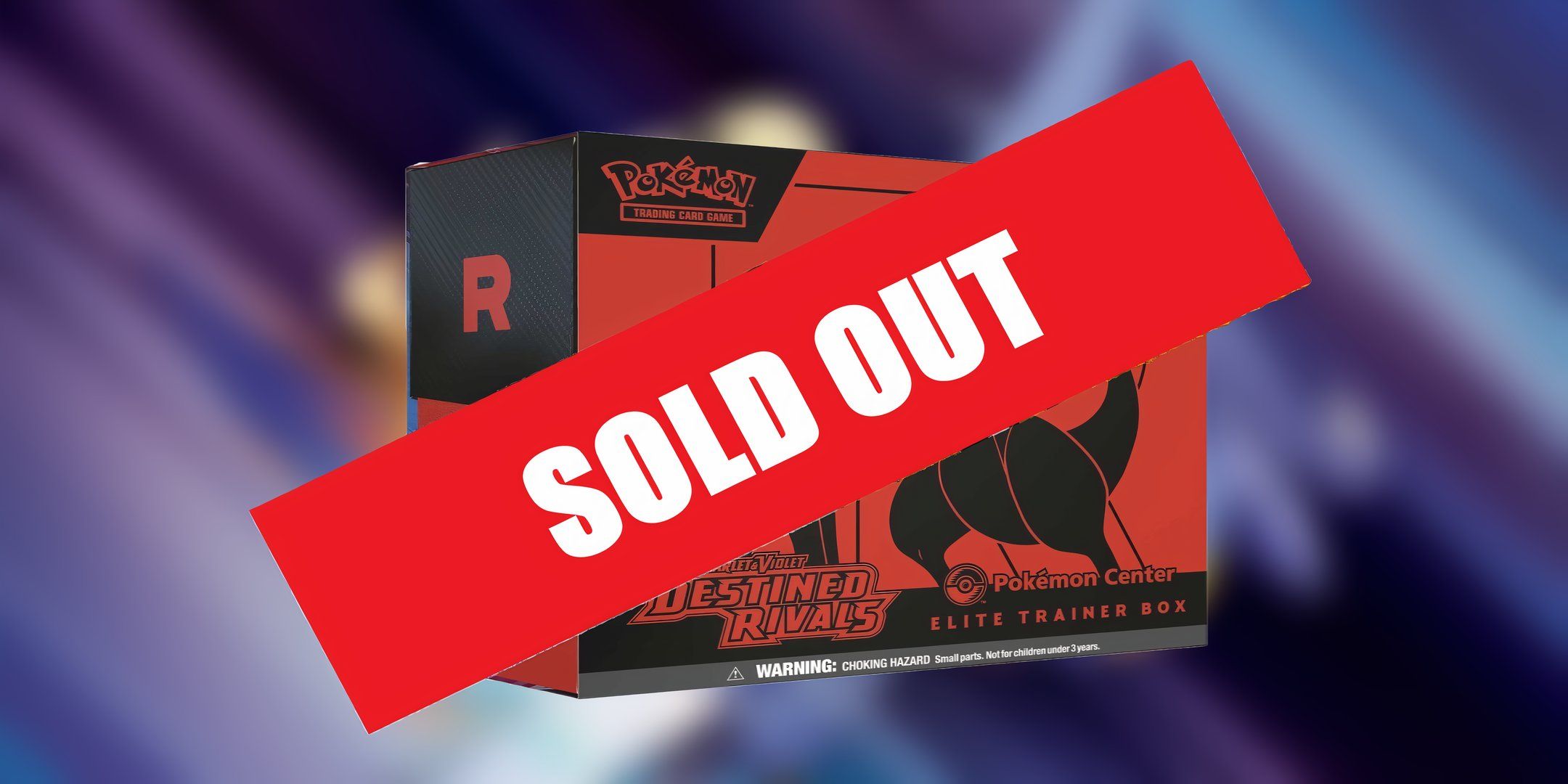
The Pokémon Company issued a public statement acknowledging that strong demand for Pokémon TCG products had led to shortages and that preorder activity had been affected by scalping and bot manipulation.[2] That kind of statement matters less for its corporate phrasing than for what it admits could no longer be kept behind retailer emails and customer service templates: the buying experience had become part of the product story.
Community reporting around the Destined Rivals period also described fights in stores and Japan’s pack-cutting practice, where booster packs were cut open at the point of sale after purchase to make resale less attractive.[3] The pack-cutting detail should be handled carefully because the research trail is community-sourced rather than an official Pokémon policy document. Still, as an anti-resale response, it is an extreme signal. It says the problem was no longer just “we need more units.” It was “we need to interfere with the resale value of sealed product because the market around the product is overpowering the intended purchase experience.”
There is a brutal retail consequence hiding inside that distinction. A customer who cannot buy a booster box does not usually separate the manufacturer, distributor, bot operator, marketplace reseller, and local store into neat columns. They see a brand they love and a system that rewards someone else for beating them to the cart. If the same pattern repeats, the anger stops sounding like disappointment and starts sounding like learned distrust.
Lorcana and Pokémon are both supply-constrained failures, but they are not identical. Lorcana shows the danger of underproduction against obvious brand heat. Pokémon shows the danger of mature demand being captured by actors who are not trying to play, collect casually, or buy through the intended path. In one case, the brand risks creating more desire than it can serve. In the other, it risks letting the path to purchase become a contest against machines and resellers.
That difference changes the countermeasure. Lorcana’s lesson points toward conservative promotion and better supply planning. Pokémon’s points toward preorder controls, retailer coordination, bot resistance, and communication that does not pretend a shortage is merely a happy sign of popularity. The marketing team cannot solve every allocation problem, but it can stop treating sellout velocity as a victory metric when the people who most wanted the product never had a fair buying opportunity.
The same principle applies outside TCGs. When production or fulfillment breaks, marketing ROI can turn negative because every campaign sends people toward a blocked transaction. That is also the lesson in how the Coca-Cola Fairlife ransomware attack stalled marketing: demand generation is only valuable when the business can satisfy the demand it creates.
KeyForge: The Demand Was Real, Then It Proved Too Fragile
KeyForge is the cleaner warning against a different misread. Its failure cannot be reduced to “not enough supply,” and it should not be flattened into “the algorithm broke, so the game died.” The timeline is more uncomfortable than that.
The game launched with a genuinely distinctive promise: every deck was unique, generated by an algorithm, and playable as a sealed identity rather than assembled from singles. Early sales reflected real curiosity. KeyForge debuted at number four on ICv2’s Fall 2018 collectible game charts and rose to number three in Spring 2019, ahead of Yu-Gi-Oh! in that ranking.[4]
If the story stopped there, a marketer could write a pleasant launch memo. New mechanic. Strong retail attention. Chart momentum. Proof that the category wanted something other than the usual chase-card economy.
But by Fall 2019, KeyForge had disappeared from ICv2’s top five.[4] That matters because it happened before the later algorithm crisis in 2021, when Fantasy Flight Games announced it could no longer make new decks after the deck-generation software was lost or damaged and could not be rebuilt quickly.[4] The technical failure was serious, but it landed on a product whose demand had already shown weakness.
This is the fragile-demand pattern. The early interest is not fake. The launch is not imaginary hype. The problem is that demand depends on a narrow support beam: in KeyForge’s case, the algorithmic system that made the product possible, plus the confidence that organized play, discovery, balance, and future releases would keep the unique-deck premise alive.
When that support beam cracked, the damage was not limited to production scheduling. It asked customers to keep believing in a game whose central promise depended on infrastructure they could not inspect. A normal card game can delay a set and still be legible. KeyForge’s delay struck closer to the product’s reason to exist.
The revival data makes the trust problem harder to wave away. Ghost Galaxy’s Winds of Exchange Gamefound campaign drew 6,172 backers and about $1.1 million, while the later Grim Reminders campaign drew 2,195 backers and about $510,000, a backer drop of roughly 64 percent.[4] Those campaign figures should not be overread as the entire market for KeyForge, and they are not an audited measure of all demand. They do show that restoring the technical dependency did not automatically restore launch-era momentum.
That is the operational lesson. Fragile demand needs protection before expansion. If the product promise depends on one system, one licensor, one creator, one marketplace rule, one data feed, or one manufacturing process, then marketing cannot treat that dependency as a backend detail. It is part of the offer. If it breaks, the repair plan has to address trust, not just availability.
A marketer who only looks at the early KeyForge chart position sees a hit. A marketer who only looks at the 2021 algorithm problem sees a technical accident. The useful read is less tidy: a novel product generated real demand, that demand weakened quickly, and the later dependency failure made the path back steeper than a simple relaunch could solve.
Inflated Demand: When Scarcity Becomes the Product
The third failure mode is thinner in the available evidence here, so it deserves a lighter touch. Inflated demand is not just “a product sold out.” It is the moment when scarcity mechanics make demand look healthier than repeatable organic buying behavior would support.
TCGs are especially vulnerable because sealed product can behave like entertainment, collectible, lottery ticket, and speculative asset at the same time. If buyers are chasing limited drops mainly because scarcity itself suggests future value, the launch dashboard can look wonderful right up until confidence in the mechanism slips. At that point, the brand learns whether people wanted the product or wanted access to a temporary arbitrage.
MetaZoo and Magic: The Gathering’s Secret Lair drops are useful reference points for this discussion because both are commonly discussed in relation to scarcity, limited availability, and collector-driven demand. The evidence provided here does not support turning either into a full case history, so the safer lesson is narrower: scarcity can be a legitimate launch mechanic, but it is a poor substitute for proof that people will keep buying when access becomes normal or resale expectations cool.
This is where standard digital marketing habits can become dangerous. Countdown timers, expiring bundles, limited windows, and “don’t miss out” copy all borrow urgency from scarcity. Used cleanly, they help customers make a decision. Used as the main source of perceived value, they blur demand with pressure. That broader scarcity problem also appears in discussions of what UBI means for marketing in an AI world, where artificial urgency becomes one more lever competing for attention.
The diagnostic test is whether demand remains credible after removing the scarcity theater. Do customers still buy when they can think? Do they return without a drop window? Do retailers want steady replenishment, or only the next frenzy? Are customers excited to use the product, or mainly anxious about missing the transaction?
The Countermeasure Has to Match the Failure
The same surface metric can point to three different realities. A sold-out launch might mean the company underbuilt against real demand. It might mean the product’s central dependency is carrying more weight than the team admits. It might mean scarcity has swollen the signal beyond what durable customers will support.
| If the failure is... | Do not misread it as... | Use this countermeasure |
|---|---|---|
| Supply-constrained demand | Pure launch success | Slow promotion when fulfillment is weak, communicate allocation clearly, improve preorder and anti-bot controls, and protect retailers from becoming the only explanation layer. |
| Fragile demand | A one-off technical problem | Identify the dependency behind the product promise, protect it before scaling, and repair confidence before asking the audience to fund or evangelize the next phase. |
| Inflated demand | Market validation | Look for repeat purchase, normal-access conversion, organic use, retailer reorder interest, and community behavior that survives without scarcity pressure. |
This is also why compressed marketing windows can work in some categories and fail badly in others. A tight announcement-to-purchase cycle, like the kind discussed in why Bethesda compresses its marketing windows, depends on converting attention while the product can actually receive it. If the shelf, server, store counter, or support team cannot handle the conversion, the window just concentrates frustration.
The sharper habit is to stop celebrating demand before identifying what kind it is. Lorcana and Pokémon show how real demand can punish a brand when access collapses. KeyForge shows how real demand can fade when the product promise rests on a fragile dependency. Inflated scarcity shows how demand can appear larger than the customer base that will remain after the game of access ends.
References
- Why Is Lorcana Sold Out Everywhere? — LorcanaPlayer.
- Pokémon TCG Product Availability Statement — The Pokémon Company.
- Community reports on Pokémon Destined Rivals pack-cutting and store incidents.
- What happened to Keyforge? — Tabletop Gaming.

Comments
Join the discussion with an anonymous comment.