

Megan Rapinoe
A case study examining Megan Rapinoe's full brand partnership portfolio — from co-creation successes with Nike and Trusaic to the transactional backlash at Subway — to identify the structural conditions that make activist-athlete deals succeed or fail, and how AI risk-vetting tools are reshaping the landscape.
Outcome
AI risk-scoring tool flagged trans rights advocacy, costing a World Cup 2026 commercial opportunity — source: CBC, 2026
This outcome is independently verified via the primary source linked above.
The cleanest way to understand the marketing lessons in Megan Rapinoe’s brand deals is not to start with a triumphant campaign reel or a backlash montage. Start with the account Rapinoe gave this summer: an unnamed brand’s AI risk-scoring software reportedly flagged her advocacy for trans rights and cost her a World Cup 2026 commercial opportunity. CBC reported the allegation after Rapinoe wrote about it in a July 13, 2026 Marie Claire op-ed; the brand was not named, and the account traces back to Rapinoe’s own disclosure. [1][2]
That incident is useful because it strips away the comfortable language marketers use around “purpose.” The same public identity that made Rapinoe valuable to Nike, Victoria’s Secret, Trusaic, and women’s sports sponsors could also be scored as a liability by a tool built to detect reputational risk. The machine did not have to be anti-equality to create a bad marketing decision. It only had to flatten advocacy, controversy, audience fit, and campaign context into the same warning signal.
Rapinoe’s portfolio is not a simple argument that activist athletes are good for brands, or bad for brands, or brave, or toxic, or any other label that lets a sponsorship team stop thinking. It is a case study in structure. When a brand gave Rapinoe authority, product relevance, a role, and a clear audience logic, her advocacy gave the work a spine. When a brand dropped her into a conventional ad system with stakeholders who had not bought into the premise, the same advocacy became an unmanaged cost center.
The strongest Rapinoe deals were built around control, not borrowed credibility
Nike’s Rapinoe work matters because it was not merely a brand borrowing her cultural position for a quarter. WWD reported that Nike gave Rapinoe a personal logo and a co-created collection, with the brand describing the arrangement as “a new model for athlete partnerships.” [3]
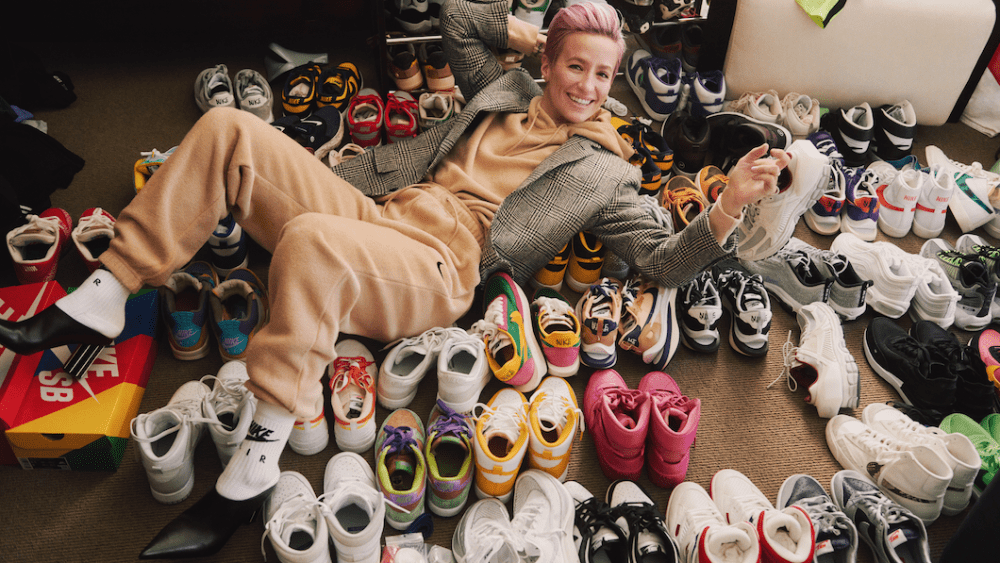
That phrase can sound like standard brand theater until the mechanics are taken seriously. A personal logo is not just decoration. It turns the athlete into an organizing asset inside the product system. A co-created capsule asks product, design, merchandising, retail, comms, and athlete marketing to share the same premise: Rapinoe is not here to increase recognition around a generic shoe drop. Her identity is part of the offer.
That distinction changes the job of the campaign. The creative does not have to pretend Rapinoe is broadly neutral. It can concentrate on the audience that sees her as a symbol of women’s sports, LGBTQ+ visibility, pay equity, and athlete voice. In that setting, controversy is not automatically waste. Some disagreement is the price of a sharper signal.
There is a useful contrast inside Nike’s own athlete-marketing universe. A scarcity-and-crossover project such as a Travis Scott football product plays a different strategic game from Rapinoe’s activist co-creation model. Both can create attention, but the organizing logic is different: one leans on cultural heat and limited access, while the other asks the brand to make the athlete’s values legible in product and campaign architecture. That is why topic-level relevance often matters more than average social performance; a broad engagement number can hide whether the right audience is actually leaning in. For more on that measurement problem, see why average engagement rate misleads in athlete brand partnerships.
Nike did not eliminate risk by doing this. It made the risk more governable. Product fit, visual identity, public message, and athlete history pointed in the same direction. If a consumer objected to Rapinoe’s politics, the brand at least knew what disagreement it had chosen. That is very different from discovering after launch that the person in the ad means something to the market that the media plan did not account for.
Trusaic made the role explicit
Trusaic went even further on structure. Rapinoe joined the company as Chief Equality Officer, an embedded executive role rather than a spokesperson assignment. [4]
That title matters because it changes what the brand is asking the market to believe. A paid spokesperson says, in effect, “this person approves of us.” An executive role says the athlete has been placed inside the company’s stated mission. For a business tied to pay equity and workplace compliance, Rapinoe’s public advocacy was not an ornamental match. It was the reason the appointment made sense.
The lesson is not that every brand should hand an athlete an officer title. Most should not. Empty titles are worse than ordinary endorsements because they invite scrutiny the organization may not be able to withstand. The useful point is narrower: Trusaic connected Rapinoe’s authority to the actual subject of the business. The partnership had somewhere to live after the announcement.
That is the structural advantage Nike and Trusaic share. They did not try to launder conventional marketing through purpose language. They gave Rapinoe a job inside the value proposition. Nike made her identity part of product expression. Trusaic made her equality platform part of corporate role design. In both cases, the partnership could be defended without pretending she was a generic famous athlete.
Repositioning campaigns need more than a famous signal
Victoria’s Secret used Rapinoe differently. She was part of the VS Collective, the high-profile rebrand that replaced the Angels era with a broader empowerment message for a company the New York Times described as a $5 billion-plus brand. [5]
This was not co-creation in the Nike sense, and it was not an embedded operating role like Trusaic. It was a repositioning signal. Rapinoe’s presence told the market that Victoria’s Secret wanted to be read through a different cultural lens: less male fantasy, more female agency, more inclusion, more public correction.
That sort of move is always more fragile than a product-native partnership because the audience is judging the gap between symbol and system. Rapinoe could help the brand mark a turn, but she could not make the turn real by appearing in it. The credibility burden stayed with Victoria’s Secret: assortment, fit, casting, store experience, corporate behavior, and the patience to let a repositioning be more than a press cycle.
Still, the case is useful because it shows why Rapinoe’s commercial value has never been reducible to likability. Victoria’s Secret did not bring her in because she was frictionless. It brought her in because her public identity had meaning the old brand lacked. The risk was not that people would notice her politics. The risk was that the brand would fail to make the rest of the business credible enough to support the signal.
Budweiser used Rapinoe to point beyond Budweiser
Budweiser’s “Future Official” campaign, created with VaynerMedia, put Rapinoe in a different function: not just endorsing a beer brand, but calling on more companies to sponsor the National Women’s Soccer League. Muse by Clios reported that the campaign had Rapinoe naming specific product categories as areas where more NWSL sponsors were needed. [6]
That is a clever use of her because it converts advocacy into category development. The message was not merely “Rapinoe likes Budweiser.” It was “women’s soccer deserves a larger commercial ecosystem, and Budweiser is publicly taking a position inside that ecosystem.” For a brand already active around sports sponsorship, the claim had category relevance.
This is where athlete activism can do work conventional endorsement cannot. A famous neutral athlete can borrow attention. A credible activist athlete can pressure a market. That pressure is valuable only if the brand is comfortable with the direction of travel. Budweiser did not need every viewer to agree with Rapinoe on everything. It needed the campaign’s sports-investment logic to make sense to the people who mattered to the brand and the league.
Owned ventures explain why paid endorsements are only part of the portfolio
Rapinoe’s founder-owned and partner-owned ventures make the endorsement analysis sharper. Boardroom has described a portfolio that includes Re-Inc, a gender-neutral lifestyle brand with U.S. women’s national team teammates; Mendi, a CBD venture with her sister Rachael; and A Touch More, a production company with Sue Bird. [7]
These ventures matter because they show that Rapinoe’s market identity is not something brands invented around her. She has built businesses around community, gender, wellness, storytelling, and athlete-led media. That makes her more powerful in the right partnership and more awkward in the wrong one.
A conventional endorsement assumes the brand controls the frame and the athlete supplies recognition. Rapinoe brings her own frame. That is useful when the brand wants a partner who can carry an agenda. It is inconvenient when the brand only wants a familiar face who will not change the meaning of the ad.
Subway shows what happens when the system is not aligned
Subway is the failure case because it exposes the operational side of backlash. Rapinoe appeared in Subway advertising, but the deal did not appear to give her a deeper role, product connection, or values-led platform. It put a politically legible athlete into a mass-market franchise system and then left local operators to absorb reactions they had not necessarily chosen.
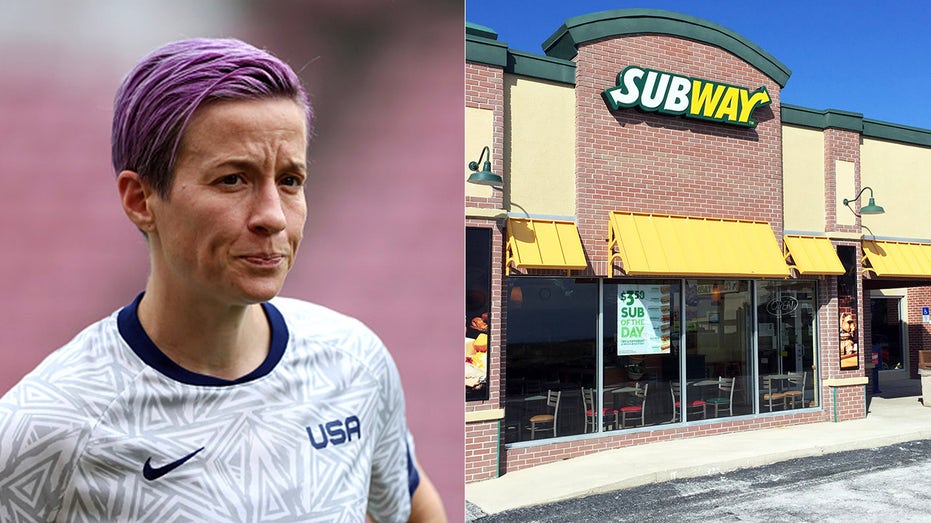
Fox Business reported that some Subway franchisees were fed up with the Rapinoe ads and noted that franchisees paid 4.5% of revenue into advertising they could not control. [8] FranchiseWire also covered the controversy, including a customer boycott note at a Wisconsin franchise. [9]
That 4.5% detail is the part marketers should sit with. It turns a values debate into a governance problem. A national campaign can be approved centrally, but the people paying into the ad fund may be the ones hearing complaints at the counter. If they cannot opt out, shape the message, or see the strategic reason for the choice, their resistance is not just ideological. It is structural.
The consumer signal was also unusually direct. A Marketing Dive survey reportedly found that 45% of consumers said Subway should drop Rapinoe; because that figure is available through secondary references rather than direct access to the original paywalled survey, it should be treated as reported sentiment rather than a fully inspectable primary finding. [8][9]
The problem was not that Subway failed to make every consumer happy. No national advertiser can do that. The problem was that the campaign gave stakeholders very little to work with besides the fact of Rapinoe’s presence. There was no obvious product architecture like Nike, no executive mission role like Trusaic, no brand correction story as explicit as Victoria’s Secret, and no women’s sports sponsorship argument like Budweiser. Once criticism arrived, the campaign did not have much structure to defend.
| Partnership type | What Rapinoe supplied | What the brand supplied | Structural read |
|---|---|---|---|
| Co-created product partnership | Public identity, athlete credibility, design relevance | Personal logo, co-created collection, product system | Advocacy had a place inside the offer |
| Embedded executive role | Equality platform and public authority | Formal Chief Equality Officer position | The role matched the company’s stated mission |
| Brand repositioning | Cultural signal and credibility with new audiences | A high-profile pivot away from an old brand image | Useful signal, but dependent on wider business change |
| Advocacy-amplification campaign | Pressure for more women’s sports investment | Category-relevant sponsorship platform | The campaign used activism to build the market |
| Transactional endorsement | Recognition and cultural meaning | Conventional ad placement in a franchise system | Backlash landed on stakeholders without enough strategic support |
| AI risk filtering | A history of visible advocacy | Automated risk scoring before campaign participation | Authentic alignment may be treated as generic controversy |
The consumer data does not give either side a shortcut
The lazy pro-activism argument says consumers want brands to take stands, so brands should move faster. The lazy anti-activism argument says backlash exists, so brands should stay quiet. The available data supports neither shortcut.
Gallup reported in 2025 that 51% of U.S. adults said companies should take a public stance on current events, up 13 percentage points from 2024. [10] Edelman’s 2024 Brands and Politics report found that 84% of consumers said they need to share values with a brand to buy it, and that 60% buy, choose, or avoid brands based on politics. [11]
Those numbers help explain why an athlete such as Rapinoe has real commercial value. A brand that is trying to reach consumers who reward visible values alignment may need a partner with enough public specificity to be believed. A bland endorser cannot do that job just by reading a purpose line.
But YouGov’s brand activism data complicates the comfort. It found that 58% would boycott a brand over a stance they disagreed with, while 74% thought some brands merely take advantage of social issues. [12] That is the double penalty: audiences can punish disagreement, and they can also punish opportunism. A brand can be attacked for meaning what it says or for not meaning it enough.
This is why “take a stand” is not a strategy, and “avoid backlash” is not one either. The real question is whether the brand has the audience logic, internal alignment, distribution model, and stakeholder control to make the stand operational. Rapinoe’s portfolio is unusually good at showing the difference because the athlete is relatively constant while the structures around her change.
What 2026 risk systems are likely to miss
The reported AI incident adds a new gatekeeping layer to a problem sponsorship teams already had. Risk scoring can be useful when it catches genuine incompatibility, undisclosed issues, or patterns a human team missed. It becomes dangerous when it treats all public friction as the same kind of risk.
Rapinoe’s trans rights advocacy may be highly relevant to one brand’s mission and completely incompatible with another brand’s stakeholder environment. It may be central to a campaign’s credibility, irrelevant to a product launch, or too much burden for a franchise system with no local buy-in. The answer depends on fit. A score that cannot see fit is not managing risk; it is outsourcing judgment.
The unnamed World Cup commercial case should not be turned into a guessing game. The more important issue is procedural. If an AI tool flags an activist athlete, the human review should not stop at “controversial.” It should ask:
- Is the flagged advocacy related to the campaign’s stated values or unrelated to the offer?
- Does the athlete have a role with real authority, or are they only lending visibility?
- Who pays for the campaign, who controls it, and who handles the reaction?
- Is the target audience more likely to view the advocacy as credibility, noise, or a reason to reject the brand?
- Can the brand defend the partnership through product, policy, investment, or distribution choices?
Those questions are not a moral purity test. They are the basic controls a brand needs before putting an activist athlete into market. They would have made the Nike and Trusaic logic easier to approve. They would have exposed the weakness of a Subway-style execution much earlier.
The practical lesson for activist-athlete partnerships
Rapinoe’s brand history does not prove that activist-athlete partnerships are inherently safer than conventional endorsements. It also does not prove they are inherently riskier. It proves that they are less forgiving of weak structure.
If the athlete’s public identity is the reason for the deal, the brand has to integrate that identity into the offer, the creative idea, the governance, and the audience plan. Nike’s co-created collection and personal logo gave Rapinoe’s identity product form. Trusaic’s Chief Equality Officer role gave it organizational form. Budweiser connected it to the commercial future of women’s soccer. Victoria’s Secret used it as part of a repositioning signal, with all the credibility pressure that implies. Subway put the same public meaning into a conventional ad system and left franchisees and consumers to fight over the interpretation.
For 2026 marketers, the standard should be simple and demanding: do not rent activist credibility unless the business is prepared to house it. That means deeper alignment, clearer stakeholder control, and human review of AI risk scores. If risk tools cannot distinguish authentic alignment from generic controversy, they may screen out the very people purpose-led brands claim they need.
References
- Megan Rapinoe says AI flagged her as a brand 'risk' over trans rights advocacy — CBC
- Megan Rapinoe op-ed on Supreme Court ruling and transgender athletes — Marie Claire, July 13, 2026
- Nike Deepens Relationship With Megan Rapinoe — WWD
- Megan Rapinoe Joins Trusaic as Chief Equality Officer — Trusaic
- Victoria's Secret Swaps Angels for 'What Women Want.' Will They Buy It? — The New York Times
- Megan Rapinoe Fronts Bud's Campaign Seeking More NWSL Brand Sponsors — Muse by Clios
- Megan Rapinoe Business Portfolio: Re-Inc, Nike, and Happy Viking — Boardroom
- Subway franchisees are fed up with Megan Rapinoe's TV ads — Fox Business
- Controversy Swirls Over Megan Rapinoe in Subway Ads — FranchiseWire
- Support for Businesses Taking a Public Stance Rebounds — Gallup, 2025
- 2024 Edelman Trust Barometer Special Report: Brands and Politics — Edelman, 2024
- How can brand activism impact consumer sentiment? — YouGov

Comments
Join the discussion with an anonymous comment.