
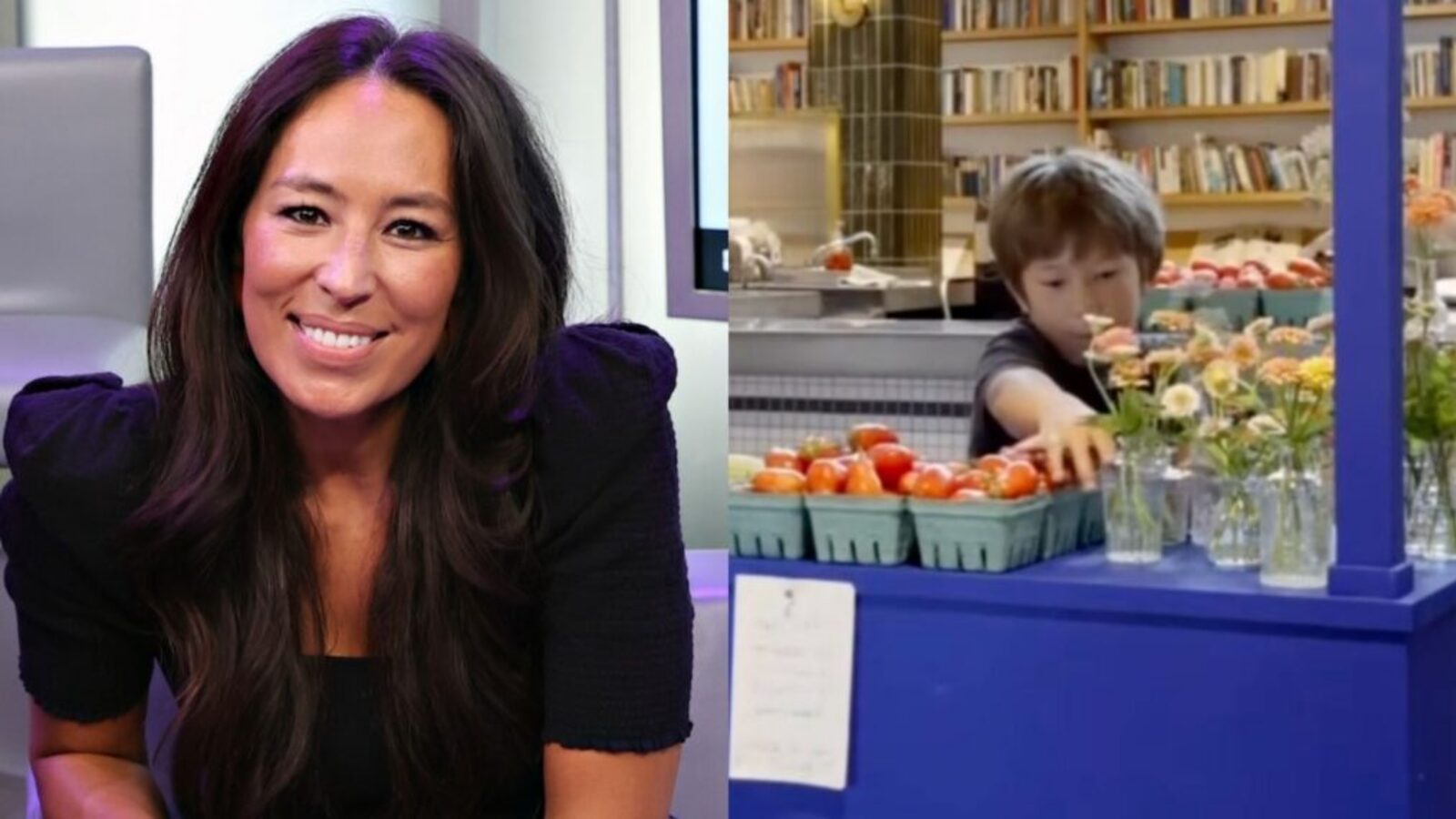
Joanna Gaines
In July 2026, a 20-second Instagram reel of Joanna Gaines' 8-year-old son Crew running a farm stand at Magnolia HQ was picked up by People, TV Insider, and Yahoo within 24 hours — with no paid amplification. This case study breaks down the three editorial gaps that post filled and what marketers can learn about engineering conditions for earned media coverage.
Outcome
Earned national media coverage from People, TV Insider, and Yahoo within 24 hours of posting — source: People, TV Insider, Yahoo, July 2026.
This outcome is independently verified via the primary source linked above.
The useful part of the Joanna Gaines farm stand case study is not that a famous parent posted a charming clip. Famous parents post charming clips all day, and most of them give an editor very little to work with beyond a caption rewrite and a shrug. The interesting part is the speed and cleanliness of the pickup: on July 16, 2026, Gaines shared a 20-second Instagram reel of her 8-year-old son Crew running a farm stand at Magnolia HQ; by July 17, People and TV Insider had each turned the same reel into national lifestyle and entertainment coverage, with Yahoo extending the story as a pickup within the same short window.[1][2]
No interview was needed. No new photo shoot was needed. No complicated explanation of Magnolia’s business was needed. The post arrived already shaped like a publishable item: a child had produce to sell, picked and prepared it, made a sign, set up a stand, found customers among Magnolia employees, sold out in the first hour, and received a proud-mom caption from one of the most recognizable lifestyle figures in American television.[1][2]
The reel was already a tiny story
The reel’s advantage was structural. It did not ask an editor to infer too much. People described Gaines supporting Crew’s farm stand in an “adorable video,” while TV Insider framed the same material as Crew’s “adorable summer business venture.”[1][2] Those are different headlines, but they are not different stories. Both could be built from the same visible sequence.
That sequence matters more than the softness of the footage. “Authentic” is an overworked word in marketing, usually deployed when someone means low-production, sentimental, or vaguely domestic. Here, the useful quality was more exact: the post contained enough action to be summarized, enough emotion to be understood, and enough resolution to avoid feeling like a stray family update.
| Story element | What the reel gave editors |
|---|---|
| Setup | Crew had produce from the Magnolia garden and a reason to create a stand. |
| Action | He picked produce, made a sign, set up the stand, and sold to Magnolia employees. |
| Resolution | The stand sold out in the first hour. |
| Emotional payoff | Joanna Gaines framed the moment as a proud-mom scene, with Chip Gaines’ comment adding a second layer of family reaction. |
For a social lead, that distinction is the whole lesson. A sweet clip can still be editorially inert. A complete clip gives an assigning editor a headline, a nut graf, a sequence of details, and a clean ending before anyone opens a CMS.
Three editorial gaps the post filled at once
The farm stand post worked because it solved several small editorial problems at the same time. None of those problems is glamorous. That is why they are easy to underestimate from the brand side.
It was clean summer filler with no moral homework
Mid-July lifestyle coverage has a practical appetite for light, seasonal stories that do not require readers to track a dispute, decode an industry development, or care about a launch calendar. Crew’s stand gave editors a summer object that was instantly legible: garden produce, a handmade sign, a child selling to familiar adults, and a “sold out” ending.
That makes the post more useful than a generic “family day” clip. A family day can be pleasant and still shapeless. The farm stand had stakes small enough to stay charming and clear enough to support a story. Would he sell the produce? He did. How fast? In the first hour.[1][2] That detail is doing a surprising amount of work. It gives the piece motion without making it serious.
It gave celebrity-family authenticity without demanding belief in a campaign
People’s version leaned into the most obvious emotional frame: Gaines as a “proud mama” supporting her son.[1] That is not accidental softness; it is the angle People’s audience can understand fastest. The clip does not need a claim about parenting philosophy or a quote from a representative. The mother is proud, the child is beaming in the role of seller, and the surrounding Magnolia employees make the moment feel public enough to cover without becoming intrusive.
This is where a large following helps but does not explain the outcome. Gaines has the scale to make lifestyle desks pay attention, but scale alone does not hand them a story. A 2023 Hello! magazine estimate put her Instagram following at 13.7 million and estimated sponsored-post earnings at $45,329, figures that speak to paid influence value rather than earned editorial value. Those numbers also carry a time caveat: they were 2023 estimates, not live measurements of the July 2026 reel.
The more useful question is what an editor could safely say without overreaching. People could say Gaines supported her son’s farm stand. TV Insider could say she gushed over his summer business venture. Neither outlet had to claim the post proved anything grand about parenting, entrepreneurship, or Magnolia’s market power.[1][2]
It contained a micro-business narrative
TV Insider’s framing is worth looking at closely because it nudged the same reel into a slightly different lane. “Summer business venture” makes Crew’s stand feel like a small enterprise story, not only a family moment.[2] That angle is useful for an entertainment outlet covering a television family whose public identity already includes homes, gardens, shops, work, and family life.
The post did not need to pretend an 8-year-old had launched a company. It only needed the recognizable shape of enterprise: gather inventory, present it, sell it, and report the outcome. That gave TV Insider enough business language to differentiate its version from People’s warmer family read while still staying inside the same facts.
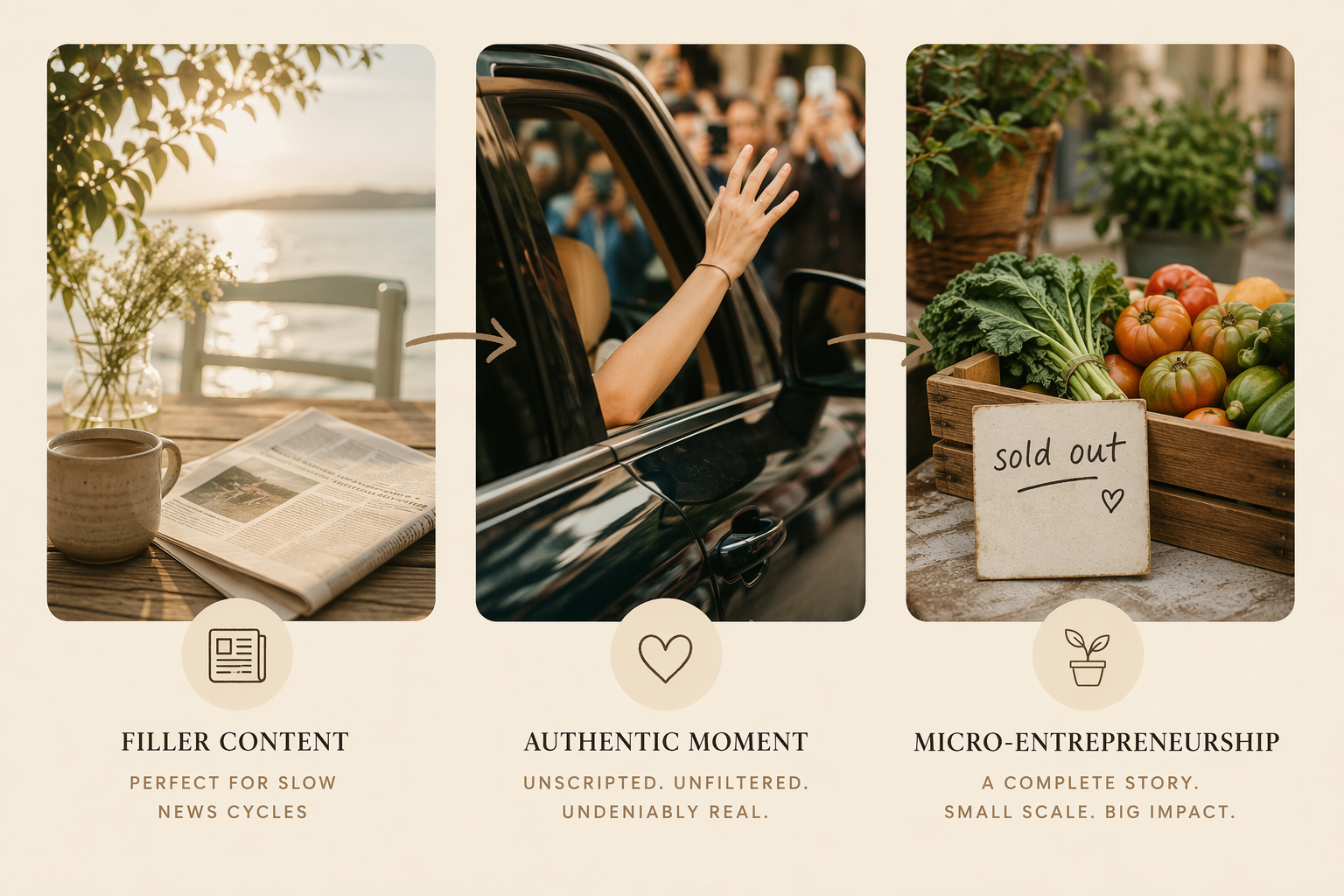
Yahoo’s role, as a pickup echo, matters for a different reason. Once People and TV Insider had translated the reel into clean article formats, the story could travel as a ready-made entertainment item. That does not prove Magnolia engineered a distribution chain. It does show how a social post becomes more portable once the first outlets have clarified its angles.
Why this felt coherent coming from Magnolia
The farm stand clip did not land as a random sentimental detour because Magnolia has long traded in a grammar of home, work, family, repair, and small-scale usefulness. That does not mean every candid family clip is secretly a brand asset. It means this particular candid family clip did not ask the audience to accept a new identity overnight.
In Guy Raz’s account of lessons from Chip and Joanna Gaines, Magnolia’s origin story includes the pressure of the 2008 housing crash and Joanna closing her first store to be a stay-at-home mom before the couple’s later expansion.[3] That history is not necessary to understand Crew’s produce stand, but it helps explain why a family-and-work scene at Magnolia HQ reads as on-brand rather than opportunistic.
A Live Oak Communications case study points to Magnolia language around “human kindness” and “doing work that we love” as part of the brand’s storytelling principles.[4] In weaker hands, those phrases would be wallpaper. In the farm stand reel, they become easier to see as operating context: a child’s small project is treated as work worth noticing, employees become customers, and the proud parent is not separated from the workplace.
That coherence is the part many brands cannot borrow quickly. A bank, software company, or consumer packaged goods brand can copy the outward ingredients — child, sign, produce, casual caption — and still produce something that feels like a skit. Permission accumulates before the post. The reel benefited from an existing audience understanding of what Magnolia is allowed to show.
What marketers can actually replicate
The replicable part is not “have Joanna Gaines’ audience” or “put a child in front of a cute stand.” The replicable part is editorial readiness. Before a low-production post goes on the calendar, a social team can ask whether it gives an outside editor enough material to package without a brand explainer.
- A complete narrative arc: something starts, someone acts, something changes, and the outcome is visible.
- An emotionally obvious payoff: the reader should not need brand context to understand why the moment matters.
- An outlet-ready angle: the same material should support at least one clean headline without exaggeration.
- A second shareability layer: a comment, reaction, contrast, or small detail that gives another audience a reason to pass it along.
- Brand permission: the scene should feel like something the brand has earned the right to show, not a borrowed costume.
Chip Gaines’ comment is a useful reminder of how small that second layer can be: a bit of relatable parenting humor attached to an already complete story. It did not carry the post by itself. It made the post easier to discuss after the basic story had already landed.
This is also where marketers need to keep their hands light. The timing between the Instagram reel and national coverage was tight; it does not prove that the coverage was caused only by the content or that Magnolia’s existing media relationships played no role. The safe conclusion is narrower and more useful: the post had the features that made fast pickup easy.
That is enough to learn from. Earned media rarely comes from charm alone. It comes from charm that has been made legible to someone else’s deadline.
The limit of engineering authenticity
A brand can engineer conditions: capture the full sequence, preserve the specific details, avoid sanding away the human parts, and make sure the post contains an angle an outlet can use. It can choose moments that already fit the brand’s established grammar instead of forcing an “authentic” scene into existence for content’s sake.
It cannot engineer the outcome with certainty. The moment a brand manufactures unpolished feeling too visibly, it removes the quality that made the farm stand useful in the first place. Crew’s stand worked as editorial material because the reel looked like a small family-and-work moment that happened to be complete enough for media. That is a condition worth designing around, not a formula that guarantees pickup.
References
- Joanna Gaines Says She's a 'Proud Mama' as She Supports Son Crew's Farm Stand in Adorable Video, People, July 17, 2026.
- Joanna Gaines Gushes Over Son Crew's Adorable Summer Business Venture, TV Insider, July 17, 2026.
- 10 Lessons From Chip and Joanna Gaines, Guy Raz.
- From Humble Beginnings: Magnolia's Use of Storytelling Marketing, Live Oak Communications.


Comments
Join the discussion with an anonymous comment.