
Victoria's Secret
This case study examines how Victoria's Secret leveraged Gigi Hadid as the anchor of a multi-layer content distribution system — including a 16,000-member creator program and a viral open casting campaign — driving a 15% YoY revenue increase to $1.56B in Q1 2026. Learn the specific tactics and measurable outcomes that turned the fashion show into a year-round sales engine.
Outcome
Drove 15% YoY net sales increase to $1.56B in Q1 2026 — source: VS&Co earnings report, June 2026
AI Tools Used
This outcome is independently verified via the primary source linked above.
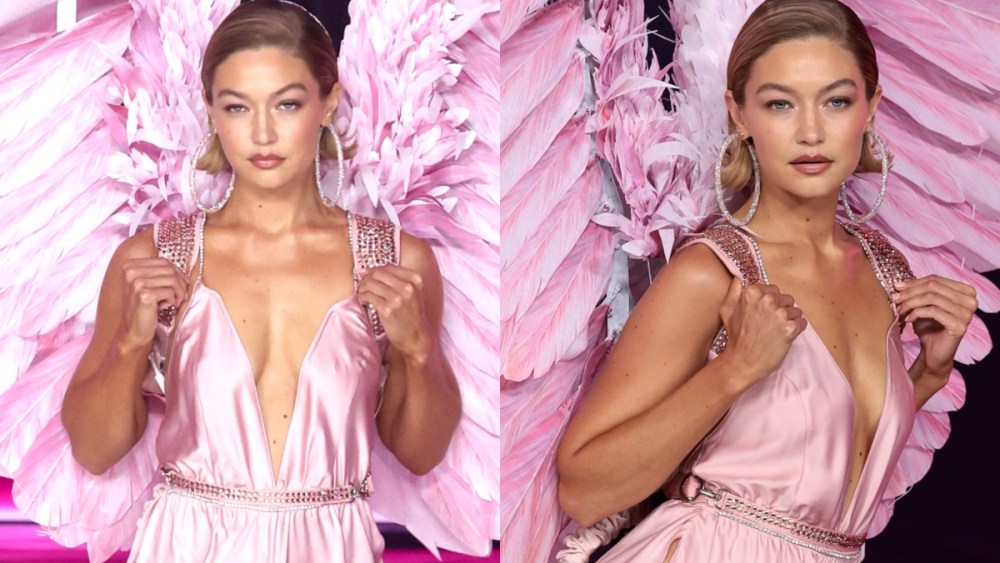
Victoria's Secret did not start its 2026 fashion show rollout by announcing a theme, a broadcast partner, or a nostalgia package. It confirmed Gigi Hadid first, tied that confirmation to the Los Angeles location reveal, and put her in the room as a judge at the Miami open casting call for the next class of runway talent.[1][2][3]
That sequencing is the interesting part. Hadid's return gives the campaign an obvious headline, which is useful, but celebrity awareness is the easiest line item to overbuy and the hardest one to defend later. The better question is not whether the model is famous enough. She is. The question is why Victoria's Secret announced her inside a casting-and-location rollout instead of treating her as a standalone talent reveal.
The answer starts with the 2024 show, where Hadid was not just a familiar face on the runway. WeArisma measured her individual reach at 126 million and attributed 35% of the show's total online mentions to her, more than any other model in its analysis.[4] That is the kind of number that makes a talent slide look less like taste and more like inventory. It does not prove a sale. It does prove that, in this specific show environment, Hadid could function as the brightest signal in the system.
The system around that signal was already visible. Traackr tracked 2,096 activated influencers, 5,542 mentions, 66 million engagements, and 414 million video views around the 2024 Victoria's Secret Fashion Show. Compared with the 2023 World Tour event, Traackr reported increases of 1,550% in activated influencers, 2,603% in mentions, and 4,869% in engagements.[5] The caveat matters: this is 2024 show data, not a 2026 forecast. But it gives Victoria's Secret a defensible reason to keep building the show as a distributed media event rather than a one-night brand performance.
The celebrity is the start of the route, not the whole route
A useful celebrity partnership has to answer two different questions. First, can the talent create a recognizable center of gravity? Second, does the brand have enough owned, earned, creator, retail, and community infrastructure to catch that attention before it evaporates?
Hadid answers the first question cleanly. She is a repeat Victoria's Secret runway presence, and the 2024 measurement gives her a concrete role in the conversation around the show. The second question is where Victoria's Secret's recent strategy becomes more instructive for marketers. The brand is not simply asking people to watch Gigi walk. It is using her as the visible front door into a larger participation loop: open casting, creator content, streaming distribution, social clipping, community feedback, app engagement, and post-show programming.
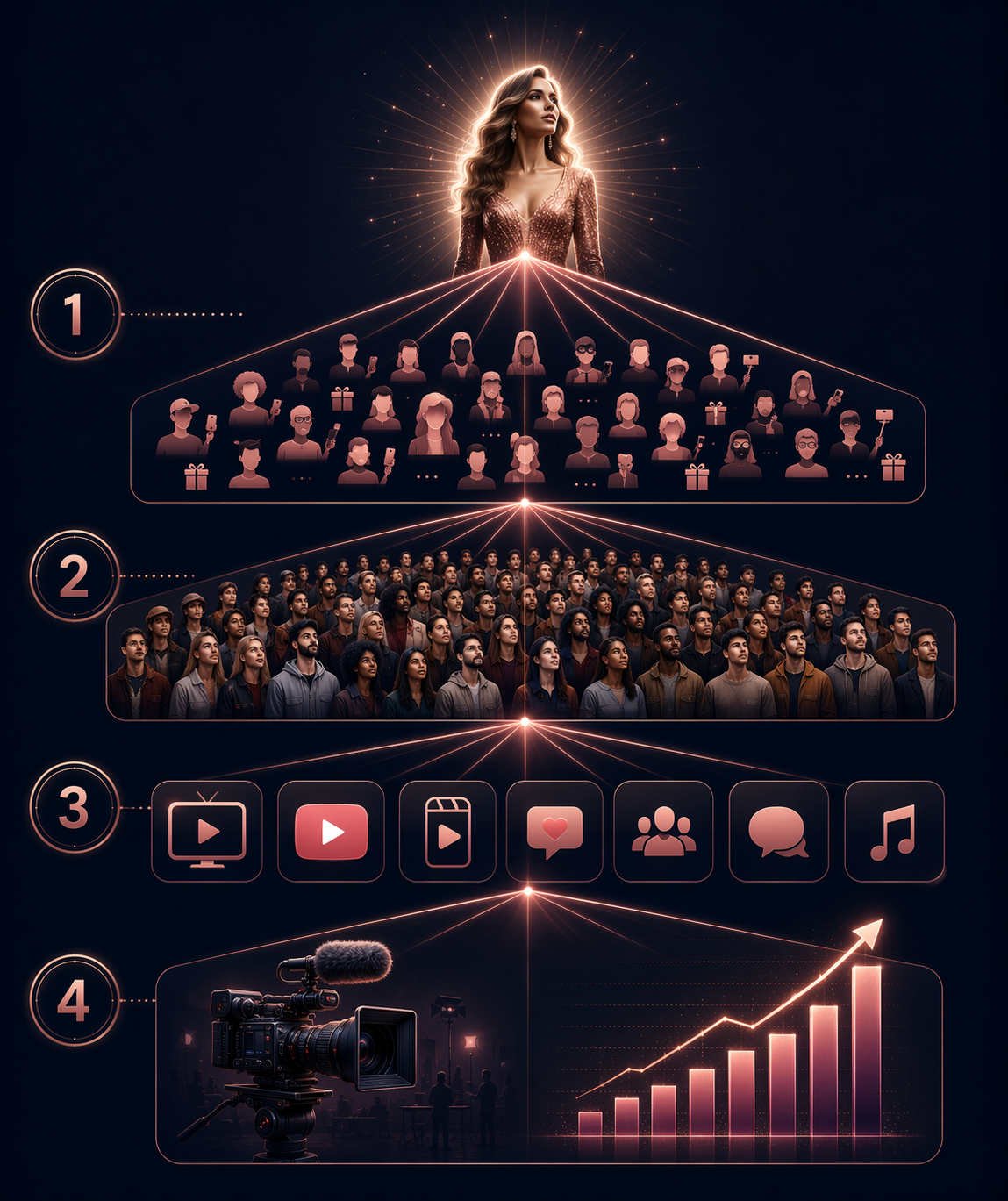
That distinction is not cosmetic. If fame is the strategy, the campaign peaks when the announcement goes live. If fame is the first node in distribution, the announcement gives every other layer something easier to package, remix, and measure.
The creator layer gives the show more surface area
Victoria's Secret's most important marketing asset around the show may not be a model at all. It may be the VS & PINK Creator Program, which Glossy reported had grown to more than 16,000 members since October 2023.[6] That scale changes what a fashion show can do. A runway moment can become thousands of try-ons, reactions, gifting videos, casting submissions, and product-adjacent posts before the show has even happened.
The 2025 gifting output shows how the machinery works. Glossy reported that gifting tied to the 2025 show generated more than 1,700 pieces of organic content, with one gifting video reaching 2.58 million views.[6] Those are not the same thing as incremental sales, and they should not be presented that way. They are distribution indicators: the brand seeded a moment, creators turned it into feed-native content, and some of that content traveled beyond the brand's own channels.
This is where Hadid's role becomes more commercially useful. A high-reach talent gives creators something to orbit. The open casting judge moment in Miami is not just a press detail; it gives the casting campaign a recognizable face, while the casting campaign gives Hadid's participation a broader story than a runway return. That is a better exchange than the usual celebrity campaign, where the brand pays for a famous image and then hopes the internet supplies context for free.
Open casting turns spectators into participants
The Angels Among Us open casting campaign is the clearest sign that Victoria's Secret wants the show to behave like a franchise. Before the 2026 show date had even been announced, the campaign had generated more than 100,000 participants and 1.7 billion media impressions, according to Glossy and comments from VS&Co's June 2026 earnings call.[6][7]
For a legacy brand, that is a smart pressure release. The old Victoria's Secret Fashion Show was something audiences watched from a distance. Open casting creates a different path into the brand: people apply, post, tag, follow updates, watch judges, and track who advances. Not every participant becomes a customer, and not every impression is valuable. Still, participation creates more durable signal than passive awareness because people have to do something.
| Layer | What Victoria's Secret gets | What marketers should measure |
|---|---|---|
| Gigi Hadid confirmation | A recognizable anchor for press, creators, and social conversation | Reach, share of mentions, earned media quality, audience overlap |
| Open casting | Participation before the runway event | Applicants, submissions, media impressions, follower growth, sentiment |
| Creator program | Distributed content outside brand-owned channels | Organic posts, engagement, video views, creator conversion paths |
| Streaming and social distribution | More ways to watch, clip, and rewatch the show | Views, watch time, clips created, traffic to owned channels |
| Documentary content | A reason to keep the story alive outside show night | Episode performance, repeat engagement, app or site actions |
This is also where attribution discipline has to enter. A celebrity reveal can help open the funnel. Casting can expand participation. Creators can multiply formats. Streaming can reduce access friction. None of those layers, by itself, explains company-wide revenue. The point is not to pretend the funnel is cleaner than it is. The point is to design enough measurement points that leadership can see whether attention is moving into owned channels and customer behavior.
Hillary Super's franchise framing is more than a phrase
Victoria's Secret appointed Hillary Super chief executive officer in September 2024, making her the company's first woman CEO; she previously led Savage X Fenty.[8] By 2026, the language around the fashion show had shifted toward treating it as a franchise, with the casting process produced as documentary content and the creator program functioning as permanent distribution infrastructure.[6]
That framing matters because it gives the show a business architecture. A one-night event has a brutal shelf life. A franchise has pre-launch content, characters, selection tension, distribution partners, community participation, merchandising moments, and post-event assets. The runway still matters, but it is no longer asked to carry the entire commercial burden by itself.
This is the part many celebrity decks skip. They show the face, then jump to projected impressions, then soften the conversion slide with phrases like brand heat or cultural relevance. Victoria's Secret's current playbook is more operational. The face creates attention. The casting campaign creates participation. The creator program creates volume. Streaming and social create access. Documentary content creates duration. Each layer gives the next one something to work with.
The business signals are real, but not Gigi-only proof
The commercial backdrop is stronger than a simple comeback headline. VS&Co reported first-quarter 2026 net sales of $1.56 billion, up 15% year over year, with comparable sales up 13%.[7] The company also reported app downloads up more than 50%, customer community voices four times higher year over year, raised full-year 2026 guidance to $7.03 billion to $7.13 billion, and marked its fourth consecutive quarter of positive comparable sales.[7]
Those numbers deserve attention because they show that the brand's marketing activity is happening during a period of measurable company momentum. They do not prove that Hadid caused the revenue lift. They do not isolate the fashion show's impact from Victoria's Secret, PINK, Beauty, Adore Me, merchandise, pricing, stores, digital experience, or broader operating changes. They are company-reported results across the VS&Co portfolio, not an independent incrementality study on one model's return.
The app and community metrics are especially useful for evaluating the distribution system. App downloads up more than 50% suggest more consumers were moving into a channel the company can continue to reach. Customer community voices rising fourfold suggests more people were participating in feedback or community mechanisms, not merely viewing content from a distance.[7] Those are the kinds of outcomes a brand team can build on after the show cycle ends.
What the 2026 case can and cannot claim yet
The strongest Gigi-specific performance data available in the research is still from the 2024 show: 126 million individual reach and 35% of online mentions in WeArisma's analysis.[4] The strongest independent influencer-ecosystem data is also from 2024, through Traackr's measurement of activated influencers, mentions, engagements, and video views.[5] As of July 2026, independently reported 2026 show-specific contribution data for Hadid was not available in the materials reviewed.
There are other practical unknowns. The exact 2026 show date was not specified in the provided sources, though coverage pointed to the Los Angeles location reveal and the established fall show window.[2][3] Hadid's compensation for the 2026 show was not publicly disclosed in the research materials. Without fee data, no one outside the company can calculate a true talent ROI.
That does not make the case unusable. It just changes the standard. The fair claim is that Victoria's Secret has evidence that Hadid can dominate conversation inside the show environment, and it has built a larger content infrastructure designed to turn that attention into repeated participation and owned-channel demand. The unfair claim would be that one model delivered $1.56 billion in quarterly sales.
The standard this sets for celebrity-led turnarounds
The useful lesson from Victoria's Secret is not that every legacy brand needs a supermodel. Most do not have a fashion show, a creator base at this scale, or a cultural archive big enough to relaunch. The useful lesson is the order of operations. Anchor talent should make the campaign easier to recognize, but the brand still has to decide where the attention goes next.
In this case, Hadid creates the recognizable signal. The creator program multiplies formats. Open casting turns some of the audience into participants. Streaming and social distribution make the event easier to watch and clip. Documentary content extends the road to the runway. Company-reported sales, app, community, and comparable-sales metrics show that Victoria's Secret had business momentum during the same period, even if the available data cannot isolate the fashion show's exact contribution.
That is a better model for evaluating celebrity partnerships than asking whether the face is famous enough. The sharper question is what distribution system is already waiting for the face: who will create around it, where the audience will be sent, what owned channel will capture the demand, and which metrics will show whether the attention repeated or disappeared.
References
- Gigi Hadid returning for Victoria's Secret Fashion Show 2026 — PageSix, July 20, 2026
- Everything to Know About the 2026 Victoria's Secret Fashion Show — Including the Location! — People
- All the Details About the 2026 Victoria's Secret Fashion Show — Marie Claire
- Victoria's Secret is so back... — WeArisma, Oct 2024
- Victoria's Secret Fashion Show: The Power of Influencer Strategy — Traackr, Oct 2024
- Victoria's Secret turns to creators to build buzz for its fashion show — Glossy, June 2026
- Victoria's Secret & Co. Reports First Quarter 2026 Results — VS&Co, June 2, 2026
- Victoria's Secret & Co. Appoints Hillary Super Chief Executive Officer — VS&Co, Sept 2024

Comments
Join the discussion with an anonymous comment.