
Coca-Cola Fairlife
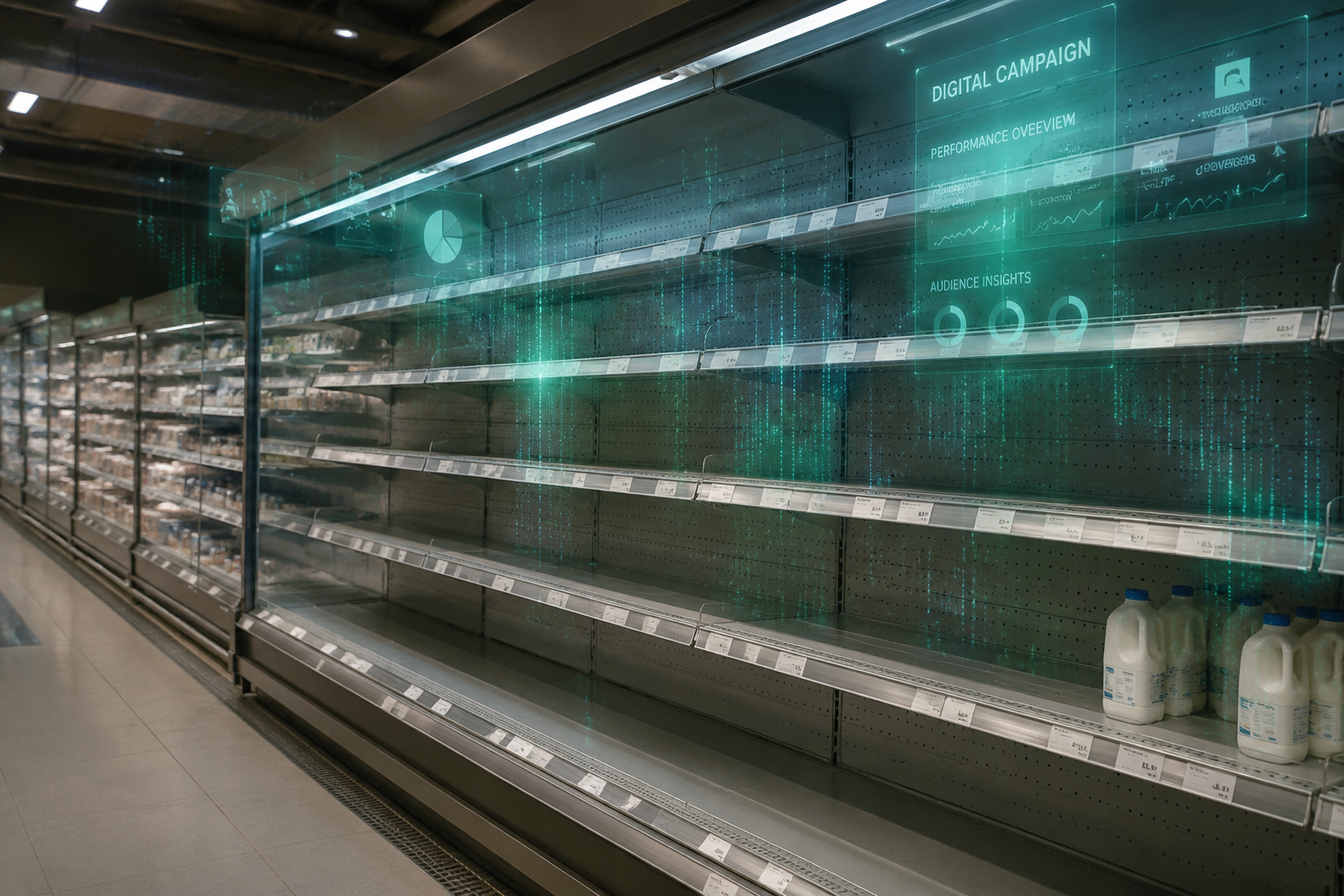
When a ransomware attack forced Fairlife to halt US production in July 2026, standard crisis marketing playbooks failed because there was no product to sell. This case study examines why production halts destroy marketing ROI and what brands can learn about resilience.
Outcome
75% of consumers switch to a competitor after a ransomware attack — source: ObjectFirst, 2023
This outcome is independently verified via the primary source linked above.
The marketing impact of the Coca-Cola Fairlife ransomware attack starts with an awkward fact: Fairlife still had demand, but the brand could not count on supply. On July 16, 2026, Coca-Cola confirmed that a ransomware attack had hit systems tied to Fairlife, and Fairlife suspended U.S. production while it worked through the disruption. As of July 20, no ransomware group had publicly claimed responsibility, and the company’s public communication remained limited, with Fairlife pointing to a technology disruption affecting operations rather than offering a detailed recovery timeline.[1][2]
That is a different kind of marketing problem from an ugly headline or a data breach response. In a reputational crisis, the marketing team can sometimes buy time with transparency, customer care, and message discipline. In a production halt, the shelf does not negotiate. If the product cannot be made, shipped, replenished, or found, campaign optimization has a hard ceiling.
Why Fairlife’s Shelf Position Made the Halt So Exposed
Fairlife was not a marginal label waiting for attention. Available reporting described it as a multibillion-dollar brand, with estimates around the $3 billion to $4 billion range.[3] That scale is exactly why the production halt mattered commercially. A small brand can sometimes go quiet and reappear. A high-velocity dairy and nutrition brand has shoppers, retailers, retail media placements, subscriptions, search demand, store-level expectations, and household routines already moving around it.
The category also gives the brand very little room to hide. Milk, protein shakes, and nutrition products do not have the switching friction of enterprise software or a financial account. A shopper standing in front of a refrigerator case can replace one bottle with another in seconds. The replacement may be less preferred, but it is available. That is enough to break the habit the original brand spent years building.
This is where marketing language can become too polite. The issue is not simply that media efficiency declines during an outage. It is that demand generation can become actively harmful. Every impression that creates intent without a path to purchase sends the customer into a failed experience: an empty shelf, an unavailable item on a retailer site, a pickup substitution, or a store associate with no useful answer.
The Moment Availability Splits From Persuasion
Most campaign systems are built to improve the path from attention to conversion. They assume the offer exists. When production stops, that assumption fails before the auction, the audience, or the creative can do much useful work.
| Marketing channel | What breaks when product is unavailable |
|---|---|
| Paid search and paid social | Spend captures existing demand or creates new demand, but the shopper reaches an out-of-stock page, a low-inventory store, or no reliable purchase path. |
| Retail media | Sponsored placements and digital shelf activity can route shoppers toward empty or inconsistent inventory, turning retailer-funded visibility into a frustration trigger. |
| Email, SMS, and loyalty | Messages that normally reinforce routine can remind loyal buyers that the routine is broken. |
| Influencer and creator work | Content can keep desire alive while comments and store checks expose the gap between the promise and availability. |
| Brand communications | Statements that do not address availability can sound evasive, even if they are legally cautious or operationally necessary. |
Paid media is usually the first place teams look because it is visible and adjustable. Pausing, throttling, excluding regions, suppressing out-of-stock SKUs, and pulling retailer destinations with poor availability are not glamorous actions. They are also the difference between conserving demand and paying to disappoint people.
Retail media is more delicate because the retailer is both channel and customer. A national brand can pause a Meta campaign with one decision. It cannot quietly let sponsored listings push shoppers toward a retailer’s empty dairy case and then expect the retailer to treat the outage as only a brand problem. When store teams, category managers, and e-commerce buyers are fielding the consequences, the marketing team’s useful job is not to keep impressions live. It is to help align availability, messaging, and substitutions before more shoppers are sent into the gap.

Retention channels can be even more irritating to customers because they arrive with the tone of a relationship. A loyal buyer who receives a routine product reminder while the product is missing is not just seeing a mistimed promotion. They are seeing that the brand’s messaging system knows their purchase history but apparently does not know whether the product can be bought. That is how automation starts to feel careless.
None of this means communication is optional. Silence leaves retailers, shoppers, and customer service teams to invent their own explanations. But communication cannot substitute for replenishment. The most useful message in a production halt is usually not a polished reassurance about brand values. It is a practical answer to what is available, where, when the answer changes, and what the brand does not yet know.
Switching Risk Starts Before the Postmortem
The consumer switching data around ransomware should be treated as pressure, not prophecy. ObjectFirst reported in 2023 that 75% of consumers switch to a competitor after a ransomware attack.[4] Arcserve reported in 2020 that 66% of consumers would switch if systems were not restored within three days.[5] Those studies predate the current 2025–2026 ransomware environment, and they measure broader consumer purchasing attitudes and behavior rather than Fairlife-specific outcomes.
Even with that caveat, the numbers point to the part marketers cannot afford to romanticize: the customer does not wait for the brand’s internal recovery plan to become elegant. They need breakfast, a protein drink, a lunchbox item, or a grocery order completed today. If the usual product is unavailable, the substitute gets a trial. If the substitute is good enough, the original brand has to win the customer back later with less certainty than it had before.
That is why the first few days after a production halt carry more marketing weight than they may appear to from a purely technical recovery view. The operations team is trying to restore systems. The retailer is trying to manage inventory and shopper complaints. The customer is deciding whether the missing item is a one-time inconvenience or a reason to change the basket. Marketing sits in the middle, and it can make the situation worse by continuing to behave as if only perception has been damaged.
The Earlier Coca-Cola Incident Matters, But Not as Proof of the Same Failure
The Fairlife halt also arrived after Coca-Cola had already dealt with a separate ransomware-related incident. In May 2025, the Everest group claimed an attack involving Coca-Cola’s Middle East division; reporting said 959 employee records were leaked and that ransom demands were refused.[6] That earlier case matters because repeated cyber headlines can compound trust concerns around a parent company.
It should not be stretched further than the public facts support. The 2025 Everest matter involved employee data tied to a different regional operation. The 2026 Fairlife incident involved a U.S. production halt. No public record as of July 20 established the same attacker, the same vulnerability, or the same operational path. Treating them as one continuous technical failure would be sloppy. Treating them as separate events that may still affect stakeholder confidence is fair.
What a Marketing Resilience Plan Has to Include
A useful resilience plan for consumer brands cannot live only in IT recovery documents or a crisis communications folder. Marketing needs its own operating rules for the moment supply becomes uncertain. Those rules do not have to be dramatic. They have to be fast enough to keep campaigns from outrunning reality.
- Define availability signals before the crisis: store-level inventory feeds, retailer e-commerce status, warehouse release signals, customer service complaint spikes, and field sales reports should all have owners.
- Set pause and throttle rules: teams should know which campaigns stop automatically when supply drops below a defined threshold and which can continue for brand maintenance only.
- Coordinate retailer messaging: retail media, sponsored search, PDP notices, pickup substitution guidance, and buyer updates need to move together.
- Separate acquisition from retention: prospecting campaigns can usually pause faster, while loyal customer channels may need practical service messaging instead of promotional reminders.
- Decide how to handle substitutes: brands should know in advance whether they will redirect shoppers to adjacent SKUs, pause entirely, or avoid substitution messaging that trains customers into a competitor.
- Give customer-facing teams usable language: a vague apology is less useful than a clear statement of what is affected, what is unknown, and where updates will appear.
The hardest rule is often the simplest one: stop campaigns that create demand the business cannot fulfill. Marketing teams are trained to protect momentum, and there is always pressure to keep the machine warm. But if the machine is sending people toward missing product, the discipline to stop is not passivity. It is damage control.
Where the Fairlife Case Leaves the Question
The full financial impact of the Fairlife ransomware attack was not known as of July 20. Neither was the attacker identity, the full recovery timeline, or the long-term effect on customer behavior. The public record was still too thin for confident claims about lost sales, permanent churn, or internal decision-making.
The marketing lesson is already visible. When shelves are empty, the campaign is no longer judged by reach, clicks, ROAS, or message sentiment alone. It is judged by whether it respects the operational truth. Marketing resilience for a physical consumer brand has to include availability signals, pause rules, retailer coordination, substitute decisions, and the willingness to stop spending when persuasion has lost its purchase path.
References
- Ransomware attack forces Coca-Cola to suspend US production at dairy unit, Cybersecurity Dive
- Technology disruption press release, Fairlife Official
- Coca-Cola suspends U.S. production of Fairlife after cyberattack, Atlanta Journal-Constitution
- Research: Ransomware Significantly Affects Customer Loyalty, ObjectFirst
- Consumers Sound Off: The Impact of Ransomware on Purchasing Behavior and Brand Loyalty, Arcserve
- Coca-Cola and bottling partner named in separate ransomware attacks, Paubox

Comments
Join the discussion with an anonymous comment.