
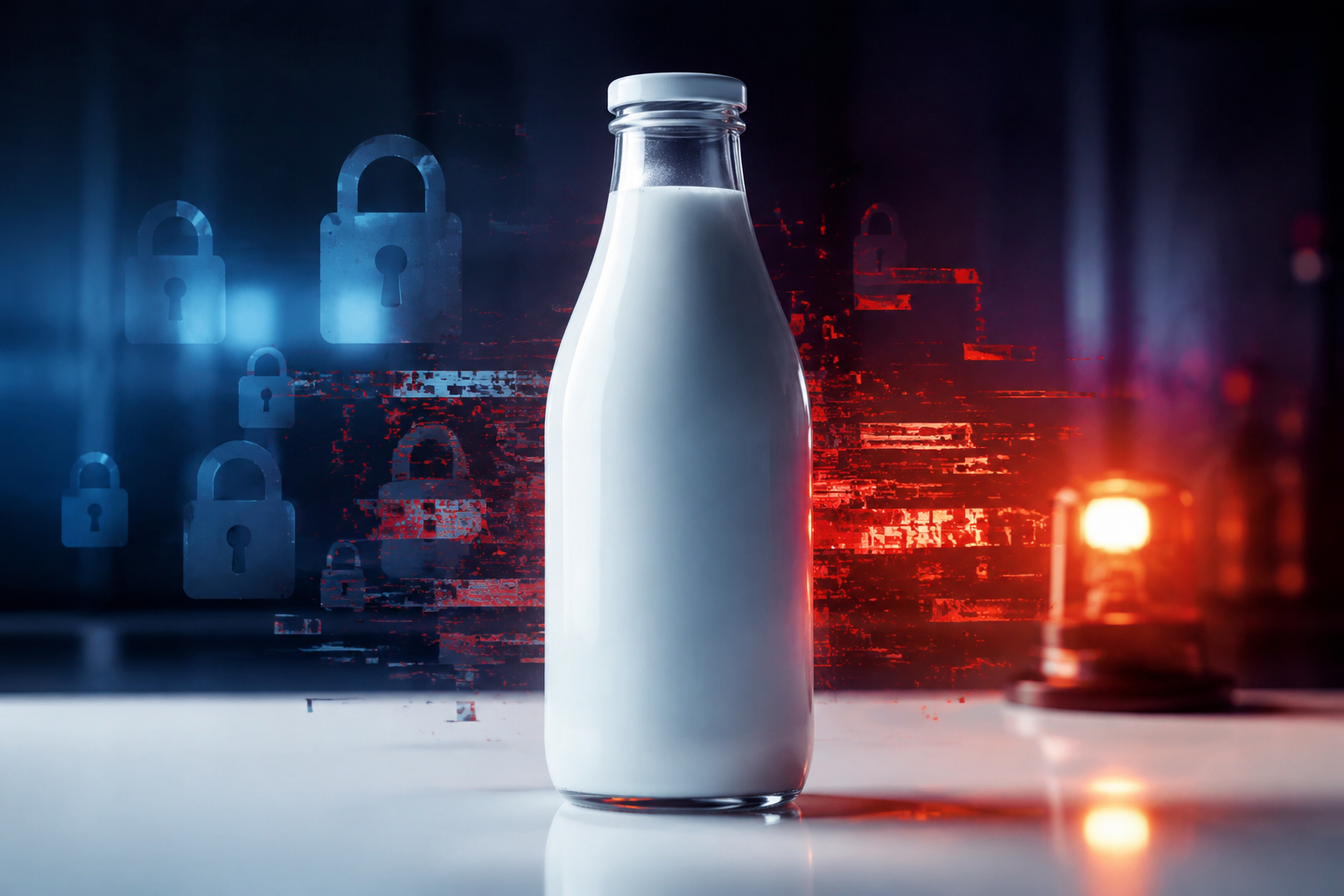
Fairlife
Coca-Cola's Fairlife ransomware attack offers a real-time case study in brand trust crisis communications. This article deconstructs what the company did and didn't say, backed by consumer data, and provides a framework for CPG marketers to prepare for similar incidents.
Outcome
Provided a crisis communication framework based on Fairlife ransomware response — source: fairlife.com
This outcome is independently verified via the primary source linked above.
A production halt that reads like a trust test
Ransomware halted all U.S. Fairlife production on July 16, 2026, and Coca-Cola disclosed the disruption the same day, turning a cyber incident into a live test of how a $4 billion dairy brand protects trust while operations are frozen [1][2].
For consumer goods marketers, the first question is not only what happened. It is what the company can safely say to shoppers, retailers, and internal teams before the investigation catches up to the brand story.
What Coca-Cola said first
The load-bearing sentence in Fairlife's public release was the one consumer brands cannot bury: 'product quality and safety have not been impacted' [3]. That assurance matters because a ransomware event at a dairy company does not land like a routine IT outage. It immediately raises the fear of contaminated product, interrupted supply, or a breakdown in the chain of custody, even when the public facts are still thin.
| Communication element | What the public statements did |
|---|---|
| Confirmed fact | A ransomware incident disrupted Fairlife operations and halted U.S. production [1]. |
| Consumer reassurance | Fairlife said product quality and safety had not been impacted [3]. |
| What stayed open | The company did not yet define the full scope, nature, or material impact [1][3]. |
| Channel choice | Coca-Cola paired the disclosure with a same-day SEC filing and a public release [1][3]. |
That combination is defensible because it separates a known production disruption from unknown forensic details. It is also intentionally incomplete. As of the initial disclosures, the public still did not know whether data theft occurred, who was behind the attack, how long production would stay suspended, or whether consumer notification would follow.
Why this hits harder in food and beverage
Fairlife is not a small line item tucked inside a corporate portfolio. TechCrunch reported the brand at roughly $4 billion in annual sales in 2024, which makes any production interruption a meaningful business problem as well as a communications problem [2]. In categories like dairy, the product is supposed to feel safe before it feels convenient, so the reputational cost is tied to the physical promise on the shelf.
The consumer trust data makes that risk concrete. CDP.com's aggregation of Deloitte, McKinsey, and Twilio Segment findings reports that 59% of consumers would reduce purchases after a single breach at a consumer products brand, 87% would not do business with a company if they had security concerns, and only 40% trust brands to use their data responsibly [5]. Those numbers are being cited through a secondary source, but they are directionally useful boardroom ammunition: a breach changes not just systems, but buying intent.
Context also matters. Cybernews reported in 2025 that the Everest gang leaked 1,104 employee files, including passport scans, in a separate attack tied to a Coca-Cola Middle East distributor, making Fairlife the company's second publicly known ransomware event in 14 months [4]. That does not prove a pattern of operational neglect. It does make repetition more expensive, because each new incident invites the memory of the last one.
The sector itself is already under pressure. Cybersecurity Dive, citing Food and Ag-ISAC executive director Scott Algeier, reported about 205 cyberattacks in the food and agriculture sector in 2026, or roughly 4.9% of all attacks [6]. For marketers, the implication is simple: physical production stops create consumer anxiety about product integrity, not just service availability.

What a marketer should have ready before the next breach
The Fairlife case suggests a playbook that belongs to marketing and communications as much as IT. The goal is not to write the final answer before the facts exist. It is to make sure the first public language is fast enough, precise enough, and channel-aware enough to protect the brand while the investigation is still running.
- First-message timing: have a same-day holding statement ready when production, shipments, or retail supply are affected.
- Confirmed vs. unknown: separate verified facts from open questions instead of blending them into one cautious paragraph.
- Consumer safety reassurance: say the product-safety fact plainly, because that is the category-specific fear.
- Channel mapping: align the website, retailer contacts, customer-service scripts, investor disclosure, and social copy so they do not drift.
- Trust data ready: keep the consumer-risk numbers close at hand for leadership, not just the incident timeline.
- Update cadence: tell audiences when the next update will come, even if the next update only repeats that the investigation is ongoing.
None of that resolves the unresolved questions in Fairlife's case. It does, however, point to the larger shift that consumer brands can no longer avoid: breach communications are part of brand equity management, and marketers need ownership of the playbook before IT, legal, and executives are forced to invent it in public.
References
- Coca-Cola says Fairlife ransomware attack halts US dairy production — BleepingComputer — 2026-07-16 — https://www.bleepingcomputer.com/news/security/coca-cola-says-fairlife-ransomware-attack-halts-us-dairy-production/
- Coca-Cola suspended production at its Fairlife dairy after a ransomware attack — TechCrunch — 2026-07-16 — https://techcrunch.com/2026/07/16/coca-cola-suspended-production-at-its-fairlife-dairy-after-a-ransomware-attack/
- Technology Disruption at Fairlife Operations — Fairlife — https://fairlife.com/news/technology-disruption-fairlife-operations/
- Coca-Cola data breach: employee data exposed — Cybernews — https://cybernews.com/security/coca-cola-data-breach-employee-data-exposed/
- Data privacy statistics: brand trust — CDP.com — https://cdp.com/basics/data-privacy-statistics-brand-trust/
- Ransomware attack on Coca-Cola suspend production dairy — Cybersecurity Dive — https://www.cybersecuritydive.com/news/ransomware-attack-coca-cola-suspend-production-dairy/825540/

Comments
Join the discussion with an anonymous comment.