
Delta Air Lines
This case study breaks down how Delta Air Lines coordinated an interactive quiz, a crowdsourced route vote, live-event activations, and AI personalization to launch 7 new transatlantic routes in Summer 2026. It shows how each tactic serves a distinct funnel stage while cross-referencing the others, offering a framework for integrated seasonal campaigns.
Outcome
Nearly 150,000 votes cast in Route Race app vote over five days, driving member engagement — source: Delta News Hub
This outcome is independently verified via the primary source linked above.
Delta’s Summer 2026 transatlantic push could have lived as a familiar airline announcement: more seats, more cities, more reasons to check the schedule. The network fact was large enough on its own. The airline planned 650-plus weekly flights to nearly 30 European destinations, including seven new routes, making it Delta’s largest transatlantic schedule to date.[1]
What made the campaign worth studying was not only the added capacity. It was the way Delta turned a route expansion into something customers could discover, vote on, encounter in person, and then be prompted to book. For anyone looking at new-route marketing, this is the useful part: the campaign did not ask one asset to do every job.
The route launch started before the route announcement felt final
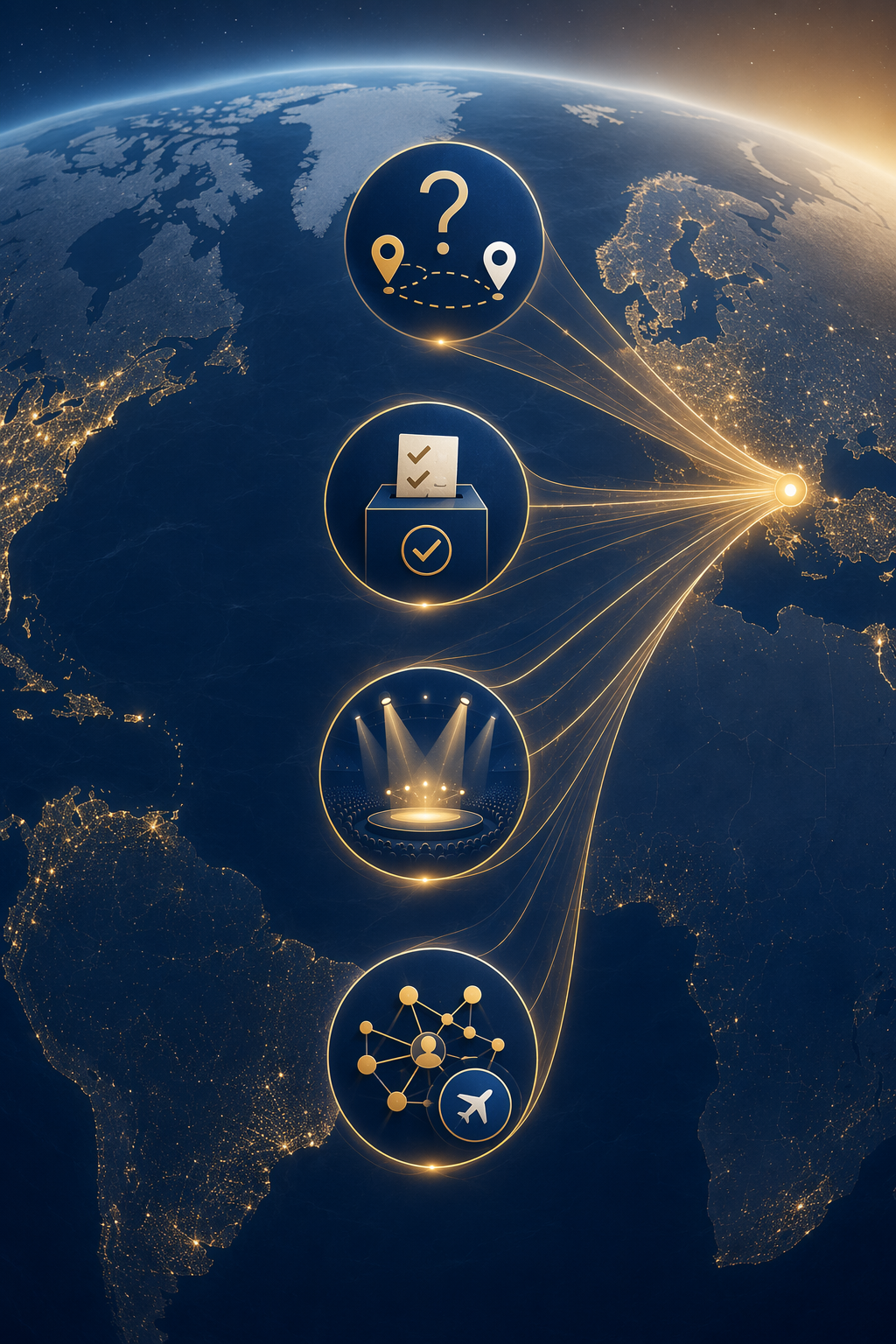
Delta Destinations, the airline’s interactive “Euro Summer Match” experience, gave the upper funnel a more concrete task than generic destination inspiration. Users took a quiz that sorted them into traveler types such as “sun chaser,” “food lover,” “culture buff,” and “nightlife explorer,” then received personalized European destination recommendations and weekly reveals.[2]
That design matters because it made Europe feel selectable rather than abstract. A traveler was not only seeing a carousel of places. They were being asked to recognize themselves in a travel mode, then follow the answer toward a destination. In campaign terms, the quiz converted broad summer wanderlust into declared preference.
The next move was more interesting. Quiz-takers received prompts to participate in Route Race, while Route Race voters received destination guides. That cross-reference kept the campaign from behaving like a pile of parallel tactics. Discovery pointed toward participation; participation pointed back toward planning.
Route Race gave members a visible stake
Route Race ran inside the Delta mobile app for five days in August 2025. Members voted among three unserved European island destinations: Sardinia, Malta, and Ibiza. Delta said the vote drew nearly 150,000 votes.[3]
The number is useful because it measures a voluntary action over a defined window. It does not prove bookings. It does prove that a meaningful group of members cared enough to open the app and make a choice before the route existed.
Sardinia won the member vote. Malta became the employees’ choice. Delta added both: New York-JFK to Olbia, Sardinia, four times weekly beginning May 20, 2026, and New York-JFK to Malta three times weekly beginning June 7, 2026. Delta also said no U.S. airline had previously served either destination nonstop.[3]
| Route Race element | Marketing job |
|---|---|
| Three candidate destinations: Sardinia, Malta, Ibiza | Made the expansion feel like a real choice rather than a prewritten announcement |
| Voting inside the Delta app | Moved engagement into a logged-in loyalty environment |
| Nearly 150,000 votes over five days | Created a specific participation signal without pretending to measure sales |
| Sardinia as members’ choice and Malta as employees’ choice | Gave two new routes a marketable origin story |
| Destination guides sent to voters | Turned participation into a planning prompt |
The real value was not crowdsourcing as theater. Sardinia and Malta had no prior nonstop U.S. airline service, so the vote carried a sense of consequence. Delta could position the routes as both network expansion and audience-validated demand. That is a stronger story than “we added capacity,” but it is still a narrower claim than “the vote caused the routes to sell.” The evidence supports engagement and route legitimacy, not a clean causal chain to revenue.
Each surface had a different job
The campaign’s discipline shows up in the division of labor. Delta Destinations handled self-guided discovery. Route Race handled member participation. Event activations created high-memory, physical brand encounters. Personalization and pricing tools moved closer to conversion. Those are different jobs, and they should not be evaluated with the same metric.
| Campaign surface | Primary role | What the available evidence can support |
|---|---|---|
| Delta Destinations quiz | Awareness and inspiration | Users were prompted to connect traveler identity with European destination recommendations |
| Route Race app vote | Engagement and loyalty participation | Nearly 150,000 votes were cast over five days inside the app |
| Masters, Kentucky Derby, Olympics activations | Brand memory and premium experience | Delta used major cultural moments to make travel benefits tangible |
| Next Best Destination | Personalized route prompting | Predictive models informed email, app notification, and ad targeting |
| Dynamic pricing | Revenue management | Delta-reported yield lift exists, but the system also triggered transparency concerns |
This is where the case becomes more useful than a launch recap. Integrated marketing is often described as message consistency. Here, the stronger idea is operational consistency: each touchpoint advanced the customer from one kind of commitment to another.
The live events made travel tangible
Delta’s event work ran alongside the route-demand program, not as a decorative side project. At Augusta Regional Airport during Masters week, the airline built an immersive walkthrough inspired by the course’s second nine, with a green-and-white umbrella ceiling and collectible Caddie Cards. Delta also increased peak-day seat capacity from 1,200 to nearly 4,000 for the tournament.[4]
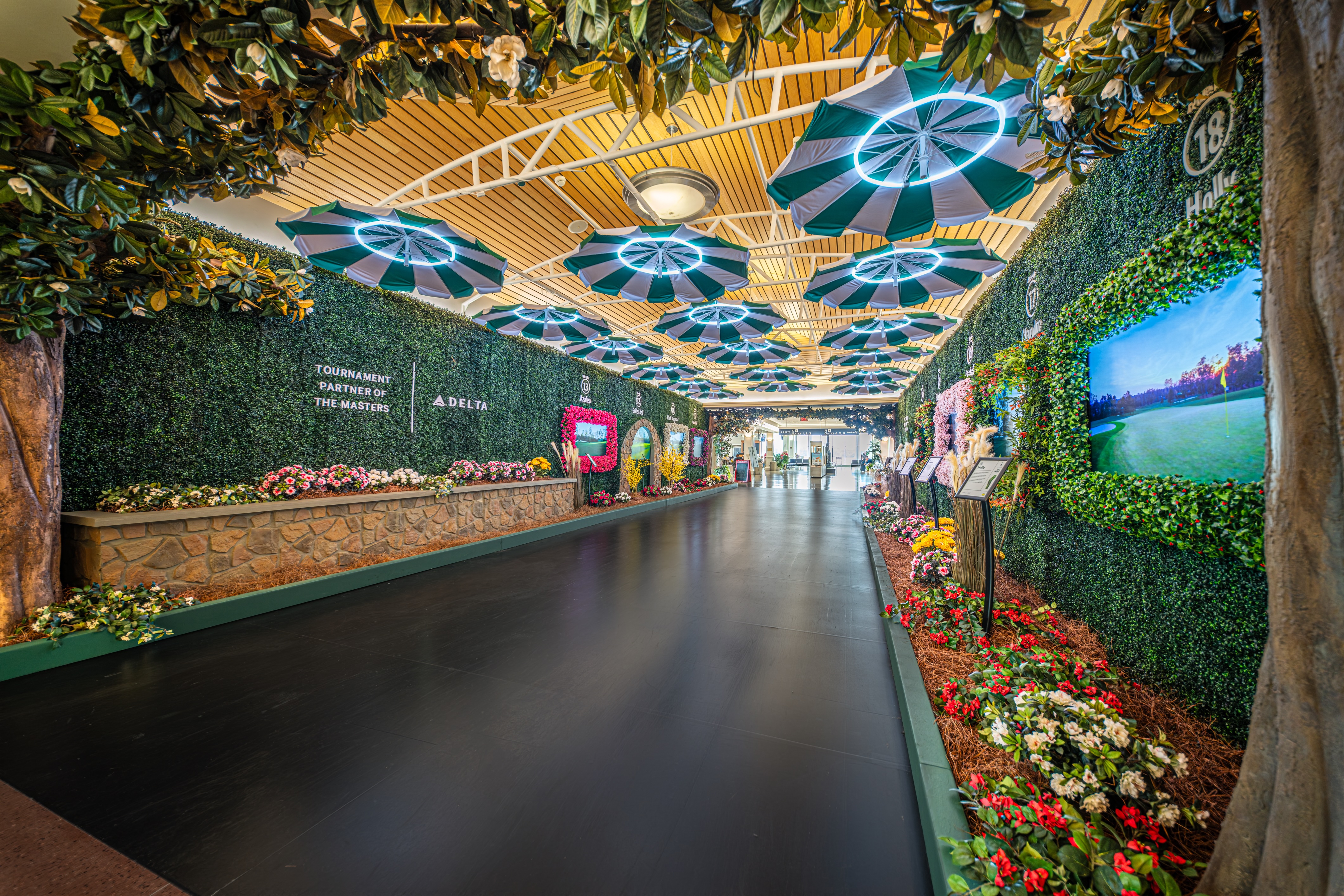
The airport setting is the important part. The activation met travelers at an actual travel moment, when the brand promise was not theoretical. The customer was already moving through the journey Delta sells: arrival, anticipation, status, hospitality, access.
At the Kentucky Derby, Delta extended the same logic through a Sky Club Mint Julep program. For the Olympics, it used a Team USA livery and added 70 round-trip flights.[4] These were not direct explanations of Sardinia, Malta, or any single new transatlantic route. They were brand-memory and premium-experience plays that gave the broader summer travel push cultural weight.
That distinction matters. A Masters installation should not be judged as if it were a fare-sale landing page. Its job was to make Delta feel present in a high-attention, high-affinity environment. The route campaign needed that kind of memory structure as much as it needed destination pages.
Personalization arrived after interest had been created
Delta’s Next Best Destination engine was the conversion layer in this system. In an interview with Futurum Group, CMO Alicia Tillman described predictive machine learning models that analyze travel history, preferences, and booking trends to recommend routes to individual customers, feeding channels such as email, app notifications, and ad targeting.[5]
Placed after the quiz and vote, that kind of personalization has a clearer role. It is not asked to manufacture desire from nothing. It can respond to signals the customer has already given: a traveler type, a destination interest, an app interaction, or a booking pattern. The creative work creates context; the model decides which next prompt is most relevant.
Delta also used AI in pricing. A case study from IIDE, citing Delta-reported metrics, says the airline launched an AI dynamic pricing engine on 3% of flights in Q1 2025, planned to scale it to 20% by year-end, used inputs including demand, weather, booking behavior, and timing, and reported a 5% to 8% per-flight yield lift.[6]
That is a revenue-management signal, not independent proof that the Summer 2026 route campaign drove the lift. It also comes with a trust cost. Delta faced backlash around AI pricing transparency and published a response addressing what it called misinformation around the system.[7] For marketers, that is the part automation decks tend to underplay: relevance can feel helpful, but price personalization quickly becomes a fairness conversation if customers think the rules are hidden.
The supporting metrics are useful, but they do not close the loop by themselves
Delta has also discussed more sophisticated measurement around brand investment. In a Brand Innovators interview, Tillman said Delta worked with Alembic and Nvidia to measure above-the-line brand investments and attributed more than 20 million cash sales to Olympics campaign exposure, with more than half coming from non-digital TV.[8]
That claim is notable because it treats brand media as measurable without reducing every effect to last-click performance. It should still be read as an interview-reported attribution claim, not an independent audit and not a route-specific outcome.
The broader business backdrop was favorable. Delta reported that loyalty and related revenue increased 13% in Q1 2026, while premium revenue grew 14%.[9] Those figures help explain why an app-based vote, premium event environments, and personalized destination prompts made strategic sense. They do not prove the seven new transatlantic routes caused the growth.
What marketers can actually take from the case
The lesson is not that every brand needs a quiz, a vote, a sports activation, and an AI model. The useful pattern is that Delta gave the route launch a sequence of customer actions before asking for the booking.
- Discovery: let people find themselves in the product before they compare prices.
- Participation: give customers or members a visible action that changes how the launch is talked about.
- Experience: use live moments to make the brand promise physical, especially when the category is emotional or premium.
- Personalization: convert expressed interest into a relevant next step without pretending the algorithm is the whole campaign.
- Transparency: explain automated pricing or recommendation systems before customers assume the worst.
For route launches, seasonal product drops, market expansions, or limited-time programs, the same operating logic applies. A press release can announce availability. Paid media can create reach. But the stronger campaign gives people a way to discover the offer, participate in its meaning, experience the brand in a high-attention moment, and then receive a prompt that reflects what they have already shown they care about.
References
- In case you missed it: Delta's newest ways to cross the Atlantic next summer, Delta News Hub, news.delta.com/case-you-missed-it-deltas-newest-ways-cross-atlantic-next-summer
- Your Euro Summer era starts now, Delta News Hub, news.delta.com/your-euro-summer-era-starts-now-delta-debuts-interactive-way-dream-plan-and-explore-europe
- Isle take two, Delta News Hub, news.delta.com/isle-take-two-sardinia-and-malta-chosen-deltas-newest-island-destinations
- Industry Innovators 2026: Delta Air Lines, BizBash, bizbash.com/experiential-marketing/industry-innovators-2026-delta-air-lines
- How Modern Marketing is Enabling Delta Air Lines to Revolutionize Travel, Futurum Group, futurumgroup.com/insights/how-modern-marketing-is-enabling-delta-air-lines-to-revolutionize-travel/
- Marketing Strategy of Delta, IIDE, iide.co/case-studies/marketing-strategy-of-delta/
- Delta responds to misinformation around AI pricing, Delta News Hub, news.delta.com/delta-responds-misinformation-around-ai-pricing
- CMO of the Week: Delta Air Lines's Alicia Tillman, Brand Innovators, brand-innovators.com/cmo-of-the-week-delta-air-liness-alicia-tillman/
- Delta Investor Relations, Delta Investor Relations, March 2026, ir.delta.com

Comments
Join the discussion with an anonymous comment.