
AI Generative Creative in Paid Social: Documented Campaign Results
A documented record of how brands have used AI generative creative in paid social advertising, covering observed outcomes, confounding factors, and what the evidence actually supports.
This outcome is independently verified via the primary source linked above.
Paid social has become the most active testing ground for AI generative creative — partly because the channel tolerates fast iteration, and partly because Meta, TikTok, and Pinterest have all embedded generative tools directly into their ad platforms. That proximity to the buy button has produced a wave of reported results, many of them vendor-supplied and difficult to evaluate independently.
What follows is a structured record of campaigns where the AI method is named, the outcome is sourced, and the caveats are stated plainly. Readers looking for a broader overview of how AI operates in paid social should consult the paid social channel guide. This record focuses on what specific campaigns actually reported.
Campaign Records
Heinz — AI-Generated Visual Creative on Meta and Instagram
Heinz ran a paid social campaign using AI-generated imagery (via Dall-E and Midjourney) as the primary ad creative. The campaign leaned into the observation that when prompted to generate "ketchup," most image models produce something resembling the Heinz bottle — which became the creative concept itself. The ads ran on Meta and Instagram and were framed as a brand awareness play rather than a direct-response effort.
Reported outcome: The campaign generated significant earned media and press coverage, which Heinz characterized as outperforming typical paid social reach for comparable spend. Quantitative engagement metrics were not disclosed publicly. The measurable outcome was qualitative — brand conversation volume and press pickup.
Coca-Cola — "Create Real Magic" Meta and Digital Campaign
Coca-Cola partnered with OpenAI and Bain to launch the "Create Real Magic" platform, which invited consumers to generate artwork using Coke's brand assets via GPT-4 and Dall-E. Selected outputs were used as paid social ad creative on Meta placements. The campaign ran in early-to-mid 2023.
Reported outcome: Coca-Cola reported strong user participation — thousands of AI-generated artworks were submitted. The company cited increased brand engagement metrics on social, though specific CPE or CTR figures were not released in public-facing materials. The campaign was primarily positioned as a brand equity and engagement initiative, not a conversion campaign.
Nutella — Mass Personalization on Meta (Italy)
Ferrero ran a Nutella campaign in Italy that used algorithmic creative generation to produce approximately 7 million unique jar label designs, each sold as a limited edition. Paid social on Facebook and Instagram was used to promote and distribute the campaign. The AI method was generative design (parametric variation of visual elements), not large language model copy generation.
Reported outcome: The limited-edition jars sold out within one month of launch. Ferrero reported the campaign as a commercial success, attributing sell-through to the personalization mechanic and social-amplified demand. The paid social component drove product page traffic; conversion data was not broken out separately from organic and earned traffic.
Zalando — Dynamic AI Creative Testing on Meta
European fashion retailer Zalando ran a series of paid social tests using AI-generated product images and copy variants on Meta. The tests were part of a broader dynamic creative optimization program, where AI-generated assets were entered into rotation alongside human-produced creative to measure relative performance.
Reported outcome: Zalando's public statements referenced improved creative testing velocity — the ability to generate and test more variants per campaign cycle — rather than a specific ROAS or CTR lift attributable to AI creative specifically. Internal testing reportedly showed AI-generated copy variants performing comparably to human copy on direct-response placements, though Zalando has not published the underlying test data.
Sephora — Meta Advantage+ Creative with AI Copy Variants
Sephora has been cited in Meta's own case study materials as an early adopter of Advantage+ Creative, which uses Meta's on-platform AI to generate copy variations, apply image enhancements, and dynamically assemble ad units. The campaigns ran across Meta and Instagram placements targeting existing customer segments and lookalike audiences.
Klarna — AI-Generated Ad Imagery Replacing Stock Photos
Klarna disclosed in mid-2024 that it had replaced a significant portion of its stock photography budget with AI-generated imagery, including for paid social placements on Meta and Instagram. The company reported generating over 1,000 images for marketing use in a short period, with the AI image output reducing per-image creative costs substantially.
Reported outcome: Klarna cited cost reduction as the primary measurable outcome — specifically, a reduction in external creative production spend. The company did not publish A/B test data comparing AI-generated imagery performance against stock photography on paid social metrics like CTR, CPM, or ROAS. The outcome is an operational cost story, not a campaign performance story.
Cross-Case Summary
Looking across these records, a few patterns emerge that are worth naming directly.
| Brand | AI Method | Primary Outcome Claimed | Outcome Type | Source Reliability |
|---|---|---|---|---|
| Heinz | AI image generation (Dall-E / Midjourney) | Earned media and brand conversation lift | Qualitative | Brand-reported |
| Coca-Cola | GPT-4 + Dall-E user-generated creative | User participation and engagement | Qualitative / partial quant | Brand/vendor-reported |
| Nutella (Ferrero) | Generative design variation | Sell-through of limited edition product | Quantitative (sell-through) | Brand-reported; mixed attribution |
| Zalando | Dynamic AI copy and image variants | Creative testing velocity improvement | Operational metric | Brand-reported; no published test data |
| Sephora | Meta Advantage+ Creative (on-platform AI) | Reduced cost per result | Quantitative (CPR) | Vendor case study (Meta) |
| Klarna | AI image generation replacing stock | Reduced creative production cost | Operational / cost | Brand-reported |
What These Cases Don't Tell You
The most common gap across these records is the absence of controlled comparison data. Most campaigns report an outcome but don't isolate the AI creative variable from other factors: audience targeting changes, budget shifts, seasonality, or platform algorithm updates running concurrently.
- None of the cases above published a clean A/B test comparing AI creative against human creative on identical audience segments with identical budgets. Most are before-after comparisons or vendor-framed summaries.
- Operational cost savings (Klarna, Zalando) are real and measurable, but they don't answer whether AI creative performs better or worse on paid social metrics.
- Brand awareness campaigns (Heinz, Coca-Cola) are evaluated on earned media and participation metrics that have limited transferability to direct-response paid social programs.
- Platform-native AI tools (Meta Advantage+) bundle creative generation with bidding and targeting optimizations, making it structurally difficult to attribute performance to the creative component specifically.
Where the Evidence Is Stronger
The most credible performance signal in this space comes from dynamic creative optimization tests where AI-generated copy variants are entered into rotation with human copy under controlled conditions. Several DTC brands and agencies have run these tests and reported findings — though most remain unpublished or disclosed only in industry conference presentations.
The general pattern from those tests: AI-generated copy performs within a comparable range to mid-tier human copy on direct-response metrics (CTR, conversion rate), but rarely outperforms the best human-written creative. Where AI shows a consistent advantage is in volume and speed — producing 20–30 variants for testing in the time it would take a human writer to produce 3–5. The testing velocity benefit is real; the creative quality ceiling is lower.
Platform AI Tools vs. Third-Party Generative Creative
A distinction that matters when reading these cases: there's a meaningful difference between using Meta Advantage+, TikTok's Smart Creative, or Pinterest's Performance+ (platform-native AI) versus using a third-party tool like Midjourney, Firefly, or a copy generation API and importing the output as ad creative.
| Approach | Control over creative | Attribution clarity | Platform optimization integration | Typical use case |
|---|---|---|---|---|
| Platform-native AI (Meta Advantage+, TikTok Smart Creative) | Low — platform adjusts assets | Low — bundled with bidding/targeting | High — native integration | Performance campaigns where efficiency is the goal |
| Third-party generative creative imported as static/video | High — you control the output | Medium — creative is isolated variable | Low — no native optimization loop | Brand campaigns, A/B testing, creative experimentation |
| Hybrid (third-party generation + platform DCO) | Medium — you control inputs, platform assembles | Medium — depends on test design | Medium | DTC brands running high-volume creative testing |
Most of the brand cases in this record fall into the third-party or hybrid category. The platform-native cases (Sephora / Meta Advantage+) are harder to evaluate independently because Meta controls both the creative optimization and the measurement.
Disclosure and Compliance Considerations
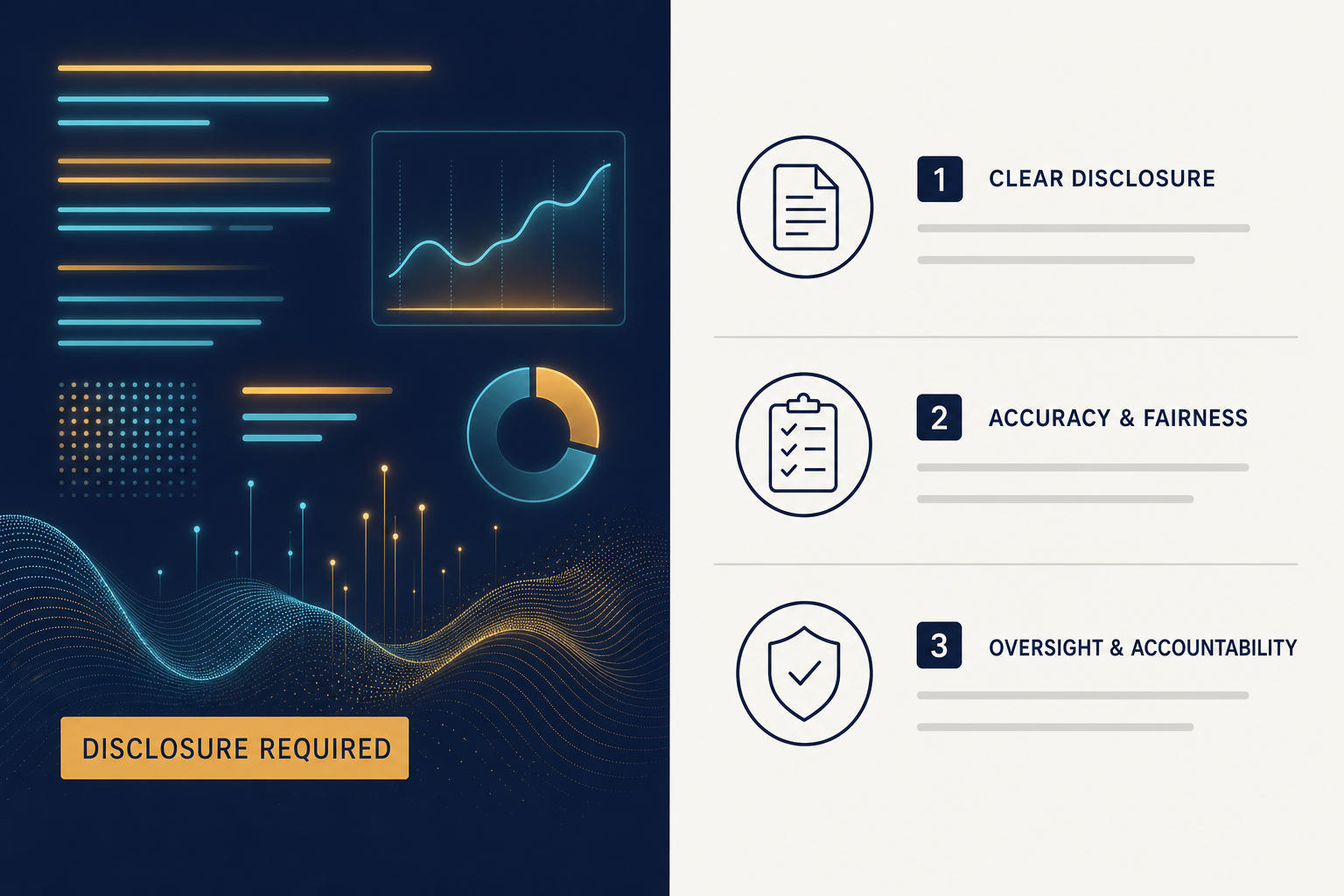
None of the campaigns documented here included explicit consumer-facing disclosure that ad creative was AI-generated. As of mid-2026, there is no FTC rule requiring disclosure of AI-generated ad creative specifically (as distinct from AI-generated endorsements or testimonials, which do carry disclosure requirements). Platform policies vary: Meta requires disclosure for AI-generated content in political ads but not for standard commercial advertising.
What to Look for in Future Case Records
The cases documented here represent the current state of public evidence — which is thinner than the volume of vendor claims would suggest. As more brands run structured tests and publish findings, the most useful records will be those that:
- Specify the AI tool and method (not just "AI creative")
- Report a primary metric with its original scope (e.g., CTR on cold audiences, ROAS on retargeting — not blended campaign averages)
- State the comparison condition (what the AI creative was tested against)
- Acknowledge concurrent variables that could explain the result
- Identify whether the source is brand-reported, vendor-reported, or independently measured
This record will be updated as new publicly verifiable cases emerge. For practitioners building internal proposals around AI creative in paid social, the operational cost reduction evidence (Klarna-style) is currently more defensible than performance lift claims.

Comments
Join the discussion with an anonymous comment.