
Did China's Micron ban reshape AI memory competition?
A dated scorecard of what China's 2023 Micron ban actually did to AI memory competition: who gained and lost DRAM and HBM share through Q1 2026, what the ban cost Micron, and why Washington's December 2024 HBM export controls reshaped the race more than Beijing's action.
- Platform
- Memory market
- Campaign type
- AI memory competition
- Spend range
- Commodity DRAM to HBM
- Timeframe
- 0-05-21 to 2026-03-31
- HBM revenue share
- SK hynix ~0%, Samsung ~21%, Micron ~21%
- Verdict
- mixed
- Industry vertical
- Semiconductors
- Last reviewed
- 0-08-28
China’s May 2023 ban on Micron had a real commercial effect, but it did not produce the broad reshaping of AI-memory competition that the headline implied. The Cyberspace Administration of China barred Micron from supplying operators of China’s critical information infrastructure on May 21, 2023, the first action of its kind against a US chipmaker. [1] The restriction narrowed Micron’s access to a defined Chinese customer category. It did not remove Micron from the global DRAM market, and it did not break the three-company contest for high-bandwidth memory, or HBM.
| Date | Event | Observed competitive consequence |
|---|---|---|
| May 21, 2023 | China bars Micron from supplying critical-information-infrastructure operators | A concentrated loss of access to a Chinese data-center customer category |
| December 2024 | The United States introduces HBM export controls | A direct intervention in the advanced-memory supply chain serving AI systems |
| October 17, 2025 | Micron reports its exit from China’s data-center business | The commercial cost of the Chinese restriction becomes explicit |
| Q1 2026 | HBM revenue share remains concentrated among SK hynix, Samsung, and Micron | The advanced AI-memory market remains a three-company oligopoly |
The useful comparison is therefore not “China acted and Micron won or lost.” It is narrower: Beijing removed one customer channel; Washington later acted on the advanced-memory tier itself. Meanwhile, the global AI demand boom expanded the market in which Micron, SK hynix, and Samsung were competing.
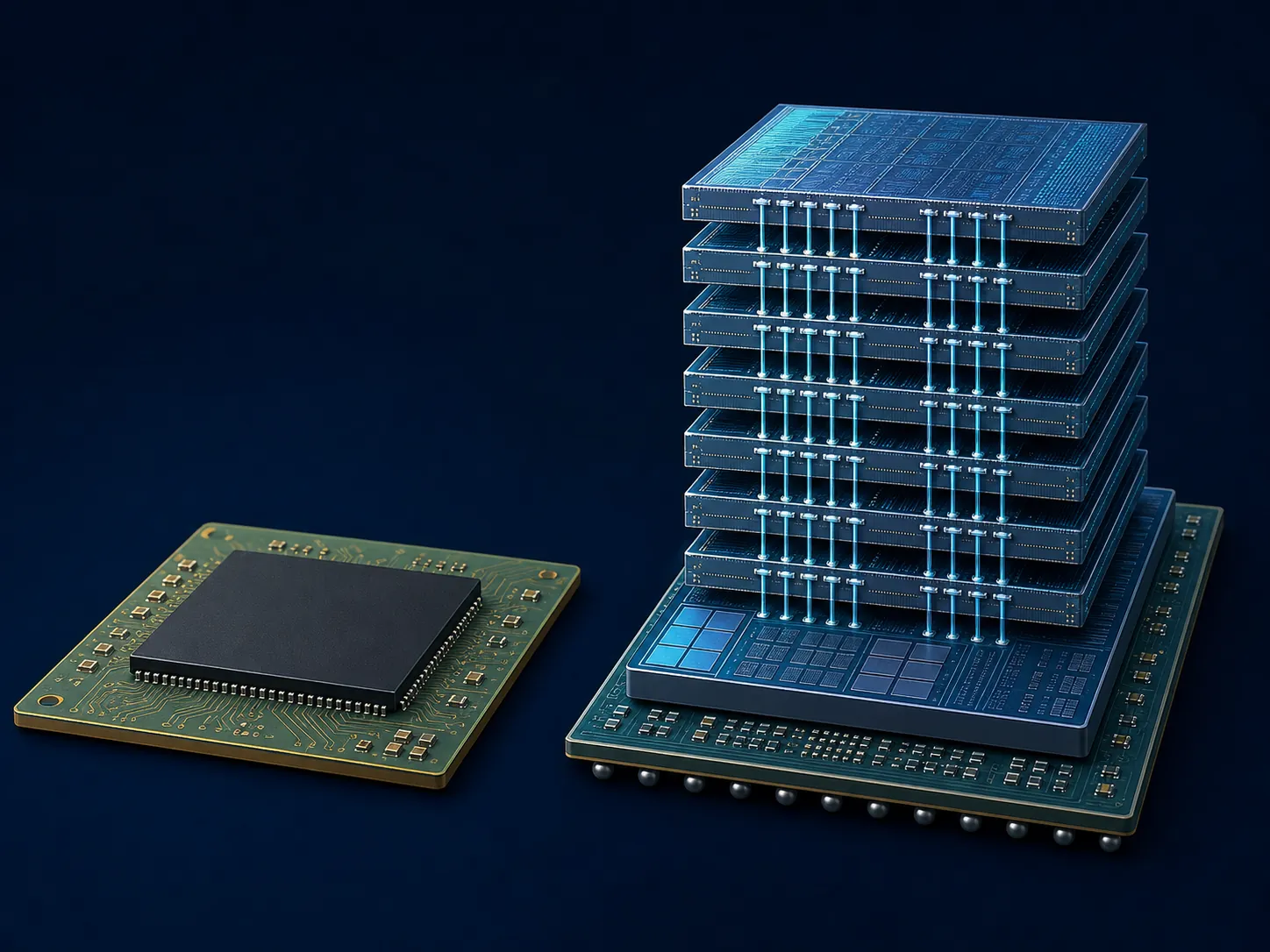
The scorecard changes when DRAM and HBM are separated
“Memory” is too broad a unit for this question. Commodity DRAM supplies conventional servers, PCs, and other systems in large volumes. HBM is the higher-value stacked memory attached to AI accelerators and advanced compute platforms. A company can gain in the first market without gaining in the second.
| Market | Latest supported result | What it says about the ban |
|---|---|---|
| Commodity DRAM | China’s CXMT increased its share from 3% to 8% in one year | Chinese suppliers gained ground in a conventional-memory segment |
| HBM revenue | SK hynix held roughly 58% in Q1 2026; Samsung and Micron held about 21% each | The AI-memory race remained concentrated among three incumbents |
CXMT’s move from 3% to 8% deserves to be counted as a genuine competitive gain. It is not evidence that China captured the HBM market, however. The result belongs in the commodity-DRAM column. In the HBM column, the latest available split still shows SK hynix, Samsung, and Micron dividing the market, with no fourth player displacing the incumbent trio.
That distinction also prevents a second error: converting a gain in company share into proof that the 2023 ban caused the gain. The ban created commercial room for Chinese memory suppliers in an affected customer market. The available figures do not establish that it caused CXMT’s entire increase, nor that it changed the global HBM hierarchy.
Micron lost a business, not its place in AI memory
The clearest consequence for Micron arrived on the customer side. After the May 2023 action, Micron’s access to China’s critical-information-infrastructure business was restricted. Its reported October 17, 2025 exit from China’s data-center business makes the outcome operational rather than merely political: a specific data-center business was no longer available to the company.
That is a meaningful loss for Micron and for the customers who had to replace an established supplier. It is also a different claim from saying that Micron’s global competitive position collapsed. By May 2026, Micron was reporting quarterly revenue of $41.5 billion, a 68% net margin, and a market capitalization of approximately $1 trillion. Those figures show corporate resilience and the scale of the later AI-memory boom. They do not show that the Chinese ban helped produce Micron’s performance.
The timing matters. Micron’s lost China data-center business and its later financial strength can both be true. The company absorbed a concentrated geographic and customer setback while benefiting from demand elsewhere, particularly from systems requiring large amounts of advanced memory. Treating the second fact as proof that the first was beneficial would confuse recovery or growth with causation.

Why the December 2024 US controls reached further
The two policy actions operated at different points in the market. China’s action targeted Micron’s ability to serve a defined group of domestic infrastructure customers. The United States’ December 2024 HBM export controls addressed the advanced-memory supply chain that supports AI systems. One was a customer-access restriction with a concentrated company impact; the other was aimed at a product tier central to the AI-compute race.
That difference gives Washington’s action greater competitive reach, even without assuming that every later market movement was caused by the controls. HBM is where AI-system demand is most directly connected to memory capacity and bandwidth. Controls affecting that tier can alter which suppliers and customers can participate in the race. China’s ban, by contrast, did not prevent Micron from remaining an HBM supplier outside the affected business.
The Q1 2026 HBM figures are the practical test. SK hynix held roughly 58% of HBM revenue, while Samsung and Micron each held near 21%. The shares show a highly concentrated market, not a market opened by China’s restriction. SK hynix’s lead is substantial, but the category still has three meaningful incumbents rather than a Chinese entrant replacing one of them.
The AI demand boom is the other force that must remain separate from policy. Rising demand can increase revenue, margins, and valuation for a company even while a regional ban removes one business. It can also make a market look more strategically transformed than its supplier shares actually are. Through Q1 2026, the evidence supports a larger and more valuable AI-memory market, but not a conclusion that the May 2023 ban determined its structure.
What changed, and what did not
- Micron lost access to China’s critical-information-infrastructure customer base and later reported an exit from China’s data-center business.
- Chinese commodity-DRAM competition strengthened, with CXMT’s share rising from 3% to 8% in one year.
- The available evidence does not show a comparable Chinese gain in HBM.
- Micron remained one of the three leading HBM suppliers in Q1 2026, alongside SK hynix and Samsung.
- The December 2024 US HBM controls had a more direct connection to the advanced AI-memory race than China’s company-specific customer restriction.
This is an observed-outcome scorecard through Q1 or mid-2026, not a final judgment on the policies’ geopolitical intent or long-term effects. On the measured competitive results, China imposed a substantial Micron-specific cost and helped create room for commodity-DRAM share gains. It did not loosen the HBM market. Micron lost a business, but it did not lose its place in the global AI-memory oligopoly; the larger forces visible in the record were the AI demand boom and the later US intervention in HBM.
Reviewed August 28, 2026.
References
- China bans major chip maker Micron from key infrastructure projects — BBC
Built on this evidence
No Bidding tactic or Creative record currently cites this case file. Compare it against other results in Benchmarks.
Related benchmark reading
Report a corroborating or contradicting result
Seeing something different in your own account? Feed the data-integrity loop instead of leaving an open comment.