
Alibaba's AI cloud grew 45% as merchant ad revenue fell 7%
Alibaba's June-quarter AI cloud revenue grew 45% while merchant ad revenue (CMR) fell 7% YoY — and the 1% like-for-like 'recovery' is a contra-revenue accounting artifact, not an advertiser rebound. A claim-versus-reality read for media buyers deciding whether Alibaba's AI ad-lift numbers hold up.
- Platform
- Alibaba Ads
- Campaign type
- AI bidding / AIGC
- Spend range
- Platform aggregate
- Timeframe
- Q0 FY27 (June 2026 quarter)
- CMR
- -7% YoY (RMB 82,547M)
- Verdict
- mixed
- Industry vertical
- ecommerce
- Last reviewed
- 0-08-26
Alibaba’s Q1 FY27 earnings put two AI stories next to each other, and only one of them has clean revenue momentum. In the June 2026 quarter, reported August 20, 2026, AI Cloud and Compute Services external revenue grew 45% year over year, the fastest growth Alibaba said it had seen in 22 quarters; AI-related product revenue reached RMB 12,376 million, grew at a triple-digit rate for the 12th straight quarter, and represented 35% of external cloud revenue. In the same quarter, customer management revenue — the line most directly tied to merchant advertising economics — fell 7% year over year to RMB 82,547 million.[1]

That split matters for anyone evaluating Alibaba’s Q1 FY27 earnings and the impact of AI cloud growth on advertisers. The cloud result is a real infrastructure signal. Compute demand is not imaginary, and Alibaba’s AI-related cloud growth is large enough to deserve attention on its own terms. But merchant media budgets do not flow through the cloud line. They show up closer to customer management revenue, and that line moved the wrong way.
The quarter’s advertiser signal is not the cloud number
| Metric | Q1 FY27 signal | Advertiser read |
|---|---|---|
| AI Cloud and Compute Services external revenue | Up 45% YoY; fastest growth in 22 quarters | Strong demand for AI and compute infrastructure, not direct proof of better ad outcomes |
| AI-related product revenue | RMB 12,376 million; triple-digit growth for the 12th straight quarter; 35% of external cloud revenue | Evidence that AI workloads are becoming a larger cloud business |
| Customer management revenue | Down 7% YoY to RMB 82,547 million | Weak aggregate signal for the revenue line merchant advertising budgets feed |
| CMR excluding contra-revenue impact | Would have grown 1% YoY | A presentation-adjusted figure, not clean evidence of an advertiser rebound |
The temptation is to let the first two rows brighten the last two. That is where the advertiser read has to slow down. Cloud AI growth says customers are buying more compute and AI-related cloud products. It does not say merchants are spending more on Taobao and Tmall ads, getting more profitable conversion volume, or expanding budgets because Alibaba’s ad products are now materially better.
CMR is the more uncomfortable line because it sits closer to the operating question a media buyer has to answer after a vendor meeting: are advertisers putting more money into the platform, and is the platform monetizing that merchant demand more strongly? In Q1 FY27, the reported answer was no. CMR declined 7% year over year.[1]
The 1% like-for-like recovery needs to be read as accounting, not demand
Alibaba also gave a more forgiving version of the CMR number: excluding the impact of contra-revenue related to its new business development program, CMR would have increased 1% year over year.[1] That sentence is useful, but it is easy to misuse. It does not mean reported merchant advertising demand recovered from a 7% decline to healthy growth. It means the reported revenue line was affected by a change in where certain merchant subsidies are recorded.
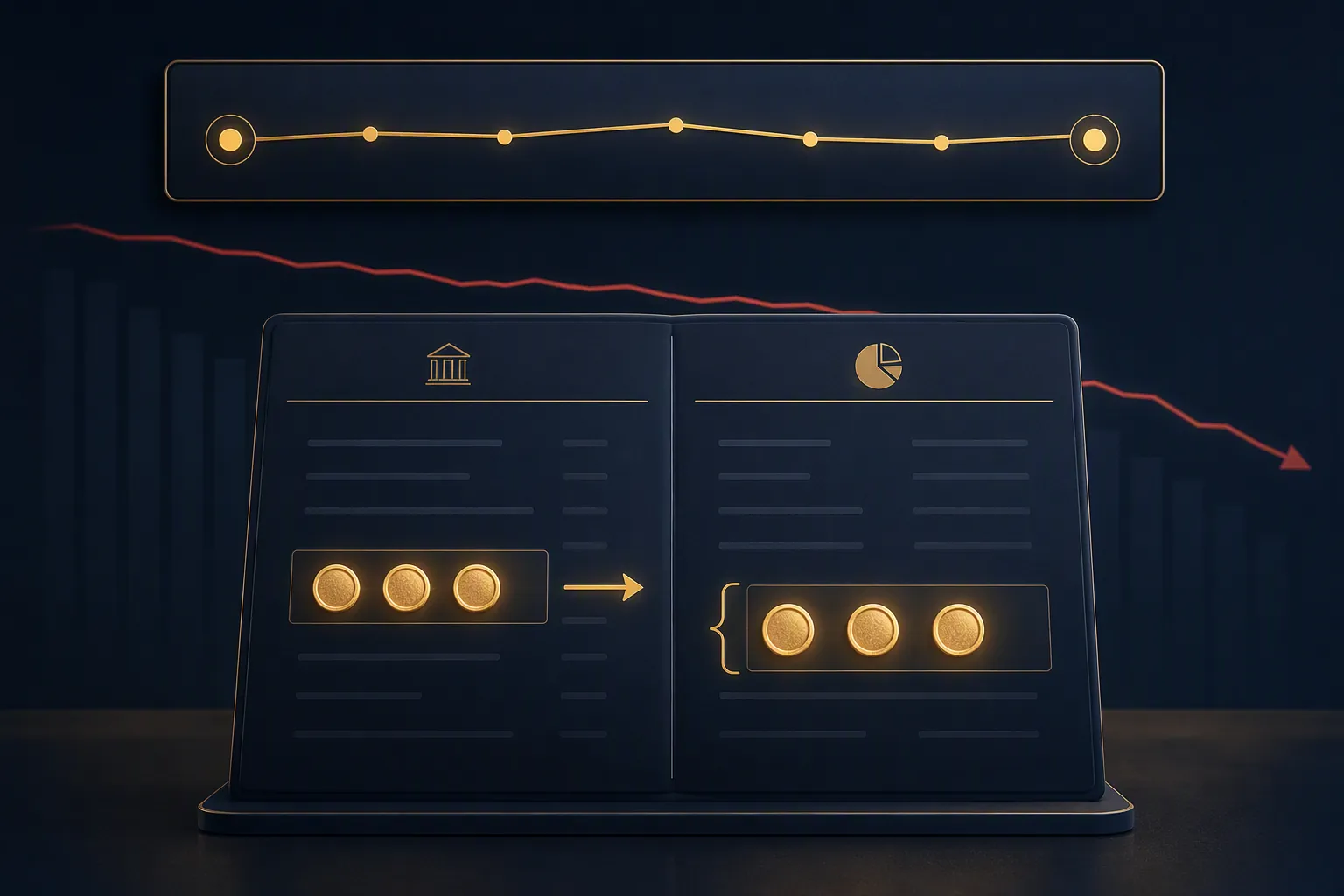
The mechanical issue is straightforward. When merchant subsidies are recorded as sales and marketing expense, they sit below revenue. When those subsidies are instead netted against revenue as contra-revenue, they reduce the reported revenue line. The Zacks/Yahoo Finance breakdown noted that Alibaba’s sales and marketing expense declined to 17.7% of revenue from 21.5%, partly because subsidies that had previously been recorded as marketing spend were moved into contra-revenue under the new business development program.[2]
That explains why the official “excluding contra-revenue impact” comparison exists. It is a normalization for presentation, not proof that merchants suddenly became more willing to fund ads. The adjusted 1% figure is best read as: after stripping out the accounting drag from the subsidy reclassification, CMR was roughly flat. For a marketplace ad business that is supposed to be benefiting from better targeting, AI bidding, creative generation, and merchant tools, roughly flat is not the same thing as validated lift.
This is also why the drop in sales and marketing expense should not be turned into a standalone efficiency story for advertisers. The cited explanation ties part of the change to classification: subsidies moved from an expense bucket into contra-revenue.[2] That can make one margin line look cleaner while making revenue look weaker. It does not, by itself, tell a buyer whether paid media on Alibaba properties became more productive.
Alibaba’s AI ad-lift claims are still vendor-reported
The harder reconciliation comes from Alibaba’s own ad-performance claims. In its 11.11 2025 materials, Alibaba said an AI-powered bidding engine lifted marketing ROI by 12%, and that AIGC capabilities lifted click-through rates by more than 10%.[3] Those are exactly the kinds of numbers that get copied into sales decks because they are specific, positive, and easy to remember.

They are also not the same as verified account economics. The claims arrived without a disclosed methodology: no visible sample definition, no control group, no incrementality design, no spend mix, no category split, and no explanation of whether the ROI comparison was measured against a holdout, a prior period, or selected adopters.[3] That does not make the claims false. It makes them vendor-reported.
A 12% ROI lift can coexist with a weaker aggregate CMR line for several legitimate reasons. The lift could apply only to campaigns that adopted the tool. It could be concentrated in certain categories. It could improve efficiency while advertisers keep budgets flat. It could be real but too small, too narrow, or too recent to move the total revenue line. Those are all plausible explanations. They are not the same as verification.
The same caution applies to the CTR claim. AIGC lifting click-through rate by more than 10% is potentially useful, but CTR is an intermediate metric.[3] A higher CTR can improve traffic acquisition, or it can simply change who clicks. For budget decisions, the useful follow-up questions are conversion rate, order value, repeat purchase behavior, contribution margin, and whether the incremental clicks came from users who would not have bought anyway.
The broader commerce backdrop does not rescue the ad story
The external commerce context was not especially forgiving. During China’s 618 shopping festival, online sales grew 4% year over year, down from 15.2% growth a year earlier, according to Syntun data cited by CNBC on June 23, 2026.[4] That should be treated as pressure on the environment, not as a direct explanation for Alibaba’s CMR decline. It covers a broader market moment, not a controlled readout of Alibaba ad performance.
Still, it makes the platform AI narrative harder to accept at face value. If consumer demand is softer and the merchant ad revenue line is down on a reported basis, a platform lift claim needs more support than “AI improved performance.” The claim has to survive contact with budgets, not just dashboards.
What advertisers should ask before using the AI claims in a budget case
For a media buyer, the practical standard is not perfection. It is reconciliation. If Alibaba’s AI ad products are improving advertiser economics, the evidence should eventually appear in at least one of three places: aggregate revenue behavior, named-account results, or campaign data with a disclosed method.
- Aggregate behavior: Does CMR improve after adjusting for accounting changes, and does that improvement look like advertiser demand rather than subsidy presentation?
- Named-account evidence: Are there identifiable merchants or cohorts showing higher profitable volume, not just higher CTR or platform-defined ROI?
- Methodology: Is the lift based on a holdout, matched control, pre/post comparison, or selected case study? What spend, category, and campaign types were included?
- Incrementality: Did the AI tool create additional sales, or did it reallocate credit inside Alibaba’s own attribution window?
- Profitability: Did the advertiser gain contribution profit after media cost, discounts, subsidies, returns, and marketplace fees?
Those questions are not hostile to Alibaba. They are the minimum standard any platform should meet when it asks advertisers to translate a product claim into budget confidence. Cloud growth can be impressive while ad-product lift remains unproven at the account level.
The Q1 FY27 read for media buyers
Alibaba’s Q1 FY27 results support the AI infrastructure story. They do not yet validate the advertiser story. The same release that showed 45% growth in AI Cloud and Compute Services external revenue also showed reported CMR down 7% to RMB 82,547 million.[1] The cleaner-looking 1% like-for-like CMR figure is tied to excluding contra-revenue impact from merchant subsidies under the new business development program, so it should not be used as shorthand for an ad-spend rebound.[1][2]
Until Alibaba’s AI bidding and AIGC claims are matched with disclosed methodology, named advertiser outcomes, or stronger movement in the revenue line merchant budgets feed, advertisers should keep those lift numbers in the vendor-reported category. They may be useful leads for testing. They are not yet evidence that Alibaba’s AI momentum has improved aggregate advertiser economics.
References
- Alibaba Group Announces June Quarter 2026 Results — Morningstar / Business Wire, August 20, 2026
- Alibaba Q1 FY27 earnings breakdown — Zacks / Yahoo Finance
- Alibaba 11.11 2025 AI ad-performance release — Alibaba
- China 618 online sales growth report citing Syntun data — CNBC, June 23, 2026
Built on this evidence
No Bidding tactic or Creative record currently cites this case file. Compare it against other results in Benchmarks.
Related benchmark reading
Report a corroborating or contradicting result
Seeing something different in your own account? Feed the data-integrity loop instead of leaving an open comment.