
AI robot dog ads have no published ROI
AI robot dog ad campaigns have no published spend, ROAS, or impressions as of the 2026-08-29 review, so vendor ROI claims are untestable against public records. The verifiable record — activation mechanics, hardware cost, and one ad ban — reads as unmeasured PR, not a measurable channel.
- Platform
- Meta
- Campaign type
- Brand activation
- Spend range
- No published campaign spend
- Timeframe
- 2026-08-29 review
- ROAS
- No published ROAS
- Verdict
- mixed
- Industry vertical
- Consumer goods, Entertainment
- Last reviewed
- 2026-08-29
As of the 2026-08-29 review, the reviewed public record contains no published attributable spend, ROAS, CPA, CTR, impressions, or footfall for any named AI robot dog advertising campaign. What is documented is easier to find: the activation mechanics, the agencies involved, hardware-cost context, press attention, and one dated platform-enforcement action. That makes the campaigns assessable as public-facing activations, but not as measurable acquisition channels.

The audit result is a measurement gap
The absence needs to be stated narrowly. It is not proof that no campaign team measured anything internally, nor proof that robot-dog activations cannot create brand value. It means the reviewed public materials do not disclose the campaign-level inputs and outputs needed to test an ROI claim.
| Present in the reviewed record | Not published for the named campaigns |
|---|---|
| Activation descriptions and creative mechanics | Attributable campaign spend |
| Named agencies and technology suppliers | ROAS, CPA, or revenue attributed to the activation |
| Press coverage and reported platform action | CTR, impressions, reach methodology, or conversion volume |
| Some hardware-price and market-segment context | Verified footfall, brand lift, or campaign-level commercial impact |
That distinction matters in a budget review. A photograph can establish that a robot appeared at an event. It cannot establish how much exposure was purchased, how much was earned, how many people saw it, which actions were attributed to it, or whether the resulting value exceeded the cost.
Persil documents the spectacle, not its return
The clearest available case is Persil’s “Dirt is Good” activation at SXSW London. TechInformed reports that Unilever used a Boston Dynamics Spot fitted with ZED cameras. The record names Mindshare, Hogarth, Subvrsive, Metro Production Group, MullenLowe, and KondZilla as agency or production participants.[1]
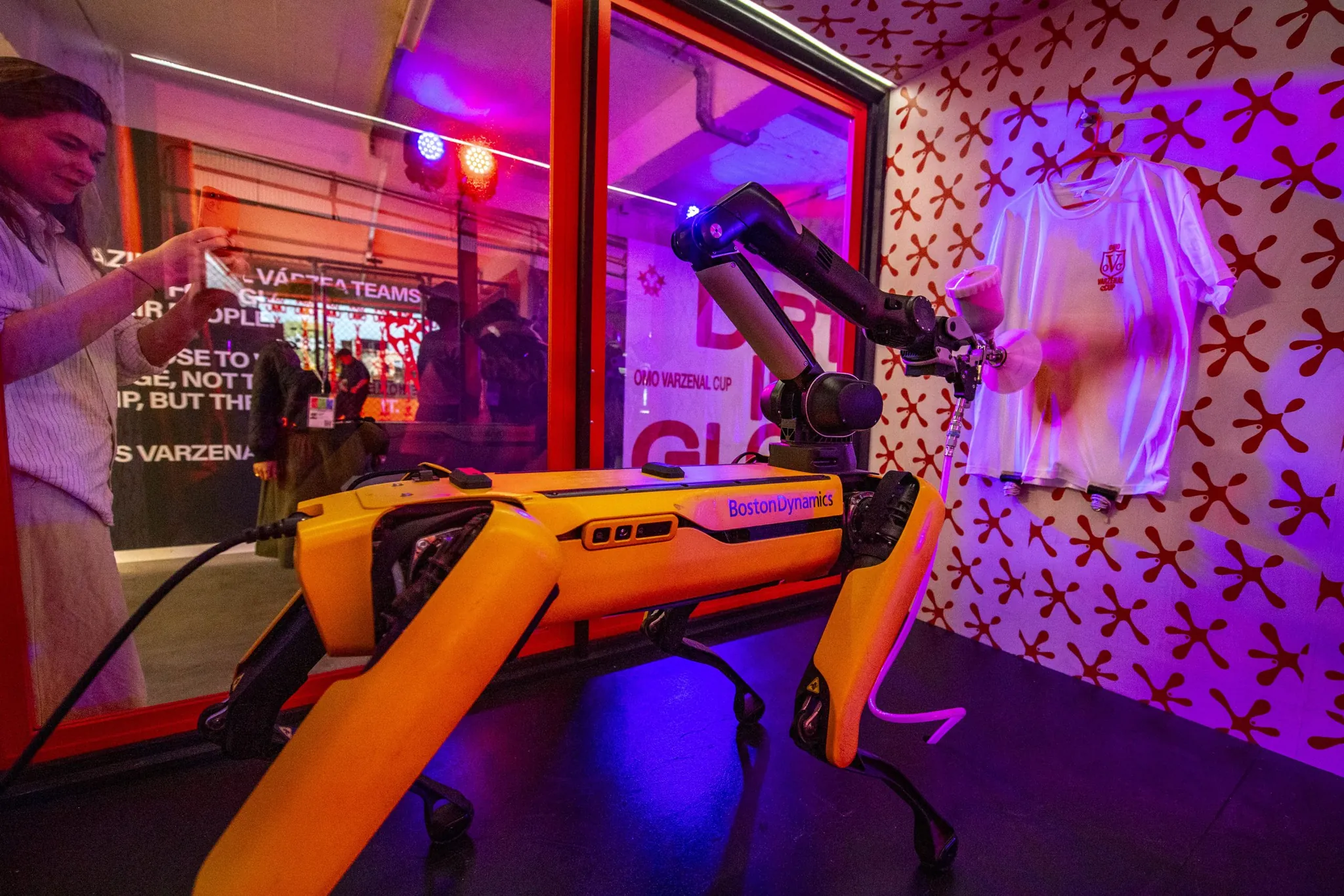
Those are useful execution facts. They help identify what was built, which hardware was involved, and who delivered it. They do not provide an activation budget, media value, impressions, attendance, leads, sales, CPA, or ROAS. The reviewed TechInformed excerpt is truncated at line 72, so the absence cannot be treated as a forensic claim about every line of the full article. The Edelman “Dirt Is Good” case page was not examined either. This is a single-sourced case with an incomplete evidence window, not a complete financial audit.
There is also no basis here for calling the Spot deployment autonomous or AI-operated. Boston Dynamics markets Spot’s remote operation from “six feet or six hundred miles away,” but the campaign record does not establish whether this activation used autonomous behavior, teleoperation, or a combination.[2]
Visibility can produce a platform problem without producing a performance number
The ITV robot-puppy case shows a different kind of public trace. On 2026-03-26, ITV reported that Meta removed the advertiser and associated accounts for deceptive or misleading practices. A Meta spokesperson said the rule applied regardless of whether the content was AI-generated.[3]
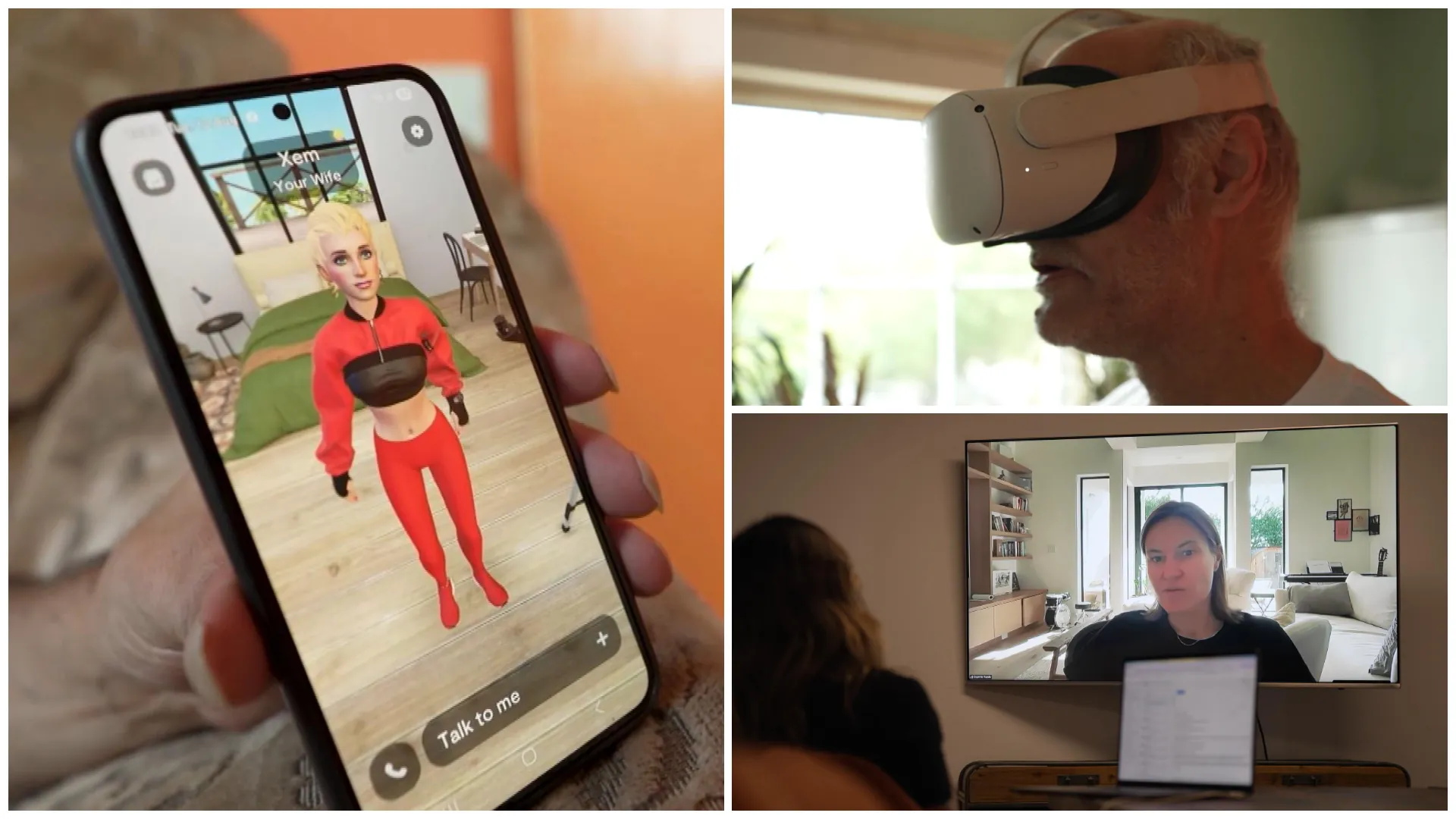
That is an enforceable distribution outcome, not an ROI result. The reviewed ITV record does not provide campaign spend, impressions before removal, click-through rate, conversions, or revenue. The watchdog’s identity and the reported complaint count are also unverified because the article body was not supplied. The record supports the dated Meta action; it does not support a broader estimate of consumer harm or business impact.
The Warner Bros example needs even more restraint. A DesignTAXI post presents the AI-dog advertisement as having been pulled, but the available post is truncated and gives no verified date or cause.[4] A LinkedIn analysis dated 2026-08-22 describes backlash across Instagram, X, and Threads, then explicitly says, “I’m inferring that’s what happened here, not reporting it.”[5] The pull should therefore be treated as unconfirmed. No available source quantifies a change in brand perception, sales, or commercial damage.
The usual substitutes for ROI do not close the gap
A growing market is not evidence that a particular activation worked. DataIntelo’s AI robot dog market report describes segment-level shares, including security at approximately 28.3% of revenue and industrial inspection at about 38% of procurement value.[6] Those figures describe market composition, not advertising response. They cannot tell a buyer whether a specific event generated incremental demand or merely attracted attention.
Hardware price is similarly useful only for feasibility planning. RoboZaps says Spot has no list price and that configured units run from $150,000 to $375,000 in public procurement records; it also says the often-repeated $74,500 quote “died years ago.”[7] That establishes why a robot activation may require substantial production and equipment planning. It does not reveal the campaign’s total cost, and it says nothing about return.
Go2 pricing is not even stable across the reviewed sources. Robotics Center gives a range of $1,600 to $19,430, while RoboZaps gives $1,600 to $2,800.[8][7] A rental channel reportedly requires a three-month minimum without disclosing a day rate. There is no documented activation budget in the available case material, so turning these figures into a tidy cost-per-event estimate would be invented precision.
Press coverage, backlash, and ad removal are also different measurements. Coverage indicates that a story traveled through media channels. Backlash indicates that some public response was visible. Removal indicates that a platform enforced a rule. None supplies attributable revenue, incremental conversions, or a defensible denominator for return.
A self-published robot-dog scam warning and an undated consumer post describing robot-dog advertising as “a cheap little toy” add anecdotal evidence of skepticism, but neither provides a regulator finding, representative sample, measured brand effect, or verified business loss. They should remain color around the cases, not become evidence of campaign failure.
The operational classification is unmeasured brand activation
A media buyer can reasonably approve a robot-dog activation for a communications objective without pretending it has direct-response proof. The budget discussion should identify whether the purchase is for earned attention, an event experience, content production, partnership value, or measurable media delivery. Those objectives can coexist, but they should not be merged into an implied ROAS number.
For the named cases reviewed here, the defensible status as of 2026-08-29 is unmeasured brand activation. Vendor ROI claims remain unverified until a named case publishes campaign-level inputs and outcomes: attributable spend, a defined exposure count, an attribution method, and a resulting action or value measure. “Not found in the reviewed record” is the finding; it is not proof that private campaign reports do not exist.
References
- The Bots from Brazil: Unilever uses Spot for brand activation — TechInformed.
- Spot — Boston Dynamics.
- Robot puppy Facebook ad banned as customers report being misled by AI content — ITV News, 2026-03-26.
- Warner Bros AI-dog ad — DesignTAXI.
- Warner Bros AI dog ad wasn’t a failure: casting — Franklin D. Rivera II, LinkedIn, 2026-08-22.
- AI Robot Dog Market Research Report 2034 — DataIntelo.
- Boston Dynamics Robot Dog — RoboZaps.
- Robot Dog Price Guide — Robotics Center.
Built on this evidence
No Bidding tactic or Creative record currently cites this case file. Compare it against other results in Benchmarks.
Related benchmark reading
Report a corroborating or contradicting result
Seeing something different in your own account? Feed the data-integrity loop instead of leaving an open comment.