
Why Pizza Hut's 'Hut' Rebrand Has No Campaign Numbers
A dated, verification-first look at Pizza Hut's 'Hut' rebrand and the 'Gameday Starts with the Hut' NFL-season campaign: what's checkable — dates, offers, sweepstakes, and the pending $2.7B Yum sale — versus what isn't, with no media spend, ROAS, CPA, or lift disclosed as of Aug 26, 2026. For media buyers, the gap between wall-to-wall coverage and zero campaign numbers is the actual story.
- Platform
- Cross-platform
- Creative type
- video
- Last reviewed
- 0-08-26
As of Aug. 26, 2026, the public record on Pizza Hut’s Hut rebrand and football-season campaign is lopsided in a very familiar way: Pizza Hut has given the market dates, offers, sweepstakes mechanics, talent, partners, and a broad digital-transaction claim, but it has not disclosed media spend, ROAS, CPA, incremental sales, or sales lift for the campaign itself. The campaign launch is documented in an Aug. 25 Pizza Hut release; the ownership backdrop is documented in Yum’s June 16 sale announcement. The performance column is blank.[1][2]
That blank matters because this is exactly the kind of activation that can look measurable from a distance. It has a clean football-season hook, Josh Allen, Pepsi, a mascot named Hutty, temporary signage, a loyalty-gated sweepstakes, and enough press pickup to tempt a slide deck into treating visibility as proof. Visibility is real. It is just not the same thing as attributable return.
For a buyer trying to benchmark this against other high-attention launches, the safest first entry is not “worked” or “didn’t work.” It is “monitored, not performance-verified.” That is the same discipline used in other high-visibility, no-number cases, from the Karina x Converse paid-ads verification record to the Roborock AI vacuum soccer campaign: document what the brand actually put into market, then stop before inventing lift.
What Pizza Hut actually put into market
Pizza Hut’s Aug. 25, 2026 release names the campaign as “Gameday Starts with the Hut” and frames it around football-season viewing, Pepsi, Buffalo Bills quarterback Josh Allen, and the brand’s Hutty mascot.[1] That release is the cleanest source for the activation because it contains the parts a campaign calendar needs: launch date, featured people and properties, consumer offers, sweepstakes rules, and the brand’s own digital-commerce claim.
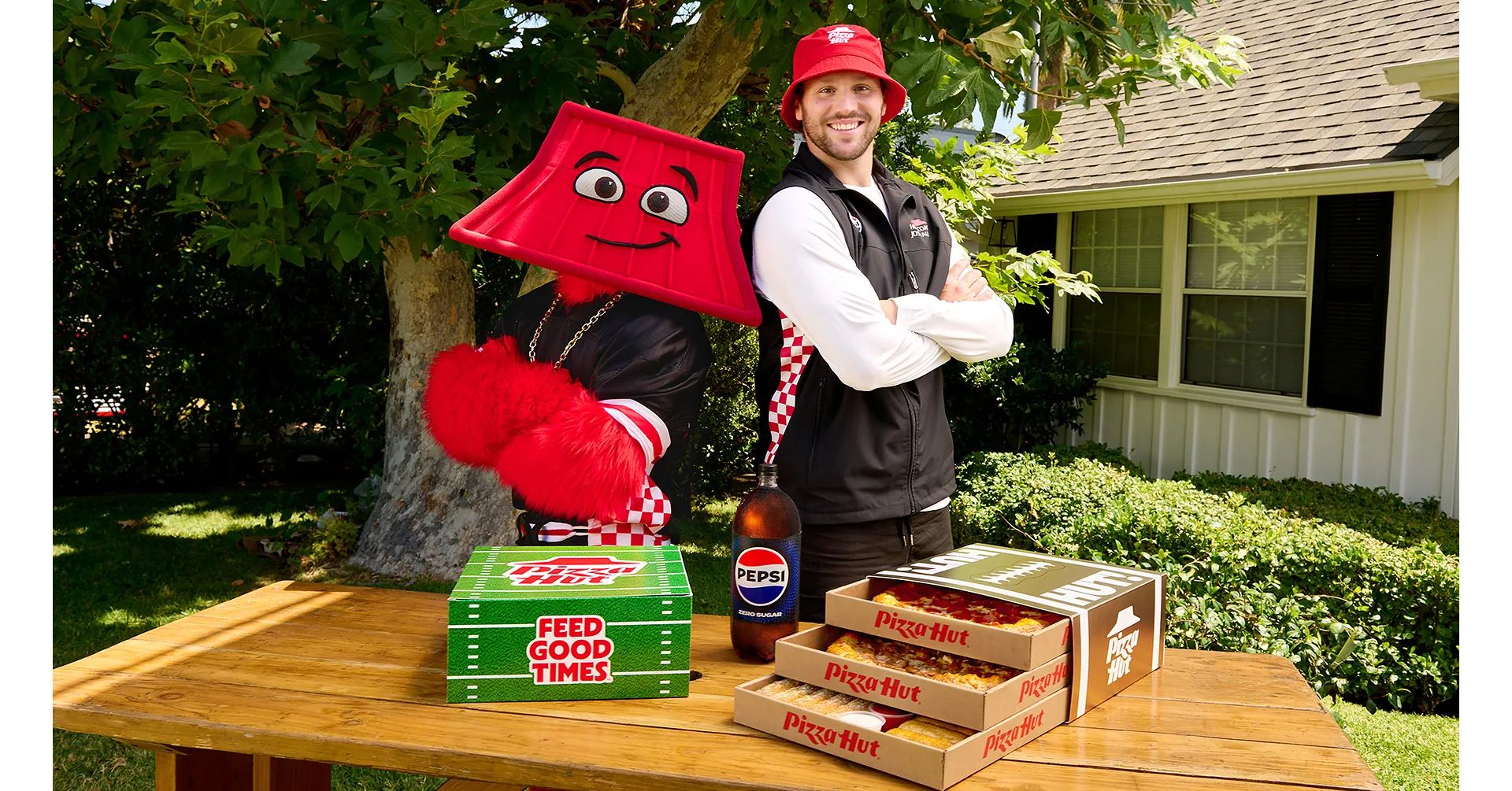
The offer stack is straightforward. Pizza Hut promoted a $10 large 3-topping pizza, a $21.99 Triple Treat Box GameDay Edition, and a $2 Pepsi add-on.[1] The sweepstakes layer runs through Hut Rewards: members can enter for a chance to win one of three prizes of 1,000,000 Hut Rewards points, each with an approximate retail value of $10,800, with entries ending at 8:00 p.m. ET on Oct. 24, 2026. The sweepstakes is administered by Fooji.[1]
That is useful structure, not proof of effectiveness. A $10 pizza offer can support traffic and conversion testing. A Pepsi add-on can push attachment behavior. A Hut Rewards gate can help capture or activate loyalty members. A quarterback can improve recall. None of those mechanics, by itself, tells a media buyer what Pizza Hut paid to distribute the campaign, what the acquisition cost was, whether the offer was incremental, or whether the customers would have ordered anyway.
| Checkable campaign element | What it supports | What it does not prove |
|---|---|---|
| Aug. 25, 2026 campaign release | The campaign was publicly launched and documented | Paid reach, spend, or sales impact |
| $10 large 3-topping pizza and $21.99 Triple Treat Box GameDay Edition | The promoted offer architecture | Incrementality or margin contribution |
| $2 Pepsi add-on | A basket-building mechanic | Attachment-rate lift |
| Hut Rewards sweepstakes ending Oct. 24, 2026 at 8:00 p.m. ET | A loyalty-gated participation window | New-member quality or repeat behavior |
| Three 1,000,000-point prizes with $10,800 ARV each | The declared prize value | Campaign ROI |
| Claim that over half of worldwide transactions are digital | A stated commerce mix indicator | This campaign’s digital conversion performance |
Pizza Hut also says that over half of its worldwide transactions are digital.[1] That is an adoption claim, and it matters because a digital-heavy transaction base can make offer redemption, loyalty capture, and attribution easier to operate. It still does not disclose whether this campaign drove more digital transactions, better digital margins, or lower acquisition costs.
The name, the dates, and the NFL framing need verification
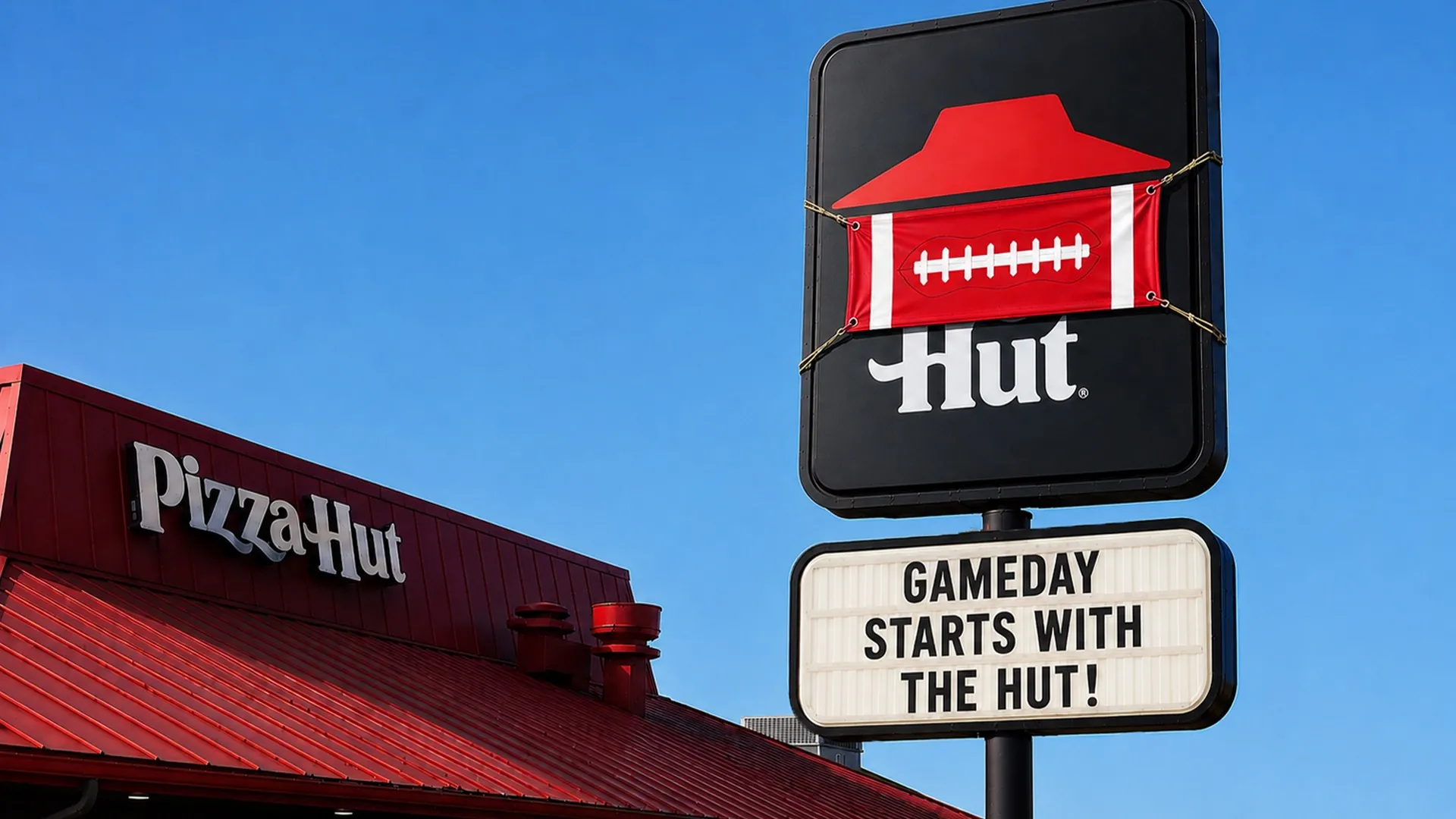
The brand’s official campaign language centers on “Hut.” The messier public-facing shorthand is “Hut Hut,” driven by coverage of two store signs using that football-call version ahead of the season.[3] That distinction is small, but it is the kind of small thing that turns into a bad taxonomy later if every recap normalizes the stunt under one label.
:max_bytes(150000):strip_icc():focal(643x467:645x469)/Pizza-Hut-Name-Change-Football-Season-082126-DN1-3cbe925e76b245798abf13d281648521.jpg)
The timing also has a source conflict. Fox Business reported a 25-week window running from Sept. 9, 2026, to Jan. 10, 2027.[4] Marketing Dive, covering the Aug. 25 ad launch, said the name change was “in effect until Aug. 31.”[5] Those statements cannot both describe the same full-flight window in the same way. Without a primary correction or a definitive brand calendar, the right move is to log the conflict rather than smooth it over.
The NFL wording needs the same treatment. Pizza Hut is using football-season energy. It is not the NFL’s current official pizza sponsor. Little Caesars has held the official NFL pizza sponsorship since 2022, and trade coverage in August 2026 described Little Caesars kicking off its fifth season in that role.[6][7] So the accurate read is football-adjacent seasonal marketing, not league-rights activation.
That correction is not pedantry. Sponsorship rights change what a buyer can assume about media inventory, marks, access, category exclusivity, and measurement. A celebrity-led football-season campaign can still be large, visible, and useful. It just should not be benchmarked as if it carried the rights package of an official NFL sponsor.
The sale backdrop is not decorative
The rebrand landed while Pizza Hut was already inside a major ownership transition. On June 16, 2026, Yum Brands announced agreements to sell Pizza Hut for $2.7 billion: LongRange Capital would acquire the Ex-China business for $1.5 billion, with a possible $75 million earn-out by 2030, while Yum China would acquire the Mainland China business for $1.2 billion.[2] Yum said it expected roughly $2.3 billion in net proceeds and expected the transaction to close in Q3 2026.[2]
That transaction was pending, not closed, when the campaign release hit. Fox Business reported in August 2026 that the sale was on track for an August close, but the Yum release itself framed the close as expected in Q3 2026.[4][2] For campaign interpretation, that pending status matters: the “Hut” push is arriving in a moment when the brand’s ownership story is being rewritten, not in a quiet operating period.
Restaurant Dive also covered the sale as a $2.7 billion transaction and placed Pizza Hut’s system scale around 19,000 restaurants globally.[8] Other coverage used roughly 20,000 as the global restaurant figure, which is close enough for general scale but not identical enough to treat as one precise number.[3] The same caution applies to U.S. closures: People reported about 250 closures, or roughly 3% of U.S. restaurants, while Restaurant Dive context has described the closure range differently, around 4%.[3][8]
The U.S. operating context is softer than a cheerful rebrand headline suggests. People’s coverage cited U.S. same-store sales declines of 5% in 2025 and 4% in Q1 2026, and Restaurant Dive’s context described a longer run of U.S. comparable-sales pressure.[3][8] None of that proves the Hut campaign was a response to those numbers. It does mean the campaign should not be read as a standalone brand-refresh story with the business context cropped out.
The old measurement framework is not a result
There is one useful older public window into how Pizza Hut has talked about media measurement. In December 2022, AdExchanger reported comments from then-CMO Lindsay Morgan about a digital-first media strategy intended to drive incremental sales while maintaining linear TV, with marketing mix modeling and iSpot.tv attribution also part of the measurement discussion.[9]
That 2022 material can help frame what kinds of questions a buyer might ask in 2026: Was the Hut campaign measured through MMM? Was TV separated from digital video? Were loyalty signups tied to incremental purchase behavior? Was Josh Allen’s role tested against non-celebrity creative? Those are sensible questions, especially for celebrity-driven campaigns where attention and response can diverge, as in the Phelps endorsements AI ad measurement analysis. They are not answered by the Hut release.
The distinction is narrow and important: a public measurement philosophy from 2022 is not a disclosed performance outcome for a 2026 campaign. It should not be carried forward as if Pizza Hut has already shown incrementality, sales lift, or ROAS for this specific rebrand.
How to log the Hut campaign without inventing a win
A campaign calendar entry for this activation can be useful if it separates mechanics from outcomes. The clean version would read something like this: Aug. 25 launch; “Gameday Starts with the Hut”; Josh Allen, Hutty, Pepsi; $10 large 3-topping pizza; $21.99 Triple Treat Box GameDay Edition; $2 Pepsi add-on; Hut Rewards sweepstakes ending Oct. 24 at 8:00 p.m. ET; three 1,000,000-point prizes with $10,800 ARV each; digital-commerce claim; no disclosed spend, CPA, ROAS, or sales lift.[1]
The financial-context column should say: Yum announced a pending $2.7 billion Pizza Hut sale on June 16, 2026; close expected in Q3 2026; roughly $2.3 billion expected net proceeds; U.S. comps were under pressure in the cited trade and consumer coverage; closure counts are reported as approximate and not perfectly consistent across sources.[2][3][8]
The rights column should say: football-season campaign, not official NFL pizza sponsorship. Little Caesars holds that position. If a benchmark deck treats Pizza Hut’s stunt and Little Caesars’ official-rights work as the same sponsorship category, the deck is already blending two different media assets before it gets to results.[6][7]
The campaign is worth watching. It has a visible hook, a simple retail offer, a loyalty mechanic, and a real business backdrop. It is not, as of Aug. 26, 2026, a public performance case study. Until Pizza Hut, Yum, a buyer, or a measurement partner discloses spend and outcome data, press volume should stay in the attention column — not the ROAS, CPA, or sales-lift column.
References
- Pizza Hut Teams Up with Pepsi and Josh Allen to Remind Fans Gameday Starts with the Hut — PR Newswire, Aug. 25, 2026.
- Yum! Brands, Inc. Enters into Agreements to Sell Pizza Hut for $2.7 Billion — Yum! Brands, June 16, 2026.
- Pizza Hut Makes a Change to Its Name in Time for Football Season: 'Hut Hut' — People, Aug. 21, 2026.
- Pizza Hut makes surprising change to iconic name ahead of NFL season — Fox Business, Aug. 2026.
- Pizza Hut ads celebrate quarterbacks as chain drops ‘pizza’ from name — Marketing Dive, Aug. 25, 2026.
- Little Caesars kicks off 5th season as official NFL pizza sponsor — National Restaurant News via Yahoo Finance, Aug. 18, 2026.
- Pizza Hut Leaves NFL, Little Caesars Becomes Official Sponsor — Adweek, June 2022.
- Yum Brands sells Pizza Hut for $2.7B — Restaurant Dive.
- Pizza Hut Heats Up Its Digital Media Strategy To Drive Incremental Sales — AdExchanger, Dec. 9, 2022.
This is a record of what happened and what was tested, not legal advice. Compliance determinations require qualified counsel.