Can AI Meme Ads Actually Deliver 8x ROAS?
The viral 8x ROAS AI meme formula is a self-reported agency claim — one account, three ads, no disclosed spend, timeframe, or attribution — so it can't be used as a benchmark. This audit shows what verifiable creative-fatigue and shelf-life data say about AI meme ads, and what to check before running a paid test.
- Platform
- Meta0 TikTok
- Creative type
- AI image ads
- Last reviewed
- 0-08-26
The 8.60x ROAS AI meme ad claim is interesting for exactly one reason: it says a weird creative format made real money in a paid account. That is worth noticing. It is not worth turning into a benchmark. The claim under audit is self-reported agency marketing, based on one client account and three ads, with no disclosed spend, test dates, account baseline, attribution window, holdout, number of losing variants, or read on what happened after the first winner fatigued out.[1]
That missing denominator is the whole problem. A buyer being asked to approve a paid-social AI meme strategy does not just need to know whether a meme ad can spike. Of course it can. The useful question is whether the account can produce enough viable shots, measure them cleanly, refresh them before fatigue eats the margin, and avoid mistaking one outlier for a production system.
| Field a buyer needs | What the 8.60x claim discloses | What that means |
|---|---|---|
| Spend | Not disclosed | You cannot tell whether the result survived meaningful budget. |
| Dates and test duration | Not disclosed | You cannot separate a short-lived spike from durable performance. |
| Baseline | Not disclosed | You cannot tell whether 8.60x beat the account’s normal winners. |
| Attribution method | Not disclosed | You cannot compare it to your account’s reporting standard. |
| Variant count | Three ads shown in the claim | You cannot estimate how many misses were required to get the winner. |
| Post-winner fatigue | Not disclosed | You cannot model refresh cost or shelf life. |
A big ROAS number can be real and still not be a benchmark
The cleanest way to read the 8.60x number is through a creative portfolio lens. Motion’s 2026 creative benchmark dataset covers more than 550,000 ads, over 6,000 advertisers, and about $1.3 billion in spend. In that dataset, roughly 5% of ads are winners, and around 6% of ads absorb most spend.[2]
That does not make meme ads bad. It makes outliers normal. If an account launches enough creative, a small minority will pull ahead. The buyer’s job is not to believe every winning screenshot; it is to understand the denominator behind the screenshot. How many ads were launched? How quickly were losers cut? How much budget reached the winner? Did the winning concept work again when rebuilt, or did only that one post-format joke work?
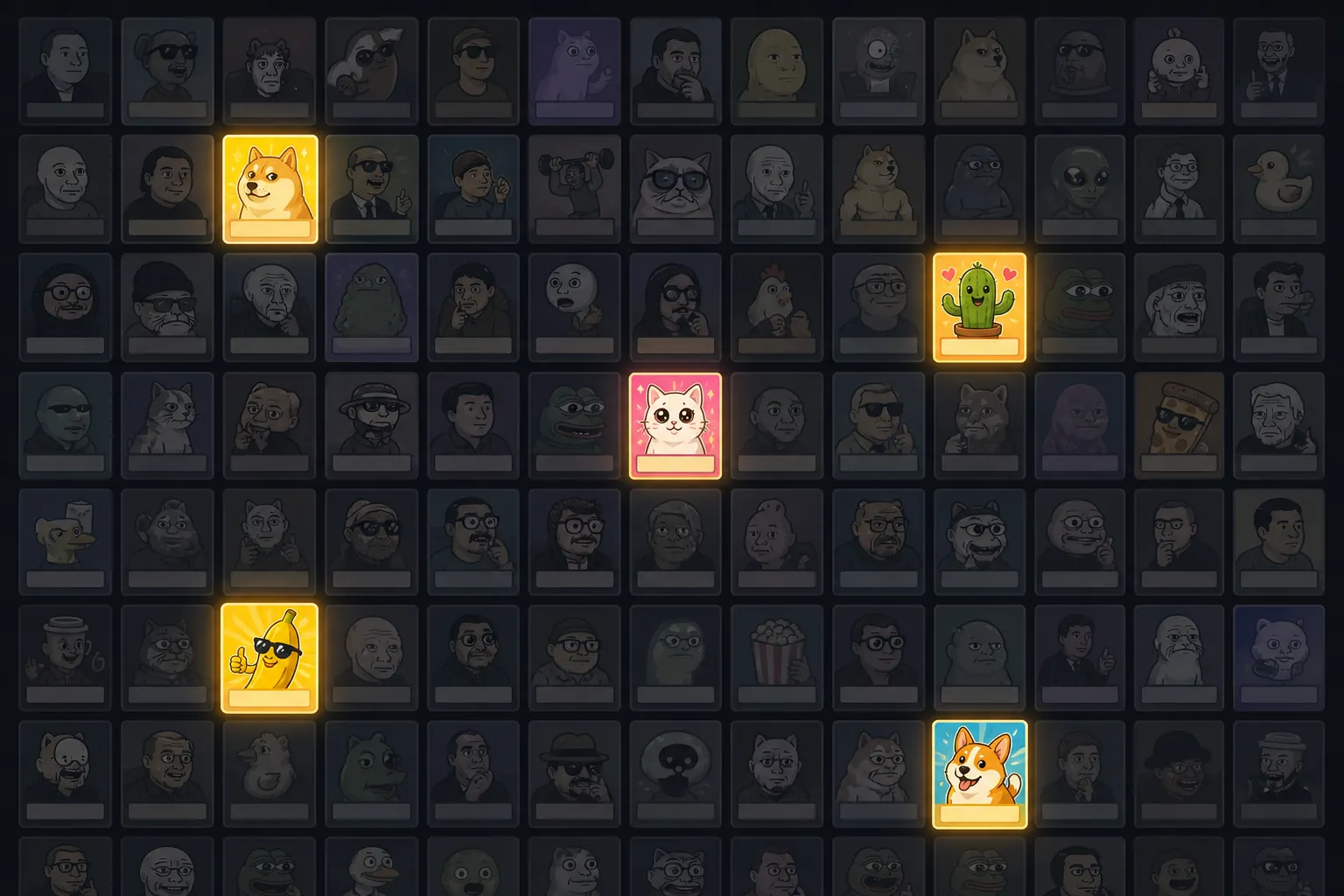
This is why the three-ad detail matters. Three ads can prove that a team found three examples worth writing about. They cannot prove a repeatable formula. A real benchmark would need the account’s normal creative hit rate, the spend distribution across all tested variants, the conversion window, the audience and placement setup, and a view of performance after repeated exposure.
For the person managing the budget, the difference is not academic. If leadership sees “8.60x ROAS” and hears “why are we not doing this,” the buyer inherits the risk. They have to decide whether to move budget out of proven creative into a format whose public evidence may only show the surviving screenshots.
What meme ads really can do: win attention fast
Meme ads are tempting because the best ones cheat the first second. They look like something the feed already understands. A format, a caption rhythm, a familiar emotional beat, or a slightly cursed visual can do what another polished static sale card often cannot: interrupt without looking like a campaign asset.
AI makes that temptation stronger. It lowers the cost of making ugly-fast variants: caption swaps, fake chat screenshots, mascot reactions, surreal product situations, trend-adjacent templates. That is useful in paid social because the account needs shots. The trap is treating cheaper shots as cleaner evidence.
The academic meme layer supports a narrower point than most vendor decks want it to support. Research on branded internet memes finds that effectiveness depends on meme maturity and product category.[4] The American Marketing Association’s summary of meme-marketing research also warns that attention can dissipate in roughly one to two weeks.[5] Those findings are not paid-social ROAS benchmarks. They do, however, fit the operating reality: the same cultural legibility that helps a meme get noticed can also make it age quickly.
A meme format is rarely just a layout. It carries timing, audience literacy, and category fit. A joke that makes sense for a low-consideration impulse product may feel wrong for a higher-trust category. A template that was still elastic last week may feel exhausted after everyone has seen the same punchline. The paid account does not get immunity from that decay just because the asset was generated with AI.
Fatigue is not a side note; it is the media plan
Meta’s creative-fatigue analysis is the harder constraint. In its analysis, conversion likelihood was roughly 45% lower at four exposures, and the authors found no direct-response “wear-in” effect where repeated exposure improved conversion performance.[3]
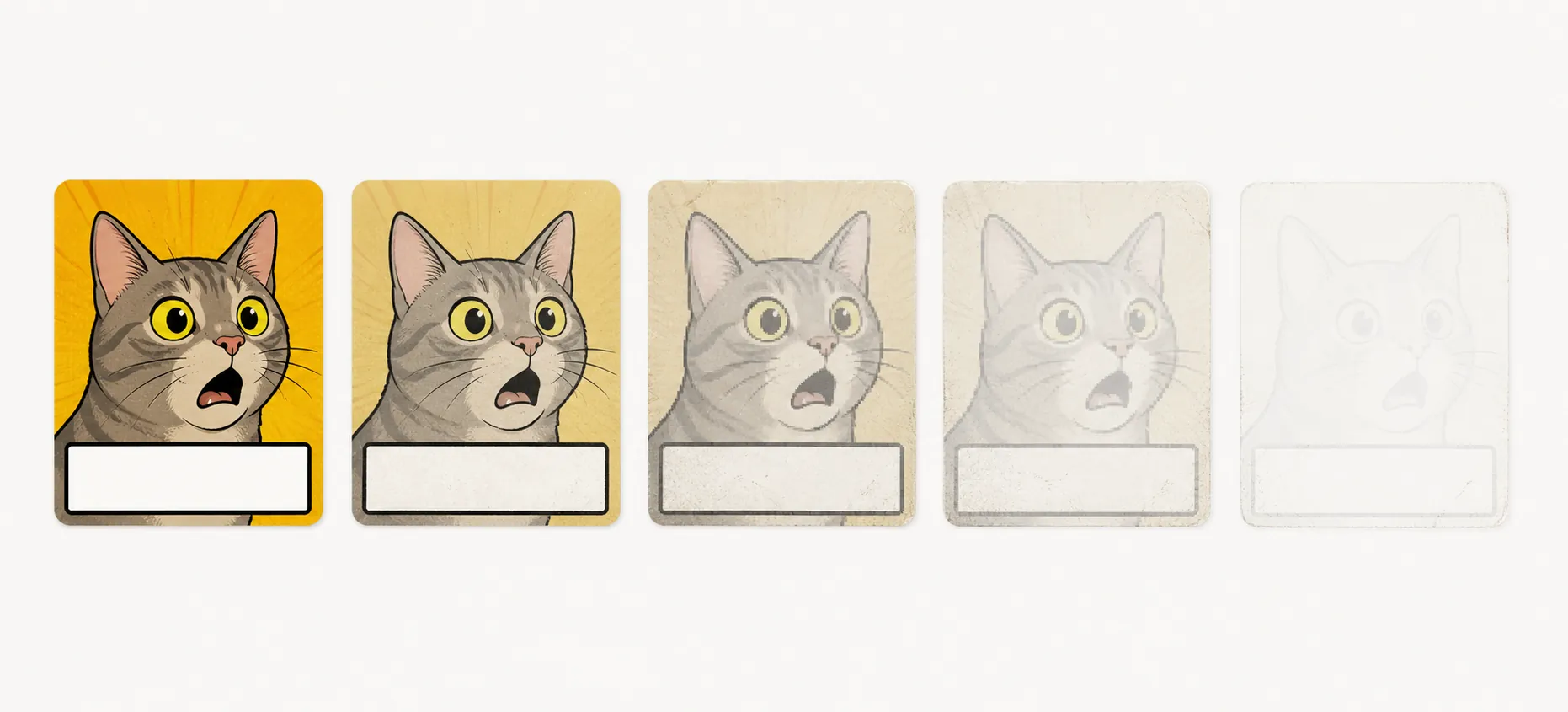
That is the uncomfortable bridge between the 8.60x claim and the real buying decision. If a meme ad wins because it is instantly recognizable, culturally timed, and visually odd, repeated exposure can burn through that advantage quickly. The creative may not get more persuasive with repetition. It may simply become more obviously an ad.
AI helps with volume, but volume is not the same as refresh discipline. A folder full of generated memes is only useful if someone is deciding which patterns are actually different, which ones are brand-safe enough to run, which ones map to a real product objection, and which ones are just trend cosplay. The account still needs naming, tagging, spend caps, stop rules, and a read on whether a new variant is extending the concept or merely repainting the same tired joke.
Reforge’s meme creative-testing framework is useful here because it treats memes as mapped emotional and cultural structures, not as random jokes pasted onto products.[6] That is closer to how a buyer should operationalize the format: identify the social behavior the meme is borrowing, match it to a product truth, then make enough variants to learn before the format decays.
What platform AI claims do and do not prove
The platform story is straightforward: Meta and TikTok both want advertisers producing more creative variations, and their AI tools are built around that need. That context is relevant. It is not independent proof that AI meme ads produce 8x ROAS.
Meta’s Andromeda announcement frames creative diversification as a performance lever and includes platform-published claims of 11% higher CTR and 7.6% higher conversion in the context of its own systems.[7] Those numbers belong in the “platform vendor claim” bucket. They may support testing more creative variation inside Meta’s delivery environment. They do not validate a third-party meme formula without the missing account-level fields.
TikTok’s Symphony materials make the same kind of case for AI-assisted creative production, including the Meoky example with 1.8x purchases and +13% ROAS in TikTok’s own published marketing materials.[8][9] Useful context, same container: platform-published case evidence, not a neutral benchmark for every account.
If a vendor pitch leans on these platform numbers, the right response is not to dismiss them. It is to keep them in their lane. Platform claims can justify a contained test of higher creative throughput. They cannot answer whether your account’s buyers will convert from a meme format, whether the joke survives repeated exposure, or whether the attributed purchases would hold under a stricter measurement setup.
For a stricter account-level setup, the natural next step is a holdout-based test rather than another creative taste debate. Signal & Convert’s AI meme generator holdout-test protocol is the cleaner companion to this kind of claim audit. For creative-risk comparison, the site’s work on AI creative backlash and conversion loss is a better reference than assuming any attention spike is good attention. TikTok buyers looking at platform-assisted production can also compare the external Symphony claims against the TikTok Symphony AI avatar ads setup.
The test should be designed for variance, not belief
A sane AI meme ad test starts from the assumption that most variants will not matter. That is not pessimism; it is what large creative datasets imply. The plan has to create enough differentiated shots for a winner to emerge, while preventing the first promising asset from absorbing so much spend that the account learns too late.
| Decision point | What to require before scaling |
|---|---|
| Budget | A contained test budget that the account can afford to spend without needing the meme lane to rescue the month. |
| Variant volume | Enough meaningfully different concepts to avoid judging the format from one joke or one template. |
| Measurement | A stated attribution window, baseline comparison, and preferably a holdout or clean pre/post structure. |
| Refresh rule | A planned replacement cadence tied to frequency, conversion decline, and concept fatigue. |
| Stop rule | A point where the lane is cut if it produces attention but not efficient attributed sales. |
| Post-winner read | A requirement to rebuild the winner and see whether the pattern repeats, not just whether one asset spiked. |
The most common bad test is too small to learn and too large to be harmless. One or two meme assets get dropped into an account, they either flop and the team declares the format dead, or one spikes and the team starts treating a lucky creative as a strategy. Neither result tells the buyer much.
The better test separates three jobs. First, prove that the account can make meme variants that are actually different from one another. Second, prove that at least one of those variants can beat the account’s current creative on the same measurement standard. Third, prove that the team can refresh the lane before frequency and cultural staleness erase the advantage. The third job is usually where the economics get less cute.
So, can AI meme ads deliver 8x ROAS?
Yes, an AI meme ad can plausibly produce an 8x-looking result in a paid account. The available public claim does not prove that the result is repeatable, scalable, or comparable to another advertiser’s baseline. With one account, three ads, and no disclosed spend, timeframe, attribution method, holdout, or fatigue read, the 8.60x figure is a case worth saving, not a benchmark worth planning around.[1]
The evidence supports a narrower and more useful conclusion: AI meme ads are a high-variance creative testing lane. They can earn fast attention, but they sit inside the same paid-social math as every other creative format: a small share of ads win, repeated exposure can reduce conversion likelihood, and culturally timed formats can expire quickly.[2][3][5]
Treat the format as a production and fatigue problem before treating it as a ROAS strategy. If the vendor cannot show spend, dates, attribution, baseline, variant count, and what happened after the first winner tired out, the right budget is a contained test budget, not a scale budget.
References
- AI Meme Ads for Meta: 8x ROAS Formula, Skaleit Agency
- Motion Creative Benchmarks 2026, Motion
- Creative Fatigue: How Advertisers Can Improve Performance by Managing Repeated Exposures, Analytics at Meta
- From Owning to Connecting: Understanding and Leveraging the Effects of Branded Internet Memes, CityUHK Scholars
- Memes in Marketing: Act Fast or They’ll Backfire, American Marketing Association
- Creative Testing Ads With Memes, Reforge
- The Creative Advantage: Unlocking the Power of Diversification with Meta Andromeda, Meta for Business
- Symphony Creative Studio, TikTok for Business
- TikTok Symphony AI Creative Suite, TikTok for Business
This is a record of what happened and what was tested, not legal advice. Compliance determinations require qualified counsel.