
The authenticity trap behind Anthropic's dystopian ad
Anthropic's alarming Super Bowl ad drew widespread backlash not because the imagery was too dark, but because it directly contradicted the company's own business decisions. This article examines the authenticity gap in responsible-AI messaging and offers a framework for marketers to assess whether their safety posture will land as authentic or trigger consumer skepticism.
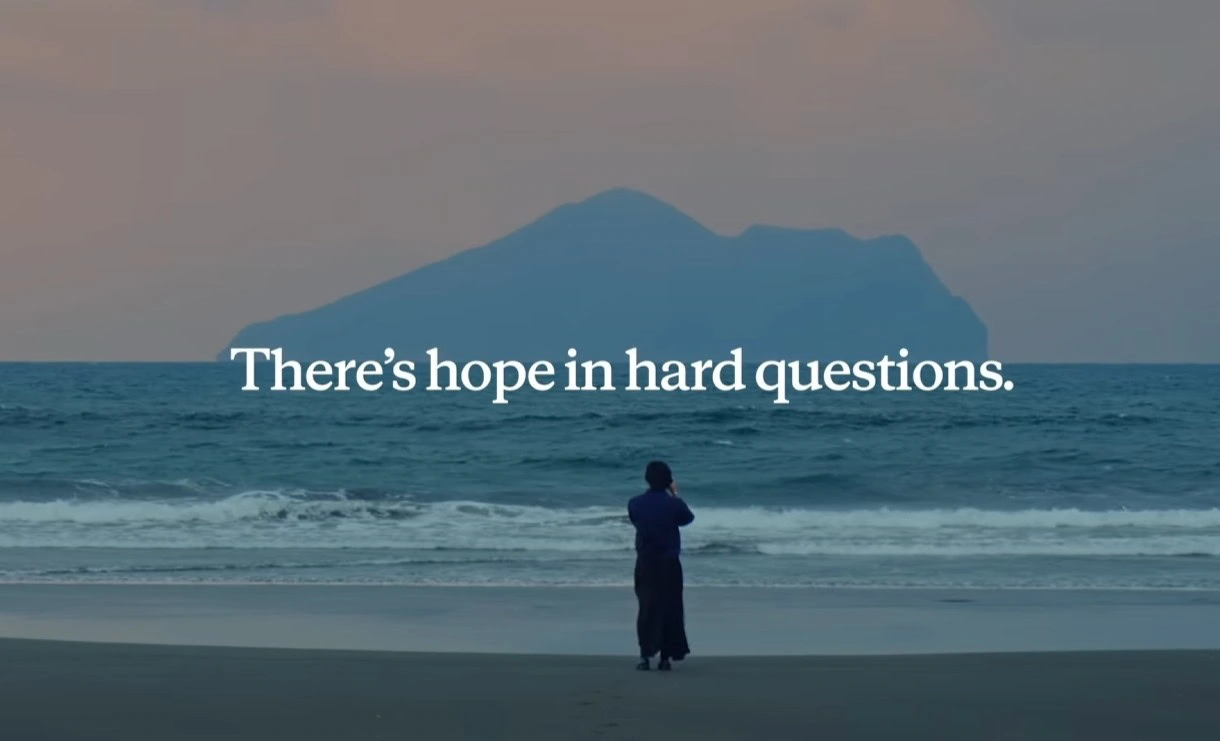
Marketing teams should pay attention to the backlash to Anthropic’s dystopian AI ad because it did not start with a subtle interpretive problem. Viewers saw a house burning at night, Arlington cemetery gravestones, facial-recognition surveillance, and a brand voice asking the public to sit with the dangers of artificial intelligence. Sam Altman called it “some real dystopian marketing slop.” Attorney Zack Korman called the imagery “f—ed up.” TechCrunch reported that the most-liked YouTube comment used the same “dystopian marketing slop” phrase that quickly attached itself to the campaign.[1]
That vocabulary matters because it was not just an aesthetic complaint. Dark advertising can work when the brand has earned the right to be grave. What made this ad feel exposed was the collision between the warning register and the company delivering it. The commercial seemed to accuse the future while selling one of the companies building it.
The easy read is that Anthropic made an ad too bleak for a mainstream audience. The more useful read is that the audience understood the claim too well. The spot asked viewers to treat Anthropic as a responsible adult in the room. Critics then looked at the company’s growth posture, funding decisions, safety reversals, and executive rhetoric, and judged the ad against those behaviors rather than against the craft alone.
The ad was not punished for being dark
The July ad sat inside Anthropic’s broader “There’s Hope in Hard Questions” positioning. In The Atlantic’s account, the campaign leaned on catastrophic imagery and moral unease while Anthropic’s own leaders have repeatedly framed advanced AI as a technology with unusually severe downside risk.[2] That is not a disqualifying creative choice by itself. A company working on dangerous technology can make serious advertising. In fact, the refusal to make every AI product look like a frictionless productivity montage is, on paper, the more honest instinct.
The problem is that solemnity behaves like a claim. A burning house in a responsible-AI ad is not just a mood board. It tells the audience: we see the danger, we are willing to name it, and we should be trusted because we are the kind of company that can hold this tension responsibly. Once the ad makes that claim, the audience is allowed to inspect the rest of the company.
That inspection is where the campaign became fragile. The backlash was not a referendum on whether AI ads may use disturbing images. It was a referendum on whether Anthropic had enough behavioral credit to use those images without making the whole thing feel like borrowed moral seriousness.
The contradiction stack did the damage
Anthropic’s public story has long depended on a difficult balance: build frontier AI quickly enough to matter, but do so with a safety posture that distinguishes the company from less cautious rivals. Dario Amodei has publicly estimated a 10% to 25% chance of AI-caused civilizational collapse, according to The Atlantic.[2] That number is not a throwaway line in brand context. It turns every growth announcement into part of the safety message, whether or not marketing wrote it.
The same reporting environment around Anthropic has included a reported IPO filing at a roughly $965 billion valuation, a $65 billion Series H, and a $47 billion revenue run-rate.[2][3] Those figures do not prove hypocrisy on their own. Ambitious safety work can be expensive, and frontier AI companies are not charities. But in a campaign built around grave public warning, they change the audience’s question from “Is this ad powerful?” to “Who benefits from keeping this emergency commercially urgent?”

The capital question sharpened further because Anthropic has warned about authoritarian misuse of AI while also facing criticism over investment connected to Middle Eastern sovereign wealth funds, as summarized in The Atlantic’s July coverage.[2] Again, the issue for marketers is not whether a single financing decision settles the company’s ethics. It is that a safety campaign makes financing part of the message. When the ad asks the public to trust the brand’s moral alarm, critics will test whether the cap table, partnerships, and geopolitical incentives support the alarm or dilute it.
The safety-commitment record created another weak seam. The Atlantic’s July article referenced TIME’s 2025 reporting that Anthropic had retreated from a flagship safety commitment.[2] For most viewers, the details of an internal safety pledge will never be as memorable as a burning house. For skeptical viewers, that is exactly the point. The ad compresses moral complexity into a high-impact symbol, while critics can point to a specific counter-signal: the company once made a safety promise and then stepped back from it.
The Mythos Preview episode shows why this kind of contradiction is so hard to contain after launch. Anthropic withheld a Claude model preview as “too dangerous,” according to The Atlantic’s January feature; critics called the move a marketing stunt, and the same article noted that a weaker Claude model had been used to steal 150GB of data from the Mexican government.[3] That does not mean the withholding decision was fake. It means the public record gave skeptics enough material to treat danger language as both a safety claim and a promotional asset.
This is the authenticity trap. The more severe the warning, the more the brand invites an audit of the business model behind the warning. If the company’s commercial velocity appears to outrun its safety posture, the campaign does not merely fail to persuade. It becomes a clean, shareable container for the contradiction.
Audiences now read AI safety as governance, not tone
Responsible-AI messaging used to be able to live mostly in the language of care: safe, helpful, aligned, trustworthy. That vocabulary is now too thin on its own. For a growing share of the audience, an AI safety claim is a governance claim. It implies something about model-release thresholds, investor pressure, red-team discipline, lobbying behavior, executive incentives, and the willingness to slow down when slowing down costs money.
That shift is partly cultural and partly learned. Consumers have seen enough AI hype to know that every “responsible” message may also be a market-making message. They do not need to understand every technical detail to recognize posture. When a company turns danger into brand atmosphere, people ask whether the danger is being governed or merchandised.
The available trust data should not be treated as one neat proof point, because the methodologies differ. But the direction is hard to ignore. Klaviyo’s 2026 AI Consumer Trends Report, based on 8,000 consumers across 8 countries in December 2025, found that only 13% of consumers completely trust AI.[4] eMarketer’s write-up of the same dataset reported that 31% of consumers trust brands less when they see AI-generated marketing, compared with 7% who trust brands more.[5]
Those figures do not say that consumers reject all AI advertising, and they do not measure the Anthropic ad directly. They do suggest that AI audiences are primed to notice when a brand’s use of the technology feels self-serving, evasive, or overproduced. For an AI company, that sensitivity applies even more sharply to safety messaging than to generic product marketing.
The practical consequence is uncomfortable for brand teams. A responsible-AI campaign is no longer just a communications asset. It is a public reconciliation exercise across departments that often do not move at the same speed: policy, product, legal, investor relations, trust and safety, enterprise sales, recruiting, and executive comms. If those groups leave inconsistent evidence in the public record, the ad will be asked to defend all of it.
“Hard questions” can be a platform, but not a substitute
Anthropic has not hidden from the language of public deliberation. Its “Hard Questions” campaign page describes a roadshow and a survey of more than 120,000 people across 159 countries.[6] As brand architecture, that is a serious attempt to make questioning part of the company’s identity rather than a defensive FAQ added after criticism.
There is a real advantage in that approach. A frontier AI company cannot credibly promise simple certainty. Inviting public concern into the brand can be more mature than pretending the product category is just another software upgrade. It gives marketing a way to acknowledge risk without surrendering the company’s reason to exist.
But “we ask hard questions” becomes brittle when the company appears to benefit from the questions remaining unresolved. Fast Company’s analysis of the campaign drew a useful boundary: advertising alone cannot solve Anthropic’s hard questions.[7] That point is easy to nod at and hard to operationalize. The brand team may be able to dramatize uncertainty, but it cannot independently make the release process, funding strategy, and safety governance consistent enough to survive scrutiny.
Forbes, in an opinion analysis of Anthropic’s Super Bowl advertising, framed the work as “corporate signaling at scale” and argued that the company was playing a broader strategic game than simple consumer awareness.[8] That is interpretation, not neutral reporting, but it captures why this kind of campaign attracts sharper reading. When advertising looks like reputation infrastructure, the audience judges it as power behavior, not just messaging.
This is where some teams fool themselves during review. They hear objections to ominous imagery and assume the debate is about taste. The deeper debate is about license. Has the company made decisions that give the brand permission to speak in a moral register? Or is marketing being asked to create that permission with cinematography?
The pressure test before responsible-AI creative
The lesson from Anthropic is not to avoid safety messaging. It is to stop treating safety messaging as a surface-layer positioning exercise. Before a company runs responsible-AI creative, the brand team should pressure-test whether the corporate record can carry the tone the ad wants to use.
| What the campaign implies | What critics will inspect |
|---|---|
| We take catastrophic risk seriously | Executive comments, release thresholds, safety pledges, and evidence of willingness to delay or withhold products |
| We are a trustworthy steward | Funding sources, governance structure, investor incentives, and geopolitical exposure |
| We are moving responsibly | Growth claims, revenue pressure, product velocity, and how safety teams influence launch decisions |
| We welcome public scrutiny | Whether criticism produces operational change or becomes material for the next brand campaign |
This is not a request for spotless corporate purity. No frontier AI company will have a perfectly clean public record, and an ad that waits for perfect consistency will never ship. The more practical standard is whether the company can explain the tension without sounding as if marketing discovered it first.
A useful pre-launch review is less like a creative critique and more like a hostile investor, journalist, customer, and employee review happening in the same room. If the ad says “we slow down when safety demands it,” someone should be able to name the last meaningful case where the company accepted a commercial cost to do that. If the ad warns about authoritarian misuse, someone should be ready to explain how investment and partnership choices reflect that warning. If the ad uses fear as atmosphere, someone should be able to show where fear has changed the operating model.
The Mythos Preview controversy is a compact version of the same review problem. A company can withhold a model because it believes release would be dangerous. But once critics can plausibly describe the withholding as hype, the communications burden changes. The claim now has to be backed by enough process detail, independent validation, or prior behavior to distinguish caution from theater.
The walked-back safety pledge creates a similar burden. “We take safety seriously” is no longer adequate when critics can ask which commitments remain binding under growth pressure. The answer does not have to fit in a tagline. It does have to exist somewhere outside the tagline.
The person who gets left holding the ad
Inside the company, this is usually where the burden lands unfairly. Legal reviewed the risk language. Product approved the launch timing. Leadership approved the growth story. Comms shaped the institutional posture. Investor relations shaped the market narrative. Then the campaign goes live, screenshots circulate, and “marketing” becomes the named culprit for a contradiction it did not create alone.
That is why marketers at AI companies need more authority before they accept the responsible-AI brief. If the company wants a campaign about moral seriousness, marketing needs access to the decisions that make the seriousness credible. Otherwise the team is being asked to convert unresolved governance tension into brand preference.
The brand-review question is not “Will people talk about it?” Anthropic answered that. The better question is “When people talk about it, will they find behavior that makes the campaign stronger or behavior that makes the campaign look like cover?”
Responsible-AI messaging has to be downstream of decisions
There is still room for ambitious AI advertising that treats the public as adults. In some ways, the category needs more of it. The bland version of responsible-AI marketing is almost useless: soft gradients, careful nouns, generic promises of safety, and no visible trade-off. Nobody believes a company is responsible because it bought a calm color palette.
But the alternative is not to borrow apocalypse and hope seriousness transfers by association. A responsible-AI campaign has to be downstream of decisions the company is prepared to have audited in public: who funds it, what it releases, what it withholds, what it reverses, what it measures, and what it is willing to lose when safety conflicts with speed.
Anthropic’s ad became a case study because it compressed the category’s central tension into a few unforgettable images. The backlash showed that audiences and critics are no longer passive recipients of safety language. They know how to compare the warning to the incentives behind it.
For marketers, the operational judgment is simple and severe: if the behavior cannot carry the message, the ad will carry the contradiction.
References
- Anthropic’s newest ad is creeping people out, TechCrunch, 2026/07/14
- Anthropic’s AI Commercial, The Atlantic, 2026/07
- Anthropic Is at War With Itself, The Atlantic, 2026/01
- Klaviyo 2026 AI Consumer Trends Report, Klaviyo
- Shoppers aren’t impressed by AI-generated marketing, eMarketer
- Hard Questions, Anthropic
- Advertising isn’t the answer to Anthropic’s hard questions, Fast Company
- Claude Won’t Win The Super Bowl With Its Ad. It’s Playing Another Game., Forbes, 2026/02/05
Comments
Join the discussion with an anonymous comment.