
Do YouTube TV Price Hikes Actually Move CTV Ad Rates?
A dated, citable record of YouTube TV's price increases from 2017 through 2026 and what each one actually did to subscriber growth. The evidence shows base-price changes and connected TV ad rates have stayed decoupled — hikes didn't dent subscriber momentum, and the February 2026 genre-plan launch is the change that reshapes which households generate which ad impressions.
- Platform
- YouTube TV
- Change category
- policy
- Effective date
- 0-02-09
- Change type
- policy shift
- Impact level
- medium
The short answer for media planning is no: there is no sourced evidence that YouTube TV’s base subscription price increases have directly moved connected TV ad rates. The dated record points to a different mechanism. YouTube TV kept raising the household price, subscribers kept growing, and broader CTV CPMs softened under expanding supply. The planning risk is not “the base plan went up, so CPMs must go up.” It is assuming one retail subscription price can explain auction pricing, live-sports scarcity, upfront commitments, programmatic supply, and plan-level audience composition.
This is a synthesis of dated price, subscriber, and CPM benchmarks, not a causal study. None of the available sources directly measures a “YouTube TV price increase → CTV ad rate change” effect. Where the evidence is company-disclosed, analyst-estimated, or market-benchmark context, that distinction matters.

The dated tracker: price went up, subscriber momentum did not break
The useful record starts with the base-plan path. YouTube TV launched at $34.99 in 2017, moved to $40 in 2018, $50 in 2019, $64.99 in 2020, $72.99 in 2023, and $82.99 for the 2025 billing cycle after a December 2024 announcement. CBS News, AP, and The New York Times all covered the December 2024 move as a $10 increase to $82.99, with The New York Times characterizing it as a 14% hike.[1][2][3]
| Date / period | Base YouTube TV price or plan change | Subscriber and ad-market readout |
|---|---|---|
| 2017 launch | $34.99 base plan | Starting point for the price spine; no CTV ad-rate effect can be isolated from the launch record. |
| 2018 | $40 base plan | Early price increase; the available brief does not provide a directly comparable subscriber disclosure tied to this hike. |
| 2019 | $50 base plan | Another base-price step; no source in the brief directly measures an ad-rate response. |
| 2020 | $64.99 base plan | Large price reset; subscriber trajectory later continued upward, but the sources do not support a direct causal claim from this hike to CPM movement. |
| 2023 | $72.99 base plan | Sets the comparison point for the later two-hike jump. By February 2024, Google confirmed more than 8 million YouTube TV subscribers.[4] |
| December 2024 announcement / January 2025 billing | $82.99 base plan | CBS, AP, and NYT reported the $10 move. Late-2025 and early-2026 subscriber figures above the February 2024 level are estimates, not Google disclosures.[1][2][3] |
| October–November 2025 Disney carriage dispute aftermath | Base price remained $82.99; Disney channels returned after the blackout | The dispute showed content-cost pressure and temporary subscriber credits, not a measured CPM effect. Yahoo Finance/Men’s Journal reported Disney was losing about $30 million per week during the blackout and subscribers received $20 credits.[5] |
| February 2026 | Genre plans launched: Sports $64.99, Sports + News $71.99, Entertainment $54.99, News + Entertainment + Family $69.99, compared with the $82.99 base plan | This is the inventory-composition event. Different plan choices change which households are available for sports, news, entertainment, and family impressions.[6][7] |
| June 2026 | Temporary base-plan promotion at $67.99 through June 30, 2026 | A dated price-elasticity signal, not a permanent rate card. It followed a category-wide Q1 2026 live-TV-streaming subscriber loss of about 948,000, which was not specific to YouTube TV.[8] |
| Q3 2026 status | Base reference remains the $82.99 plan, with genre plans and expired promo in the recent record | The latest subscriber estimates put YouTube TV above 10 million, but that figure is analyst-estimated rather than Google-confirmed.[4][9] |
That table is the part worth keeping close in a budget discussion. A base-price increase is a household billing event. A CPM is a media-market clearing price or negotiated benchmark. They can interact through reach, churn, inventory concentration, and content mix, but the available record does not show the subscription price itself acting as a reliable CPM lever.
Subscriber growth absorbed the hikes, but the source quality changes after 8 million
The strongest disclosed subscriber anchor is February 2024, when Google said YouTube TV had more than 8 million subscribers.[4] That comes after the 2023 move to $72.99 and before the January 2025 billing increase to $82.99. It is not an estimate, and it is the cleanest number in the sequence.
The later numbers are useful, but they need different handling. Resourcera’s updated YouTube TV statistics page places the service around 9.3 million to 9.4 million subscribers in late 2025 and above 10 million in early 2026, while also compiling market-share and growth context.[4] Omdia said in December 2025 that YouTube TV was on track to become the largest U.S. pay-TV operator by 2027.[9] Those are not the same thing as a fresh Google subscriber disclosure.
The conservative read is still meaningful: the repeated base-price increases did not coincide with a visible break in subscriber momentum in the available record. That does not prove households were insensitive to price. It means any churn from the hikes was more than offset by acquisition, cord-cutting substitution, channel breadth, sports access, product habit, or some combination the sources do not fully decompose.
Content-cost pass-through is the more supported explanation for the retail price movement than ad-rate strategy. The research record flags NFL Sunday Ticket economics at roughly $2 billion per year and the 2025 Disney carriage dispute as pressure points. During the Disney blackout, Yahoo Finance/Men’s Journal reported an estimated $30 million per week loss for Disney, $20 subscriber credits from YouTube TV, and a 28% base-price jump since 2023 across two hikes.[5] That is a carriage-cost and packaging story before it is an auction-pricing story.
CTV CPMs were moving on a broader supply axis
The CPM evidence points away from a YouTube TV price-led explanation. Adwave’s Q2 2026 CTV benchmark placed blended average CTV CPM around $26 and live sports around $45 to $65, while describing the market in the context of softer pricing and abundant supply.[10] Paramount Ads Manager gives a broad planning range of $20 to $40 for standard CTV and $40 to $60 for premium CTV inventory.[11] Those ranges overlap with, but do not collapse into, any one YouTube TV-specific number.

Gupta Media’s public YouTube TV ad-buying benchmark is useful because it is specifically about YouTube TV, but it is stale for a 2026 plan. In January 2024, Gupta listed a $32.28 base CPM for YouTube TV, plus $5 for each overlay.[12] Treat that as a dated premium-island marker, not as a current market-clearing price.
The broader market context also argues against a simple price-hike-to-CPM story. eMarketer’s Q2 2026 Digital Video Forecast put 2026 CTV upfront spending at $17.73 billion, above primetime linear TV at $16.98 billion, while noting upfront prices were mostly stagnant aside from sports.[13] StackAdapt cited CTV spend of about $37.95 billion and roughly 14.5% growth.[14] More money moving into CTV does not automatically mean tighter pricing when sellable impressions and buying paths expand at the same time.
For buyers, the conflict among CPM sources is not a problem to smooth away. It is the market. A blended benchmark, a platform self-serve range, a two-year-old YouTube TV-specific benchmark, and upfront pricing commentary are measuring different buying conditions. The mistake is averaging them into one “CTV CPM” and then blaming a YouTube TV subscription-price headline when the plan misses.
The February 2026 genre plans matter more than another base-price hike
The February 2026 launch of genre plans is where the planning implication changes. YouTube announced Sports at $64.99, Sports + News at $71.99, Entertainment at $54.99, and News + Entertainment + Family at $69.99, alongside the $82.99 base plan.[6] Variety covered the same plan structure, and Deadline detailed the sports bundle’s channel lineup, including ESPN Unlimited in fall 2026 and the omission of MLB Network and Tennis Channel.[7][15]
That is not just cheaper packaging. It splits the household base into different impression-producing pools. An Entertainment-only household no longer contributes the same sports-viewing inventory as a household on a Sports or full base plan. A Sports + News household may remain valuable for live-event and high-attention daypart reach while no longer representing the full entertainment footprint. A News + Entertainment + Family household can preserve frequent viewing without supplying the same live-sports scarcity.
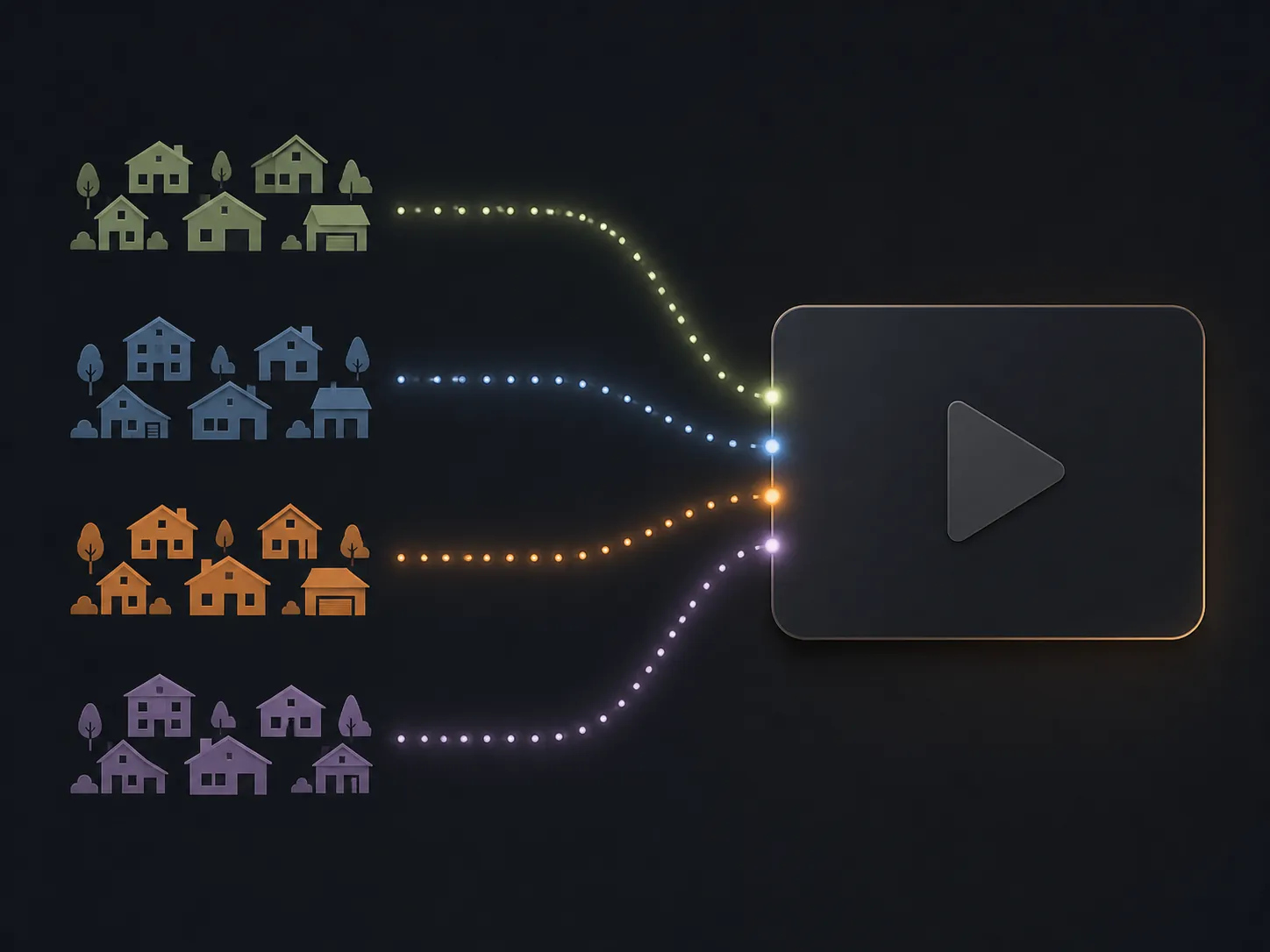
The media question becomes plan mix, not sticker price. If sports-heavy homes self-select into sports plans, the value of sports impressions depends on whether enough audience remains concentrated in those packages and whether buyers can access it cleanly. If price-sensitive entertainment homes move down to Entertainment, those households may still support reach campaigns, but they are not a substitute for live-sports reach. If news and family viewing sit in separate bundles, frequency management and audience duplication assumptions need rechecking.
This is also where channel-level inventory tracking becomes more useful than general streaming commentary. A buyer trying to understand which pools expanded or contracted should map the genre plans to actual channel availability and campaign goals. For a working channel-by-channel view, see the internal inventory record on YouTube TV channel additions and ad opportunities.
The June 2026 promo is an elasticity signal, not a new normal
The June 2026 promotion deserves a different label from the permanent price increases. TechTimes reported that YouTube TV dropped the base-plan price to $67.99 through June 30, 2026.[8] Because that offer expired, it should not be modeled as the standing household price in Q3 2026.
It does, however, sit next to an important category signal. TechTimes also cited a Q1 2026 live-TV-streaming subscriber loss of about 948,000 across the category.[8] That number is not YouTube TV-specific, so it cannot be used to say YouTube TV lost that many households. It can be used to say the live-TV-streaming category was showing enough price and retention pressure for promotions and packaging changes to matter.
For CTV planning, a temporary promo can change acquisition timing and the composition of new or returning households. It still does not translate mechanically into CPM relief. If the promo pulls in lighter-viewing or price-sensitive households, it may add reach without adding the same high-value sports supply. If it pulls back households that churned after the Disney dispute or base-price hike, the effect may be concentrated in particular viewing categories. The sources do not provide that decomposition, so the right action is to watch disclosed subscriber updates, plan mix, and inventory availability rather than infer it from the promo price alone.
What to model instead of the base subscription price
A YouTube TV price-increase headline is worth logging, but it should not drive the CPM assumption by itself. The dated record supports four planning inputs that are more defensible:
- Subscriber source quality: keep Google-confirmed subscriber disclosures separate from analyst estimates. The February 2024 8 million-plus figure is stronger than the early-2026 10 million-plus estimate.
- Plan mix after February 2026: model sports, news, entertainment, and family households as different impression pools when campaign reach depends on programming context.
- Live-sports availability: treat sports as its own scarcity tier, consistent with the higher live-sports CPM ranges in 2026 benchmarks.
- Market-wide CTV supply: compare YouTube TV against blended CTV, premium CTV, upfront, and programmatic benchmarks instead of forcing one platform-specific CPM to explain the whole plan.
The clean planning judgment is this: do not model CTV CPMs from YouTube TV’s base subscription price. Model them from available inventory, package mix, sports concentration, buying path, and the broader CTV supply environment. The base price tells you what households are being asked to pay. It does not, on its own, tell you what advertisers will pay for impressions.
References
- YouTube TV price increase 2025, CBS News, Dec. 2024
- YouTube TV increases price 2025, AP News
- YouTube TV Raises Prices by 14 Percent, The New York Times, Dec. 12, 2024
- YouTube TV Statistics, Resourcera, updated Aug. 19, 2026
- Disney, YouTube TV reached deal, Yahoo Finance / Men’s Journal, Nov. 15, 2025
- YouTube TV plans launch pricing, YouTube Official Blog, Feb. 9, 2026
- YouTube TV Plans Pricing Channels Genre Packages Sports News, Variety
- YouTube TV Drops Base Plan Price Through June 30; Cable Still Costs $30 More Monthly, TechTimes, June 11, 2026
- Omdia: YouTube TV on Track to Become the Largest US Pay-TV Operator by 2027, Business Wire / Omdia, Dec. 11, 2025
- Average CTV CPM Q2 2026, Adwave, Q2 2026
- CTV Advertising Cost, Paramount Ads Manager
- YouTube TV Ads, Gupta Media, Jan. 24, 2024
- Digital Video Forecast Trends Q2 2026, eMarketer, Q2 2026
- Connected TV Stats, StackAdapt
- YouTube TV Sports Bundle Price Channel Lineup, Deadline, Feb. 2026
Primary source: https://blog.youtube/news-and-events/youtube-tv-plans-launch-pricing/