
Why the Pentagon 'blacklist' of Anthropic was never a list
The Pentagon's action on Anthropic was never a 'blacklist': it was a supply chain risk designation issued by Department of War letter on March 4, 2026, and a federal judge blocked the designation as unlawful on August 28, 2026. The restriction, which Anthropic said covered only Claude used directly in Department of War contracts, is what the 'blacklist' headlines missed.
- Platform
- Department of War
- Change category
- policy
- Effective date
- 2026-03-04
- Change type
- policy shift
No official “blacklist” of Anthropic or Claude is established in the supplied record. The documented action was a March 4, 2026 letter from the Department of War designating Anthropic a “supply chain risk to America’s national security.” Anthropic said the letter’s scope was narrower still: it applied only to Claude used by customers as a direct part of Department of War contracts. [1]
That distinction matters because a blacklist suggests a named, general-purpose list that tells every buyer to stay away. The record supplied here describes a government designation affecting a particular contracting relationship, followed by litigation over whether the designation was lawful. On August 28, Judge Rita Lin blocked it as unlawful. [2][3]
What happened, in order
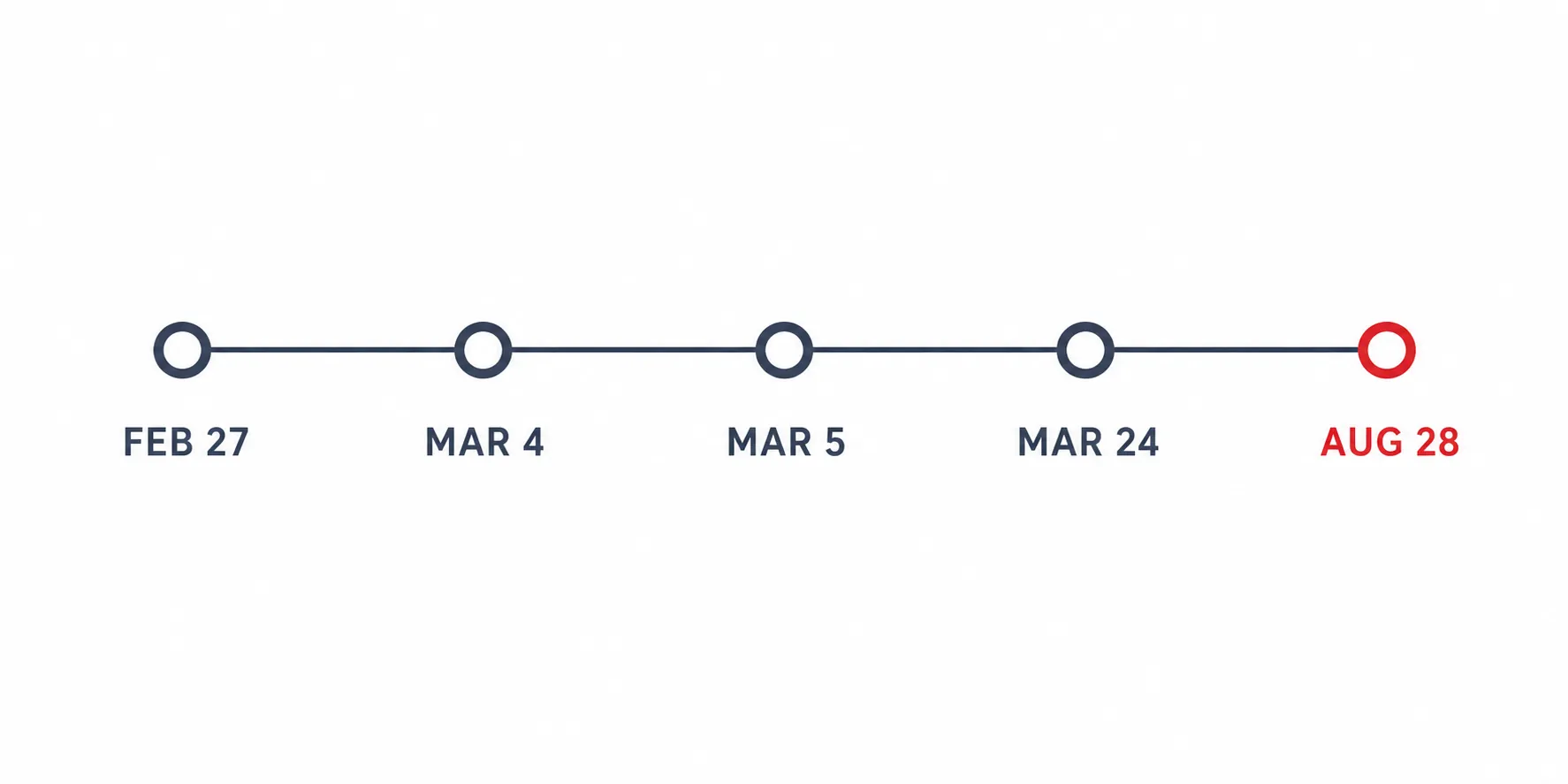
The sequence is easier to follow when the threat, designation, announcement, hearing, and ruling are kept separate:
- February 27: DefenseScoop reported that the Pentagon threatened to blacklist Anthropic amid a dispute over the company’s restrictions on surveillance and autonomous lethal weapons.
- March 4: The Department of War sent the letter designating Anthropic a supply-chain risk to national security, according to the letter as quoted and published by Anthropic.
- March 5: Anthropic announced the designation and described the letter’s direct-contract limitation.
- March 24: At a hearing, Judge Lin said the government could stop using Claude; the legal question was whether it had done so lawfully.
- August 28: Lin blocked the supply-chain-risk designation as unlawful.
The official wording was “supply chain risk,” not “blacklist”
The March 4 letter is the central document in the available record. As Anthropic quoted it, the Department of War designated the company a “supply chain risk to America’s national security.” That phrase identifies the stated mechanism and concern, but it does not, by itself, establish a public list of prohibited vendors or a universal ban on Claude.
Anthropic’s account also says the letter “plainly applies only to the use of Claude by customers as a direct part of contracts with the Department of War.” That is a significant qualification. A contractor using Claude inside a covered government contract is a different situation from an unrelated private company, advertiser, researcher, or individual using Claude. The supplied materials do not establish that every Claude account, every Anthropic customer, or every use of the model was prohibited.
The available evidence does not identify the statutory authority behind the designation. It therefore cannot support a more specific claim that the action was made under a particular procurement, cybersecurity, export-control, or contractor-compliance framework. Those possibilities should not be substituted for the wording of the letter that is actually available.
There was nevertheless a reason for the broader headlines. The Center for Democracy & Technology described a possible contractor-cascade effect in which the restriction could reach contractors doing business with the government, including entities beyond the direct Claude contract at issue. That is policy analysis about the practical consequences, not proof that the official designation itself covered every contractor or customer. [6]
Why the guardrails dispute enters the story
The February 27 threat was reported in the context of Anthropic’s safety restrictions on government uses, including surveillance and autonomous lethal weapons. DefenseScoop quoted Pentagon Chief Technology Officer Emil Michael saying, “Anthropic is lying,” while reporting on the dispute and concerns raised by AI experts. [4]
That account helps explain the political background, but it should not be mistaken for the wording of the March 4 designation. The letter’s quoted rationale was the generic national-security phrase “supply chain risk.” The supplied record does not establish that the guardrails dispute was formally stated as the legal cause of the designation, nor does it provide a full government release or the complete letter for comparison.
What the March 24 hearing clarified
The March 24 hearing prevented another important overstatement. CNBC reported that Judge Lin said the Department of War was free to stop using Claude. The question before the court was whether the government broke the law in making the decision, not whether the government had to continue using Anthropic’s model under all circumstances. [5]
That distinction separates procurement choice from retaliatory or unlawful treatment. A government agency may decide not to buy or deploy a product. That does not automatically settle whether the stated reason, procedure, or consequence complies with the law. The hearing concerned the second question.
What the August 28 ruling did—and did not do
On August 28, Judge Lin blocked the supply-chain-risk designation as unlawful. The Guardian quoted her criticism that “the empty invocation of national security is not a blank check to punish and retaliate against government critics.” CNBC likewise described the ruling as blocking the Pentagon’s supply-chain-risk action against Anthropic. [2][3]
The practical meaning is narrower than “the Pentagon was forbidden from ever stopping use of Claude.” The ruling rejected the designation as it had been issued; it did not turn every future purchasing or deployment decision involving Claude into a legal obligation to buy the model. Nor does the ruling, as described in the supplied coverage, establish that Anthropic had won a general right to government contracts.
Anthropic said the designation caused billions of dollars in lost business and reputational harm. Those are the company’s claimed effects, not findings independently established here by the court. [2] They still explain why a narrow-looking contracting designation could have consequences beyond the sentence printed in the letter: government buyers, prime contractors, subcontractors, and compliance teams may all react to a risk label before its precise reach is settled.
For readers tracking the wider context, the site’s background explainer on Anthropic and Claude covers the company and model at a general level, while the dated tracker on Claude security testing and enterprise adoption follows a related evidence record.
The precise answer to the “Pentagon blacklist” question
“Blacklist” described the news frame, not a documented official list. The documented action was a March 4 supply-chain-risk designation, stated by Anthropic to cover Claude used directly in Department of War contracts. The February threat, March announcement, March hearing, and August ruling were separate events. On August 28, the court rejected the designation as unlawful. That is what the verified record supports—and it is more precise than saying that every Claude customer was blacklisted.
References
- Where things stand with the Department of War — Anthropic, March 5, 2026
- US court rules Pentagon Anthropic ban illegal — The Guardian, August 28, 2026
- Judge blocks Pentagon blacklist of Anthropic — CNBC, August 28, 2026
- Pentagon threat to blacklist Anthropic raises concerns among AI experts — DefenseScoop, February 27, 2026
- Anthropic lawsuit against Pentagon over supply chain risk designation — CNBC, March 24, 2026
- Chain reaction: What the Pentagon-Anthropic dispute means for civilian agencies across all levels of government — Center for Democracy & Technology
Primary source: https://www.anthropic.com/news/where-things-stand-with-the-department-of-war