
What Trump's AI Data Center Response Means for Ad Prices
Media buyers tracking Trump's AI data center policy need a scope check: EO 14318 accelerates federal permitting and energy financing but contains no language touching ad pricing, auction mechanics, or platform behavior. No policy-driven ad-price change is verifiable as of September 2026, and buildout-to-CPM claims remain unproven.
- Platform
- Federal government
- Change category
- policy
- Effective date
- 2025-07-23
- Change type
- policy shift
- Impact level
- Low
Last reviewed: September 1, 2026.
The operative federal action is Executive Order 14318, “Accelerating Federal Permitting of Data Center Infrastructure.” President Donald Trump signed it on July 23, 2025, and it was published in the Federal Register on July 28, 2025 as document 2025-14212. The order concerns federal permitting for data centers and associated energy infrastructure, along with federal support involving financing mechanisms. It does not direct advertising platforms to change prices, auction rules, AI campaign products, or the allocation of computing resources to advertisers.[1][2]
That chronology matters because the Q3 2026 sources cited here consist of speech and news coverage, not a new executive action. A WRAL fact-check concerned a July 8, 2026 energy claim made at a NATO summit, while an Axios item published August 23 covered a defense interview involving data centers. Neither item is a statute, executive order, agency rule, permitting decision, or platform announcement.[3][4]
| Scope check | What the record supports |
|---|---|
| What changed | Federal policy was directed toward faster permitting for data-center and associated energy infrastructure, with Commerce and OSTP support involving financing mechanisms.[1][2] |
| What did not change | EO 14318 contains no advertising-price instruction, auction-mechanics change, platform requirement, or CPM target.[1][2] |
| Q3 2026 status | The supplied Q3 materials document public claims and reporting, not a new executive action.[3][4] |
| Implication for media plans | No policy-driven change in ad prices was verifiable from the reviewed record as of September 1, 2026. |
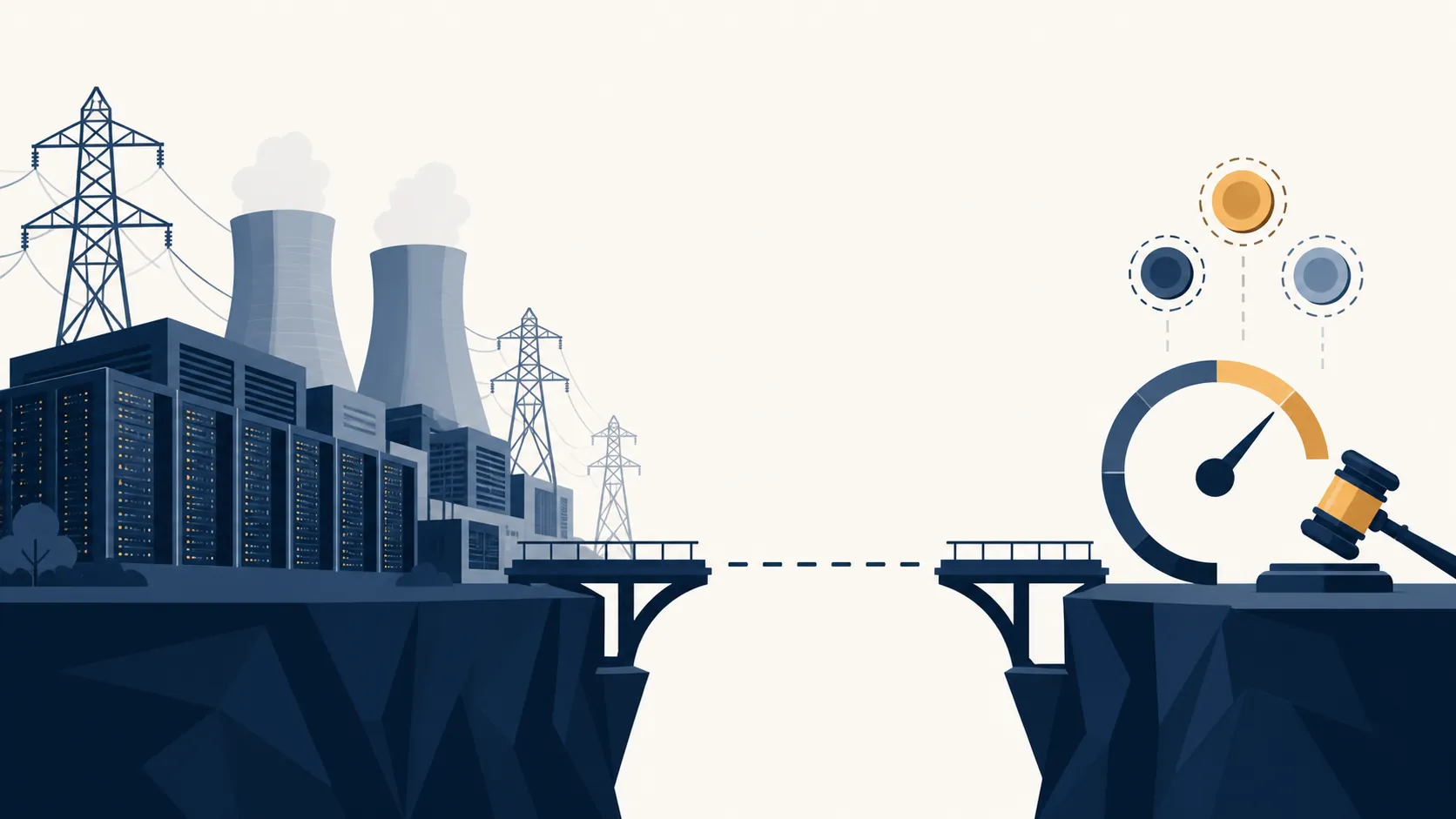
What Executive Order 14318 can actually change
EO 14318 operates on the infrastructure side of the market. Its permitting provisions are meant to accelerate federal handling of data-center projects and the energy and grid infrastructure associated with them. Its financial-support provisions contemplate Commerce Department and Office of Science and Technology Policy assistance through mechanisms such as loans, loan guarantees, grants, and tax incentives.[1][2]
Those provisions can matter to developers deciding where and when to build, utilities considering generation or transmission requirements, and investors assessing how projects will be financed. They may influence construction schedules, capital structures, or the availability of power over time. The order itself does not establish what any resulting capacity would cost, which companies would receive it, or how a platform would distribute that capacity among advertising, cloud, consumer, and model-development workloads.
The missing advertising mechanisms are specific. The order does not alter reserve prices, bid ranking, quality calculations, billing events, campaign budgets, publisher revenue shares, advertiser eligibility, inventory supply, or automated-bidding objectives. It does not require a platform to pass infrastructure savings to advertisers, recover higher capital costs through ad prices, or modify an AI-driven campaign product. It also sets no implementation date for an advertising change because it creates no such change.[1][2]

A lower barrier to building infrastructure could eventually affect the cost or availability of computing capacity. A higher volume of investment could also create financing pressure that reaches service pricing. Both are plausible long-horizon pathways. Neither pathway determines an advertising-auction outcome by itself, and the reviewed materials neither prove nor disprove that an indirect effect will emerge later.
The evidence needed before attributing a CPM move to the policy
A media buyer would need a traceable chain rather than a broad association between two rising numbers. The first link is a dated implementation of the policy: a permit, financing action, completed energy project, or other identifiable measure taken under EO 14318. The second is a corresponding platform action. The third is measurable advertising-cost evidence that survives ordinary checks for competing explanations.
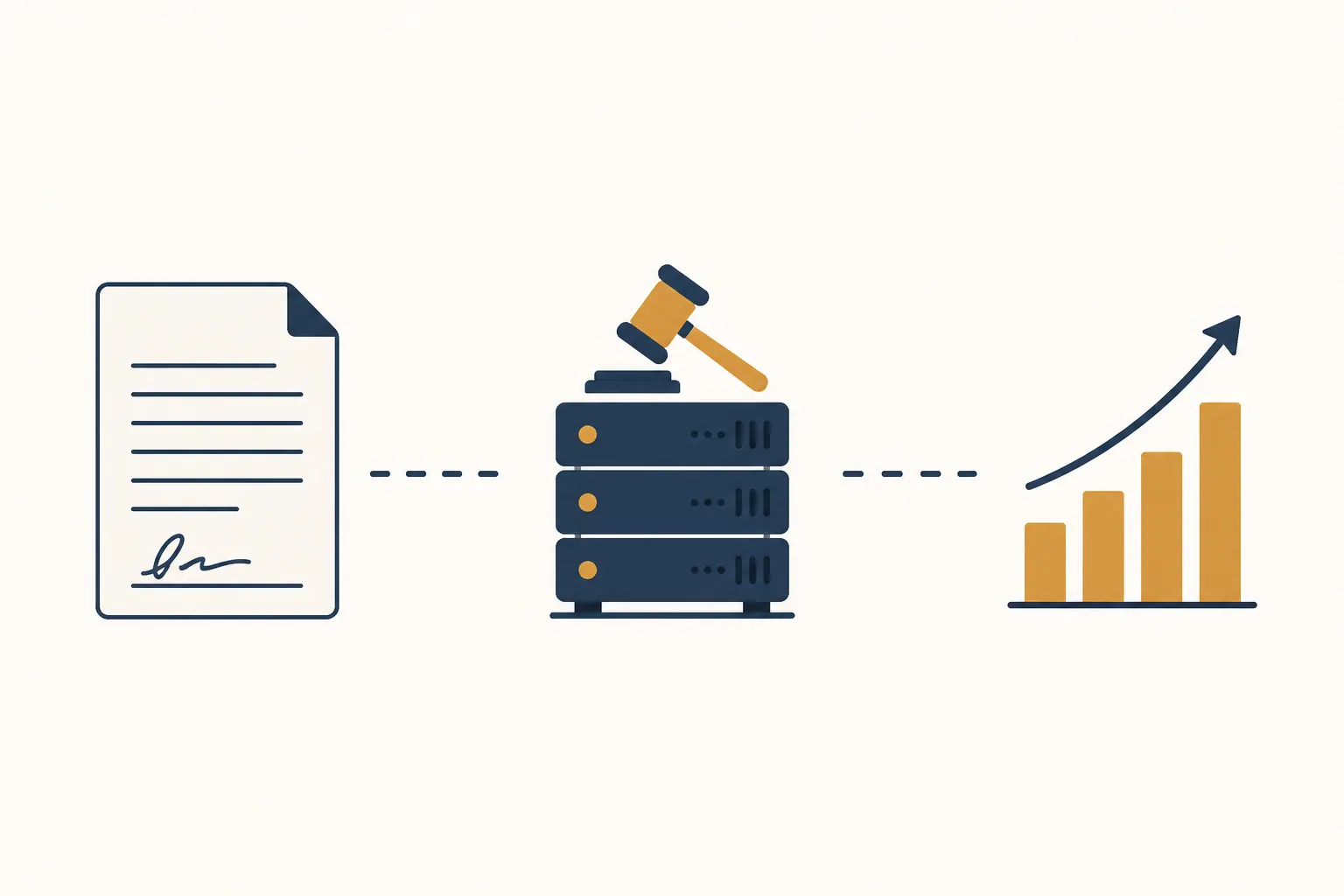
- Identify the operative policy event. Record what agency or company acted, the date, the project involved, and whether the action concerned permitting, financing, power delivery, or completed computing capacity.
- Find the platform connection. Useful evidence would include a dated change to auction mechanics, pricing terms, bidding systems, campaign eligibility, compute-related fees, or a first-party statement linking infrastructure costs to advertising economics.
- Measure the auction result. Compare CPM, CPC, CPA, win rate, impression volume, and conversion quality where relevant, rather than treating a single headline metric as the whole effect.
- Account for confounders. Seasonality, macroeconomic demand, election spending, audience mix, inventory changes, creative performance, campaign objectives, and platform product changes can all move observed ad costs without an infrastructure-policy cause.
Suppose, hypothetically, that CPMs rise after a data-center permit is approved. Timing alone would not show that the permit caused the increase. The project might not yet be operating; the platform might not use its capacity; advertiser demand might have risen seasonally; or auction rules might have changed for an unrelated reason. A credible attribution would need evidence connecting those stages rather than merely arranging them on the same timeline.
The only ad-platform document among the reviewed sources is Google’s static Performance Max explainer. It describes an automated campaign product but contains no dated change connecting campaign pricing or AI automation to energy use, data-center capital expenditure, or compute allocation.[5] That makes it a narrow check on these sources, not proof that Google or every other platform has never made a relevant operational change.
The source gap is material. The reviewed record contains no primary Q2 or Q3 2026 earnings transcript or typed investor statement from Alphabet, Meta, Microsoft, Amazon, or OpenAI connecting infrastructure costs or energy constraints to CPMs, ad prices, or inference fees. Without that intermediate platform evidence, a buyer could report an infrastructure-policy development and a CPM movement separately, but could not responsibly present the former as the established cause of the latter.
Why the infrastructure numbers invite a stronger conclusion than they support
The scale of projected spending makes the proposed connection sound intuitive. Futurum, an analyst firm rather than a first-party platform source, projected aggregate AI infrastructure capital expenditure of about $380 billion in 2025 and $660 billion to $690 billion in 2026. It also framed Stargate around $500 billion and 7 gigawatts.[6] These are analyst estimates and project framing, not reported auction changes.
CNBC reported on July 28, 2026 that Alphabet had increased its 2026 capital-expenditure guidance and that higher spending among peers was attracting investor scrutiny. The report did not identify an associated advertising-pricing change.[7] Separately, Yahoo Finance cited an estimate placing hyperscaler capital spending at 102% of cloud revenue.[8] That ratio may illustrate investment intensity, but it does not show how the spending was allocated across services or passed through to advertising customers.
Power and financing estimates add to the same pressure narrative. A Ropes & Gray investor-panel account projected U.S. data-center power demand of 35 to 45 gigawatts by 2030, with about 80% attributed to cloud-based demand.[9] Quinn Emanuel discussed an estimate of approximately $1.5 trillion in external financing required by 2028 and the risks associated with financing the data-center boom.[10] Both figures concern projected infrastructure requirements. Neither measures ad inventory, advertiser demand, auction clearing prices, or platform pricing behavior.
These estimates explain why finance and infrastructure coverage may discuss pressure on hyperscaler economics. They do not establish which business line would absorb any pressure. A company could change cloud pricing, reduce margins, revise investment schedules, improve hardware utilization, shift workload allocation, alter consumer product access, or make other operational choices. An advertising response is one possible branch among many, not the automatic endpoint of higher capital spending.
How to treat the Q3 2026 coverage
The WRAL and Axios items can document that data-center energy and infrastructure remained part of public discussion in Q3 2026. They cannot amend EO 14318 or create an advertising rule. The available WRAL material also omits the PolitiFact ruling outcome, while the full Axios text was not retrieved, so neither source should be extended beyond the limited claims available in the cited material.[3][4]
For tracking purposes, a speech becomes operationally relevant when it is followed by a signed directive, agency action, company announcement, or documented market-mechanism change. Until then, its implications for a media plan remain prospective rather than measurable.
Tracker status
As of September 1, 2026, no policy-driven ad-price change was verifiable from EO 14318 or the accompanying materials. The order accelerates federal permitting for data-center and associated energy infrastructure and provides for federal support involving financing mechanisms; it contains no language governing advertising prices, auction mechanics, or ad-platform behavior.[1][2]
The proposed link from Trump’s data-center policy to CPM movement is therefore unsupported, rather than confirmed or ruled out. The tracker should change only when a dated platform announcement, auction modification, or first-party pricing statement supplies the missing connection and observable ad-cost evidence can be evaluated against the usual competing causes.
References
- Accelerating Federal Permitting of Data Center Infrastructure — The White House, July 23, 2025
- Accelerating Federal Permitting of Data Center Infrastructure — Federal Register, July 28, 2025
- Fact-check of Trump’s AI data-center energy claim — WRAL
- Trump data-centers defense interview — Axios, August 23, 2026
- About Performance Max campaigns — Google Ads Help
- AI Capex 2026: The $690B Infrastructure Sprint — Futurum
- Hyperscalers face higher capex scrutiny after Alphabet report panned — CNBC, July 28, 2026
- AI’s spending boom and hyperscaler capital expenditure — Yahoo Finance
- Data Center Investment in 2026: AI Demand, Power Constraints and Private Equity — Ropes & Gray
- Client Alert: Emerging Litigation Risks in Financing AI Data Centers Boom — Quinn Emanuel
Primary source: https://www.federalregister.gov/documents/2025/07/28/2025-14212/accelerating-federal-permitting-of-data-center-infrastructure