
NVIDIA-MediaTek chip deal doesn't change PC or car ads yet
Trade coverage reads the NVIDIA-MediaTek AI chip deal as a signal for PC and in-car ad targeting, but the announcement names no automotive product and introduces no ad platform. For media buyers, the verdict is that nothing in the deal changes ad surfaces by itself — automotive inventory stays speculative until named products, dates, and operators exist.
- Platform
- No ad platform
- Change category
- targeting
- Change type
- No change
- Impact level
- Low
For media buyers, the immediate answer is simple: the NVIDIA–MediaTek AI chip deal does not create anything new to buy, target, or measure today. It introduces no ad platform, makes no new identity signal available, and names no automotive product that could supply in-car inventory. The announcement matters as a silicon and computing-platform agreement, but coverage that jumps from chip capability to advertising impact is skipping several operators and product decisions that have not been disclosed.

What the deal actually covers
NVIDIA’s announcement identifies the GB10 Grace Blackwell Superchip, developed with MediaTek, as the processor powering DGX Spark. It also says the collaboration will extend to RTX Spark systems and describes the companies’ work as spanning AI “from edge to cloud.” The same release points to NVIDIA NVLink Fusion and MGX as building blocks for semi-custom AI factories in scale-out data centers.[1]
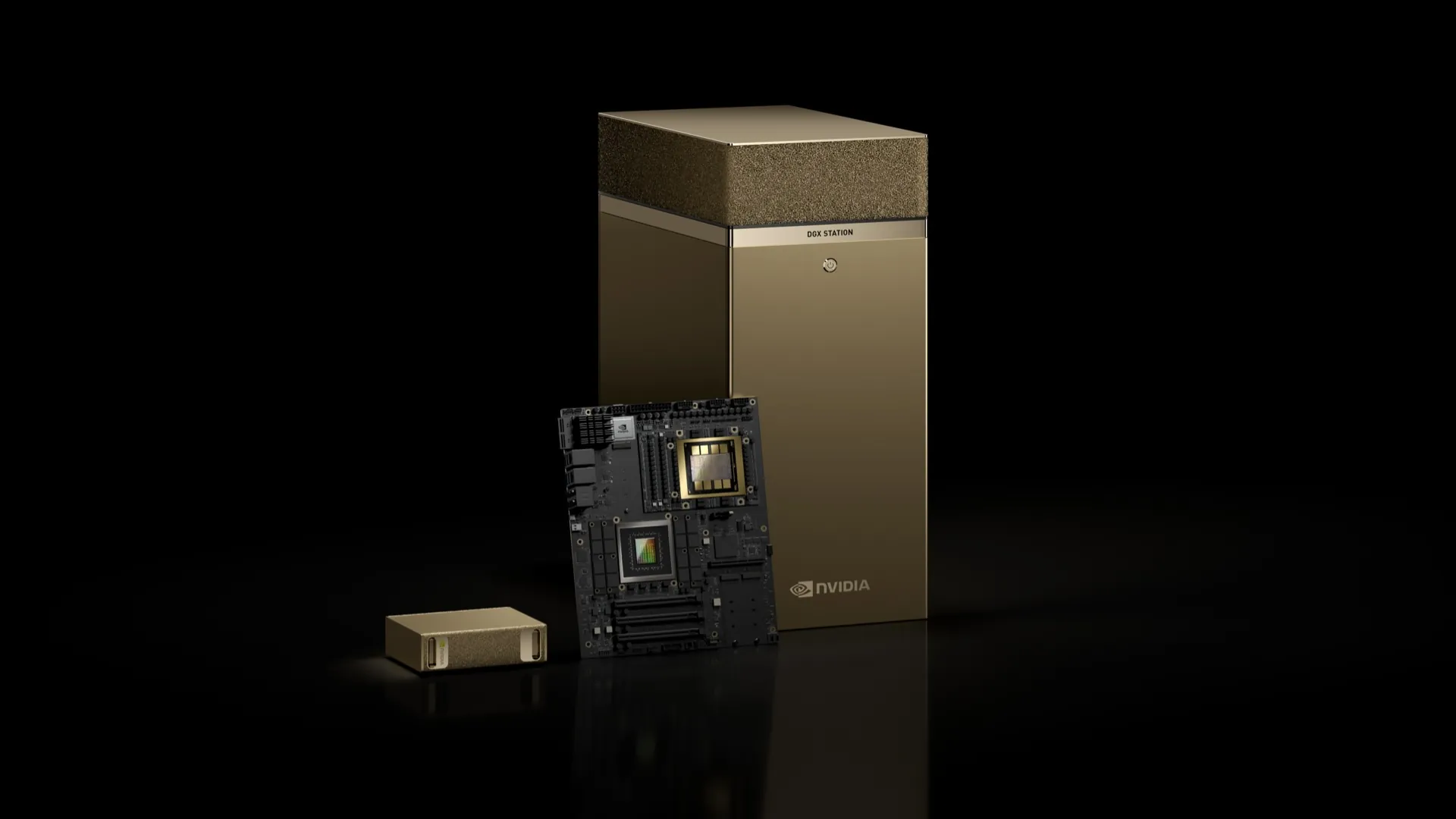
That is broader than a single PC chip, but breadth should not be mistaken for product availability. NVLink Fusion and MGX describe capabilities that can support semi-custom infrastructure; the release does not turn every possible implementation into a launch commitment. It provides no availability dates or OEM partner list for the expanded products described in the source packet.[1]
The financial component is a $3.5 billion investment by NVIDIA in MediaTek through convertible bonds. Quartz reports the investment alongside collaboration categories covering data centers, PCs, and automotive, while Yahoo Finance independently corroborates the amount at headline level.[2][3] Neither report identifies an automotive product attached to this transaction.
| Claim | What the supplied evidence establishes | What remains undisclosed |
|---|---|---|
| GB10 and personal AI systems | GB10 powers DGX Spark, with the partnership extending to RTX Spark.[1] | Availability dates and OEM deployment details |
| Data-center infrastructure | NVLink Fusion and MGX can support semi-custom AI factories.[1] | A specific customer launch or advertising use |
| Investment | NVIDIA is investing $3.5 billion through convertible bonds.[2][3] | Any direct allocation to advertising products |
| Automotive | Quartz includes automotive among the collaboration categories.[2] | A named vehicle chip, cockpit product, automaker deployment, ad surface, or operator |
| Advertising impact | No ad platform or measurement integration is announced. | Who could expose signals or inventory to buyers, under what controls, and when |
One source limitation deserves explicit treatment. The available Reuters material is only a truncated social preview, not a usable passage establishing the deal’s terms or scope. It cannot fill the gaps left by the primary announcement. Similarly, Quartz’s inclusion of “automotive” confirms category language, but not whether that language refers to an existing cockpit program, an undeclared product, or a general roadmap.
The route from an AI PC chip to an ad signal
On-device inference can change where an AI workload runs. A PC may process a model locally rather than sending every task to cloud infrastructure, potentially changing latency, cost, or the handling of input data. Those are meaningful computing properties. They do not automatically give an advertiser access to the result.
For local inference to become a paid-media input, another party must turn it into an addressable signal. An operating system, browser, application, publisher, retail-media network, or other platform would need to define the event; obtain any necessary permissions; decide whether it can leave the device; associate it with an advertising identifier or audience; expose it through campaign controls; and support reporting or attribution. NVIDIA and MediaTek supplying silicon does not perform those steps.

The practical chain looks like this:
- The chip enables local or edge computing.
- A shipping PC and its software decide which workloads use that capability.
- A platform defines whether any resulting event qualifies as advertising data.
- Identity and consent systems determine whether the event can be associated with an audience.
- A buying platform must expose a usable targeting, optimization, or measurement control.
- Reporting and attribution systems must specify what the signal measures and where it can be joined.
The announcement reaches the first part of that chain. It does not identify the advertising platform responsible for the later parts.
Identity and measurement remain platform-side
Current identity graphs can link identifiers such as mobile advertising IDs, hashed emails, first-party-linked identifiers, connected-TV IDs, and UID2. The supplied industry analysis places those graph and measurement functions on the platform side rather than treating edge inference as a replacement for them.[5] A model running on a PC therefore does not, by itself, become a cross-device identity key or a new attribution path.
Consider a hypothetical PC application that uses local inference to classify a user’s current task. The classification may never leave the machine. If the application operator later decides to use it for ads, the operator still has to establish consent, retention rules, audience definitions, activation controls, and measurement. The chip vendor’s ability to run the model answers none of those governance or integration questions.
There is also no basis for assuming that consumers will accept every AI-mediated advertising feature merely because executives expect them to. Data cited by Unacast from IAB and Sonata shows an acceptance-perception gap: 82% of executives believed consumers would accept AI-generated ads, compared with 45% of consumers. The gap widened from 32 to 37 percentage points since 2024.[5] That finding concerns attitudes toward AI-generated advertising, not the effectiveness of local inference or this chip partnership, but it is a useful constraint on confident adoption claims.
None of this rules out later PC advertising products. It sets the evidence threshold. A meaningful update for buyers would identify a shipping device or software feature, the platform operating it, the signal exposed, the campaign control using it, and the measurement route. Those details are absent here.
Automotive is a category in the coverage, not a product in the deal
The automotive reference requires tighter handling because NVIDIA and MediaTek already have automotive history. An earlier, separate partnership announced around Computex concerned smart automotive interiors and combined MediaTek cockpit systems with NVIDIA GPU and AI technology.[4] That earlier cockpit program should not be silently folded into the 2026 edge-to-cloud deal.
The current NVIDIA release names DGX Spark, RTX Spark, NVLink Fusion, and MGX, but no automotive processor, vehicle platform, cockpit product, model, or automaker deployment.[1] Quartz’s category list does not resolve whether “automotive” points back to the earlier cockpit work or forward to something undisclosed.[2] Without a named product, it cannot support a claim that new in-car ad inventory is approaching availability.
Even a confirmed automotive compute product would remain several steps away from buyable media. A vehicle manufacturer or infotainment operator would need to create the surface, define when it can display commercial content, establish data permissions, connect an ad-serving or demand system, and expose inventory with measurable delivery rules. The supplied packet names no in-car ad operator offering live inventory as a result of this deal. That is an absence in the available evidence, not proof that no such operators exist anywhere in the market.
Market estimates do not supply the missing operator
The market-size material is too inconsistent to serve as a shortcut. Dataintelo estimates that the in-car advertising platform market will grow from about $1.8 billion in 2025 to about $6.7 billion in 2034, a 15.8% compound annual growth rate. It attributes approximately 58.3% of 2025 revenue to the aftermarket and says automakers including GM, Ford, Stellantis, BYD, and SAIC are embedding ad API frameworks.[6] Its methodology is not disclosed in the supplied material, so these remain vendor estimates rather than verified market measurements.
Autoweek, by contrast, frames in-car advertising as a $625 billion opportunity.[7] That figure is more than 300 times Dataintelo’s $1.8 billion estimate, and the packet does not provide enough methodology to reconcile the difference.[6][7] The two figures may be measuring different boundaries, time horizons, or revenue pools; treating either one as settled market size would conceal rather than solve that problem.
| Evidence | What it can support | What it cannot support |
|---|---|---|
| Dataintelo estimate | A vendor forecast of a growing, currently aftermarket-heavy category.[6] | Verified market size or inventory created by the NVIDIA–MediaTek deal |
| Autoweek estimate | Evidence that much larger opportunity claims are circulating.[7] | A comparable market total without a shared methodology |
| Automotive category language in Quartz | Automotive is included in the reported collaboration framing.[2] | Confirmation of a named vehicle product or ad platform |
| Earlier cockpit partnership | The companies have collaborated on automotive interior technology.[4] | Proof that the earlier program is part of the 2026 transaction |
For an ad-ops team, market opportunity is secondary to operability. The required questions are who controls the screen, who sells the placement, what event counts as an impression, which identifiers are available, how consent is handled, and how exposure connects to an outcome. None of the automotive sources in the packet answers those questions for inventory created by this agreement.
What would count as a real advertising change
The deal becomes actionable for paid media only when downstream disclosures close the present gaps. On the PC side, that means a named shipping product and software operator, along with an explicit signal, campaign control, or measurement integration. On the automotive side, it means a named vehicle or cockpit product, an availability date, an operator responsible for the ad surface, and documented buying and attribution mechanics.
Until then, no campaign plan needs to change because of this announcement. GB10, RTX Spark, NVLink Fusion, MGX, and the investment are concrete parts of a significant supplier and platform relationship. New PC identity signals and automotive inventory are not. Claims that the deal unlocks either remain unproven until named products ship with dates and named operators.
References
- NVIDIA and MediaTek Deepen Long-Standing Partnership to Build AI Edge to Cloud Computing Platforms — NVIDIA Newsroom
- Nvidia investing $3.5 billion in MediaTek for AI chip partnership — Quartz
- Nvidia to Invest $3.5 Billion in Chipmaker MediaTek — Yahoo Finance
- Nvidia and MediaTek partner to develop smart automotive interior solutions — ADAS & Autonomous Vehicle International
- The State of Location Data in Ad Tech 2026: Privacy, Quality, and the Age of AI — Unacast
- In-Car Advertising Platform Market Research Report 2034 — Dataintelo
- Automakers Eye $625 Billion Opportunity in In-Car Advertising — Autoweek
Primary source: https://nvidianews.nvidia.com/news/nvidia-and-mediatek-deepen-long-standing-partnership-to-build-ai-edge-to-cloud-computing-platforms