
Nvidia-MediaTek chips have no ad-platform impact yet
As of August 31, 2026, no major ad platform (Meta, Google, Amazon, Apple, TikTok, or The Trade Desk) is publicly documented using NVIDIA-MediaTek silicon for ad serving or ranking. The chip partnership itself is confirmed and expanding, but the ad-platform impact claim remains unverified; this analysis shows which evidence would change that conclusion.
- Platform
- Meta, Google, Amazon, Apple, TikTok, The Trade Desk
- Change category
- bidding
- Effective date
- 2026-08-31
- Change type
- No documented change
- Impact level
- None
As of August 31, 2026, the cited sources do not publicly document Meta, Google, Amazon, Apple, TikTok, or The Trade Desk using NVIDIA-MediaTek silicon for ad serving or ranking. NVIDIA and MediaTek have expanded a real chip partnership, but the claimed impact on major ad platforms remains unverified.[1][2]
| Ad platform | Adoption status | Evidence boundary |
|---|---|---|
| Meta | Not documented | No cited source ties NVIDIA-MediaTek or GB10 silicon to Meta ad serving or ranking.[1][2] |
| Not documented | No cited source ties the silicon to Google Ads, YouTube ad delivery, or ranking.[1][2] | |
| Amazon | Not documented | No cited source ties the silicon to Amazon Ads serving or ranking.[1][2] |
| Apple | Not documented | No cited source ties the silicon to Apple advertising workloads.[1][2] |
| TikTok | Not documented | No cited source ties the silicon to TikTok ad serving or ranking.[1][2] |
| The Trade Desk | Not documented | No cited source ties the silicon to The Trade Desk’s bidding or ad-ranking workloads.[1][2] |
That is a verified absence within a defined evidence set, not a denial from any of the six companies. It does not rule out private evaluations, supplier relationships covered by confidentiality agreements, or deployments that have not been announced. It means buyers currently have no named platform and no stated advertising workload connecting this partnership to campaign delivery.

What the expanded partnership confirms
NVIDIA’s August 31 announcement says MediaTek is adopting NVLink Fusion to develop custom XPUs for rack-scale AI infrastructure. NVLink Fusion is intended to let partners combine custom processors with NVIDIA technology inside semi-custom AI systems. This moves the relationship beyond a single compact computer and gives MediaTek a role in designing larger systems.[1]
The announcement does not identify an advertising customer, ad exchange, demand-side platform, retail-media network, or ranking workload. “AI factory” is a broad infrastructure category; it cannot by itself establish that the hardware is serving ad requests, calculating bids, retrieving candidates, predicting conversion rates, or ranking sponsored content.
GB10, meanwhile, remains the Grace Blackwell superchip associated with NVIDIA DGX Spark. ABI Research describes DGX Spark configurations in which four systems operate as one coherent node for local inference and enterprise agentic workloads. Its account of MediaTek’s partnerships also points to Meta in AR wearables, NVIDIA in AI IoT and automotive cockpits, and Denso in automotive technology—not advertising delivery.[2]
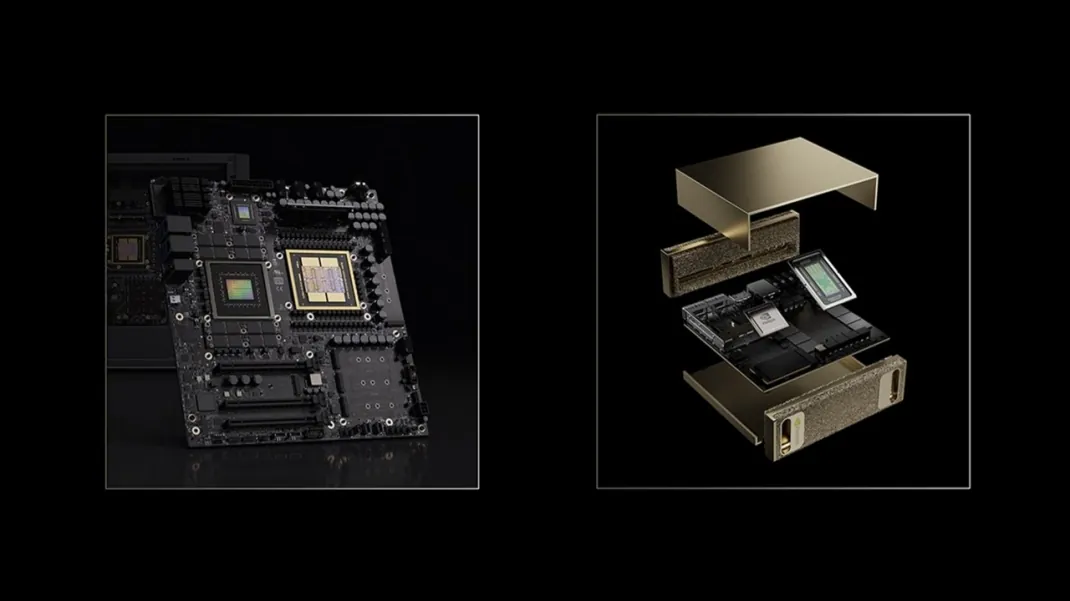
Meta’s appearance in that account deserves careful handling. It verifies an adjacent relationship involving AR wearables; it does not verify that Meta uses GB10 or an NVLink Fusion design in its advertising systems. A recognizable platform name does not bridge the workload gap.
How the partnership reached custom data-center silicon
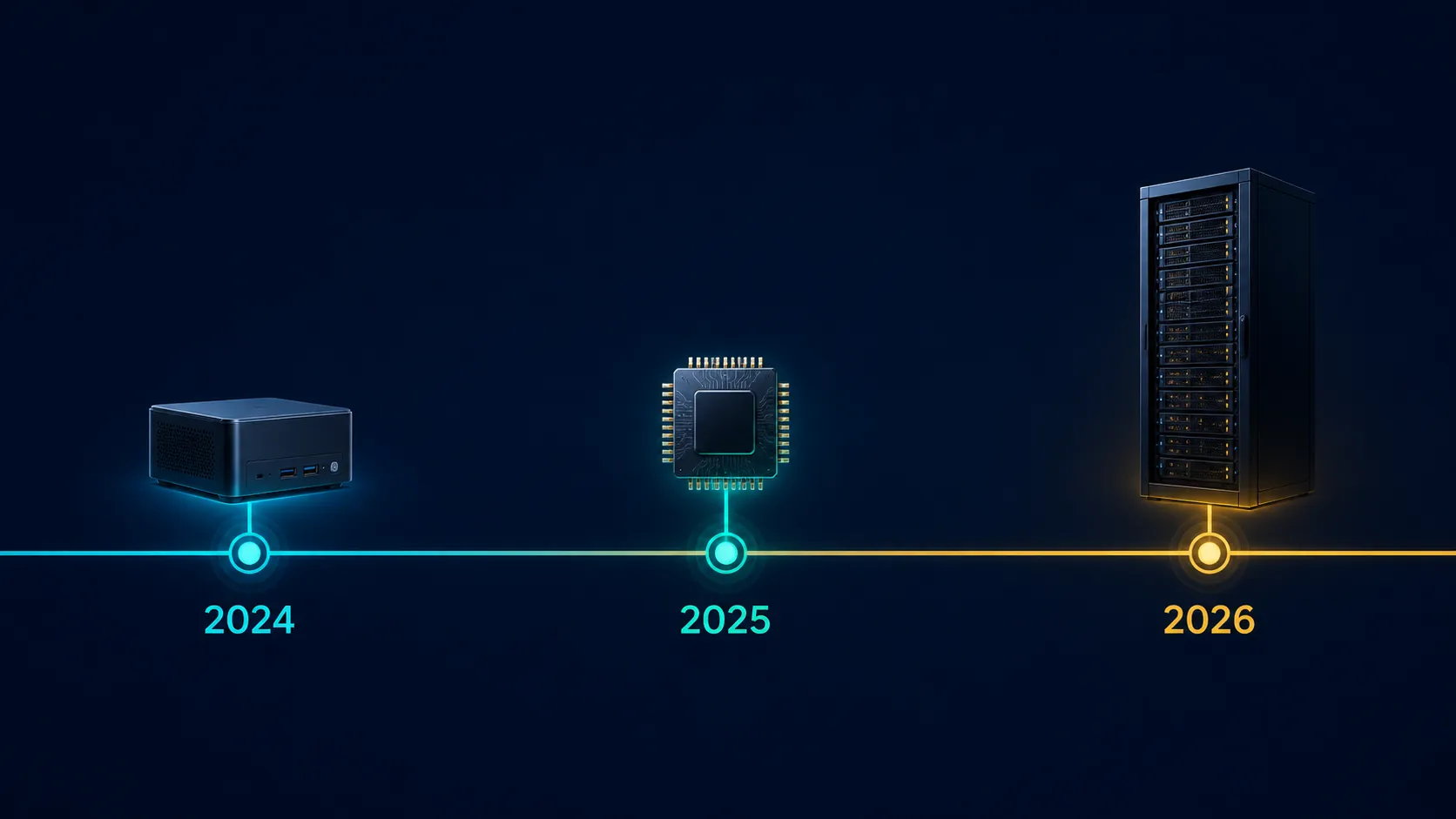
| Date | Confirmed development | What it establishes for advertising |
|---|---|---|
| 2024 | The Project DIGITS and GB10 phase placed MediaTek-linked silicon in NVIDIA’s compact AI-system lineage.[2] | No named ad-serving or ranking deployment. |
| 2025 | NVIDIA introduced NVLink Fusion, naming MediaTek among the chipmaking partners offering it as a design foundation.[3] | A route to semi-custom infrastructure, not evidence of adoption by an ad platform. |
| August 31, 2026 | NVIDIA said MediaTek would adopt NVLink Fusion for custom XPUs used in rack-scale AI factories.[1] | The expanded scope still came without a named advertising customer or workload. |
MediaTek’s data-center ambitions add context but not adoption evidence. Futurum characterized the data center as a top priority in its coverage of MediaTek Analyst Day 2026.[4] That is analyst framing rather than a quoted MediaTek commitment in the cited sources, and a strategic priority does not reveal which customers have deployed the resulting hardware.
The available documents also support only a bounded description of MediaTek’s cloud role: it can use NVLink Fusion as a design foundation for custom XPUs. They do not establish whether a particular customer will buy a complete MediaTek-designed rack, a component or chiplet, or another configuration. Treating every future system built through the ecosystem as one uniform “NVIDIA-MediaTek chip” would hide distinctions that matter for performance and cost.
Where the ad-platform claim outruns the evidence
An ad platform can use AI infrastructure for many purposes without using it in the path that determines campaign outcomes. Internal coding assistants, creative tools, forecasting research, fraud investigations, and employee-facing agents are all different from production bidding, retrieval, ranking, pacing, or ad delivery. A platform-level customer announcement would therefore still need to name—or clearly describe—the relevant workload.
The strongest evidence would be a primary announcement from one of the six platforms or the vendors identifying the hardware and tying it to a production advertising function. Useful documentation could include a deployment architecture, engineering paper, case study, procurement disclosure, benchmark, or executive statement with enough detail to distinguish advertising from an adjacent AI use.
An explicit platform denial would change the tracker in the other direction. It would not prove that adoption could never happen, but it would replace today’s document search result with a direct statement about current use. None appears in the cited sources.
No defensible ad-serving savings yet
Even confirmed adoption would not automatically establish cheaper advertising. NVIDIA argues that cost per token is the relevant way to assess AI-factory economics, but that framework is vendor-authored and does not supply independent GB10 or NVLink Fusion unit economics for an ad-platform workload.[5]
A useful cost assessment would need workload-specific throughput and latency, power consumption, memory requirements, hardware and networking costs, utilization, software overhead, and a credible comparison with the system being replaced. Advertising analysis would also need to show where the inference sits in the serving path and whether any infrastructure saving survives added model, data, reliability, and integration costs.
The cited sources contain no independent figures for cost per inference or token, total cost of ownership, or comparative performance against H100, GB200, or TPU systems. They therefore cannot support a percentage estimate for lower serving costs, improved targeting, better auction performance, or lower advertising prices. Nor can they establish that savings, if achieved, would be passed through to advertisers instead of retained by a platform.
Broad AI-infrastructure spending and competition among demand-side platforms do not close these gaps. They can indicate demand for compute or commercial pressure to improve models, but neither identifies the silicon executing an ad request. Likewise, an investment amount reported without confirmation in the primary NVIDIA announcement is not a sound basis for estimating adoption or impact.
What media buyers can act on
The technology development is credible: MediaTek has adopted NVLink Fusion for custom XPUs, and its work with NVIDIA now reaches from GB10-based compact systems toward rack-scale infrastructure. The advertised connection to major ad platforms is not yet evidenced.
There is consequently no sourced reason to shift media budgets, change vendors, revise serving-cost assumptions, or attribute platform performance changes to NVIDIA-MediaTek silicon. Those decisions should wait for a named adopter tied to an advertising workload and, for economic claims, usable independent cost evidence.
Last reviewed August 31, 2026. The tracker should be revisited when a named deployment, an explicit platform denial, or workload-specific cost data becomes available.
References
- NVIDIA and MediaTek Deepen Long-Standing Partnership to Build AI Edge to Cloud Computing Platforms — NVIDIA Newsroom, August 31, 2026
- MediaTek Analyst Day 2026 — ABI Research, April 9, 2026
- NVIDIA Unveils NVLink Fusion for Industry to Build Semi-Custom AI Infrastructure With NVIDIA Partner Ecosystem — NVIDIA, 2025
- MediaTek Analyst Day 2026: MediaTek's Data Center Strategy — Futurum, April 6, 2026
- Rethinking AI TCO: Why Cost per Token Is the Only Metric That Matters — NVIDIA Blog
Primary source: https://nvidianews.nvidia.com/news/nvidia-and-mediatek-deepen-long-standing-partnership-to-build-ai-edge-to-cloud-computing-platforms