
Do Nvidia's earnings really move your AI ad costs?
Nvidia reports Q2 FY27 earnings on Aug 26 — but will record data-center revenue and the reported AI-server price hikes actually reach your Meta and Google ad costs? This claim-check maps the real transmission chain and lands on the honest verdict: indirect, lagged, and partially offset, not "Nvidia raised your CPMs."
- Platform
- Meta0 Google Ads
- Change category
- bidding
- Effective date
- 0-08-26
- Change type
- opt-in feature
- Impact level
- Low
Status: this is a pre-print claim-check current as of Aug. 25, 2026, before Nvidia reports Q2 FY27 earnings on Aug. 26. The answer a buyer needs today is: indirect, lagged, and partially offset. The print is worth watching, especially after Nvidia’s Q1 FY27 revenue of $81.6 billion, data-center revenue of $75.2 billion, and Q2 guide of about $91 billion, but it is not a clean trigger for repricing next month’s CPM, CPC, or CPA assumptions inside Meta, Google, or any other live account.[1]
If someone forwards a Nvidia earnings and AI-chip-cost headline, separate three stories before touching the forecast: Nvidia’s earnings and guidance; the reported AI-server price hikes that would apply to some systems shipped in early 2027; and the ad-cost inflation buyers are already seeing in 2026. Those are related only through a chain. They are not the same event.
| Story buyers may be blending together | What is actually known before Aug. 26 | What it means for ad-cost forecasting today |
|---|---|---|
| Nvidia earnings | Q1 FY27 revenue was $81.6B, with $75.2B from data center; Q2 consensus sits around $91.9B-$92.2B, with Q3 consensus around $103.1B.[1][2][3] | Watch the print for platform-cost context, not as a direct CPM/CPC input. |
| Reported AI-server price hikes | Fortune and CNBC reported that Nvidia warned large customers of AI-server price increases of more than 15% in many cases, tied to Vera Rubin and Grace Blackwell systems shipped in early 2027; Nvidia had not confirmed the reporting in the cited reports.[4][5] | Relevant to 2027 infrastructure economics if confirmed; too early and too indirect to explain this quarter’s auction movement. |
| 2026 ad-cost inflation | Meta benchmark CPM, CPA, and CPC are up year over year, and AI campaign products are seeing broad adoption.[6] | This is the account-facing evidence buyers should start from before reaching for chip-cost explanations. |
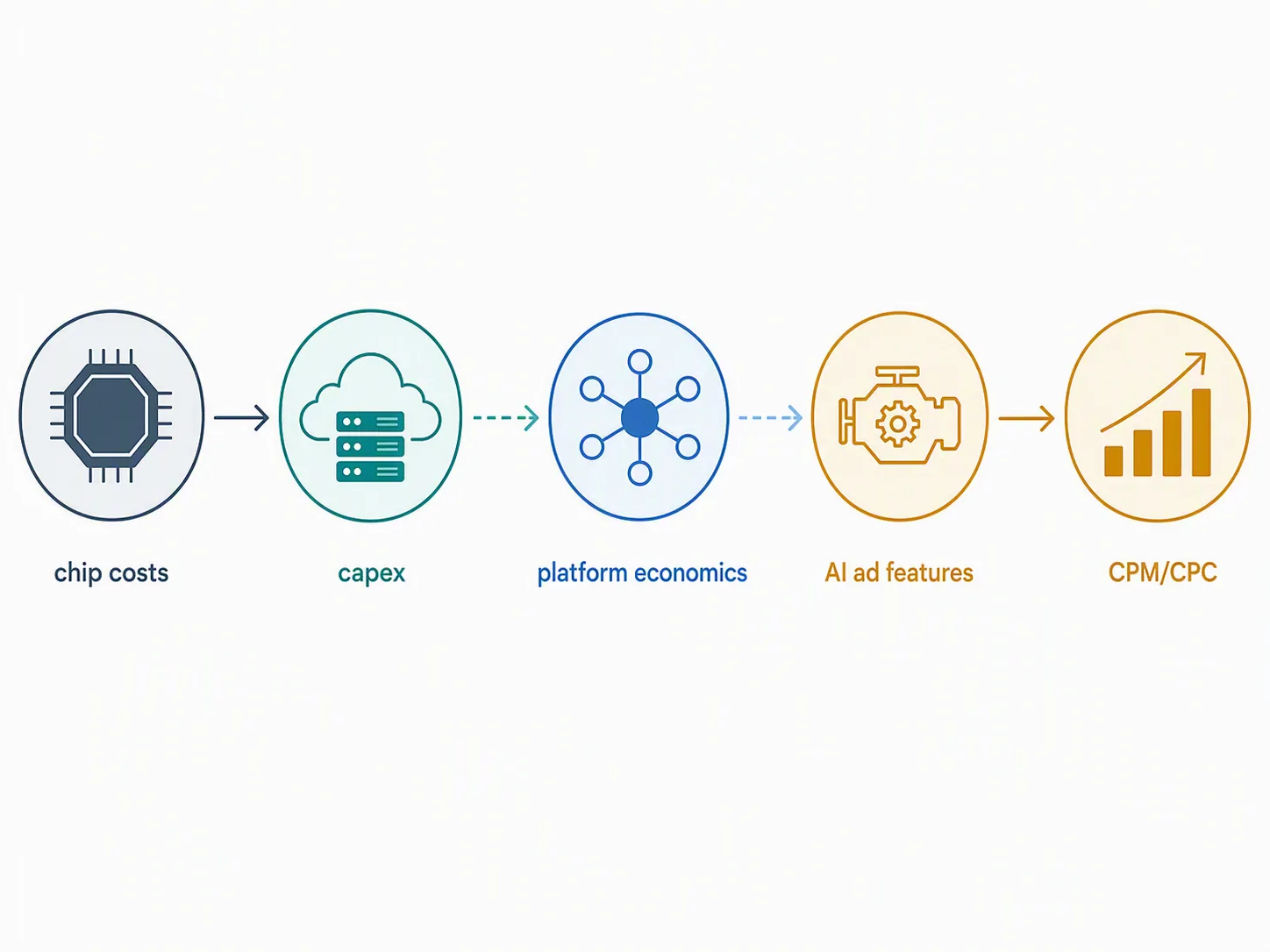
Where Nvidia can enter the ad-cost chain
The strongest version of the Nvidia-to-ad-cost argument does not say that Nvidia raises a price and Meta CPMs immediately move. It says chip and server costs affect the economics of the companies running the ad systems, and those economics can eventually influence how aggressively platforms monetize, how they package AI ad tools, and what kinds of automation they steer buyers toward. That is a synthesis across the earnings, capex, and ad-cost data; none of the cited sources directly proves the full chain end to end.
Start with scale. Nvidia’s Q1 FY27 was not a normal supplier quarter: $81.6 billion in total revenue, up 85% year over year, and $75.2 billion from data center, up 92%. Data center represented roughly 92% of revenue. Nvidia also guided Q2 FY27 revenue to about $91 billion, plus or minus 2%.[1] Pre-print consensus for Q2 is slightly above that guide, around $91.9 billion to $92.2 billion, with Q3 consensus around $103.1 billion.[2][3]
Those numbers matter because the biggest ad platforms are also among the biggest AI-infrastructure spenders. Microsoft, Alphabet, Amazon, and Meta spent a combined $166.0 billion in capex in the June 2026 quarter, up 87% year over year and 27% quarter over quarter, according to Rex Shares’ compilation from issuer 8-Ks. Meta’s quarterly capex alone moved from $19.84 billion to $31.08 billion.[2]
That is the first plausible transmission channel: hyperscaler capex pressure. If the platforms are spending more to build and operate AI infrastructure, they have an incentive to protect margins somewhere. For ad businesses, “somewhere” can include higher ad load, more aggressive monetization surfaces, expanded automation, different auction dynamics, or stronger nudges into products that help the platform allocate demand more efficiently. The buyer sees the last mile: more competition in a placement, different query matching, less transparent traffic mix, or a campaign product that clears at a higher CPC.
But this is not a pass-through invoice. Meta does not take a GPU quote, add a margin, and hand the result to an Advantage+ auction. Google does not need a new Nvidia rack price to make a Performance Max or AI Max auction more expensive tomorrow morning. The path runs through corporate investment plans, product design, auction pressure, advertiser adoption, and optimization behavior. Each step can dilute, delay, or redirect the original cost shock.
The reported 2027 server-price item is real news, not settled attribution
The Aug. 22 price-hike story belongs in the file, with two labels attached. First: reported, not confirmed by Nvidia in the cited reports. Second: early 2027 shipping timing, not an immediate 2026 auction input. Fortune reported that Nvidia told large customers AI-server prices would rise more than 15% in many cases for systems shipped early next year, tied to Vera Rubin and Grace Blackwell systems and driven by memory-cost surges; CNBC summarized the same reported warning.[4][5]
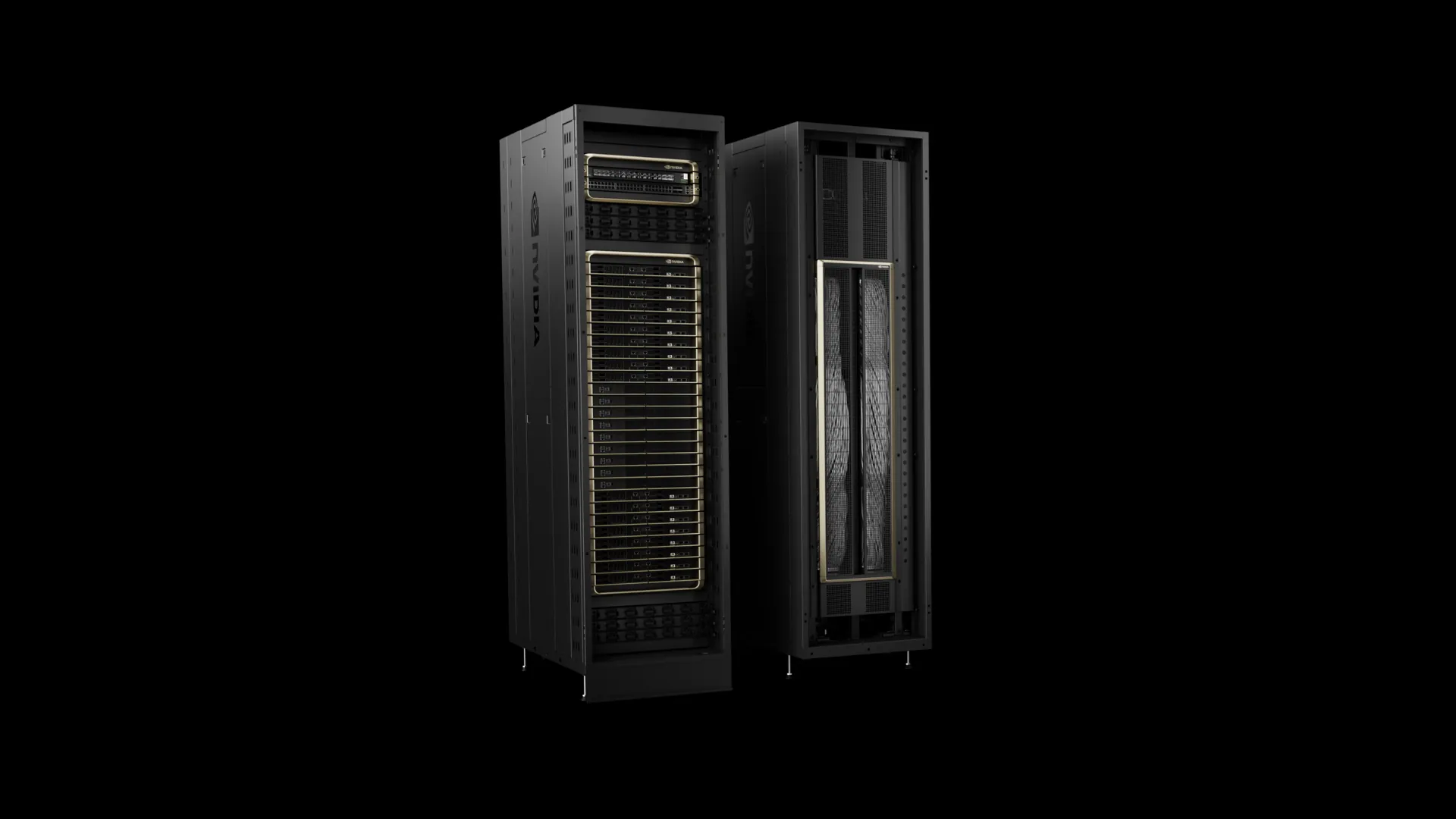
If confirmed, that would make the infrastructure-cost story more concrete. A platform buying or renting large amounts of AI capacity has to absorb higher system costs, renegotiate, delay, redesign, or charge more for something. For a media buyer, though, the useful date is not the headline date. It is when that cost shows up in platform budgets, model-serving economics, product pricing, auction design, or monetization targets. Early-2027 hardware shipping does not explain a July or August 2026 CPM spike by itself.
AI ad features have their own cost curve
The second plausible channel is the cost of running AI ad features at scale. Advantage+, Performance Max, AI Max, and similar products depend on model-driven matching, creative assembly, prediction, and bidding decisions. Those systems require infrastructure. If the cost of serving or training the models rises, the platforms care.
This is also where the “partially offset” part of the verdict matters. AI infrastructure does not only get more expensive. Platforms also improve utilization, compress models, route workloads differently, and reduce inference costs over time. The caveat is directional, not quantified: higher infrastructure costs may increase platform pressure, while efficiency gains push the other way. That means the honest sentence is not “Nvidia price hikes will raise AI ad costs by X.”
For the client-call version: Nvidia can shape the cost environment in which Meta and Google build ad products. It does not give you a clean budget multiplier for September.
The 2026 ad-cost evidence is closer to the buyer’s P&L
Buyers do not need a chip theory to know costs are up. The closer evidence is already in benchmark dashboards and campaign exports. Ryze’s 2026 Meta benchmark puts CPM at $14.19, up 20.1% year over year; CPA at $38.19, up 38.1%; and CPC at $0.78, up 11.4%. The same source says 78% of advertisers are using Advantage+.[6]
Threadpoint’s own portfolio data points in the same direction, with CPM moving from $15.07 to $17.01, a 13% increase.[7] On Google, Digiday reported that AI Max CPC increases are roughly 10% in typical cases and can reach up to 25%; it also puts search budget increases at 7% to 15% year over year and search-auction advertiser count up 35% year over year.[8]
| Account-facing signal | 2026 reading | What it proves | What it does not prove |
|---|---|---|---|
| Meta CPM benchmark | $14.19, up 20.1% YoY.[6] | Meta inventory is more expensive in the benchmark set. | That Nvidia caused the increase. |
| Meta CPA benchmark | $38.19, up 38.1% YoY.[6] | Conversion economics are under pressure. | That infrastructure cost is the main driver. |
| Meta CPC benchmark | $0.78, up 11.4% YoY.[6] | Click costs are rising, though less sharply than CPA. | That the same cause is moving every metric equally. |
| Advantage+ adoption | 78% of advertisers using Advantage+.[6] | AI-driven campaign products are no longer edge cases. | That adoption always improves efficiency for every buyer. |
| Threadpoint portfolio CPM | $15.07 to $17.01, up 13%.[7] | At least one agency portfolio saw meaningful CPM inflation. | That this is a universal platform-wide rate card change. |
| Google AI Max CPCs | Roughly +10% typical; up to +25%, as reported by Digiday.[8] | AI Max can change paid-search CPC exposure now. | That Nvidia’s 2027 server pricing is the cause. |

These numbers do real work in the argument because they locate the problem where a buyer can verify it. If Advantage+ adoption is high, more budgets are letting Meta decide more of the targeting and delivery path. If AI Max is expanding query and creative matching, more Google spend may be entering auctions the buyer did not previously model the same way. If more advertisers and larger search budgets are entering the auction, the CPC pressure has an immediate mechanism.[6][8]
That mechanism sits much closer to the monthly forecast than Nvidia’s server gross margin or a reported early-2027 system price. Auction competition changes clearing prices now. Automation adoption changes where spend flows now. Zero-click traffic shifts can force buyers to fight harder for the clicks that remain measurable now. None of those requires ignoring Nvidia; they just deserve to be checked first.
What to check before blaming chip costs
When CPM or CPC jumps inside a live account, the first diagnostic should be account-local. The Nvidia story can sit in the macro notes while the buyer checks the auction evidence.
- Compare CPM, CPC, CPA, CVR, and AOV movement separately. A CPM-only move points to inventory and competition; a CPA move with flat CPC may point to conversion quality, landing-page friction, or tracking.
- Split AI-enabled campaign types from older structures. Advantage+, Performance Max, and AI Max can alter traffic mix even when total budget is unchanged.
- Check adoption timing. If AI Max or Advantage+ expansion happened in the same week costs moved, that is nearer evidence than a chip headline.
- Look for auction-density clues: impression share, overlap, lost rank, higher bid pressure, broader matching, and budget pacing changes.
- Separate platform-wide benchmark inflation from account-specific deterioration. A benchmark can justify a planning adjustment; it cannot diagnose a single account without the account’s own mix.
A simple hypothetical: if an account moved more budget into an AI-enabled campaign type in July, saw CPC rise in that campaign type, and also saw broader query or placement exposure, that is a usable working explanation. If the only evidence is that Nvidia may report another large data-center quarter, the attribution is too loose for a budget conversation.
How to handle the Aug. 26 Nvidia print
After Nvidia reports, the update should be appended, not used to rewrite the whole analysis. The fields that matter for this tracker are narrow: final Q2 FY27 revenue, data-center revenue, Q3 guidance, and any management commentary on supply, pricing, customer demand, memory constraints, or timing of next-generation systems.
If Q2 revenue or data-center revenue lands well above consensus, that strengthens the read that AI infrastructure demand remains intense. If management comments directly on supply, pricing, or customer demand, that may sharpen the capex-pressure channel. If guidance points to another large step-up, the platform-cost environment deserves more attention in 2027 planning. None of those outcomes automatically explains a 2026 Meta CPM increase or a Google AI Max CPC move without the nearer auction and adoption evidence.
So the forecast action before Aug. 26 is restrained. Keep Nvidia in the macro-risk notes. Do not raise CPM, CPC, or CPA assumptions solely because Nvidia is expected to post another large data-center quarter. For this quarter’s ad-cost story, start with auction competition, AI product adoption, budget density, traffic mix, and zero-click pressure. Nvidia may shape the platform cost environment over time, but “Nvidia raised my ad costs” is not a claim the current evidence can carry on its own.
References
- NVIDIA Announces Financial Results for First Quarter Fiscal 2027 — NVIDIA Newsroom — May 20, 2026
- Nvidia Earnings — REX Shares
- Will Nvidia Stock Soar After Aug. 26? Here's What History Shows — The Motley Fool — Aug. 24, 2026
- Nvidia customers AI-related price hikes 15 percent Vera Rubin Grace Blackwell chips — Fortune — Aug. 22, 2026
- Nvidia customers reportedly warned about AI-related price hikes — CNBC — Aug. 22, 2026
- Meta Ads Cost Benchmarks by Industry 2026 — Ryze
- Why Are My Meta CPMs So High in 2026 and What To Actually Do About It — Threadpoint
- Digiday report on Google AI Max CPCs — Digiday — May 6, 2026
Primary source: https://nvidianews.nvidia.com/news/nvidia-announces-financial-results-for-first-quarter-fiscal-2027