
What Meta's teen settlement changes mean for advertisers
Meta's Aug 26, 2026 teen settlement is less about the headline payout than the enforceable app changes: a 2-hour daily cap, Night Mode, School Mode, and feed and creative restrictions for 13-17 users. Media buyers get a dated, per-change breakdown of advertiser impact plus a what-to-monitor list.
- Platform
- Meta
- Change category
- policy
- Change type
- policy shift
- Impact level
- Moderate for teen-targeted; low otherwise
Published August 26, 2026. Last reviewed August 28, 2026. Meta’s teen settlement is unlikely to move most campaigns immediately. The direct exposure is concentrated in campaigns explicitly reaching 13–17-year-olds—especially gaming, entertainment, quick-service restaurants, and apparel—because the changes can restrict when those users open or continue sessions. These are safety controls intended to protect younger users; the advertiser question is where that protection changes delivery. Meta describes the agreement as roughly $18 billion in payments and commitments, but the more useful record for advertisers is the product-change register below. [1]

The change register
The settlement terms are not all on the same clock. Some commitments are described as taking effect within months, while the precise implementation dates remain tied to judicial approval and Meta’s operational rollout. Scope is also disputed: Reuters reports that the changes apply to teens in signatory states, while other coverage describes the safeguards as nationwide in the United States. Treat both items as open fields in a media plan rather than assuming a nationwide, already-live restriction. [3][5][9]
| App or product change | Mechanics and timing | Advertiser consequence |
|---|---|---|
| Cumulative daily cap | Facebook and Instagram share a two-hour cumulative daily limit. Meta says the system detects use across multiple accounts; a teen can lift the limit only with parental permission. Messaging and long-form video are excluded from the cap. Timing is not yet specified; the principal terms are generally described as lasting five to ten years, depending on the provision and source. [1][2][6] | The cap can reduce total reachable sessions and available impressions for 13–17 audiences, but it should not be modeled as a two-hour limit on every ad surface. Messaging and excluded long-form video need separate treatment in delivery analysis. |
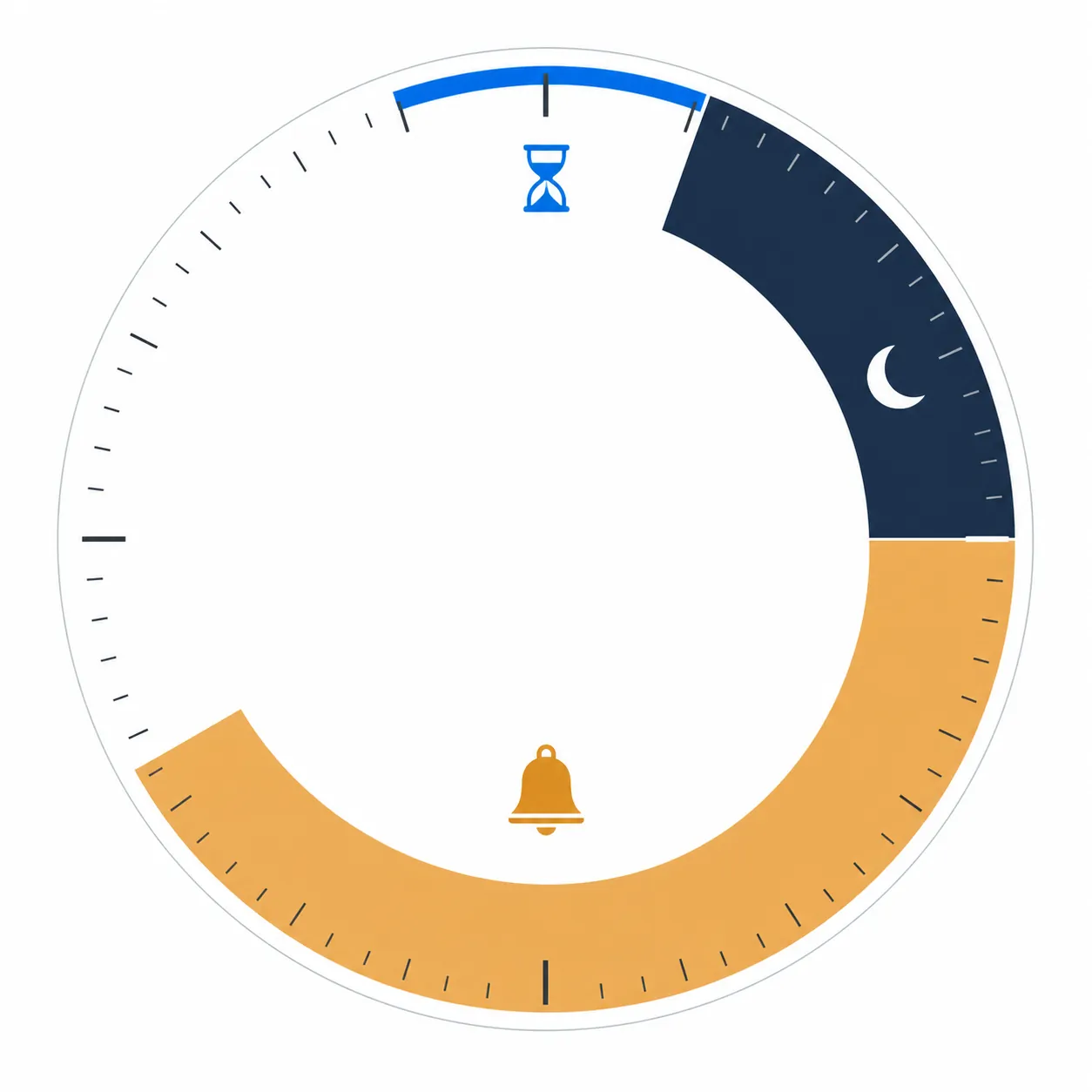
| Night Mode | Teen access is blocked from midnight to 6 a.m. The effective date remains unspecified and is subject to implementation. [1][3] | Overnight delivery, late-night frequency building, and conversion windows for teen-targeted campaigns may contract. Daypart reports will be more informative than a campaign-level average. |
| School Mode | Notifications are muted from 8 a.m. to 3 p.m. The material does not establish that all in-app access is blocked during those hours. [1][3] | The likely first signal is weaker re-engagement and fewer notification-driven returns, not necessarily zero auction availability. Separate notification effects from a full delivery blackout. |
| Usage prompts | Prompts appear after 15 minutes of continuous use and at 60 and 90 minutes of cumulative use. Rollout timing is not specified. [1] | Prompts can interrupt sessions before the two-hour ceiling, so watch hourly delivery, session depth, and frequency—not only daily spend. |
| Hidden likes | Likes are hidden from teen users under the settlement’s product changes. The effective date is not specified. [1] | This is primarily a creative-response and social-proof change. It does not, on the available evidence, establish a direct reduction in ad inventory. |
| Non-algorithmic feed option | Teens receive an option for a chronological, non-algorithmic feed. Timing and the share of users choosing it are not specified. [1] | Feed composition and organic engagement may change for users who select the option. The settlement does not establish that paid ads disappear from that feed. |
| Autoplay | Autoplay is turned off for teen users. The implementation date is not specified. [1] | Video campaigns may see fewer passive starts or shorter chains of consecutive views. Evaluate starts, completed views, and downstream conversion separately. |
| Extreme-makeup and cosmetic-surgery filter | The agreement restricts access to filters depicting extreme makeup or cosmetic surgery. Timing is not specified. [1] | The direct paid-media effect is unclear, but eligible creator formats and the creative environment available to teens may narrow. |
| Unwanted-contact controls | Meta agrees to stronger controls intended to limit unwanted contact with teen users. The public summaries do not provide a complete operational specification or effective date. [1] | Do not translate the provision into a guaranteed delivery reduction without platform documentation. Its clearest immediate relevance is to how teen accounts can be contacted and engaged. |
| Parental controls | The settlement strengthens parental controls, including the permission mechanism connected to lifting the time cap. Detailed settings and rollout dates remain unspecified. [1] | Permission-dependent usage can create additional variation between users. Campaign pacing should not assume that a teen who reaches the cap can continue under the same conditions. |
| Age assurance | Meta must strengthen age-assurance systems. Independent testing is required, with false-positive limits no higher than 10% for users aged 16–17 and 3% for users aged 13–15. Adults claiming to be 18+ have a two-week window in one reported description of the terms. [7] | Classification determines who enters the restricted environment. Age-assurance errors can therefore affect both eligible reach and reporting, but the settlement does not provide a forecast of the number of misclassified ad impressions. |
Where reachable supply can actually fall
The two-hour cap is the load-bearing change for delivery. It is cumulative across Facebook and Instagram, so a user’s available time is not reset simply by moving between the two apps. At the same time, the exclusions matter: messaging and long-form video are outside the described cap. A buyer should therefore avoid applying a blanket “two hours less” adjustment to every placement.
Citi analysts estimate that teens account for less than 1% of Meta revenue and spend about one hour a day on Instagram on average. Those are analyst estimates, not Meta-reported usage or revenue data. If the average is directionally right, many teens are already below the new ceiling; the effect will be more concentrated among heavier users and campaigns that depend on teen sessions at particular hours. [8]
Night Mode creates the cleanest daypart question: what portion of teen delivery currently occurs between midnight and 6 a.m.? School Mode is different. A notification mute from 8 a.m. to 3 p.m. may suppress return behavior without eliminating all in-app opportunities. The 15-, 60-, and 90-minute prompts add a second interruption layer before a user reaches the cap. For gaming launches, entertainment releases, late-night QSR offers, and apparel drops, the useful baseline is hourly reach, frequency, pacing, and conversion—not an all-audience CPM average.
The settlement materials do not establish a new detailed-targeting taxonomy or document a new loss of teen interest segments. For planning purposes, separate any pre-existing limits in current platform documentation from changes created by this agreement. The clearest exposure is in campaigns that intentionally reach 13–17 users through age-based audience settings or broad delivery that includes them.
Age assurance is the gatekeeper
Age assurance matters to advertisers because it determines which users are treated as teens in the first place. The agreement refers to signals from Google and Apple operating systems and app stores, alongside other age-assurance methods. It also attaches measurable false-positive limits and independent testing: no more than 10% for ages 16–17 and 3% for ages 13–15 in the reported terms. [6][7]

Those thresholds are not a promise that age classification will be invisible to campaign reporting. A false positive can move an adult into a restricted teen experience; an underage user classified as an adult can remain outside it. The independent testing requirement gives buyers a basis for asking how the system performs, but the public settlement summaries do not yet supply a frequency estimate for either error.
The stronger restrictions are conditional
The agreement contains an escalation mechanism that could matter more than the initial product package. Phase 2 would impose a 60-minute limit per app, a 10 p.m. to 7 a.m. night block, and ten-year terms. The contingent payment—reported as approximately $5.02 billion by Tech Policy Press and $5.3 billion by Meta—is tied to rival adoption rather than being a guaranteed payment. [1][6]
The industry-wide trigger can be satisfied through a settlement or consent decree, state or federal law, or verified voluntary compliance by TikTok, YouTube, and/or Snap. Meta publicly invited TikTok and YouTube to join the effort on August 26. A most-favored-nation clause can extend stricter terms to all states within 30 days, while a new-entrant clause can collapse the adoption condition if a functionally similar app reaches at least 5 million teen users and 30 or more minutes of daily use for four consecutive months. [6][10]
For buyers, this is a monitoring issue rather than a current Phase 2 planning assumption. A rival’s legal commitment or verified voluntary compliance could change the available session supply across the market, not just on Meta.
The money and the court record, briefly
The financial headline varies by source. Meta describes approximately $18 billion in total payments and commitments: about $12.7 billion guaranteed over ten years, or 70%, and about $5.3 billion contingent on rivals. Tech Policy Press reads the structure as approximately $12 billion guaranteed and $5.02 billion contingent. New York’s attorney general describes up to $17.1 billion; Reuters reports the 29-state case at up to $16.7 billion, with a separate Texas agreement bringing the combined figure to roughly $18 billion. Meta says it will accrue approximately $10 billion in the third quarter of 2026. These figures should remain attributed rather than compressed into one definitive total. [1][4][3][6]
The settlement resolves a 29-state bellwether trial after about five days of testimony. Instagram head Adam Mosseri testified; Mark Zuckerberg did not. Meta denies wrongdoing. Reporting also differs on whether Judge Yvonne Gonzalez Rogers has already approved the agreement: BBC coverage reads it as approved, while the New York attorney general and Reuters describe court approval as still required. [9][5][4][3]
Other recordkeeping conflicts remain. Meta and Tech Policy Press describe a five-year independent-auditor period, while Reuters reports ten years. Reuters limits the changes to teenagers in signatory states and says there is no international effect; the Guardian frames the safeguards as nationwide in the United States. Party counts also vary across reports, including Meta’s 52 attorneys general, BBC’s 48 states plus the District of Columbia and three territories, and other counts that treat Texas or participating jurisdictions differently. New Mexico is reported as outside the settlement. [1][6][3][5][9]
What to monitor next
- Judicial approval and the effective date for each product commitment. The settlement summaries do not establish one universal launch date; one state attorney general described implementation as occurring within months. [4]
- The geographic rule in the final order: signatory states only, nationwide United States coverage, or a provision-by-provision distinction.
- Age-assurance performance, including independent-test results, false-positive rates, and how quickly users claiming to be 18+ are reclassified or reviewed.
- Any clarification at Meta Connect on September 23, 2026, especially for the cap’s exclusions, School Mode behavior, placement eligibility, and rollout sequencing.
- Rival-triggered Phase 2 activation, including a settlement, consent decree, law, or verified voluntary compliance by TikTok, YouTube, or Snap.
- Teen-segment reach, hourly delivery, frequency, pacing, session depth, video starts and completions, and creative eligibility before and after each confirmed rollout date.
References
- Agreement with State Attorneys General Supporting Teens — Meta, August 26, 2026
- Meta agrees to sweeping changes to restrict kids’ access to its apps as part of settlement with states — TechCrunch, August 26, 2026
- Meta, US states agree $16.7 billion settlement in social media addiction case — Reuters via Yahoo Finance, August 26, 2026
- Attorney General James Secures $17.1 Billion and Groundbreaking Reforms from Meta — New York Attorney General, August 26, 2026
- Meta settles teen social media addiction trial — BBC, August 26, 2026
- What’s in Meta’s Teen Social Media Settlement—and What Hinges on Its Rivals — Tech Policy Press, August 26, 2026
- Meta state AG kids online safety settlement — The Verge, August 26, 2026
- Could Meta’s teen settlement be less painful than feared? Citi weighs in — Citi via Investing.com, August 26, 2026
- Meta social media addiction trial settlement — The Guardian, August 26, 2026
- Open Letter to TikTok and YouTube to Join Us in Supporting Teens — Meta, August 26, 2026
Primary source: https://about.fb.com/news/2026/08/agreement-with-state-attorneys-general-supporting-teens/