
Did the Meta EU data-transfer fine change ad targeting?
A dated, checkable record of what the €1.2B Meta EU data-transfer fine actually changed for EU ad targeting: which regulatory events from May 2023 through the January 2026 less-personalized tier shifted targeting, when they took effect, and what is still pending. The bottom line — the fine never suspended targeting on its own, but the chain it anchored is what now shrinks the data pool EU targeting runs on.
- Platform
- Meta
- Change category
- policy
- Effective date
- 0-05-22
- Change type
- policy shift
- Impact level
- medium
As of Aug. 26, 2026, the clean answer is this: the €1.2 billion Meta EU data-transfer fine did not, by itself, suspend EU ad targeting. The transfer-suspension threat attached to the May 2023 order was neutralized after the European Commission adopted the EU-U.S. Data Privacy Framework adequacy decision on July 10, 2023 and Meta began relying on it from Sept. 7, 2023.[1][2][3] The operational story did not end there, though. The fine anchored a chain of legal-basis, consent, pay-or-consent, DMA, and user-choice changes that now matters much more than the original transfer headline.

Dated tracker: what changed for EU Meta ad targeting
The useful way to read the fine’s impact on ad targeting is not as one giant event. It is a dated chain. Some entries touched transfer authority. Some touched the legal basis for behavioral ads. Some changed the consent architecture users pass through before they remain in the full targeting pool.
| Date or effective point | Regulatory or platform event | What it touched inside the ad system | Targeting impact |
|---|---|---|---|
| May 22, 2023 | Irish DPC, implementing an EDPB binding decision, fined Meta €1.2 billion and ordered suspension of future Facebook EU-U.S. data transfers within five months, plus cessation of unlawful U.S. processing and storage within six months.[1] | Transfer authority for Facebook EU user data. This was infrastructure behind delivery, optimization, and measurement, not a same-day removal of interests, lookalikes, or ad-account controls. | Direct threat, but not an immediate targeting shutdown. |
| July 10, 2023 | European Commission adopted the EU-U.S. Data Privacy Framework adequacy decision.[2] | Created a new transfer route for certified U.S. organizations receiving EU personal data. | Defused the direct transfer-cliff path. It did not create new targeting signals. |
| Sept. 7, 2023 | Meta disclosed that it began relying on the EU-U.S. Data Privacy Framework from this date.[3] | Meta’s transfer basis for Facebook EU-U.S. data flows. | Direct suspension risk largely neutralized for ad operations tied to the transfer order. |
| Late 2023 | EDPB urgent binding action addressed Meta’s reliance on contract and legitimate interests for behavioral advertising, while Meta moved EU, EEA, and Swiss users toward a subscription/no-ads or ads-supported choice model.[4][5] | Legal basis and user choice for behavioral advertising, not the old transfer question. | Indirect but operationally active: targeting access increasingly depended on the consent and choice path users entered. |
| April 17, 2024 | EDPB adopted Opinion 08/2024 on valid consent in consent-or-pay models.[6] | Regulatory pressure on whether large platforms can treat a paid alternative as the main route away from behavioral ads. | Indirect pressure. No single ad-account switch flipped that day, but the consent architecture became harder to treat as settled. |
| July 1, 2024 | European Commission issued preliminary findings that Meta’s binary pay-or-consent model did not comply with the Digital Markets Act.[7] | Whether users must be offered an equivalent service using less personal data rather than choosing only between paid no-ads and full personalized ads. | Active regulatory pressure with remedy risk. The targeting question shifted from transfer legality to how many users remain available for full behavioral ads. |
| January 2026 | Meta’s less-personalized ads tier became the live mechanism to move EU users out of full behavioral targeting while still keeping them in an ads-supported experience.[8] | Audience signal density: users can be routed away from full behavioral personalization rather than simply being counted as either paid/no-ads or fully targetable. | Active targeting-pool shrinkage. This is the dated implementation change advertisers should watch more closely than the 2023 fine amount. |
| Aug. 26, 2026 | Current operating read. | EU Meta campaign planning, audience quality assumptions, and performance explanations. | Do not attribute EU performance changes to the fine alone. Track transfer authority separately from legal basis, consent design, DMA remedies, and adoption of the less-personalized tier. |
The 2023 transfer cliff was real, then quickly defused
The May 2023 order looked terrifying from an ad-ops seat because it was not just a fine. The order included a suspension of future Facebook EU-U.S. transfers within five months and a separate six-month deadline tied to unlawful U.S. processing and storage.[1] If that path had stayed live, it could have threatened the data flows sitting underneath delivery, optimization, reporting, and cross-border processing.
That is different from saying buyers woke up on May 23 and lost targeting inputs. The materials support a narrower conclusion: the order created a dated transfer-compliance cliff. It did not document the immediate disappearance of interest targeting, lookalike creation, retargeting audiences, Advantage tools, or conversion optimization for EU campaigns.

Then the July 2023 adequacy decision changed the practical risk profile. The European Commission adopted the EU-U.S. Data Privacy Framework on July 10, 2023, creating a new adequacy route for certified U.S. organizations receiving EU personal data.[2] Meta later disclosed that it began relying on the framework from Sept. 7, 2023.[3]
For campaign planning, that sequence is the correction to the usual overstatement. The €1.2 billion fine was a serious legal event and a serious company-risk event. It was not the event that directly turned off EU targeting. The transfer order had teeth, but the DPF and Meta’s reliance on it defused the immediate suspension route within months.
The targeting effect moved from transfers to consent
The later part of the chain is less dramatic than a record fine and more relevant to a buyer. It asks a different question: which users remain in the pool for full behavioral personalization?
Late 2023 is where that question becomes operational. The EDPB’s urgent binding action addressed Meta’s reliance on contract and legitimate interests for behavioral advertising, while Meta introduced a subscription/no-ads option for people in the EU, EEA, and Switzerland.[4][5] That moved the issue away from transatlantic transfer plumbing and into user-level permission architecture.
A consent screen is not an Ads Manager feature, but it can become an audience-input feature upstream. If a user’s choice changes whether Meta can use their activity for behavioral ads, the buyer does not need to see a new toggle for the targeting pool to change. The consequence appears later as thinner signal density, less reliable modeled expansion, or a smaller set of users available for the most personalized delivery routes. Public materials do not provide an advertiser-level removal rate, so that part remains unquantified.
The 2024 materials kept pushing in the same direction. EDPB Opinion 08/2024 dealt with valid consent in consent-or-pay models, and the Commission’s July 2024 DMA preliminary findings said Meta’s binary model did not give users the required less-personalized but equivalent alternative.[6][7] That matters because the enforcement theory points directly at the shape of the ad-supported product: not merely whether users can avoid ads by paying, but whether they can keep using the service with ads that rely on less personal data.
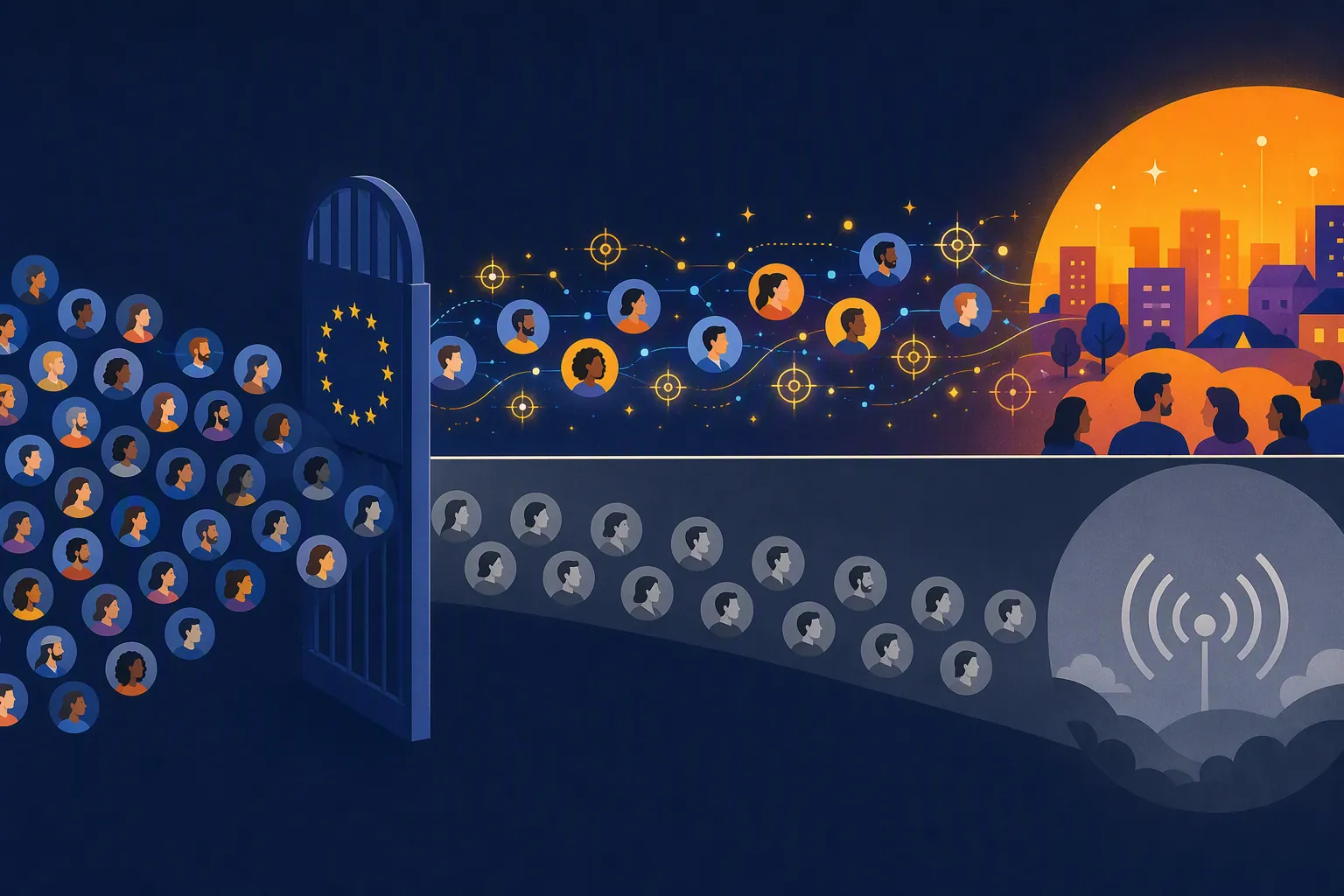
That is why the January 2026 less-personalized ads tier is the more important implementation point for ad targeting. It is the live mechanism that can route EU users out of full behavioral personalization without necessarily removing them from an ads-supported Meta experience.[8] From an operator’s point of view, that is more concrete than the fine amount: it changes who is eligible to supply the behavioral signals that full-funnel Meta delivery has historically leaned on.
What not to blame on the fine
A weak performance read would say, “EU Meta got worse because of the €1.2 billion fine.” The dated record does not support that shortcut. The fine and transfer order explain a suspended-transfer threat in 2023. The DPF sequence explains why that threat did not become the direct ad-targeting break many people feared. Later consent and DMA developments explain the route by which targeting inputs can shrink.
| If a performance shift appears | Do not assume | Check instead |
|---|---|---|
| May to September 2023 | That the fine directly removed targeting options. | Whether anything actually changed in transfer authority, delivery behavior, or platform disclosures after the DPF adequacy decision and Meta’s Sept. 7 reliance date. |
| Late 2023 to 2024 | That the old transfer order is still the main ad-targeting mechanism. | Legal-basis changes, consent prompts, subscription/no-ads adoption, and pay-or-consent pressure. |
| After January 2026 | That all EU users remain equally available for full behavioral personalization. | Whether user choice into the less-personalized ads tier is reducing the pool available for full behavioral targeting. |
| Any period | That a regulatory headline proves causation. | The exact dated implementation event, the affected market, the affected user choice, and whether Meta disclosed a change to targeting, measurement, or delivery. |
The most important distinction is between availability of the ad product and quality of the data pool. The 2023 transfer issue threatened the former if it had not been defused. The later consent and less-personalized tier issues affect the latter: how many users, and which kinds of signals, remain available to power behavioral delivery.
What to keep marked as pending
The open items are not “will Meta targeting collapse?” The better unresolved items are smaller and more useful: how many EU users move into less-personalized ads, how Meta represents those users inside delivery and reporting, whether additional DMA or privacy remedies change the user-choice screen again, and whether advertisers receive clearer visibility into audience availability.
Until those pieces are disclosed, the dated operating judgment is simple: track the regulatory chain and the shrinking data pool, not the record-fine headline. The fine alone is not a defensible explanation for EU campaign results. The January 2026 less-personalized tier is the change that belongs in the targeting-risk column.
References
- Meta ordered to suspend Facebook EU data flows as it’s hit with record €1.2BN privacy fine under GDPR — TechCrunch, May 22, 2023
- Data protection: European Commission adopts new adequacy decision for safe and trusted EU-US data flows — European Commission, July 10, 2023
- Form 10-Q for the quarterly period ended September 30, 2023 — Meta Platforms, Inc., Nov. 2, 2023
- Urgent Binding Decision 01/2023 requested by the Norwegian SA for the ordering of final measures regarding Meta Platforms Ireland Ltd — European Data Protection Board, Oct. 27, 2023
- Facebook and Instagram to Offer Subscription for No Ads in Europe — Meta, Oct. 30, 2023
- Opinion 08/2024 on Valid Consent in the Context of Consent or Pay Models Implemented by Large Online Platforms — European Data Protection Board, April 17, 2024
- Commission sends preliminary findings to Meta over its “Pay or Consent” model for breach of the Digital Markets Act — European Commission, July 1, 2024
- Less personalized ads for people in Europe — Meta, January 2026
Primary source: https://www.dataprotection.ie/en/news-media/press-releases/data-protection-commission-announces-conclusion-inquiry-meta-platforms-ireland