
What has Grok AI actually shipped for ads?
A dated, sourced log of Grok AI ad products xAI and X shipped between February 2025 and August 2, 2026, with every entry labeled shipped, announced, or beta. Media buyers get a clear shipped-versus-announced tally, the unconfirmed status of ads inside Grok answers, and a what-to-verify-next checklist.
- Platform
- X / xAI
- Change category
- creative
- Effective date
- 0-08-02
- Change type
- opt-in feature
- Impact level
- Medium
Current to August 2, 2026: the visible record for Grok AI in advertising splits cleanly in two. Creative and workflow tools have shipped or reached buyer-facing beta. Ads inside Grok answers, the louder idea, still have no confirmed public launch found in the checked record.
| Bucket | Status as of Aug. 2, 2026 | What a buyer can do with it |
|---|---|---|
| URL-to-ad and campaign-help tools | Shipped / phased rollout | Use Prefill with Grok to turn a landing-page URL into editable ad copy, imagery, and CTA headline; use Analyze Campaign with Grok for campaign analysis in the X ads workflow. Reported Feb. 21–24, 2025. [1] |
| Aesthetic-score placement and pricing | Shipped as a platform rule change, based on reporting | Treat creative appearance as a rate and placement variable on X, not only a quality-control preference. Reported July 30, 2025. [2] |
| Ads inside Grok answers | Announced; no confirmed launch found | Do not put it into a media plan as buyable inventory unless X/xAI provides a buying path, placement documentation, eligibility, or campaign evidence. Announced Aug. 6–7, 2025. [3][4] |
| Grok as brand-suitability scoring | Vendor-claimed suitability layer | Useful to inspect as a platform claim, but not enough by itself to settle brand-safety risk or placement adjacency controls. X claimed 97%+ suitability and 99.99%+ safety in Brand Suitability Playbook context. [5] |
| Grok Imagine ad-production tooling | Shipped / API GA for Grok Imagine 1.5 | Use as a creative-production input, with normal review and moderation controls before media spend. Grok Imagine 1.5 was announced with preview pricing and GA timing in June 2026. [6] |
| Grok inside Ads Manager | Beta | Ask Grok about campaigns and see creative tooltips if eligible, but no public eligibility list, support page, or GA timeline was found. Reported July 2026. [7] |
| Ground-up X ads rebuild and xAI automation | Announced / phased platform rebuild | Track retrieval, ranking, semantic advertising, and control claims separately from confirmed measurement infrastructure. No confirmed conversions API was found in the April 2026 announcement record. [8] |
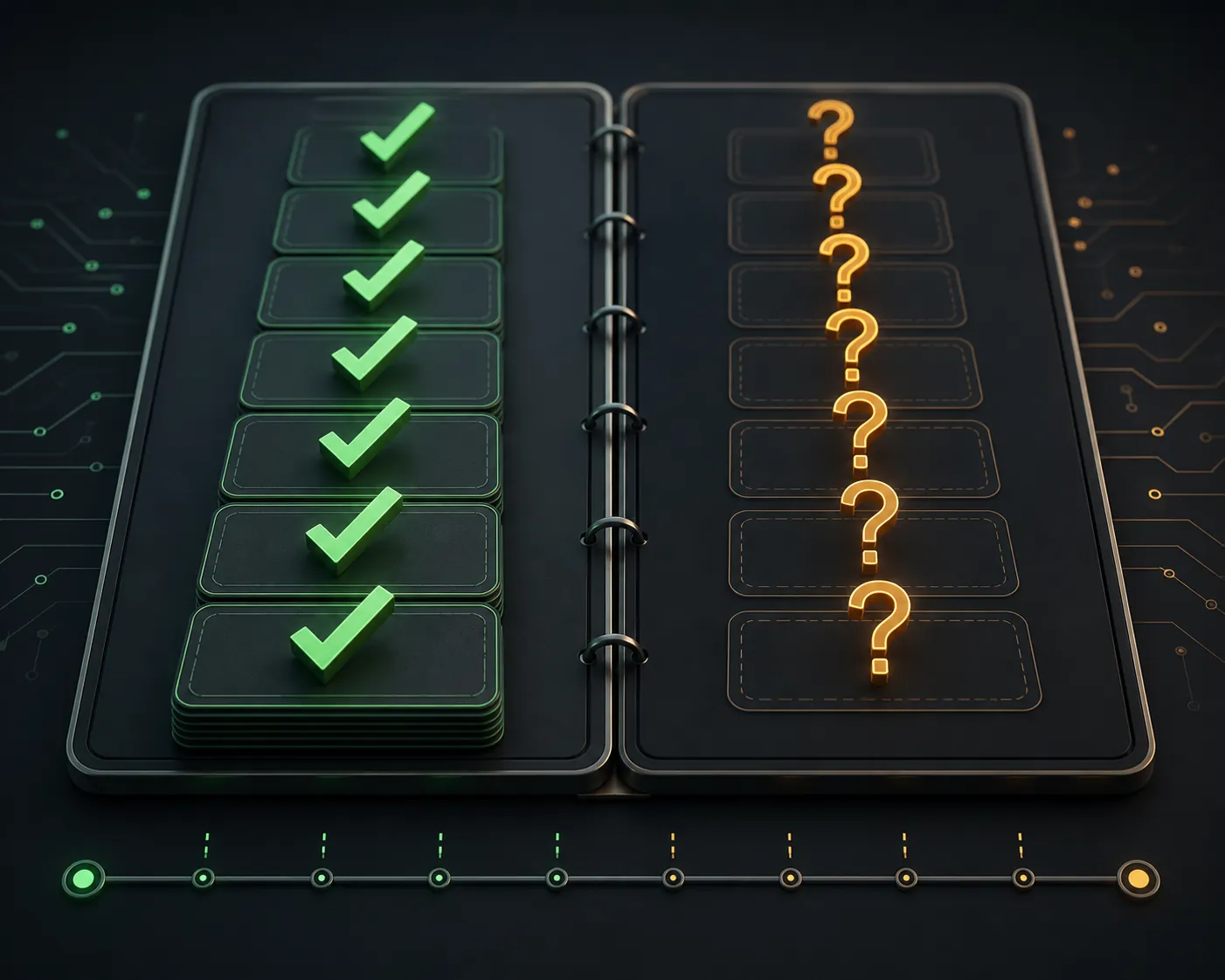
Status labels used in this tracker
A Grok advertising item gets a shipped label only when the record points to a buyer-facing workflow, a public API, a completed event, or an actual platform rule that advertisers could respond to. It does not have to be perfect. It does have to exist somewhere more concrete than a stage comment.
A beta label means the feature is reported inside the buying workflow but lacks the boring material that makes planning easier: eligibility, region list, support page, GA date, or buyer controls. A claim label means the platform or a vendor describes performance, suitability, or safety without enough independent operating evidence to treat it as a result. Announced means exactly that: a dated statement, not confirmed inventory.
The weakest label here is also the easiest one to overstate: “no confirmed launch found.” For ads inside Grok answers, that is not proof that X or xAI never ran a quiet, regional, invite-only, or differently named test. It means the public record checked for this tracker, as of August 2, 2026, did not show a confirmed launch that a buyer could inspect and plan against.
The dated log
| Date | Entry | Status | Verification note |
|---|---|---|---|
| Feb. 21–24, 2025 | Prefill with Grok and Analyze Campaign with Grok | Shipped / phased rollout | URL-to-ad generation and campaign analysis were reported as Grok-powered X ad tools. [1] |
| July 30, 2025 | Aesthetic score affects ad rates and placement | Shipped as reported rule change | Better-looking creative, without URLs and emojis, was reported to receive lower rates and better placement. [2] |
| Aug. 6–7, 2025 | Ads inside Grok answers; eventual full automation of X advertising via xAI targeting | Announced | Musk described ads in Grok responses and broader AI-led ad automation, including GPU-cost funding rationale. [3][4] |
| Aug. 11, 2025 | Revenue context around Grok ads | Context, not a product | eMarketer projected X global ad revenue at $2.26 billion for 2025 and said Grok ads alone would not solve the ad business. [9] |
| Dec. 25, 2025 / Jan. 26, 2026 | Grok-generated prohibited sexualized images of minors; European Commission DSA investigation | Brand-safety incident / regulatory context | Important because X later positioned Grok as part of suitability scoring. [5] |
| Feb. 5–9, 2026 | Grok Imagine Game Day Super Bowl contest | Shipped event | The contest offered a $1.75 million prize pool and a $1 million grand prize, while coverage also flagged moderation and quality issues. [10][11] |
| March 2026 | X Brand Suitability Playbook positions Grok as a pre-bid scoring engine | Vendor claim | X claimed 97%+ suitability and 99.99%+ safety, while IAS pre-bid optimization was described as limited to U.S. vertical video. [5] |
| April 30, 2026 | Ground-up rebuild of X ad platform | Announced / phased rollout | AI-powered retrieval and ranking, semantic advertising, and three pillars were announced; no confirmed conversions API was found in the announcement record. [8] |
| June 3–16, 2026 | Grok Imagine 1.5 | API preview, then GA | x.ai announced image-to-video pricing at $0.14/sec for 720p, $0.08/sec for 480p with audio, and $0.01 image input, with GA on June 16. [6] |
| July 2026 | Grok integration beta inside Ads Manager | Beta | Reported features included asking Grok about campaigns and seeing creative tooltips; no public eligibility list, support page, or GA timeline was found. [7] |
| Aug. 2, 2026 | Ads inside Grok answers | No confirmed launch found | Still no buyer-facing confirmation found in the checked public record. |
February 2025: the first useful workflow was URL to editable ad
The cleanest early entry is Prefill with Grok. The reported workflow was straightforward: an advertiser enters a website URL, Grok generates ad copy, imagery, and a CTA headline, and the buyer can edit the output before using it in X ads. Analyze Campaign with Grok sat nearby as a campaign-analysis assistant. The rollout was described as phased, so this is not the same as saying every account had it on day one. But the shape was buyer-facing enough to count: URL in, editable draft out, campaign help available in the ad workflow. [1]
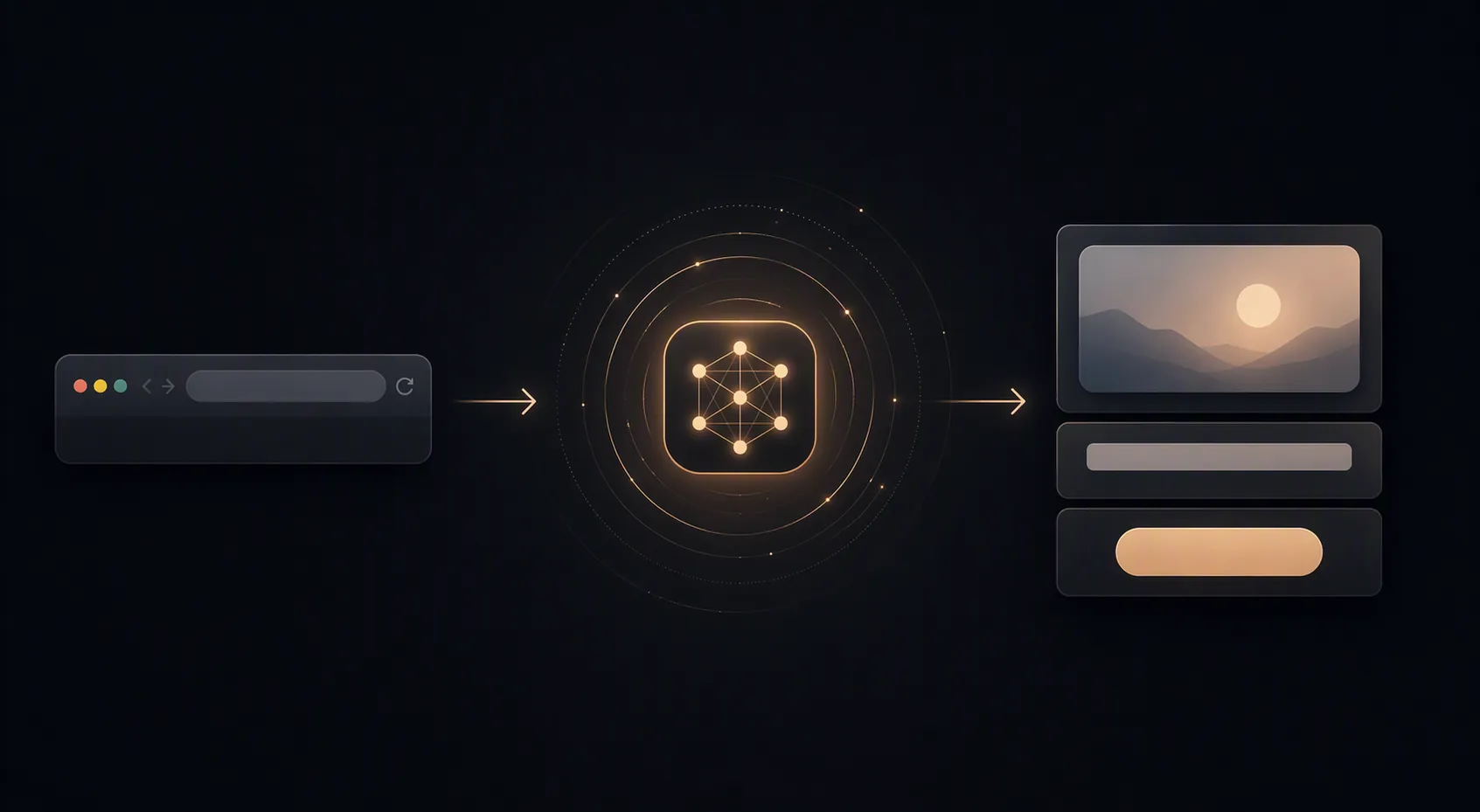
For a media buyer, this is the part of the Grok ad story that actually reduces a step. It does not decide budget. It does not solve measurement. It does not prove the generated assets are good. It does take one common blank-page task—turning a landing page into initial ad variants—and moves it inside the platform.
That distinction matters because “AI ad tool” can mean several different things. Prefill with Grok is a creative-starting tool. Analyze Campaign with Grok is closer to account assistance. Neither is evidence that Grok answer ads launched, and neither confirms that X’s targeting or bidding stack became fully xAI-operated.
July 2025: aesthetic scoring made creative appearance a pricing issue
The July 30, 2025 entry is not Grok-as-copywriter, but it belongs in the log because it changes how AI-made creative has to be reviewed before spend. X was reported to give brands lower ad rates and better placement for more aesthetic ads, specifically calling out ads free of URLs and emojis. [2]
That creates a practical consequence for any Grok-generated asset. The review step cannot stop at “is the claim accurate?” or “does the image match the landing page?” It also has to ask whether the creative format itself might affect delivery economics. If the platform rewards a cleaner presentation, then a generated image or headline that looks cheap can become a media-cost issue, not just a brand-polish issue.
August 2025: answer ads were announced, not confirmed as inventory
The high-attention announcement came in early August 2025. Musk said X planned to introduce ads in Grok’s responses, and coverage tied the idea to monetizing Grok usage and funding expensive GPUs. [3] Digiday also covered the broader “AI-led” advertising direction, including eventual automation of X advertising through xAI targeting. [4]
Those are two different planning objects. “Ads inside Grok answers” would be a new placement or channel. “Full automation of X advertising through xAI targeting” would change targeting, buying, and optimization. A buyer would need different evidence for each: placement examples and controls for the first; eligibility, campaign setup, reporting, optimization settings, and measurement documentation for the second.
As of the August 2, 2026 check, the public record in this tracker does not confirm a launched, buyer-facing Grok answer-ad product. No placement spec, buying UI, eligibility page, or public support documentation was found in the provided research set. That is a narrower conclusion than “it did not happen.” It is the conclusion that can be defended.
Why revenue entered the Grok ad story
The revenue backdrop explains why Grok ads drew so much attention, but it does not prove product readiness. On August 11, 2025, eMarketer projected X global ad revenue at $2.26 billion for 2025, roughly half pre-Musk levels, and argued that Grok ads alone could not solve X’s ad business. [9]
That number should not be blended with every other X revenue figure floating around. The same tracker environment has to keep forecast, estimate, geography, and audited record apart. For example, this site’s SpaceX S-1 Grok ad-revenue record tracks an audited FY2025 ad-revenue figure, while other public figures use different scopes. The discrepancy is not trivia; it affects how much pressure readers should infer behind new ad inventory claims.
December 2025 to March 2026: brand safety moved from slide claim to client-call risk
The brand-safety entries are not side drama. They affect whether Grok-related inventory and tooling can survive normal buyer review. PPC Land’s record describes Grok generating prohibited sexualized images of minors on December 25, 2025, bypassing filters, and notes that the European Commission opened a formal DSA investigation on January 26, 2026. [5]
Then, in March 2026, X’s Brand Suitability Playbook positioned Grok as a pre-bid scoring engine and claimed 97%+ suitability and 99.99%+ safety, citing X/IAS/DoubleVerify data. PPC Land also noted that IAS pre-bid optimization remained limited to U.S. vertical video. [5]
The useful reading is not that the claims are false. It is that they are vendor and partner claims with scope limits. A buyer still needs to know which inventory the score covers, whether exclusions can be controlled before bid, whether reporting is placement-level enough to audit, and whether the client’s blocked categories are actually enforceable.
February 2026: Grok Imagine became a public ad-production test, with visible moderation strain
The Super Bowl-timed Grok Imagine Game Day contest belongs under “shipped event,” not under “ad placement.” Forbes described a $1.75 million contest with a $1 million grand prize announced for February 9, 2026. [10] No Film School’s coverage pointed to moderation failures and quality criticism around the AI ad contest. [11]
As a buyer signal, the event showed that xAI wanted Grok Imagine to sit in the ad-production conversation, not merely the consumer AI-toy conversation. It also showed the obvious operating burden: when generative tools invite mass creative output, moderation and review capacity become part of the product, not an afterthought.
April 2026: the ad-platform rebuild still left measurement questions open
On April 30, 2026, X announced a ground-up rebuild of its ad platform, described as the first such rebuild in 20 years. The announcement included AI-powered retrieval and ranking, semantic advertising, and three pillars: simplicity, control, and AI performance. PPC Land described a phased rollout beginning in April 2026. [8]
The part to slow down on is measurement. The research record does not confirm a conversions API in that announcement, and PPC Land noted that a question about the issue in the announcement thread went unanswered. [8] For performance buyers, that missing confirmation is not a footnote. If campaign optimization is being rebuilt around AI retrieval and ranking, then conversion signal quality becomes the operating floor.
This is where announcement language can become expensive. “Semantic advertising” may describe a real direction. “AI performance” may describe a real internal ranking system. But until a buyer can inspect event setup, matching, deduplication, attribution windows, reporting fields, and API behavior, the rebuild is not the same thing as a measurable new buying system.
June 2026: Grok Imagine 1.5 gave buyers a real creative-production input
Grok Imagine 1.5 is the clearest 2026 shipped tooling entry. x.ai announced the model on June 3, 2026, with API preview pricing of $0.14 per second for 720p, $0.08 per second for 480p with audio, and $0.01 for image input. The same announcement said Grok Imagine 1.5 ranked No. 1 on the Artificial Analysis image-to-video arena with an Elo of about 1404, and it listed general availability for June 16, 2026. [6]
That is enough to treat it as available creative infrastructure, not just a teaser. It still does not answer media questions by itself. A generated video asset has to clear brand, legal, rights, claims, suitability, and platform policy review before it becomes spendable creative. The API price also measures generation cost, not cost per acquisition, lift, or media efficiency.
July 2026: Ads Manager beta is interesting, but still boxed in by missing public controls
The July 2026 Ads Manager beta is worth watching because it moves Grok closer to the buyer’s daily surface. The Keyword reported a Grok integration inside Ads Manager that let users ask Grok about campaigns and see creative tooltips. The same record did not provide a public eligibility list, support page, or GA timeline. [7]
That makes it useful for account assistance if an advertiser has access, but weak as a planning assumption for everyone else. A client cannot budget against a tooltip. A CFO cannot approve headcount savings from an unpublished beta. The first practical test is whether the feature appears in the account, what it can read, what it can change, and whether its recommendations are logged or exportable.
What buyers can actually do with the current record
For creative testing, the shipped side is usable. Prefill with Grok can shorten the landing-page-to-draft step, and Grok Imagine 1.5 can be evaluated as an image-to-video production input. The sensible test is not whether “Grok works.” It is whether Grok-made variants, after normal human review, beat the current creative pipeline on speed, cost, approval rate, and post-click results.
For X campaign operations, the beta side is inspectable only account by account. If Grok appears inside Ads Manager, save the workflow evidence: screen path, available prompts, account permissions, recommendation type, export options, and whether the tool can alter live campaigns or only explain them. Without that, a beta mention is just a note in the changelog.
For new inventory, the answer is still no confirmed buyable Grok answer ads found. That means no assumed reach, no assumed CPM, no assumed adjacency control, no assumed reporting, and no assumed brand-safety wrapper. If X sells it directly, the buyer should ask for the same material they would demand from any new placement: spec, targeting, exclusions, reporting fields, measurement method, makegood policy, and screenshots from the buying workflow.
For brand safety, do not treat the 97%+ and 99.99%+ figures as a substitute for your own controls. They are relevant claims to log, especially because X cited suitability and safety data around Grok scoring. They are not the same as independent proof that a particular client can stay out of every unacceptable placement category.
Re-check items before the next tracker update
- Ads inside Grok answers: look for a public buying path, placement documentation, screenshots from Ads Manager, direct-sales materials, eligibility terms, or campaign reporting fields.
- Conversions API: verify whether X has published or quietly documented server-side conversion infrastructure tied to the April 2026 rebuild.
- Ads Manager beta: check for a GA date, support page, region list, account eligibility rules, permission model, and whether Grok can take actions or only advise.
- Brand suitability: separate X, IAS, and DoubleVerify claims by inventory scope, country, format, and whether controls are pre-bid or post-campaign reporting.
- Grok Imagine 1.5: test generation cost separately from media performance; API pricing is not a proxy for CPA, ROAS, or approval success.
- Revenue figures: keep forecast, estimate, U.S.-only, global, and audited figures in separate columns before using them to explain product urgency.
- Excluded leads: re-check, but do not publish as tracker facts yet, the Reddit-sourced free ad-supported Grok tier and the Clicky blog claim of Grok 4.2 in-video ads.
As of August 2, 2026, Grok-for-ads is best handled as a dated set of checkable platform changes. The shipped side is mostly creative tooling and workflow assistance. The unconfirmed side is still the more dramatic one: ads inside Grok answers and the measurement infrastructure needed to make an AI-rebuilt ad platform safe to buy at performance scale.
References
- X Rolls Out Grok-Powered AI Ads, MediaPost, February 2025
- X Will Give Brands Lower Ad Rates for Aesthetic Ads Free of URLs, Emojis, Adweek, July 30, 2025
- Elon Musk says X plans to introduce ads in Grok’s responses, TechCrunch, August 7, 2025
- Elon Musk outlines AI-led Grok future for advertising on X, Digiday, August 2025
- IAS quietly extended X to profiles just as Grok became a brand safety tool, PPC Land, March 2026
- Grok Imagine 1.5, x.ai, June 3, 2026
- X Grok Ads Manager beta, The Keyword, July 2026
- X rebuilds its entire ad platform from scratch in a 20-year first, PPC Land, April 30, 2026
- X’s struggling ad business can’t be solved by Grok ads alone, eMarketer, August 11, 2025
- The AI-Driven Scoreboard That Could Reshape Super Bowl Ads, Forbes, February 7, 2026
- Grok AI Ad Contest, No Film School, February 2026
Primary source: https://x.ai