
Does Anthropic's chip veteran hire change AI ad tools?
Anthropic's Google TPU veteran hire is one dated step in its chip-verticalization timeline, not a signal it is entering the ad business. For media buyers running Claude-powered ad tools, the near-term effect runs through API capacity and rate limits; price relief from Anthropic's own silicon is not realistic before 2028.
- Platform
- Anthropic
- Change category
- policy
- Effective date
- 0-08-21
- Change type
- policy shift
- Impact level
- Low
Anthropic’s August 21, 2026 hire of Amir Salek changes the compute story around Claude more than it changes the advertising workflow sitting on top of Claude. Salek is not a random hardware executive: Bloomberg reported that he founded Google’s custom chip program, ran the TPU business until 2022, helped deliver the first seven TPU generations, and is joining Anthropic’s compute team reporting to James Bradbury.[1] For a media buyer using Claude-powered tools to generate ad copy, spin creative variants, brief agents, or review campaign data, the practical question is narrower: will the tools get cheaper, less rate-limited, or more available this quarter?
The answer is: not because of the hire alone. The hire matters because it sits inside a dated compute-verticalization sequence. It does not show Anthropic entering ad inventory, and it does not establish immediate token-price relief.
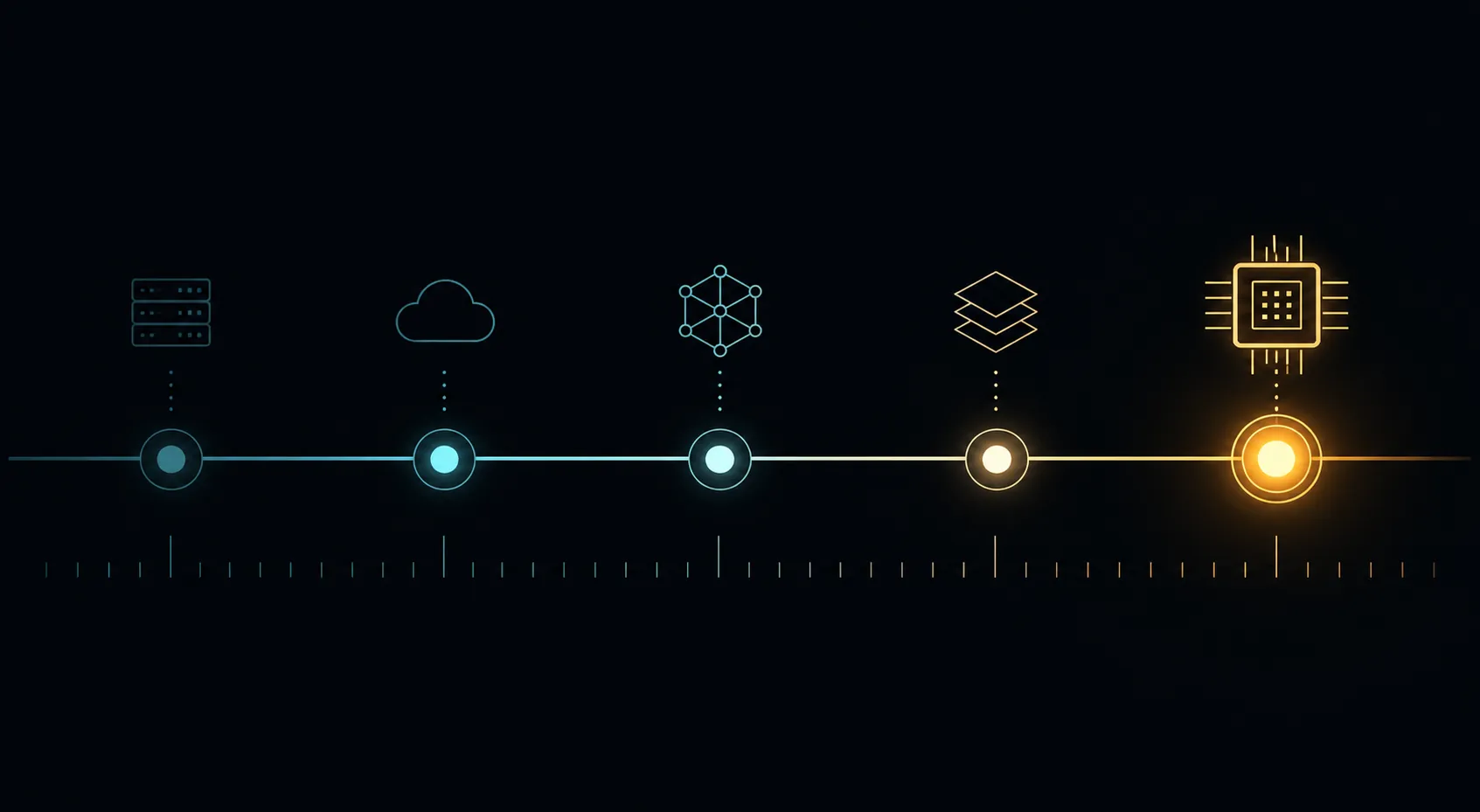
The dated sequence matters more than the headline hire
| Date | Observed event | Why it matters to Claude-based ad tools |
|---|---|---|
| April 9, 2026 | Anthropic was reported to be exploring its own AI chips while Claude revenue run rate had passed $30 billion, up from about $9 billion at the end of 2025. The same reporting said a Google/Broadcom arrangement would add about 3.5GW of TPU compute from 2027, roughly three times an earlier 1GW plan, contingent on continued commercial success in Broadcom’s SEC filing.[2] | This is capacity planning, not an ad-product launch. More compute can eventually affect model availability and inference economics. |
| August 5, 2026 | Reuters reported that Anthropic would build an in-house chip design team for Claude, describing it as the latest step in a multi-chip strategy that still keeps AWS, Google, Nvidia, and AMD central. Reuters also reported no disclosed timeline or manufacturing decision.[3] | This is the clearest sign that Anthropic wants more influence over the chip-model stack, but it does not say when any buyer-facing change arrives. |
| August 2026 | Business Insider reported Anthropic’s first public confirmation of a custom silicon team through job listings, including roles paying $320,000 to $485,000 and requiring candidates who have “shipped silicon.”[4] | The hiring profile supports seriousness. It still describes team formation, not production supply. |
| August 11, 2026 | Riot Platforms announced a 191MW Rockdale, Texas deal with Anthropic valued at $9.1 billion over 20 years, with potential extensions up to about $16.1 billion.[5] | Power and data-center access are near-term infrastructure constraints. They can matter to service availability before custom chips ever reach production. |
| August 19, 2026 | Anthropic placed a Fractile order. | This adds to the multi-supplier compute pattern, though the available sourcing does not include enough public detail here to treat it as a buyer-facing capacity change. |
| August 21, 2026 | Anthropic hired Amir Salek, the Google TPU veteran, into its compute organization.[1] | The appointment increases the credibility of Anthropic’s hardware effort. It does not by itself change API limits, invoices, or ad-tool behavior. |
That sequence is the useful part. If the Salek appointment is read in isolation, it is easy to turn it into a clean but unsupported claim: chip veteran joins Anthropic, therefore Claude tokens get cheaper, therefore ad tools get cheaper. The actual chain has more gates: silicon design, manufacturing, deployment, model optimization, internal cost reduction, API pricing policy, and then pass-through by the ad-tool vendor.
This is not evidence that Anthropic is entering the ad business
The hire can make the story sound like an advertising-platform move. The available evidence points elsewhere. Anthropic said on February 4, 2026 that Claude would remain ad-free, describing subscriptions and enterprise contracts as its revenue model and naming agentic commerce as the commercial direction.[6] That matters because it separates two very different interpretations.
- Supported interpretation: Anthropic is trying to control more of the compute supply behind Claude, which can affect inference economics, API capacity, usage limits, and reliability.
- Unsupported interpretation: Anthropic is building an ad network or changing Claude into ad inventory.
For buyers working inside AI ad tools, that distinction is not academic. If Anthropic were moving into ad inventory, the watchlist would include targeting rules, auction mechanics, attribution surfaces, brand-safety policy, and ad-load disclosures. The current evidence points instead to infrastructure: whether Claude-backed tools have enough capacity during production windows, whether API errors spike, whether rate limits relax or tighten, and whether vendors revise pricing after their own input costs change.
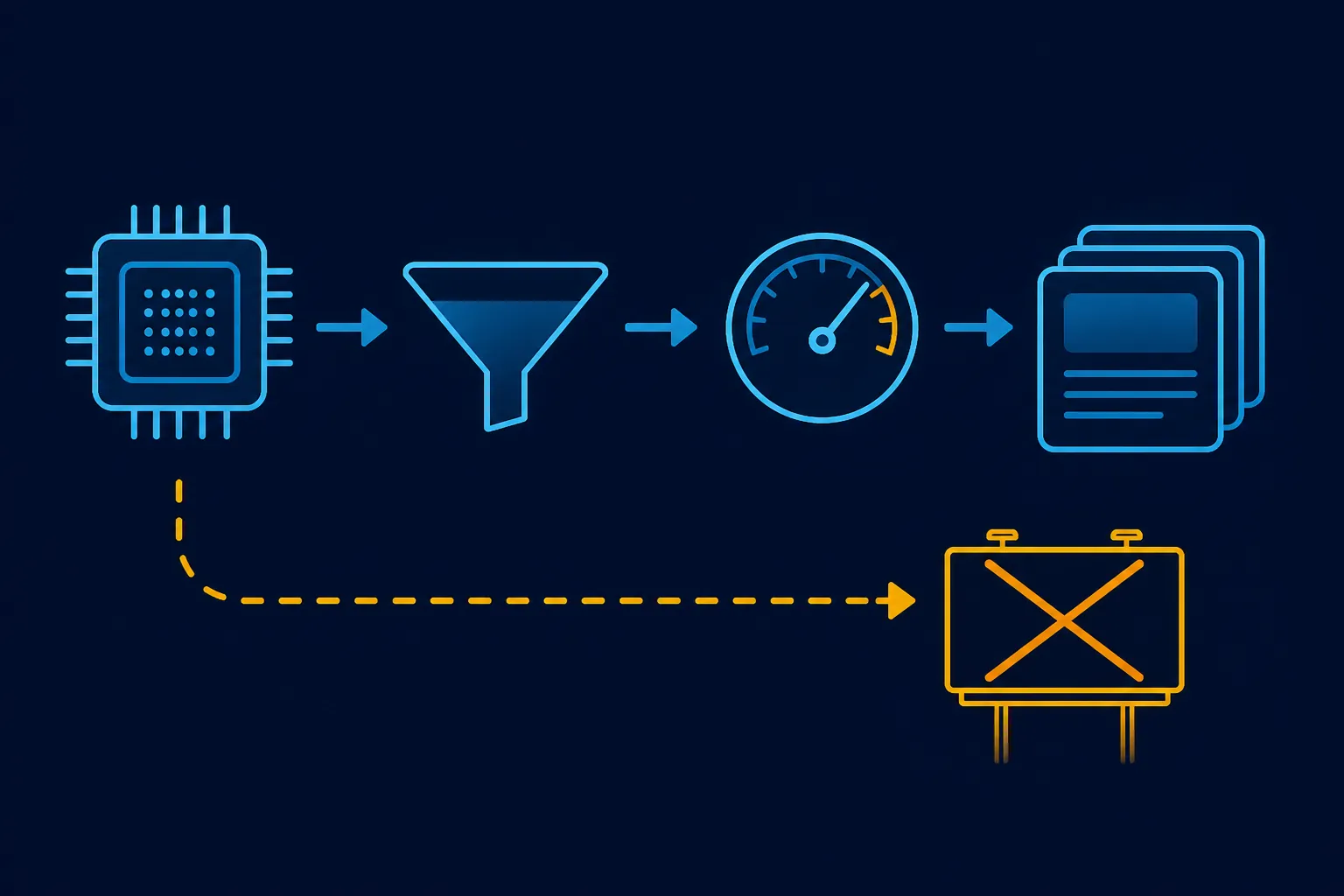
How compute infrastructure reaches an ad tool
A Claude-powered ad workflow usually hides the model layer. A buyer sees a product interface: generate ten hooks, rewrite for a retail audience, compare landing-page angles, summarize search-query themes, or let an agent prepare a client-ready brief. Under that interface, the vendor is paying for inference, managing API calls, and deciding what to do when demand exceeds its own allocation.
Anthropic’s compute decisions can transmit through three routes.
- Inference cost: if Anthropic lowers its cost to run Claude, it may gain room to lower API prices, offer more generous tiers, or preserve margins. That does not guarantee an ad-tool vendor lowers its own subscription price.
- API capacity: if Anthropic has more usable compute, tool vendors may see fewer capacity-related slowdowns or may be able to support heavier batch jobs, more agents, and larger customer accounts.
- Rate limits and reliability: more or better-matched compute can affect how many calls an account can make, how long jobs wait in queues, and how often a production workflow degrades during peak demand.
Those are the signals that matter when a creative review is due before a launch or a reporting agent is supposed to prepare pacing notes before a client call. A custom-silicon headline does not help if the operating account still hits the same limit at 4 p.m.
Near-term capacity is the more plausible buyer-facing effect
The near-term story is not that Salek shows up and Claude-powered ad tools immediately become cheaper. It is that Anthropic is stacking compute options across suppliers, power, and internal design expertise. Bloomberg reported that Anthropic buys chips from Nvidia, Google, and Amazon.[1] Reuters described the in-house design effort as part of a multi-chip strategy while keeping AWS, Google, Nvidia, and AMD central.[3] The April report added the Google/Broadcom TPU expansion from 2027.[2] The Riot deal adds a long-duration power and infrastructure component.[5]
For an agency buyer, that points first to availability. If the supply stack improves, the experienced change is more likely to look like larger usable quotas, fewer degraded responses, better handling of agentic batches, or less painful constraints around busy periods. It may show up through the ad-tool vendor rather than through Anthropic directly: a higher plan limit, a new “bulk generation” feature, a more reliable agent run, or a service-level promise that was previously hard to offer.
Channel Insider framed the immediate partner question in similar operational terms: instance options, usage pricing, and SLAs, rather than direct chip purchases by partners.[7] That framing is useful because most advertisers do not buy compute from Anthropic. They buy tools, seats, workflows, and outcomes. The infrastructure matters when it changes the terms those products can reliably offer.
Why the Salek hire is credible evidence, and where it stops
Salek’s background gives the hardware effort weight. Google’s TPU program is one of the few real examples of model-serving infrastructure becoming a strategic advantage at scale, and Bloomberg’s reporting ties Salek directly to the founding of that program and the first seven TPU generations.[1] In that context, the hire is not just another AI executive announcement. It is a signal that Anthropic wants experienced leadership for the hard parts of custom compute: matching models to accelerators, making trade-offs across performance and cost, and coordinating hardware with the software stack.
But a credible hire is not a disclosed architecture. Reuters reported no timeline and no manufacturing decision for the in-house chip effort.[3] The Business Insider job-listing details show that Anthropic is recruiting people who have shipped silicon, but job listings are still an input, not an output.[4] The useful reading is that Anthropic is building capability. The unsupported reading is that a chip exists, has a production date, and will automatically change ad-tool pricing.
That distinction also applies to the cost claims now traveling around the market. A roughly 50% per-token inference-cost reduction has been discussed in industry rumor channels, but the available sourcing does not identify it as an Anthropic disclosure. It traces the better-sourced version of that number to an early-testing claim about OpenAI’s Jalapeño relayed through TechTimes, and a separate unverified LinkedIn claim applies a similar target to Anthropic. That is not enough to anchor a buyer forecast.
Price relief has a longer chain than capacity relief
A lower internal inference cost, if achieved, still has to pass through several commercial decisions before an ad buyer sees it. Anthropic would first need production silicon or a materially better supply arrangement. It would then need to decide whether to pass savings into API pricing, absorb the savings, or spend them on larger models, longer contexts, higher availability, or enterprise commitments. After that, the ad-tool vendor has its own decision: lower subscription prices, increase margins, increase included usage, bundle heavier agents, or keep the same plan but improve reliability.
The earliest-production window belongs in that context. The 2028–2030 window is an industry estimate based on the usual three-to-five-year chip cycle, not an Anthropic date. The same applies to reported development-cost estimates such as $500 million to $750 million: useful for scale, not evidence of a buyer-facing schedule. A possible Samsung manufacturing partnership also remains unconfirmed in the available sourcing.
So the practical pricing view is conservative: custom silicon may become one factor in Claude’s late-decade cost structure, but it does not justify changing a 2026 ad-tool budget. If a vendor claims cheaper Claude-powered advertising workflows because of Anthropic’s new chip veteran, the follow-up should be specific: which plan changed, which limit changed, which model is covered, when did the change start, and is it available on this account?
The ad-tool surface Anthropic has actually exposed
There is one ad-adjacent product surface worth keeping in view, but it does not turn the chip hire into an advertising move. On May 13, 2026, Anthropic introduced Claude for Small Business with 15 agentic workflows and connectors including HubSpot, Canva, and QuickBooks.[8] Those connectors sit close to the work small agencies and owner-operators actually do: customer records, creative assets, invoicing, reporting, and campaign-support tasks.
That is a workflow layer, not inventory. In a marketing stack, it can help draft, organize, reconcile, summarize, and hand work between tools. In agentic workflows, compute pressure can be more visible than in a one-off chat request because agents may call tools repeatedly, inspect files, revise outputs, and wait on connected systems. A capacity constraint can therefore show up as a stalled workflow rather than a simple slow answer.
That is where Anthropic’s compute work could become relevant to advertising teams without Anthropic selling ads. Better capacity can make the same workflow less fragile. Better cost structure can make heavier workflows economically possible. Neither point requires an ad network.
What to watch in live Claude-based advertising tools
The watchlist should be account-level and dated. Infrastructure headlines are useful only after they map to behavior a buyer can observe.
- Rate-limit changes: note whether the tool raises, lowers, or redefines usage caps for Claude-backed features.
- Queue and timeout behavior: compare batch generation, agent runs, file analysis, and reporting jobs during busy working hours.
- Model routing disclosures: watch whether the vendor changes which Claude model powers each feature or plan.
- Plan-level pass-through: separate lower API costs from lower tool prices. The second does not automatically follow from the first.
- SLA language: for enterprise or agency plans, check whether reliability commitments change after new capacity announcements.
- Benchmark movement: compare vendor claims with actual latency, completion quality, and failure behavior in dated Benchmarks records.
This is also the right way to treat vendor emails. “Powered by Claude” and “benefiting from Anthropic infrastructure” are not the same as a changed limit or a changed bill. A useful vendor update names the model, plan, usage cap, effective date, and whether existing customers receive the change.
Bottom line for media buyers
Anthropic hiring Amir Salek is a meaningful dated node in its attempt to control more of Claude’s compute supply. It becomes more significant when read beside the April chip exploration, the August in-house custom-silicon team, the Riot Platforms infrastructure deal, the August 19 Fractile order, and Anthropic’s broader multi-chip strategy.
It does not establish that Anthropic is entering advertising inventory, and it does not create immediate token-price relief for Claude-powered ad tools. The evidence supports a more operational conclusion: watch capacity, rate limits, queue behavior, and SLA changes now. Treat silicon-driven price effects as a later production-and-pass-through chain that Anthropic has not yet disclosed.
References
- Anthropic Taps Google Chip Veteran as Part of Push Into Hardware, Bloomberg via Yahoo Finance
- Anthropic is exploring building its own AI chips as Claude revenues surge past $30 billion run rate, The Next Web
- Anthropic to build in-house chip design team for Claude, hire engineers, Reuters via Yahoo Finance
- It's official: Anthropic is building an in-house chip team for Claude, Business Insider
- Riot Platforms signs Anthropic deal as miners shift to AI infrastructure, CNBC, August 11, 2026
- Claude is a space to think, Anthropic, February 4, 2026
- Why Anthropic's Chips Matter for the Channel, Channel Insider
- Introducing Claude for Small Business, Anthropic, May 13, 2026
Primary source: https://www.bloomberg.com/news/articles/2026-08-21/anthropic-taps-google-chip-veteran-as-part-of-push-into-hardware