

AI Mode vs. AI Overviews: Why Your SEO Strategy Needs Separate Tracks
With only 13.7% citation overlap and opposite user behaviors between Google AI Mode and AI Overviews, optimizing both with a single approach wastes effort. This article shows how citation patterns, domain preferences, and user behavior differ — and how to build separate strategies for each surface.
The fastest way to waste an AI search budget in 2026 is to treat Google AI Mode and AI Overviews as the same optimization target. They can be triggered by semantically similar searches, and they both sit inside Google, but the evidence says they do not cite the same sources, do not produce the same response shape, and do not lead users through the same behavior.
That matters because AI Mode optimization should not be a recycled AI Overview playbook with a new title. The question is not whether technical SEO, helpful content, crawlability, and brand authority still matter. Google says they do. The question is where the extra work goes after that foundation is already in place.
The overlap is too small for one playbook
Ahrefs compared 730,000 AI Mode and AI Overview response pairs in US data from September 2025. For the same query, only 13.7% of citations appeared in both surfaces. The responses also had just 16% word-level overlap, even though the paired queries had 86% semantic similarity.[1]
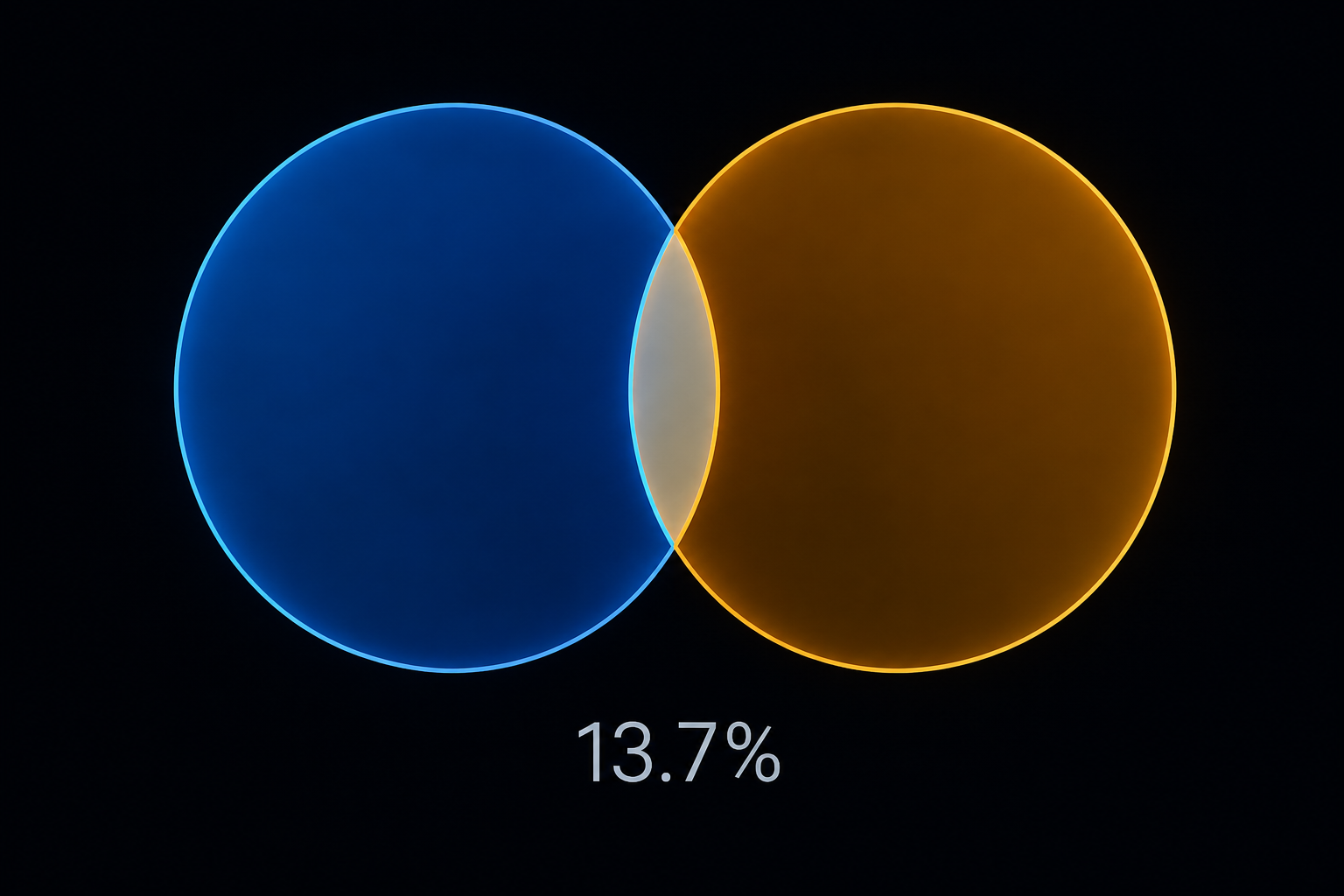
That is the uncomfortable combination: Google can understand two searches as closely related while still assembling meaningfully different answer sets. If a content team rewrites briefs only around AI Overview citations, it may be optimizing for the wrong citation pool when the same business later asks about AI Mode visibility.
The same Ahrefs study does leave room for partial transfer. If a brand appears in AI Overviews, Ahrefs found a 61% chance it also appears in AI Mode. That is not trivial. But it does not rescue a unified strategy, because AI Mode tends to add more competitors and more source variety around the overlapping brand.[1]
So the planning rule is narrower than the usual industry take: AI Overview visibility is a useful signal for AI Mode, not a proxy for it. A domain can be eligible for both while still needing different content formats, different citation targets, and different reporting definitions.
The response shape changes the job
AI Mode is not just a longer AI Overview. In the Ahrefs dataset, AI Mode responses were four times longer on average and mentioned 3.3 entities, compared with 1.3 entities in AI Overviews.[1] That changes what a source has to supply. A short, direct answer may be enough for one surface; the other has more room to pull in adjacent entities, constraints, comparisons, and supporting passages.
Google’s own documentation makes the split plausible rather than mysterious. Its AI optimization guidance describes different model and retrieval patterns: Gemini 2.x for AI Overviews, and a more advanced Gemini system with agentic reinforcement learning for AI Mode. It also distinguishes a more static summary experience from AI Mode’s multi-turn retrieval behavior and query fan-out.[2]
That mechanism explains why two pages can perform differently across the two surfaces. AI Overviews often need a compact, quotable explanation that resolves the immediate query. AI Mode has more opportunity to decompose the task, widen the source set, and retrieve passages that cover subtopics the original query did not spell out.
This is where tidy advice starts doing damage. “Add schema,” “answer the question clearly,” and “earn mentions” may all be directionally reasonable, but they are too blunt to decide whether a team should compress a section, expand an entity cluster, commission a video, or improve coverage on a community platform. The surface determines which of those tasks has a better claim on next week’s capacity.
A second dataset points in the same direction
The Ahrefs study is the spine of the comparison, but it should not carry the entire argument alone. Semrush looked at AI Mode in 2026 and found that domain overlap between AI Mode sidebar sources and organic top-10 results was under 50% on average across five high-intent SEO queries.[3]
That is not the same measurement as Ahrefs’ AI Mode-versus-AI Overview citation overlap, and the Semrush sample described here is much smaller. Still, the directional point is consistent: AI Mode is not simply a decorated version of the traditional SERP, and it is not reliably explained by AI Overview performance either.
For a working SEO team, this means the reporting object has to be named precisely. “AI visibility” is too broad if the dashboard mixes AI Overview appearances, AI Mode citations, organic rankings, and brand mentions into one trend line. A blended chart may look efficient, but it hides the part of the work that needs correction.
Source ecosystems are not interchangeable
The domain mix also diverges. Ahrefs’ domain preference data found AI Overviews leaning more heavily toward YouTube and Reddit, while AI Mode leaned more toward encyclopedic sources, health sites, and Quora. Wikipedia appeared in 28.9% of AI Mode results versus 18.1% of AI Overview results in the Ahrefs analysis.[1]
Those preferences should not be inflated into universal rules. A medical query, a software comparison, and a local service query will not all draw from the same type of source. But the split is enough to change outreach and content planning. AI Overview work may justify more attention to concise explainers, video assets, and community visibility. AI Mode work puts more pressure on entity coverage, definitional completeness, and passages that can survive being retrieved out of context.
This also explains why a citation-first approach for AI Overviews should not be copy-pasted into AI Mode. If the team already has an AI Overview process, keep it, but mark it as surface-specific. For a deeper treatment of that side of the work, see what a citation-first SEO strategy looks like for Google AI Overviews.
| Optimization layer | AI Overviews | AI Mode |
|---|---|---|
| Best content fit | Concise answers, comparison-friendly summaries, video support | Deep explainers, entity-rich passages, broader topical coverage |
| Source ecosystem to watch | Community platforms and video-heavy surfaces where relevant | Encyclopedic, reference-like, expert, and passage-rich sources |
| Likely user posture | Verification, comparison, and scrolling back into the SERP | Shortlist acceptance and fewer outbound clicks |
| Reporting risk | Overcrediting AI Overview appearances as total AI visibility | Missing closed-loop exposure when clicks do not materialize |
User behavior makes the split more expensive to ignore
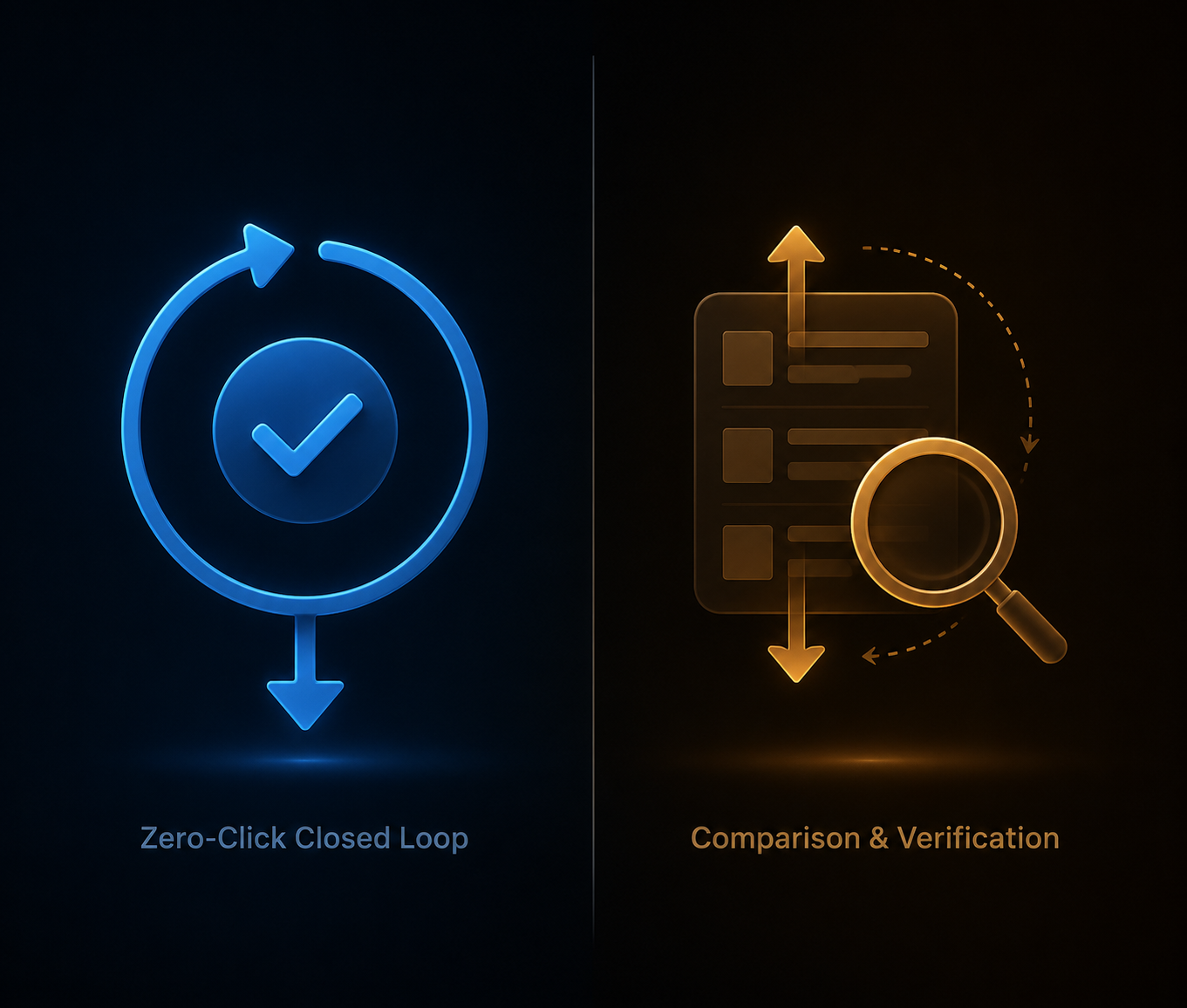
Citation differences affect production work. Behavior differences affect forecasting. Kevin Indig’s clickstream study, based on 846,000 Google search sessions from February to March 2026 through Clickstream Solutions and Surfer SEO, found that AI Mode behaved like a closed loop: 88% of users accepted the AI shortlist as-is, 74% picked the item ranked first, and 64% clicked nothing.[4]
The often-quoted 93% zero-click estimate for AI Mode should be handled carefully. Search Engine Land has discussed AI Mode as a high zero-click environment, and Yotpo cites a 93% zero-click rate, but the exact methodology and sample size behind that specific figure are not independently re-verifiable from the primary source material available here.[5][6] Treat it as a warning sign, not a precision instrument.
AI Overviews show a different pattern. In the same user-behavior reporting, reverse scrolling accounted for 47.5% of scroll movement when AI Overviews appeared, compared with 27% without an AI Overview. That suggests users often move back through results to compare, verify, or inspect sources rather than simply accepting the generated summary as the end of the task.[4]
The business consequence is plain: AI Mode visibility may influence consideration without sending a visit, while AI Overview visibility may still sit closer to a comparison journey. If the same KPI is applied to both, one surface will look underperforming for the wrong reason and the other may get credit for behavior it did not cause.
The shared foundation still matters
Separate tracks do not mean abandoning SEO fundamentals. Google’s AI optimization guide emphasizes that the same base requirements still apply: make content accessible to Google, create useful pages, use structured data where it accurately represents the page, and maintain a strong technical foundation.[2]
That base layer is not glamorous, but it prevents a common failure mode. A site that cannot be crawled cleanly, does not establish topical authority, or hides key information in unusable formats is not suddenly fixed by AI-specific tactics. The additive work starts after the page is already eligible to be understood, trusted, and retrieved.
The useful distinction is not “old SEO versus AI SEO.” It is “shared eligibility work versus surface-specific retrieval and presentation work.” The first belongs in the core SEO backlog. The second needs separate planning because the surfaces reward different formats and produce different user outcomes.
Build the AI Overview track for extraction and verification
AI Overview optimization should start from the idea that the user may still compare. The answer has to be easy for Google to extract, but the surrounding page also has to support a skeptical reader who scrolls, checks alternatives, and looks for confirmation.
- Write compact answer passages that resolve the query without requiring a long setup.
- Use headings that map to real comparison, definition, and decision queries rather than internal campaign language.
- Support claims with visible evidence, examples, and sourceable statements that can be quoted cleanly.
- Watch community platforms when they are already shaping the result set; do not manufacture low-value participation just to check a Reddit box.
- Use video when the topic benefits from demonstration, walkthrough, or visual comparison, not as a universal AI Overview tax.
The burden here usually lands on editors, subject-matter reviewers, and multimedia teams. They have to make pages easier to quote and easier to verify. That can mean tightening an introduction, adding a comparison table, improving a video transcript, or exposing the evidence behind a recommendation.
Build the AI Mode track for depth, entities, and passages
AI Mode optimization starts from a different user journey. The system has more room to expand the task, retrieve additional passages, and present a shortlist. The page has to be useful not only as a whole document, but also as a source of self-contained passages that explain entities, attributes, trade-offs, and constraints.
- Expand entity coverage where the user’s task naturally requires related concepts, product attributes, alternatives, prerequisites, or risks.
- Make important passages semantically dense: include the entity, the attribute, the condition, and the practical consequence in close proximity.
- Build reference-like sections that can answer follow-up questions without forcing the model to infer missing context.
- Audit whether your brand is present in the external sources AI Mode appears to favor for your category, especially reference, expert, and Q&A-style sources.
- Expect fewer clicks from some AI Mode exposures; plan for influence, shortlist inclusion, and assisted demand rather than direct-session attribution alone.
This work falls more heavily on content strategists, information architects, and whoever maintains the site’s entity model. It may require merging thin articles, splitting overloaded pages, adding glossary-like support, or improving internal links so related entities are not stranded across the site.
There is a useful comparison here with other AI answer engines. Perplexity, Google AI Mode, and AI Overviews all cite sources, but they do not have identical citation habits. If your team already treats Perplexity as its own surface, the same discipline should apply inside Google. See this technical guide to getting cited in Perplexity for the broader principle: citation systems need platform-specific evidence before they need platform-specific rituals.
Report them separately, even when the tools are imperfect
Measurement is the least glamorous part of this split and probably the most important. Google’s Search Console generative AI reports launched on June 3, 2026, but the initial reporting available at launch shows impressions only and does not segment AI Mode from AI Overviews. That means native reporting still cannot answer the surface-level question cleanly.
Until that changes, teams need a separate measurement layer using third-party tools such as Ahrefs Brand Radar and Semrush AI Visibility Toolkit, plus their own SERP sampling and query sets. The goal is not perfect attribution. The goal is to avoid a dashboard where AI Mode gains are hidden by AI Overview losses, or where AI Overview citations are mistaken for AI Mode readiness.
| Metric | Track for AI Overviews | Track for AI Mode |
|---|---|---|
| Citation presence | Whether the page or domain appears in AI Overview citations for priority queries | Whether the page, domain, or brand appears in AI Mode responses and sidebar sources |
| Source overlap | Overlap with organic top results and visible cited sources | Overlap with AI Overview citations and AI Mode-specific source pools |
| User behavior expectation | Comparison, verification, reverse scrolling, and possible click-through | Shortlist inclusion, answer acceptance, and higher zero-click exposure |
| Content diagnosis | Is the answer concise and quotable enough? | Is the coverage deep, entity-rich, and passage-retrievable enough? |
The caveats belong in the dashboard notes, not in someone’s memory. The Ahrefs overlap data is from September 2025 US results. The clickstream behavior data is from February to March 2026. The 93% zero-click figure should be labeled as a cited estimate with unclear primary-method detail. Google’s models and interfaces can change. None of that weakens the case for separate tracking; it strengthens it, because stale blended reporting is exactly how teams keep funding the wrong work.
Where the planning meeting should land
A sensible plan keeps one SEO foundation and adds two AI layers. The foundation covers crawlability, indexability, technical health, useful content, structured data that matches the page, internal linking, and authority building. The AI Overview layer focuses on concise extraction, comparison support, video where useful, and community visibility where the result set already depends on it. The AI Mode layer focuses on entity depth, semantic density, reference-style coverage, and the source ecosystems that feed longer, multi-turn answers.
The operational difference is the point. The AI Overview backlog may ask an editor to sharpen summaries and make evidence easier to verify. The AI Mode backlog may ask a strategist to rebuild topical coverage and entity relationships. The reporting backlog has to keep both surfaces separate, because Google Search Console still does not give enough segmentation to make a single native report reliable.
Do not collapse those into one “AI search” initiative unless the query set, citation pool, content format, user behavior, and success metric are genuinely the same. The evidence available in Q3 2026 says they usually are not.
References
- Are AI Mode and AI Overviews Just Different Versions of the Same Answer? — Ahrefs
- Google's AI Optimization Guide — Google Search Central, May 15, 2026
- What Is Google AI Mode? (+ How to Optimize for It in 2026) — Semrush
- Users behave differently in AI Overviews vs. AI Mode — Search Engine Land
- AI Mode is Google's next ads engine — Search Engine Land
- Google AI Mode Vs. Traditional Search: A Guide For Brands — Yotpo

Comments
Join the discussion with an anonymous comment.