
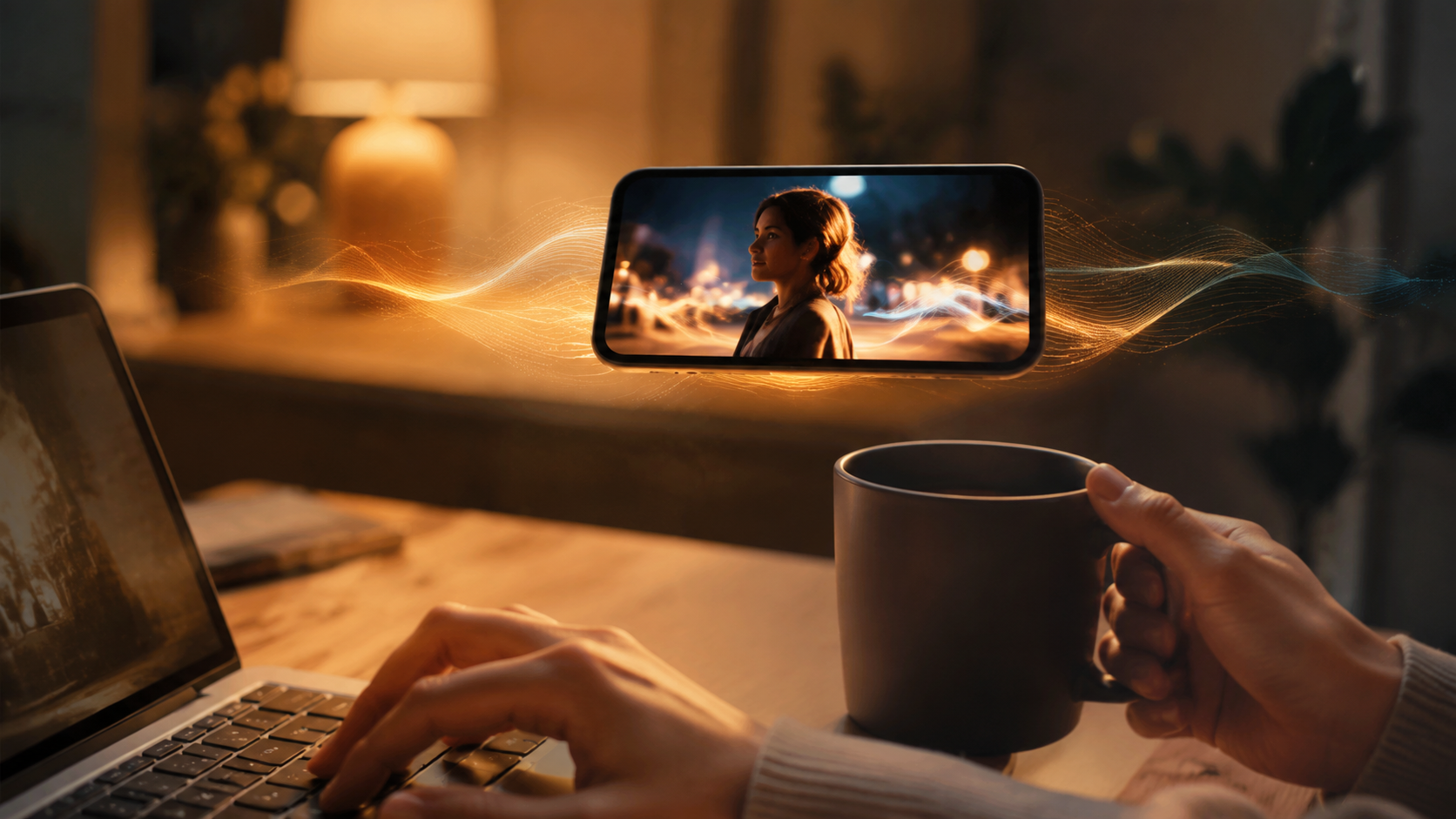
How YouTube Free PiP Changes Your Content Strategy
YouTube's free Picture-in-Picture rollout shifts viewing toward audio-first consumption. This article explains how content marketers should adapt their video strategy, production priorities, and format choices to capture engagement tailwinds.
YouTube’s free Picture-in-Picture change matters less as a product announcement than as a permission slip for behavior that was already visible in the edit bay. On April 29, 2026, YouTube began rolling out free global PiP on iOS and Android for long-form, non-music videos; music content remained behind Premium in most markets.[1] Pair that with Sprout Social’s finding that 62% of YouTube users watch while doing other tasks, and the strategic issue becomes obvious: the viewer was already half-listening while cooking, commuting, working, messaging, or comparing tabs. YouTube just made that session easier to continue.[2]
For marketers searching for guidance on the youtube picture in picture feature for marketers, the useful question is not how to turn PiP on. It is whether the next brand video still makes sense when the screen is small, the viewer is in another app, and the only thing carrying the idea is the host’s voice, the edit rhythm, and the sound mix.
That does not make YouTube a podcast app overnight. It does make a larger share of YouTube viewing feel podcast-adjacent: video is present, but attention arrives in bursts. A viewer may hear the setup, glance back for the demo, leave again during the context, then return when a chapter marker or verbal cue tells them the useful part is on screen. Videos built only for continuous visual attention will not collapse in every PiP session, but they now carry more avoidable friction.
The Viewing Session PiP Creates
Picture-in-Picture does not remove the screen. It reduces the screen’s authority. A full-screen YouTube video can assume the viewer sees the chart, the lower-third, the product close-up, the cursor movement, and the visual joke. A PiP session cannot. The video has to keep its place in the viewer’s ear until the visual moment is worth reclaiming attention.
That distinction is especially important for brand channels. A creator with a loyal audience may get patience through personality or habit. A brand video usually earns less forgiveness. If the opening depends on a title card, a montage, or a silent product sequence, PiP viewers may never receive the premise. If the host sounds distant, clipped, echoey, or overprocessed for phone speakers, the viewer does not need to dislike the brand to drift away. They simply have no reason to keep the tiny window alive.
This is also why the music-content limitation matters without needing much airtime. The 2026 free rollout applied to long-form non-music content, while music remained Premium-only.[1] For content marketers, the most relevant categories are the ones already comfortable with explanation, commentary, interviews, product education, finance, business, training, and recaps. Those are the videos most likely to survive when the viewer listens first.
The First 30 Seconds Need to Work With the Screen Ignored
The first 30 seconds of a post-PiP brand video should be written as audio before it is blocked as video. Not because visuals stop mattering, but because the viewer may not look up until the video has already explained why looking up is worth it.
A weak opening often hides behind visual movement: logo animation, quick b-roll, title text, product shots, motion graphics, then finally the point. In a full-screen conference-room review, that can feel polished. In a PiP session, it can feel like dead air with branding attached. The fix is not to make the host shout a hook. It is to make the spoken opening carry the promise, the audience, and the reason to stay.
| Opening Habit | PiP Problem | Better Production Choice |
|---|---|---|
| Silent logo animation | The listener hears nothing useful while deciding whether to keep watching | Start with a clear spoken premise, then let the brand mark appear underneath |
| Text-only thesis card | The main idea disappears for viewers who are looking elsewhere | Read the thesis aloud in natural language |
| Fast visual montage | Energy is visible but meaning is unavailable | Use the montage only after the viewer understands what the segment will answer |
| Host references “this chart” without context | The audio track becomes dependent on a visual the viewer may not see | Name the takeaway before inviting the viewer back to the screen |
A usable audio-first opening might sound like a strong editor’s note, not a radio ad: “In the next six minutes, we’re going to show why your onboarding video loses viewers before the product demo, and the fix is probably in the script, not the animation.” That line gives the listener a reason to continue before any graphic has to do work. The video can still show retention curves, interface clips, or customer examples; it simply stops making the first act dependent on them.
Audio Quality Moves From Polish to Retention
Teams often treat audio as the cleanup pass after picture lock. PiP punishes that habit. The viewer who is listening through a phone speaker while doing something else is less tolerant of room echo, uneven host levels, music beds fighting the voice, or interviews recorded across mismatched microphones. Those flaws do not merely make the video feel less premium. They make the content harder to follow at the exact moment the screen is least available.
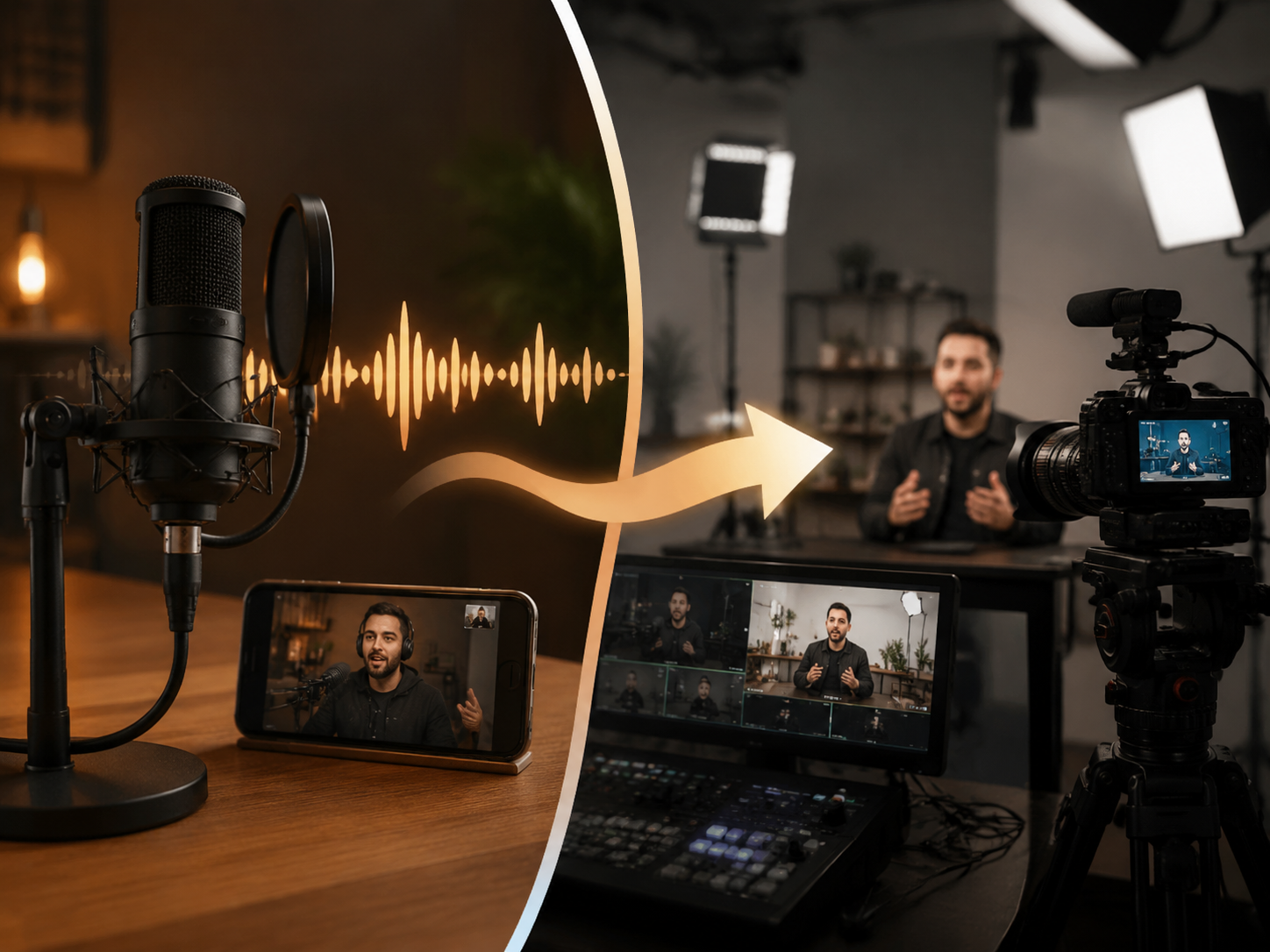
For brand production, that changes the order of operations. Before asking for more animated callouts, check whether the spoken track can carry the idea by itself. Before adding another b-roll layer, check whether the host’s consonants are clear on a phone. Before approving a remote executive interview, check whether the guest’s recording environment makes the company sound less credible than the idea actually is.
Sound design also has a navigational job. A subtle music shift can signal a new section. A short sonic cue can prepare the viewer for a recurring segment. A clean pause before a key claim can help the listener reorient. None of this requires theatrical audio branding. It requires an edit that assumes some viewers are building a mental map without staring at the timeline.
What to change in the production brief
- Require the first 30 seconds to be understandable without visuals.
- Record voice tracks close enough to avoid room tone becoming the dominant texture.
- Mix for phone speakers, not only studio headphones.
- Keep music beds below the voice instead of letting them compete for attention.
- Use verbal signposts before major visual moments: “If you’re watching, this is the chart to pause on.”
The last point matters because audio-first does not mean audio-only. It means the edit helps the viewer know when to look. A screen recording, product walkthrough, or data visualization can still be the most valuable part of the video. The audio track should create a path back to it instead of assuming the viewer never left.
Stop Trapping Value in Text Overlays
Text overlays are useful when they reinforce a point. They become a retention liability when they carry the only version of the point. This is one of the easiest PiP mistakes for brand teams to miss, because review meetings happen with everyone watching the same full-size frame. The edit looks clear. The hierarchy looks neat. The quote card looks sharp. Then a mobile viewer hears a vague transition while the actual claim sits unread in a small floating window.
The safer rule is simple: if a sentence is essential to understanding the video, put it in the voice track. The screen can summarize, emphasize, label, or make the idea memorable. It should not be the only place the idea exists.
This changes how scripts and storyboards should be reviewed. Instead of asking only whether the visual system is attractive, ask whether the audio transcript reads like a coherent argument. If the transcript contains long stretches of “as you can see here,” “this one,” “over there,” and “the number on the right,” the video is asking PiP viewers to do work the format no longer guarantees they will do.
Chapters Become Return Paths, Not Just Navigation
Chapter markers were already useful for long-form YouTube. PiP makes them more important because they give distracted viewers a way to recover visual moments after the fact. Someone may listen through the setup, miss the dashboard demo, and then come back when they have both hands free. If the video has clean chapters and a pinned comment that points to the visual sections, that viewer can return without scrubbing blindly.
For marketers, this is not only a user-experience nicety. It can change how long-form assets earn value over time. A product explainer with chaptered demos, objection handling, pricing context, customer proof, and implementation notes can support multiple viewing modes. A prospect can listen casually once, then revisit the exact section that helps them brief a colleague or compare options.
- Add chapters around visual evidence, not only around topic shifts.
- Use chapter names that describe the viewer’s task, such as “Dashboard walkthrough” or “Cost comparison,” rather than internal segment labels.
- Pin a comment with links to the moments a PiP listener is most likely to revisit.
- Mention the return path in the audio when the visual matters: “We’ve chaptered this demo if you want to come back to the screen later.”
That last line may feel too plain for a highly produced video. It is often exactly what the distracted viewer needs. A good YouTube edit does not pretend every viewer is in a theater seat.
The 8–15% Lift Is a Test Signal, Not a Forecast to Put in a Deck
OutlierKit projected that audio-led categories, including podcasts, education, business and finance, news recaps, and ambient content, could see an 8–15% view-duration lift over the 90 days after the free global PiP rollout.[3] That is worth paying attention to, especially if your brand already produces explainers, interviews, webinars, executive commentary, or thought-leadership series.
It should not be treated as an official YouTube promise. OutlierKit’s figure is a third-party projection, not a platform disclosure.[3] The responsible use is to justify a low-risk test: take content that already has a reason to be heard, improve the audio-first structure, and compare its behavior against nearby uploads. If the change improves clarity for PiP viewers, it probably improves the video for full-screen viewers too.
The categories in the projection also tell marketers where not to overextend the lesson. A silent visual teardown, a design critique, or a software tutorial with dense cursor movement may still need the viewer’s eyes. The strategy is not to flatten every format into a talk track. It is to identify which parts of the content calendar can carry more value through sound, and which visual-heavy pieces need better verbal scaffolding.
Podcast-Compatible Cuts Are an Audio Hedge
Once a brand starts planning YouTube videos that make sense without constant visual attention, podcast-compatible cuts become easier to produce. That does not mean every YouTube upload should become a podcast episode. It means some long-form videos can be recorded and edited so the audio version does not feel like a damaged export from a visual asset.
Interviews, market recaps, founder explainers, analyst conversations, and customer education episodes are the obvious candidates. Product demos and screen-led tutorials need more judgment. If the listener would spend most of the cut hearing “click here” and “this menu,” the audio version needs a separate narration plan or should stay on YouTube with stronger chapters.
This is also where repurposing discipline matters. A strong audio-first YouTube recording can feed podcast distribution, newsletter excerpts, short clips, and sales enablement snippets. If the team is already building a system for turning long-form video into shorter assets, an audio-first pass should happen before the cutting begins, not after. For a related production workflow, see A Five-Stage AI Workflow for Repurposing Long-Form Video into YouTube Shorts.
Measurement Will Be Messier Than the Behavior
The hardest part of adapting to PiP is that YouTube Studio does not clearly hand marketers a PiP segment to analyze. Publicly documented analytics do not separate PiP, fullscreen, and background-style sessions in a way that lets a channel owner say, “This retention gain came from PiP.” That may change if YouTube exposes more viewing-mode data, but as of July 2026, teams should assume they are working with proxies rather than clean attribution.
That does not make the behavior unmeasurable. It means the readout has to be cautious. Watch whether mobile and desktop retention curves start behaving differently after audio-first changes. Look for average view duration changes on videos with stronger spoken openings, cleaner audio, and better chapters. Compare repeat viewing around chaptered visual moments. Track whether comments mention listening, multitasking, commuting, or coming back to watch a section. None of those signals proves PiP caused the change, but together they can show whether the content is becoming more resilient in mobile, partial-attention sessions.
Session context also complicates the read. Digital Applied and Sprout Social report average YouTube session length at 14 minutes and 29 seconds, the highest among social platforms in their cited data.[2][4] PiP may encourage longer sessions for some viewers while lowering per-second visual attention. A marketer who looks only at view duration may miss whether the viewer actually saw the key demo. A marketer who looks only at click-through or conversion may miss that the video is doing upper-funnel work as a listened-to asset.
| Signal | What It Can Suggest | What It Cannot Prove |
|---|---|---|
| Mobile retention improves relative to desktop | The video may be holding partial-attention viewers better | That PiP specifically caused the change |
| Average view duration rises on audio-first formats | The new structure may be easier to follow while multitasking | That all viewers are more engaged visually |
| Repeat views cluster around chapters | Viewers may be returning to visual moments after listening | That the first session happened in PiP |
| Comments mention listening or multitasking | The audience is using the video in audio-primary contexts | How common that behavior is across all viewers |
The practical move is to annotate your publishing calendar. Mark which uploads were built with audio-first openings, upgraded sound, chapter return paths, and podcast-compatible structure. Then review their performance against similar uploads, not against the whole channel. If the team also runs YouTube across paid, CTV, or broader streaming investments, keep the PiP read separate from platform-mix decisions; those belong in a wider comparison such as Comparing Streaming Ad Platforms for Marketers in 2026.
What to Audit Before the Next Batch Goes Live
The wrong response to free PiP is to ask whether the brand now needs a podcast. The better response is to inspect the videos already scheduled for the quarter and find the points where they fail if the viewer is listening first.
- Play the first 30 seconds with the screen covered and ask whether the premise is still clear.
- Read the transcript and flag every essential idea that appears only as on-screen text.
- Test the mix on a phone speaker before approving the final export.
- Add chapters and pinned return paths for demos, charts, comparisons, and visual proof.
- Identify which long-form recordings could produce a clean podcast-compatible cut without confusing the listener.
- Annotate uploads so retention and repeat-view patterns can be compared against similar videos later.
Post-PiP YouTube strategy is not about abandoning visuals. It is about making every valuable video survive the moments when the viewer is listening first and looking second. Before investing in more visual complexity, audit the next batch for audio-first hooks, voice quality, sonic orientation, chapter return paths, and podcast-cut potential.
References
- YouTube picture-in-picture goes global, but music stays behind a paywall — PPC Land
- YouTube Statistics Every Marketer Should Know in 2026 — Sprout Social
- YouTube Picture-in-Picture Goes Free Globally: Creator Impact (2026) — OutlierKit
- YouTube Statistics 2026: 180+ Platform Data Points — Digital Applied

Comments
Join the discussion with an anonymous comment.