
United Airlines' crisis recovery marketing playbook
How United Airlines went from the worst viral crisis in airline history to record revenue and industry-leading customer satisfaction by Q2 2026. This playbook shows that the brand was rebuilt not through PR messaging but through product investment and operational improvements, then framed as a quality narrative — with sourced data on stock recovery, revenue growth, and satisfaction scores.
United Airlines’ Flight 3411 crisis is still remembered through one phrase the company never should have allowed to define the moment: “re-accommodate.” A passenger had been violently removed from an aircraft, the video was everywhere, and the first corporate language sounded procedural at the exact moment the public needed to hear human accountability. That is the starting point for any serious look at the united airlines crisis communication marketing strategy: the company did not merely have a messaging problem. It had a credibility problem.
By Q2 2026, the same airline was pointing to a very different set of signals: $17.7 billion in quarterly revenue, up 16% year over year; customer satisfaction scores up 10% year over year; Wi-Fi satisfaction scores more than double the industry baseline; and market share gains in every hub, according to CX Dive’s reporting on United CEO Scott Kirby’s comments and company performance claims.[1] Those numbers do not erase the 2017 crisis. They do make the recovery worth studying.
The useful question is not whether United eventually found better language. Most large companies can produce better language after the first draft has already failed. The harder question is what changed between the viral crisis and the later quality narrative — and whether the marketing worked because the company changed what customers could actually experience.
The crisis was reputational because it was operational first
The Flight 3411 incident did not need elaborate interpretation to damage the brand. The visible facts carried the story: a paying passenger, Dr. David Dao, was removed from a United Express flight after he refused to give up his seat. The response that followed made the injury feel institutional rather than accidental.
The early damage was severe. Everything-PR reports that United’s stock dropped roughly 4%, wiping out about $1 billion in market capitalization, and that the company’s approval rating fell by 69% after the incident.[2] The ISRM case study describes 426,000 tweets in the first 24 hours and 1.4 billion social media impressions.[3] Those figures matter less as spectacle than as timing evidence: the public narrative moved faster than the company’s accountable response.
The first CEO statement from Oscar Munoz described the incident as having to “re-accommodate” customers, while an internal message characterized Dao as “disruptive and belligerent,” according to Everything-PR’s crisis analysis.[2] A fuller apology came more than 48 hours after the incident went viral.[2] By then, United was no longer just responding to what happened on the aircraft. It was responding to what its response seemed to reveal.
The standard crisis-communication lesson is obvious enough: apologize quickly, sound human, do not hide behind policy language. It is also incomplete. The first response failed because it seemed to protect the organization from the person harmed by the organization’s process. No amount of sentiment monitoring can compensate for that kind of inversion.
Why the defensive posture made the brand less believable
Everything-PR identifies three structural failures in United’s response: a failure of empathy, a failure of timing, and a failure of crisis infrastructure, including the absence of sufficient 24/7 monitoring and rapid-response protocol.[2] That framing is useful because it keeps the lesson out of the shallow “bad wording” category. The bad wording was the visible symptom.
Academic work on public responses to corporate crises helps explain why this mattered. NC State News summarized a 2020 study by Ma and colleagues that surveyed 688 United customers after the Flight 3411 crisis. The study found that seeking information was the most common crisis response, that positive and negative reactions were not mutually exclusive, and that defensive corporate responses can inadvertently encourage more threatening behaviors from stakeholders.[4]
That finding complicates the executive-deck version of reputation repair. Customers were not simply moving from awareness to anger to churn in a neat funnel. They were looking for information, interpreting corporate motives, and holding mixed attitudes at the same time. A defensive statement can therefore do more than disappoint people who are already angry. It can give undecided observers a reason to keep digging.
This is where the early United response was especially costly. The company did not only lose emotional goodwill. It lost explanatory authority. Once the public had decided that the video showed the truth and the company’s language showed self-protection, later communication had to overcome both the event and the impression that the institution’s first instinct was to minimize it.
The recovery did not begin with a campaign
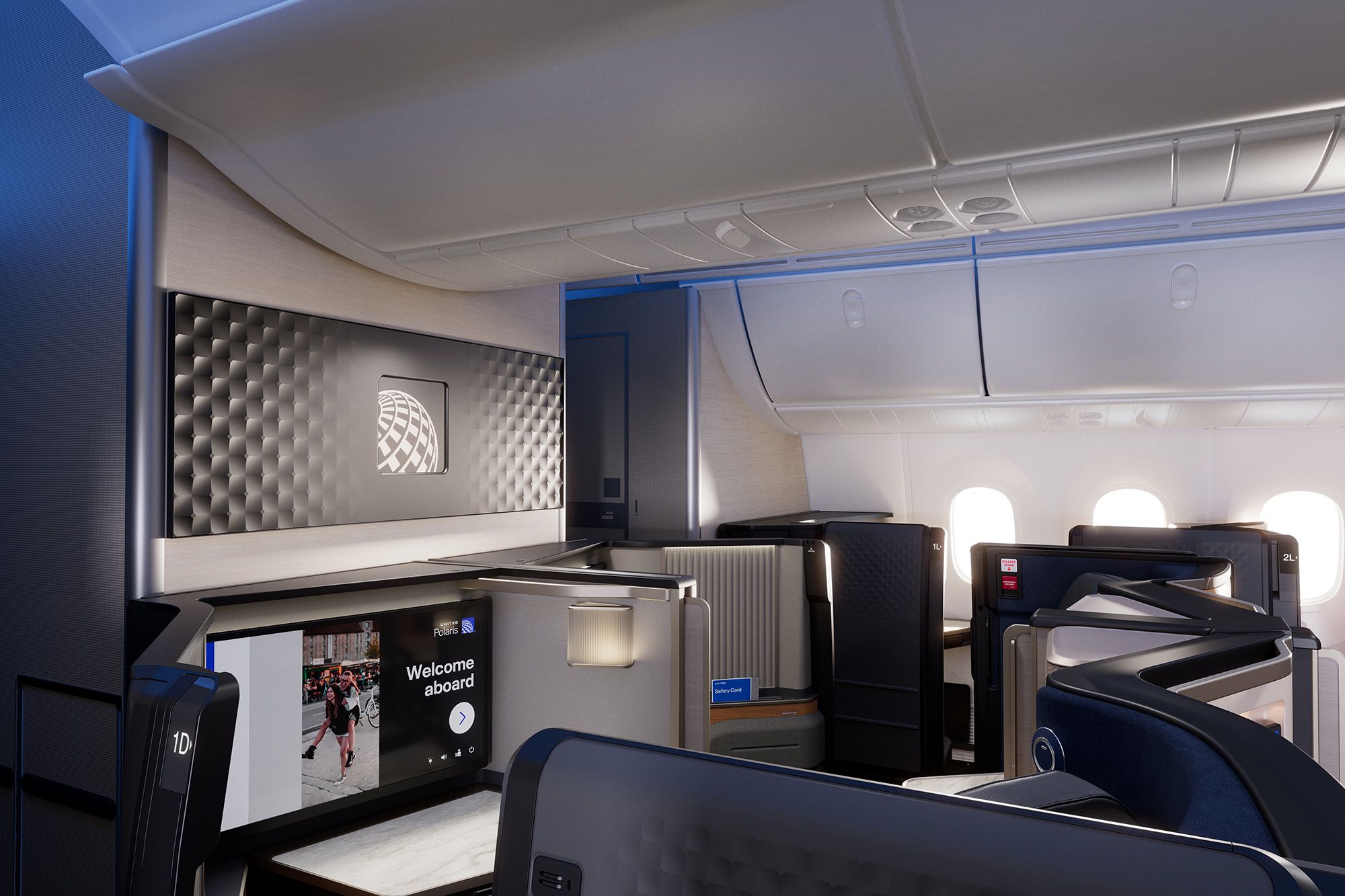
The more interesting part of United’s recovery is that its later marketing did not ask customers to accept a purely reputational reset. The company’s stronger story emerged around tangible product and operational changes: the United Next fleet renewal program, Starlink Wi-Fi, Polaris and premium-cabin expansion, and improvements in reliability and customer experience that United could package as a quality transformation.[1]
Scott Kirby’s elevation matters here, but not because a CEO change magically changes a brand. Kirby succeeded Munoz as CEO in May 2020, after having been president under Munoz and inside the company during the earlier crisis period.[5] That continuity makes the later shift more useful as a case study. It was not a simple outsider-rescues-the-brand story. The company had to build a more credible commercial argument while carrying institutional memory of the crisis.
| Recovery element | What it changed for the customer | Why it mattered for marketing |
|---|---|---|
| United Next fleet renewal | Aircraft modernization and capacity for a more consistent product | Gave the brand a future-facing investment story instead of a defensive reputation story |
| Starlink Wi-Fi rollout | Connectivity became a visible, usable in-flight experience | Turned an abstract promise of improvement into a passenger-testable claim |
| Polaris and premium cabin expansion | Higher-end cabins became part of the product-quality narrative | Allowed United to compete on experience, not only network or price |
| Reliability and customer-experience improvements | Reduced the gap between advertising and travel-day reality | Made loyalty messaging less dependent on persuasion alone |
This sequence is the part many crisis playbooks skip. They move from apology to values statement to campaign architecture. United’s stronger recovery logic moved in the opposite direction: spend money where customers can feel the difference, then let marketing carry evidence instead of aspiration.
Bospar’s analysis uses the idea of sustained corrective programming rather than a single apology campaign to describe trust rebuilding after a crisis.[6] That phrase is more useful than the usual “rebuild trust” language because it implies repetition, operating discipline, and visible correction. In an airline context, that means the brand promise has to survive the boarding process, the seat, the cabin crew handoff, the Wi-Fi login, the missed connection, and the service recovery moment after something goes wrong.
Product quality became the message because it could be inspected
Marketing can help a company recover only when the claim being marketed has become easier for customers to verify. United’s later quality narrative had that advantage. A better seat, working Wi-Fi, a refreshed cabin, and a more reliable trip are not moral abstractions. They are contact points.
That does not mean every traveler experienced the same improvement or that product investment alone proves cultural change. It does mean the marketing team had something sturdier than contrition to work with. The shift from “we are sorry” to “the experience is better” matters because the second claim is tested every day by passengers who do not care how elegant the brand platform looks in a presentation.
The Harris Poll offers one of the cleaner pieces of evidence for this mechanism. Its analysis found that United’s investment in a better in-flight experience directly lifted purchase intent among travelers.[7] That is not the same as proving that every customer returned because of one product feature. It does support the narrower, more practical point: when United made the travel experience itself more compelling, brand consideration improved.
For marketers, that distinction matters. A crisis-recovery campaign can make people aware that a company wants forgiveness. A product-led recovery strategy gives people a reason to update their expectations. The second is slower, more expensive, and less controllable than message testing. It is also harder for the audience to dismiss as spin.
The 2026 results are strong, but they are not a clean verdict
By Q2 2026, United had enough performance evidence to make its quality narrative commercially credible. CX Dive reported $17.7 billion in quarterly revenue, 16% year-over-year revenue growth, customer satisfaction up 10% year over year, Wi-Fi satisfaction more than double the industry baseline, and market share gains in every hub.[1] Those are not soft reputation anecdotes. They are business and customer-experience signals.
They still need to be handled carefully. The Q2 2026 figures are reported through company materials and CEO commentary as covered by CX Dive.[1] They are useful directional evidence, especially when read alongside third-party purchase-intent research, but they should not be treated as independent proof that the brand has permanently escaped the 2017 frame.
That caution is not academic nitpicking. Brand recovery metrics can describe different things. Revenue can rise because of demand, capacity, pricing, network strength, loyalty behavior, or some mix of all of them. Satisfaction scores can improve while some customers still remember the crisis vividly. Purchase intent can lift without guaranteeing conversion. Market share gains can coexist with reputational residue in search results, social memory, and AI-generated summaries.
United’s recovery is therefore best read as observable rehabilitation, not reputational erasure. The brand built enough operational proof to support a better story, and the market signals by Q2 2026 suggest that many customers were willing to evaluate the airline on more recent experience. But the crisis remains permanently searchable, and the 2024 cluster of safety incidents shows how quickly pattern recognition can pull the old interpretation back into view.
What the playbook actually teaches
The United case is often used as a warning about bad crisis language. It is that, but the stronger lesson is about sequencing. Communication failed in 2017 because the company’s language seemed detached from the human reality of the incident. Communication became more credible later because the company invested in operational and product changes that gave the brand something concrete to say.
For anyone studying United Airlines’ crisis communication marketing strategy, the work would not begin with “find the right message.” It would begin with a harsher audit:
- Which policy, incentive, staffing, service, or infrastructure conditions made the crisis possible or made the response unbelievable?
- Which changes can customers, employees, regulators, or partners actually observe?
- Which proof points are independently visible, and which are company-reported claims that need caveats?
- Which parts of the old narrative will remain searchable even if current performance improves?
- Where should marketing amplify proof, and where should it stay quiet until the operating reality catches up?
This is also where the frontline employee reality belongs. In most corporate crises, the people facing customers are left to operationalize policies they did not design and explain failures they did not cause. A recovery strategy that invests only in messaging leaves those employees exposed. A recovery strategy that changes tools, training, product, service standards, and escalation pathways gives them something better than a script.
United’s later brand work appears stronger because it treated the customer experience as proof. Starlink Wi-Fi, premium cabin expansion, fleet renewal, and reliability improvements were not side notes to the message; they were the conditions that made the message plausible. The marketing could then frame quality, loyalty, and experience without asking audiences to forget why the company had lost trust in the first place.
That is a more durable lesson than the familiar apology checklist. Fast empathy matters. Accountable language matters. Crisis infrastructure matters. But recovery marketing works only when the company changes the experience before asking the market to change its mind.
United’s playbook is credible because communication became the last mile of proof. It is not a final declaration that the brand is fixed. The 2017 narrative still sits in the retrieval layer of the internet, and any future safety or service pattern can reactivate it. Brand recovery, especially after a crisis this visible, is maintained through repeated evidence. It is not announced once and closed.
References
- United Airlines CEO: ‘Brand loyalty wins’ — CX Dive
- How United Airlines PR Crisis Derailed Its Reputation: A Lesson in Corporate Missteps — Everything-PR
- Social Media Case Study: United Flight 3411 — ISRM
- Public Responses to Corporate Crises Can Vary A Lot — NC State News
- United Airlines Team USA — Everything-PR
- Rebuilding Trust After a Crisis: PR Lessons from United Airlines — Bospar
- Summer Vacation Travel: United Airlines Boosts Purchase Intent With a Better In-Flight Experience — The Harris Poll

Comments
Join the discussion with an anonymous comment.