

How Topps Built a Multi-Layered World Cup Sponsorship Strategy
Topps' World Cup 2026 sponsorship strategy is a case study in multi-layered activation: naming rights to the final halftime show, in-stadium retail, exclusive collectibles licensing, and more. This article breaks down each layer and the strategic lessons for brands evaluating similar multi-touchpoint sponsorship models.
Topps put its name on the first FIFA World Cup Final halftime show before it owns the World Cup collectibles category. That is the useful tension in the Topps World Cup sponsorship marketing strategy: the loudest 2026 asset arrived five years before the company’s exclusive FIFA collectibles license begins in 2031.
The timing was unusually visible. Topps branding first appeared on LED boards during the third-place match on July 18, 2026, and Sports Business Journal reported the title sponsorship the next day.[1] The show itself gave Topps the naming position on an 11-minute World Cup Final entertainment property, produced by Global Citizen and curated by Chris Martin, with a lineup built for mass attention rather than category explanation.[1][2]
That kind of move is easy to overread. A halftime title does not prove sales impact. It does not reveal the sponsorship fee. It does not give Topps the 2026 or 2030 World Cup sticker business. What it does do is place the brand inside the most watched moment of the tournament, then let the rest of Fanatics’ rights stack make that moment less perishable.
The Sponsorship Was Built as a Stack, Not a Slot
The cleaner way to read the deal is not as “Topps bought halftime.” It is that Fanatics and Topps assembled several rights around the World Cup ecosystem, each doing a different job.
| Layer | What It Controlled | Strategic Job |
|---|---|---|
| Topps Final Halftime Show | Naming rights to the first World Cup Final halftime show | Mass cultural visibility |
| On-site retail | Fanatics-operated in-stadium and FIFA Fan Festival retail | Purchase environment control |
| Fanatics Fest press access | Official World Cup Final pre-match press conferences hosted on July 17, 2026 | Institutional proximity |
| FIFA collectibles license | Exclusive physical trading cards, stickers, trading card games, and digital collectibles from 2031 | Future category ownership |
| Product innovation | Debut patches and relic programs adapted from other sports | Proof of how the category may change after the handoff |
The value is in the sequence. A brand impression from halftime is fleeting on its own. A brand impression followed by official retail presence, press-conference proximity, a known future license, and a credible product-change story starts to look like market preparation.
Halftime Created the Shared Reference Point
The halftime show mattered because it gave Topps a simple sentence the market could remember: Topps was attached to the World Cup Final’s first halftime show. The platform also came with seven additional brand partners, including ADI Chain, Bank of America, DoorDash, Kayford Holdings, Marriott Bonvoy, Visa, and YouTube Music.[1][2]
There was also a cause platform. FIFA said the show supported the FIFA Global Citizen Education Fund, which had a $100 million target, had raised more than $60 million, and included a $1-per-ticket donation mechanism.[2] For Topps, the education fund was not the strategic center of the sponsorship, but it helped the halftime show operate as a FIFA-backed cultural platform rather than a standalone brand performance.
The important restraint is to avoid turning that visibility into a made-up return calculation. SBJ referenced Apple’s reported $50 million Super Bowl halftime benchmark, but that is a comparison point, not a disclosed Topps fee.[1] Without the price, the media value, the conversion path, and the incremental revenue, the halftime show can be evaluated as a positioning asset, not as a proven ROI machine.
Retail Made the Visibility Shoppable
Fanatics’ official on-site retail role is the less glamorous layer and one of the more practical ones. Operating all in-stadium retail and FIFA Fan Festival retail experiences means Fanatics was not only present in the broadcast-adjacent spectacle; it was also present where fans were already buying tournament goods.
That matters because sponsorship often fails in the gap between attention and action. The fan sees the brand, likes the moment, and then has no natural next step. Retail rights do not solve that entire problem, especially because Topps could not sell official 2026 World Cup collectibles under the future license. But they do give Fanatics control over the physical environments where World Cup fandom turns into transactions.
For a parent company trying to make Topps feel native to FIFA before 2031, that is useful infrastructure. The retail layer keeps Fanatics close to demand signals: what fans buy, where they queue, which venues move volume, and how tournament merchandise behaves when the event is still live.
Press Conferences Borrowed FIFA Proximity
Fanatics Fest added a different kind of asset. On July 17, 2026, it hosted the official World Cup Final pre-match press conferences, the first time those press conferences were held outside FIFA’s own venues.[1] That is not a consumer-reach asset in the same way halftime is. It is a proximity asset.
For a collectibles company preparing to inherit FIFA rights later, proximity has value. It places Fanatics in the operating rhythm of the final weekend, close to media, teams, FIFA protocols, and official tournament staging. It also lets the broader Fanatics ecosystem look less like an external vendor and more like a host inside FIFA’s commercial environment.
The 2031 License Explains the 2026 Urgency
The long-term FIFA collectibles agreement is the anchor that makes the 2026 activity coherent. FIFA and Fanatics announced an exclusive license covering physical trading cards, stickers, trading card games, and digital collectibles beginning in 2031.[3] The agreement also included a commitment of more than $150 million to distribute free collectibles to youth globally over the partnership’s lifetime.[3]
Two caveats belong in the same breath. First, Topps does not hold the 2026 or 2030 World Cup collectibles rights. Panini remains the relevant incumbent for those tournaments. Second, the “lifetime” attached to the $150 million-plus youth commitment has not been publicly defined, so the figure should not be converted into an annual marketing investment or a fixed per-year distribution plan.
Still, the commitment says something about market entry. Giving away collectibles to young fans is not a short-term monetization tactic. It is habit formation, and habit formation is exactly the problem Topps faces if it wants to shift a World Cup category that has been organized around another brand for decades.
Product Innovation Gave the Future License a Point of View
A future license is only strategically interesting if the buyer has a view on how to use it. Fanatics Collectibles CEO Mike Mahan has pointed to jersey debut patches and relic programs as examples of innovations from other sports that could inform the FIFA collectibles business.[4]
That detail is easy to miss, but it is the difference between replacing a logo on the same old product and changing the collecting proposition. Stickers have a completion logic: fill the album. Relics and patches introduce a scarcity and memorabilia logic: own a piece of a player’s moment. Those logics can coexist, but they do not create the same behavior.
Topps cannot yet prove that these formats will work for FIFA at World Cup scale. What it can do in 2026 is prepare fans, retailers, and FIFA stakeholders for the idea that the post-2031 category may not simply be a handoff from one sticker supplier to another.
Panini Is the Reason the Bridge Had to Start Early
The incumbent market is not theoretical. Panini’s 2026 World Cup album requires 980 stickers, 310 more than the 2022 album, reflecting the expansion of the tournament to 48 teams.[5] NPR reported that retailers saw sticker packets sell out within one week of release in late April 2026, with Panini America SVP Jason Howarth saying demand was running at three to five times the 2022 pace.[5]
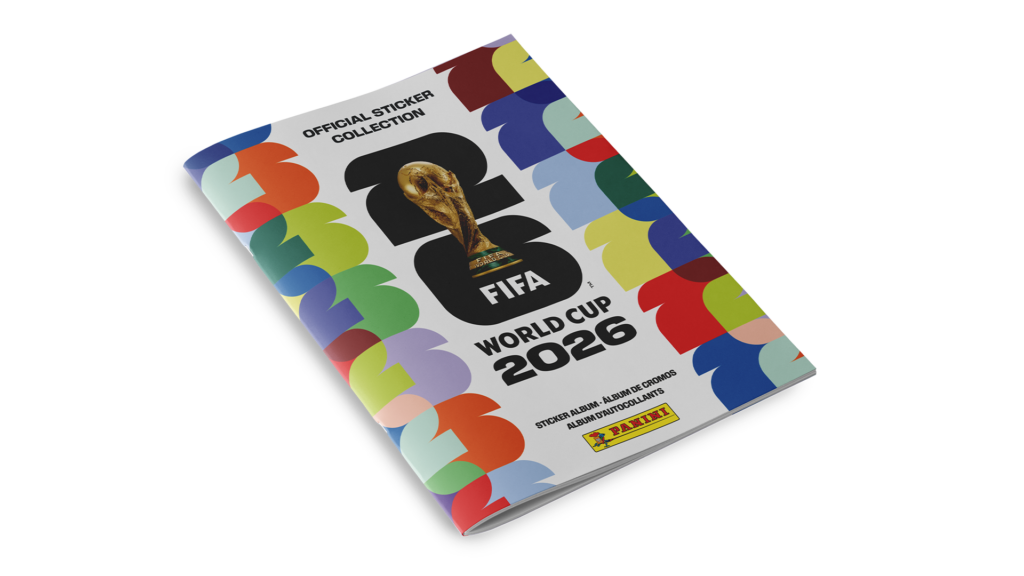
That sell-through data is company-reported, so it should not be treated as independent market measurement. Even with that limitation, the direction is hard to ignore. The World Cup sticker ritual is not a fading habit waiting politely for a new rights holder. It is active, expanding, and reinforced by the tournament’s larger team count.
This is why the 2026 Topps presence makes more sense as pre-competitive brand building than as a direct collectibles push. Topps could not credibly ask collectors to switch World Cup albums in 2026. It could, however, make the Topps name feel increasingly adjacent to FIFA before the moment when the product rights actually change.
For marketers, that is the sharper lesson. A future category win does not automatically transfer habit. If the incumbent owns the ritual, the challenger needs years of context-setting before the first official product launch.
Scale Helps, but It Does Not Prove This Sponsorship Worked
Fanatics has the scale to attempt this kind of layered build. Card Capsule reported that Fanatics Collectibles revenue reached about $1.6 billion in 2024, up from Topps’ roughly $368 million in 2020.[4] Ad Age reported that the segment was guided to exceed $3 billion in 2026.[6]
Those figures establish ambition and capacity. They do not isolate Topps’ World Cup sponsorship performance. They refer to the broader Fanatics Collectibles segment, not a FIFA-specific campaign P&L, and they cannot tell us whether the halftime title, the retail rights, or the press-conference hosting created incremental collectors.
The better evaluation question is narrower: did the portfolio create more useful World Cup adjacency than a single sponsorship asset would have created? On the available evidence, yes. The halftime show supplied the public landmark. Retail supplied transaction environments. Fanatics Fest supplied institutional presence. The 2031 license supplied the strategic reason. Product innovation supplied the future category story.
What Other Sponsors Should Take From the Topps Model
The replicable part of the Topps World Cup sponsorship marketing strategy is not “buy the biggest show you can find.” Most brands cannot, and many should not. The replicable part is the architecture: each right had a job, and the jobs were sequenced around a future commercial objective.
- Use spectacle to create a shared reference point, not as a substitute for distribution.
- Secure purchase environments when the strategy depends on converting attention into behavior.
- Build institutional proximity when the brand needs to become familiar to rights holders, media, and partners before a category handoff.
- Start habit-building before the license begins if the incumbent owns a durable consumer ritual.
- Show how the future product will be different, but do not claim adoption before the product exists.
This is also where discipline matters. A stacked sponsorship can look impressive in a deck because every layer has a logo, a date, and a stage. The real test is whether the layers remove friction from the same commercial journey. In Topps’ case, the journey runs from World Cup awareness in 2026 to FIFA collectibles behavior after 2031.
That means the 2026 campaign deserves credit for construction, not coronation. Topps and Fanatics built a strong model for multi-touchpoint sponsorship architecture. The commercial verdict starts later, when the FIFA collectibles license activates and the brand has to turn borrowed World Cup presence into owned category behavior.
References
- Topps secures title sponsorship for World Cup final halftime show, Sports Business Journal, July 19, 2026.
- First-ever FIFA World Cup™ Topps Final Halftime Show provides a creative brand platform, FIFA.
- FIFA & Fanatics press releases on the exclusive collectibles agreement, FIFA and Fanatics.
- How Fanatics' Acquisition of Topps Changed the Sports Card Hobby, Card Capsule.
- A global World Cup tradition catches fire in the U.S.: Panini sticker collecting, NPR, June 5, 2026.
- Behind the sports trading card industry's rapid growth and what's next, Ad Age.

Comments
Join the discussion with an anonymous comment.