

A 4-Step AI Marketing Framework from Sandra Bullock's Comments
Sandra Bullock's April 2026 AI comments triggered unexpected backlash. This article extracts a 4-step communication framework from her full interview and shows how marketers can acknowledge skepticism without triggering the same reaction.
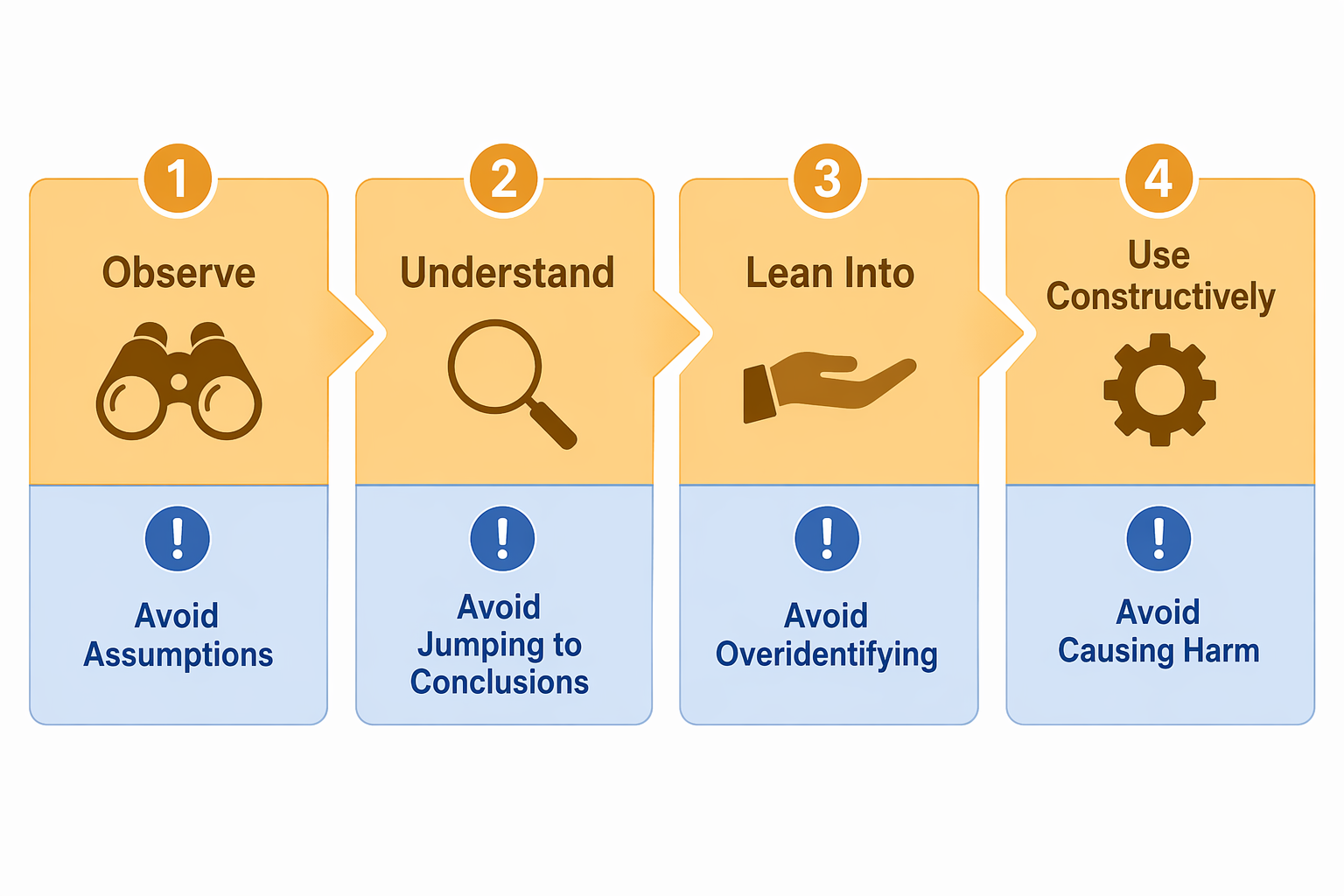
Sandra Bullock’s April 2026 AI comments became useful to marketers for the wrong reason: the short version sounded like a celebrity telling everyone to “lean into” artificial intelligence, while the full exchange was more ambivalent, more nervous, and more human than that. At CNBC’s Changemakers Summit, Bullock described a sequence for dealing with AI — “observe it, understand it, lean into it, use it constructively” — then immediately paired that openness with a warning that people will use the technology “for evil and not good.” She also joked about her own image being used, saying “there could be worse with my image.” [1]
That is the marketing angle worth taking seriously. Not because Bullock is suddenly an AI strategist, and not because celebrity backlash is a clean proxy for brand risk. The useful lesson is narrower: when an adoption-friendly phrase is separated from its caution, the audience hears salesmanship. Once that happens, clarification arrives late and sounds defensive, even when the original remark was more careful than the reaction allows.
The backlash followed the soundbite. Deadline covered the comments under the frame that Bullock encouraged Hollywood to “lean into AI,” and AOL later reported that critics accused her of “promoting” AI and selling out; Bullock’s representative clarified that she “did not praise AI.” [2][3] That representative may have been right on the substance. But reputationally, the damage had already found its simplest shape: famous person, business summit, AI optimism, audience distrust.
What the full comment actually contained
The full CNBC exchange matters because Bullock was not delivering a polished product pitch. Her language was relational and improvisational. She talked about making AI “our friend,” but the phrase sat inside a larger answer about uncertainty, misuse, and the need to figure out what the technology can and cannot do. The adoption sequence was not a clean corporate mandate. It was closer to: we have to look at this thing, learn what it is, engage with it carefully, and use it in a way that does not become destructive. [1]
That distinction is easy to lose because “lean into AI” is a much better headline than “observe, understand, lean in, use constructively while acknowledging that some people will use it for harm.” The shorter version travels faster. It also strips out the part that would have told skeptical listeners they were not being mocked for worrying.
For a marketing team, this is the familiar failure mode. A nuanced executive answer becomes a social post. A pilot program becomes an “AI transformation.” A workflow change that will alter jobs is announced as an efficiency win before anyone names whose work is changing, what will be protected, or what the company will refuse to automate. The audience does not need to prove bad faith to feel managed. They only need to notice that the risk was edited out.
Bullock’s delivery also had a setting problem. “Make it our friend” can work in a conversational interview because it signals uncertainty without sounding technical. In a business summit context, however, a room trained to listen for operational evidence may hear the same phrase as soft persuasion. That is not a moral failure. It is a register mismatch. The words felt relational; the room expected a clearer account of governance, incentives, and consequences.
Pam Abdy, Warner Bros. Motion Picture Group co-chair and CEO, offered the cleaner executive register in the same CNBC session by framing AI as “a tool for storytellers.” [1] That phrase does less emotional work than “friend,” but it does more operational work. It positions the technology as subordinate to a human function. For stakeholder communications, especially in B2B or internal leadership settings, that kind of language usually gives people more to evaluate.
The four-step framework only works if the warning stays attached
The strongest way to use Bullock’s comment is not to copy her phrasing. It is to preserve the structure underneath it. Each adoption step needs its own risk acknowledgment. Without that pairing, the sequence turns into a motivational slide. With it, the same sequence becomes a more credible communication pattern for an internal memo, customer announcement, webinar, or leadership presentation.
| Adoption step | What marketers should say | Risk acknowledgment that must travel with it |
|---|---|---|
| Observe | We are watching where AI changes the workflow, the customer experience, and the cost of production. | We do not yet know every effect, and we will not treat uncertainty as resistance. |
| Understand | We are mapping what the tool does, who uses it, what data it touches, and where human review remains necessary. | Some people, roles, creators, customers, or communities may be more exposed to risk than others. |
| Lean into | We will test the use cases that remove drudge work or improve service without pretending every use is acceptable. | Adoption requires limits, consent where relevant, safeguards, and a visible escalation path. |
| Use constructively | We will define the tasks AI can support and the outcomes it must not be allowed to distort. | Constructive use excludes deception, replacement disguised as empowerment, undisclosed synthetic content where disclosure is expected, and uses that shift harm onto people with less power. |
Observe does not mean stop resisting
“Observe” is often where AI communication starts to go wrong. In too many rollouts, observation is framed as the polite waiting room before acceptance: look around, notice everyone else is moving, and prepare to catch up. That is not observation. That is pressure with softer lighting.
A better version names what is being watched. Which tasks are becoming faster? Which steps now require more review because the output is plausible but unreliable? Which employees are being asked to train or correct systems without that labor being recognized? Which customer-facing moments now include synthetic text, imagery, recommendations, or routing? The word “observe” earns trust only when it points to visible changes rather than asking people to suspend judgment.
Understand means naming who is exposed
“Understand” should not be reduced to tool training. Training tells people which button to click. Understanding tells them what the tool changes, who carries the risk, and who has authority to challenge the output. In AI messaging, that difference is not cosmetic. It is the difference between asking for compliance and inviting informed participation.
For a marketing manager, that might mean saying: this tool can draft first-pass subject lines, but the lifecycle team still owns claims review; this tool can summarize customer feedback, but research will validate themes before product decisions; this tool can generate image concepts, but legal and creative leads will review rights, likeness, and disclosure questions before anything ships. None of those sentences make the rollout less ambitious. They make the responsibility structure legible.
Lean into needs limits before it asks for energy
“Lean into” is the phrase most likely to trigger suspicion because it sounds like enthusiasm has already been decided. If employees or customers are still trying to understand the tradeoff, being told to lean in can feel like being told the debate is over. That is exactly why Bullock’s warning matters. Her adoption language came with the acknowledgment that people will use AI badly. [1]
Brands need the same pairing. If the message is “we’re leaning into AI-assisted customer support,” the next sentence should say what will not be handed to the system. If the message is “we’re leaning into AI-generated creative exploration,” the next sentence should say how consent, attribution, likeness, and human approval will be handled. If the message is “we’re leaning into AI for productivity,” the next sentence should say whether productivity gains are being used to improve work or simply compress headcount expectations. Messaging cannot solve the underlying labor question, but it should not hide it.
Use constructively has to exclude something
“Use constructively” sounds reassuring until it becomes undefined. Every AI announcement claims constructive intent. The useful question is what the organization is willing to rule out. Without exclusions, “constructive” becomes a mood rather than a standard.
A constructive-use statement should be specific enough to disappoint someone. It might exclude undisclosed synthetic testimonials. It might exclude generating a creator’s style for commercial use without permission. It might exclude using AI scoring to deny service without human appeal. It might exclude replacing expert review in regulated or high-stakes contexts. The exact boundaries depend on the business, but the communication principle does not: adoption language becomes more credible when it admits there are uses the company will not pursue.
Why accurate AI data can still fail as a message
Reese Witherspoon’s April 2026 AI comments sharpen the same lesson from another direction. Her case is not a simple example of bad information. Coverage reported that she cited legitimate research, including International Labour Organization data indicating that 9.6% of women’s jobs were at high risk of automation compared with 3.5% of men’s jobs, and a Harvard-linked meta-analysis of 143,000 people across 25 countries showing 25% lower AI adoption among women. [4][5]
Those numbers are not trivial. They point to a real gendered exposure problem and a real adoption gap. The communication failure was not that the data was inherently unserious. It was that the surrounding frame — learn AI, keep up, do not be left behind — landed as pressure. Authors, fans, and other public figures pushed back because the message sounded less like solidarity with women facing automation risk and more like another powerful person turning anxiety into an upskilling mandate. [4][5]
That should make marketers uncomfortable in a useful way. Evidence does not automatically create permission. A statistic can be accurate and still be heard as a threat if the messenger skips the emotional reality of the audience. When people are worried about job loss, creative appropriation, surveillance, or degraded work, “the data says you should adopt faster” can sound like the institution has already chosen efficiency over them.
The fix is not to abandon data. It is to stop making data carry the whole emotional burden of the message. If the fact is “some groups may be more exposed,” the next move should be protection, not panic. Who gets training during paid time? Who gets a say in where the tool is used? Who reviews the impact on roles? What will leadership not automate? Without those answers, urgency starts to feel like a transfer of responsibility from the organization to the individual.
The skeptical message often sounds more human
Dionne Warwick’s response worked because it did not sound like a policy memo. Entertainment Weekly reported that she mocked AI advocates by pointing to fake Facebook stories about her own life: “On Facebook I have been to the hospital, the World Cup...” [6] The line is funny because it is specific. It does not ask the audience to understand model risk, synthetic media, or platform incentives. It says: you have seen this nonsense happen to a real person.
That is how skepticism travels. It moves through examples people recognize, jokes that relieve tension, and stories that make the risk concrete. Pro-AI messaging often loses that contest because it reaches for abstractions: innovation, transformation, productivity, competitiveness. Those words may be true inside a strategy deck. They rarely feel as true as a person saying the internet keeps inventing hospital visits for her.
This is also where Bullock’s self-deprecation mattered. Her joke about her own image did more to acknowledge the weirdness of AI than a polished reassurance would have done. It told the audience she understood she was not outside the risk. Brands can learn from that without trying to imitate celebrity charm. The transferable move is not the joke itself. It is the willingness to locate the concern in a lived example before asking people to accept a broader point.
Choose the register before choosing the slogan
The same AI message should not sound identical in every room. A customer-facing brand campaign can use warmer language if it also shows the boundary. An internal memo about workflow automation needs less inspiration and more accountability. A leadership presentation can talk about productivity, but it should also show the governance model. A creator or partner announcement should address consent, attribution, and compensation before celebrating speed.
Bullock’s “friend” language may have been natural to her conversational style, but marketers should be careful before borrowing it. In some contexts, personifying AI softens the topic. In others, it sounds like an attempt to make a power shift feel cuddly. Abdy’s “tool for storytellers” framing is less emotionally generous, but it gives stakeholders a more useful hierarchy: human purpose first, tool second. [1]
A practical test helps here: if the audience has something material at stake, use operational language before emotional language. Tell them what changes, what does not change, who decides, who reviews, and what happens when the system is wrong. Warmth can follow clarity. It cannot replace it.
A usable standard for AI adoption messaging
The safer lesson from Bullock’s comments is not “be more charming about AI.” Charm did not protect the soundbite. The better lesson is to keep the dual message intact. If a brand says “observe,” it should admit uncertainty. If it says “understand,” it should name who is exposed. If it says “lean into,” it should state the limits and safeguards. If it says “use constructively,” it should define what constructive use excludes.
That standard will not answer every serious objection to AI. It will not settle copyright fights, labor displacement, consent, bias, surveillance, or industry power. Messaging is not a substitute for policy. But poor messaging can make all of those concerns worse by making the audience feel the organization noticed the upside and hoped nobody would mention the cost.
Borrow only the optimistic half of Bullock’s language and the brand inherits the suspicion that attached to the soundbite. Pair each adoption claim with a real risk acknowledgment, use a register suited to the room, and leave room for uncertainty. Responsible AI messaging is not softer hype. It is adoption language with the warning left in.
References
- Academy Award-Winning Actress-Producer Sandra Bullock and Warner Bros. Motion Picture Group Co-Chair/CEO Pam Abdy at CNBC Changemakers Summit, CNBC, April 16, 2026
- Sandra Bullock Encourages Hollywood To Lean Into AI, Deadline, April 2026
- Sell out? Sandra Bullock blasted for promoting AI, AOL
- Reese Witherspoon AI Jobs Women, Variety, 2026
- Reese Witherspoon Authors Book Club Learn AI, Los Angeles Times
- Dionne Warwick mocks AI advocates, Entertainment Weekly

Comments
Join the discussion with an anonymous comment.