
The Four Layers of Sam's Club's Mystery Cake Pops Strategy
Sam's Club turned a $17.74 box of mystery cake pops into a national earned media event within days. This article breaks down the four-layer participation retail strategy — product design as social object, creator flywheel, co-creation community, and clean-ingredient trust — that content marketers can adapt for their own brand launches.
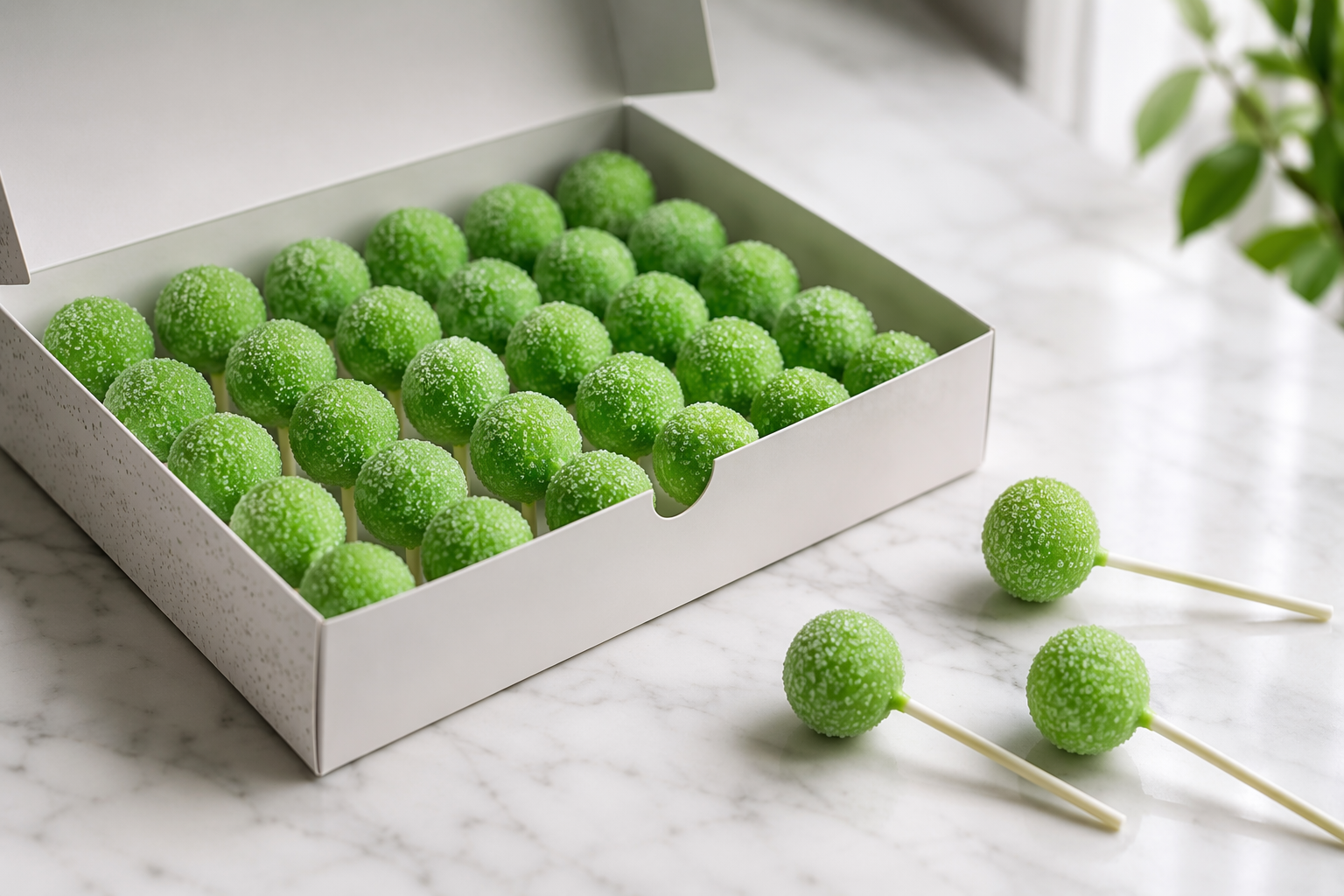
The Sam's Club mystery cake pops marketing strategy starts with a very practical retail object: a 14-count box of bright green cake pops priced at $17.74, each pop coated in sour sugar and hiding one of three possible flavors: pineapple, blue raspberry, or dill pickle. The product page also frames the value comparison plainly: about $0.80 per pop versus $3.25 for a Starbucks cake pop. [1]
That is doing more work than a novelty description. The identical green exterior means the buyer cannot know what they have until someone bites in. The sour sugar gives the product a visual texture for camera close-ups. The three flavors give the shopper a reveal. The dill pickle option gives everyone else a reason to care.
Within roughly five days of the first visible Instagram wave, national lifestyle and food outlets were covering the item, and the coverage kept returning to the same hook: the possibility that a sweet-looking cake pop might taste like dill pickle. Parade called the new cake pops a mystery dividing patrons; Southern Living said shoppers were buzzing; AllRecipes framed the drop as a jaw-dropping version of a fan-favorite bakery item; Yahoo Lifestyle and The Takeout also led with the shopper debate around the mystery flavor. [2][3][4][5][6]
It is tempting to file this under “weird product goes viral.” That misses the useful part. Weirdness helped, but the launch worked because the product gave ordinary members a simple content job: buy the box, bite the cake pop, reveal the flavor, compare the price, and react without needing a script.
The product was built as a filming prompt
Most branded “share this” prompts make the customer do too much labor. They ask for enthusiasm, invention, editing, or some awkward declaration of affinity. The Mystery Cake Pops ask for almost none of that. The product itself supplies the scene.
A creator does not need to explain a brand story before the video makes sense. They can show the box, point out that every pop looks the same, name the possible flavors, and take a bite. The uncertainty is visible before the payoff. The moment of consumption is also the moment of content.
The identical exterior matters here. If the pineapple, blue raspberry, and dill pickle versions looked different, the product would still be playful, but the social mechanic would be weaker. The shopper could sort the flavors before recording. The mystery would become packaging copy rather than behavior. By making the pops visually identical, Sam's Club turned each box into a small probability game.
The dill pickle flavor is the sharper editorial choice. “Mystery dessert” is a broad hook. “You might bite into a green cake pop and get dill pickle” is a headline. It gives journalists a concrete detail, creators a reaction setup, and commenters a binary argument they can join without having tried the product. Pineapple and blue raspberry make the box plausible as a sweet bakery item. Dill pickle makes it newsworthy.
The price adds a second content angle. A $17.74 box of 14 cake pops is not just a checkout detail; it is a comparison engine. The product page's $0.80-per-pop framing against a $3.25 Starbucks cake pop gives creators a ready-made value line before the first bite. [1]
That matters because taste reactions alone are fragile. They can be funny, but they burn out quickly. Price lets a creator make a different kind of post: the “look what I found” bargain post, the warehouse-club value post, the family-snack math post, or the “would you risk dill pickle for this price?” post. One bakery SKU becomes several formats without the brand having to brief each one.
| Product choice | Content behavior it encourages |
|---|---|
| Identical green exterior | The shopper has to reveal the flavor on camera or in conversation. |
| Three possible flavors | The post has a simple premise that viewers understand immediately. |
| Dill pickle option | The product earns a sharper hook than “new dessert.” |
| $17.74 box / $0.80 per pop comparison | Creators can talk about value, not only shock or taste. |
The first spark was not a corporate post
The visible wave began with an independent Instagram account, @samsclubmembers, which had 473,000 followers and posted a taste-test reel around the product. That distinction is important. This was not, based on the available sources, a case where the corporate account simply pushed a stunt and the internet obeyed. [7][8]
An independent fan account changes the texture of the launch. The account can speak like a member rather than an announcement channel. It can frame the product as a find, not an asset. The taste test can look like participation instead of distribution.
That does not mean Sam's Club had no system behind the moment. Chief Marketer reported that Sam's Club launched a creator program open to all members regardless of follower count, with uncapped commissions; Sam's Club EVP and chief growth officer Diana Marshall also said the company was aiming for 25x growth in creator platform participants in 2026. [7]
P2PI described the program as part of a broader customer-loyalty rethink through the creator economy, with members positioned not only as shoppers but as product advocates and content distributors. [8]
That is the cleaner lesson for marketers. You do not need to claim full control over the first viral post to recognize the infrastructure that made participation easier. A mystery product gives members something to film. A creator program lowers the barrier to treating that film as part of a repeatable behavior. An independent fan account can start the visible wave, while the brand's broader participation system gives more members a reason to keep making and sharing content.
This is also why member-created content carries a different kind of trust signal than a polished campaign asset. Signal & Convert has covered the broader discomfort around synthetic brand messaging in AI-generated marketing and the trust gap; the Sam's Club case sits on the other side of that problem. The content is not persuasive because it is perfectly messaged. It is persuasive because the shopper's uncertainty is real enough to watch.
The community layer made participation normal before launch
The cake pops would be easier to dismiss as a one-off social gimmick if Sam's Club had not already built a member-participation habit around Member's Mark. The Member's Mark Community had grown to more than 150,000 participants by May 2026, up from 50,000 in roughly two years, and Sam's Club said participants had completed almost half a million activities to date. [9]
Business Insider reported that the community includes 15,000 highly active monthly members and that members have been involved in flavor voting and prototype testing. Sam's Club Chief Merchant Myron Frazier said the community can provide statistically significant feedback within four hours. [10]
Those numbers do not prove that the Mystery Cake Pops sold through, lifted membership, or changed long-term loyalty. They do show something more operationally useful: Sam's Club had already trained a meaningful group of members to treat product development as participatory. When a strange bakery item arrives, the brand is not asking a cold audience to suddenly behave like collaborators.
For a content team, that changes the launch brief. The question is no longer only “What assets do we need?” It becomes “Which member behaviors already exist, and what product detail will let those behaviors show up publicly?” Voting, tasting, comparing, testing, and reacting are all easier to activate when the audience has practiced them before.
The clean-ingredient claim kept the stunt from feeling disposable
A box of neon-green mystery cake pops has an obvious vulnerability. It can read as junk-food theater: engineered for clicks, built for a week of reactions, and not particularly connected to the private-label promise around quality.
Sam's Club had a backstop for that objection. The product page says the Mystery Cake Pops are “Made without artificial colors, flavors, or preservatives.” [1] That claim connects to a larger Member's Mark milestone announced in January 2026, when Sam's Club said it had removed more than 40 ingredients from all Member's Mark food and beverage items as part of its 100% “Made Without” standard. [11]
This does not turn the product into a health campaign, and it should not be stretched into one. The point is narrower: the clean-ingredient signal makes the oddity easier to accept inside the Member's Mark system. The cake pops can be playful without asking the shopper to ignore the quality language Sam's Club has been building around its private label.
What the case proves—and what it does not
As of July 21, 2026, the strongest supported conclusion is about earned media and user-generated content mechanics, not business outcome. The launch had already moved from a member-facing product find into national lifestyle and food coverage within days, and the coverage was unusually consistent in the hook it chose: the dill pickle mystery. [2][3][4][5][6]
The available sources do not provide sales volume, conversion rate, total impressions, retention impact, creator payout levels, or incremental membership data tied to the cake pops. Sam's Club also does not publicly disclose membership totals or creator commission percentages in the available materials. Anyone calling this a proven sales win is moving faster than the evidence.
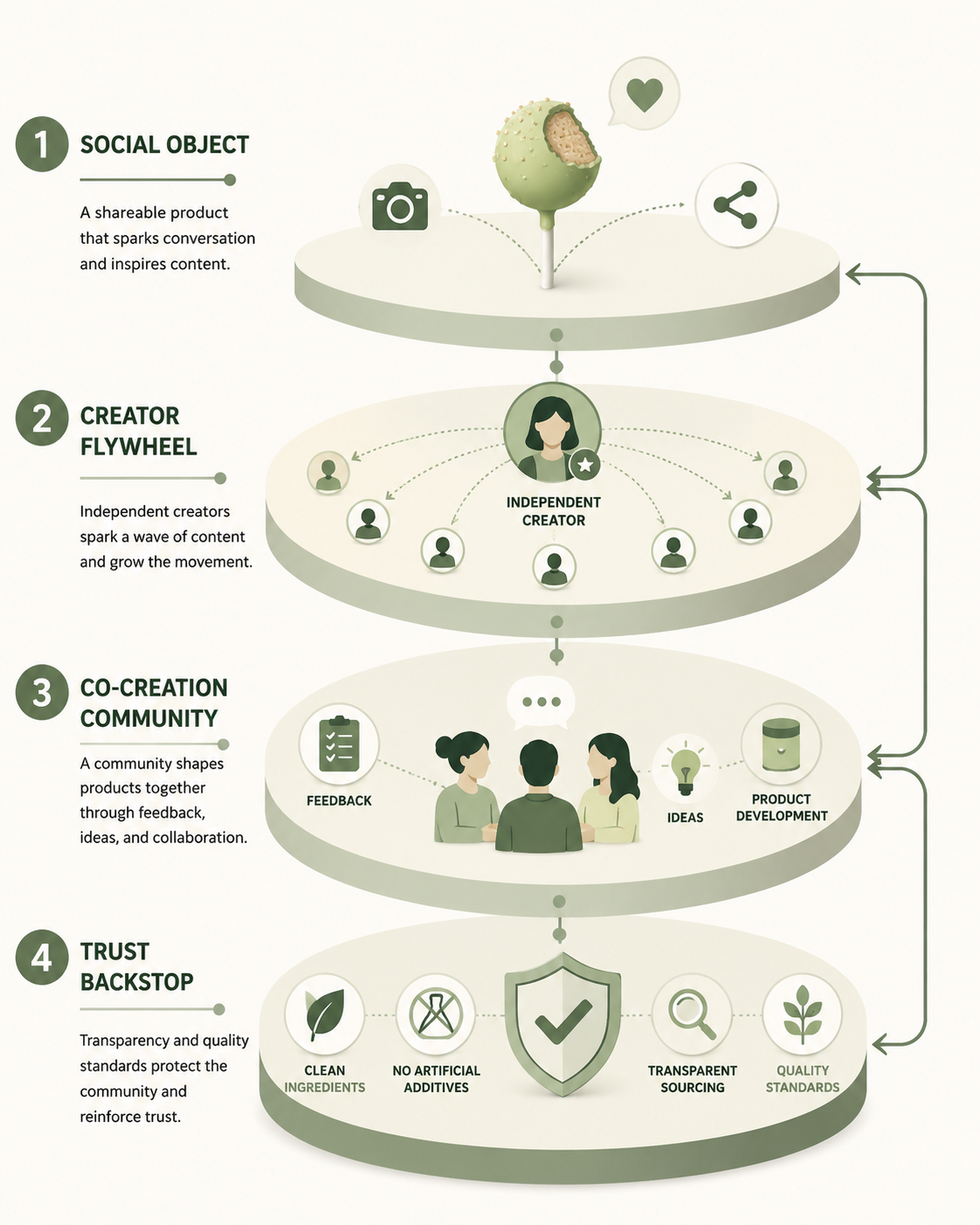
Still, for content marketers, the mechanism is unusually clean. The product created uncertainty. The flavor set created conflict. The price created a comparison. The creator ecosystem lowered the friction of participation. The Member's Mark Community made co-creation feel like an existing member behavior rather than a sudden campaign ask. The clean-ingredient claim gave the stunt a quality anchor.
That is a more useful model than “make something weird.” Before asking people to post, test the launch against four questions: does the product give them something uncertain to reveal, something concrete to compare, a community reason to care, and a trust signal that keeps the stunt from feeling disposable?
References
- Member's Mark Mystery Cake Pops, 14 ct. — Sam's Club
- Sam's Club's New Cake Pops Are a Sweet Mystery, Dividing Patrons — Parade
- Sam's Club Shoppers Are Buzzing About This Mystery Dessert — Southern Living
- Sam's Club Just Dropped a Jaw-Dropping Version of a Fan-Favorite Bakery Item — AllRecipes
- Sam's Club Mystery Cake Pops Mystery Flavor Has Shoppers Totally Divided — Yahoo Lifestyle
- This Sam's Club Mystery Dessert Has Adventurous Shoppers Running To The Bakery — The Takeout
- Sam's Club Taps Its Members For New Influencer Program — Chief Marketer
- How Sam's Club Is Rethinking Customer Loyalty Through the Creator Economy — P2PI
- Member's Mark Community Surges to Over 150,000 Participants — Sam's Club corporate, May 28, 2026
- Sam's Club Has Growing Army of Fans Helping in Race Against Costco — Business Insider
- Sam's Club Reaches 100% 'Made Without' Milestone — Sam's Club corporate, January 12, 2026

Comments
Join the discussion with an anonymous comment.