
How Mystery Cake Pops Sparked a Viral Social Media Frenzy
Sam's Club Mystery Cake Pops went viral within days of launch. This article breaks down the structural mechanics behind that success — including the deliberate use of a divisive flavor — and shows how social media marketers can use AI trend analysis tools to apply the same surprise marketing principles to their own brands.
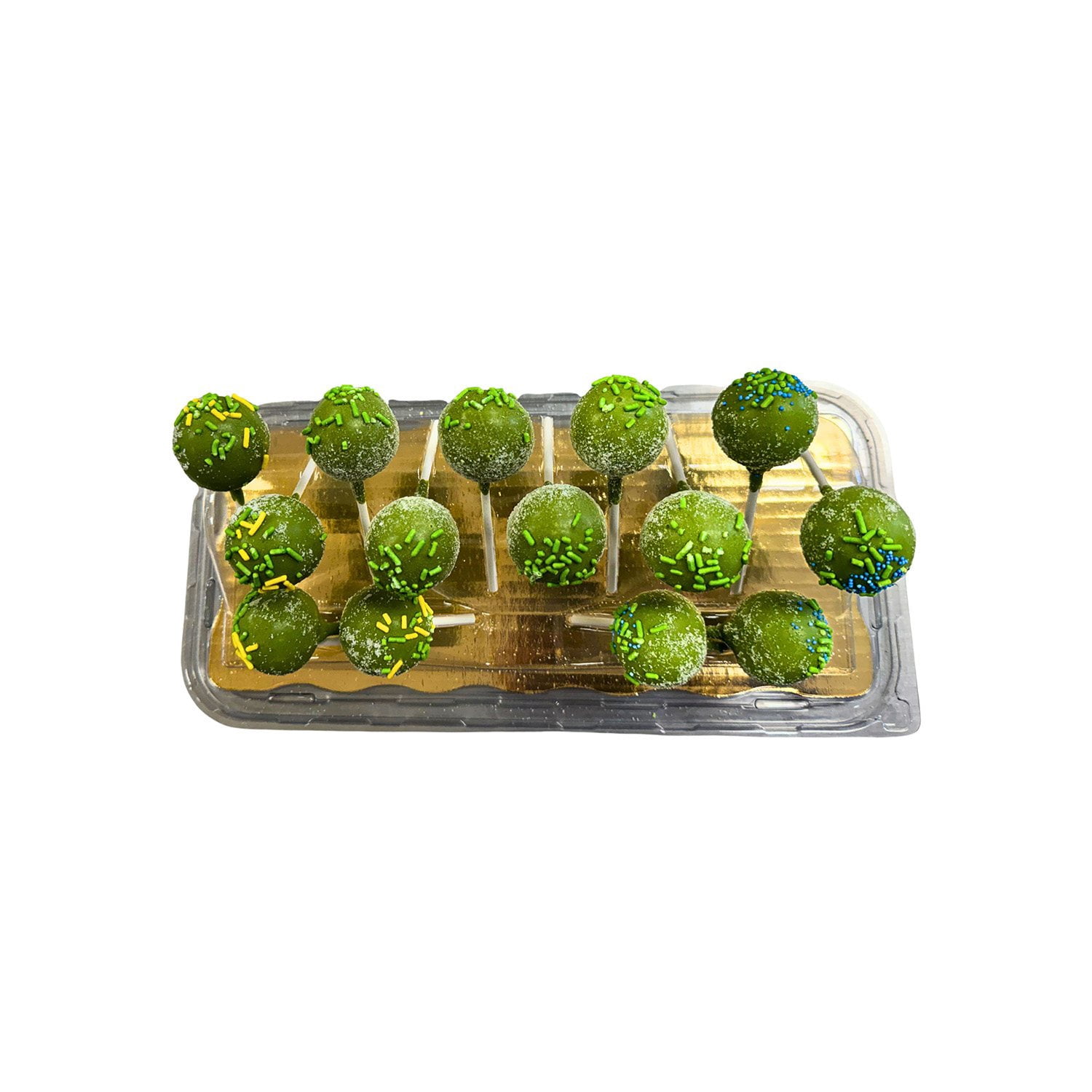
The smartest part of Sam’s Club’s Mystery Cake Pops was visible before anyone took a bite: every pop looked the same.
The Member’s Mark box held 14 cake pops for $17.74, or about $1.27 each, and the mid-July 2026 launch gave shoppers three possible flavors: pineapple, blue raspberry, and dill pickle. Under the identical green coating, there was no visual cue telling a shopper which one they had picked up.[1]
That is the whole social mechanic in miniature. The product did not ask people to admire a novelty flavor from a distance. It asked them to participate in a small uncertainty: pick one, bite it, react, and then make everyone else at the table wonder whether they were next.
For social teams studying the Mystery Cake Pops, the useful lesson is not “make something weird.” Plenty of weird products die quietly. The useful lesson is that Sam’s Club built a format where the weirdness had a job. Pineapple and blue raspberry made the box feel playful and plausible. Dill pickle gave it friction.
The pickle did the strategic work
If all three flavors had been broadly pleasant, the mystery would have been thinner. People might still have posted a few taste tests, but the stakes would collapse into simple flavor preference. Pineapple or blue raspberry? Cute. Sweet or sweeter? Fine. Dill pickle changes the emotional math.
Early coverage framed the product around division almost immediately. Woman’s World described the flavor as “dividing shoppers,” while The Takeout positioned the dessert as something adventurous shoppers were running to the bakery to try.[1][2] Parade similarly described the new Member’s Mark cake pops as a “sweet mystery” that was dividing patrons, and Allrecipes called the drop a jaw-dropping version of a fan-favorite bakery item.[3][4]
That coverage matters less as proof of scale than as a read on the hook. Within the first week, the public story was not “Sam’s Club has cake pops.” It was “Sam’s Club may make you eat a dill pickle cake pop without warning.” That is a sharper reason to post.
A divisive anchor gives people several easy roles to play. One shopper becomes the brave taster. Another refuses. Someone else insists pickle desserts could work. A friend films the reaction before the bite. Comments split into “genius” and “gross.” None of these behaviors require a polished brand challenge, a creator contract, or a complicated hashtag mechanic. The product itself creates the scene.
This is where marketers often flatten the case after the fact. They see the strange flavor and call it the campaign. But the pickle alone was not enough. A clearly labeled dill pickle cake pop would still be a novelty; it would be easier to avoid, easier to judge without tasting, and easier to reduce to a screenshot. The identical green coating forced the pickle into the experience rather than leaving it as a label.
That difference is crucial. The coating turned flavor into suspense. The box turned suspense into a group activity. The low unit cost made the activity feel safe enough to try. And the divisive flavor made the result worth reporting back to other people.
The format also gave creators and ordinary shoppers a clean content structure without asking them to invent one. Show the box. Explain the three flavors. Choose a pop. Guess. Bite. React. Reveal or argue. For short-form video, that is a tidy arc: setup, tension, payoff. For comments, it leaves a simple opening: would you try it?
It is tempting to call that virality, full stop. The more careful read is that Sam’s Club appears to have created strong early conditions for user-generated content and debate. We do not yet have Sam’s Club sales data, internal engagement metrics, repeat purchase behavior, or long-term sentiment. The product launched roughly a week before this analysis, so the evidence is still early and mostly drawn from third-party media coverage and visible shopper reaction formats.
Why the mystery format maps cleanly to PIEL
A useful way to inspect the cake pops is the PIEL framework from Lim, Lim, and Thaichon’s 2026 Psychology & Marketing article on surprise marketing. The framework identifies four conditions: probabilistic, intentional, exclusive, and low-stake.[5] It was not written as a Sam’s Club case study, and it does not prove the cake pops caused a specific level of engagement. But it gives working marketers a better checklist than “be unexpected.”
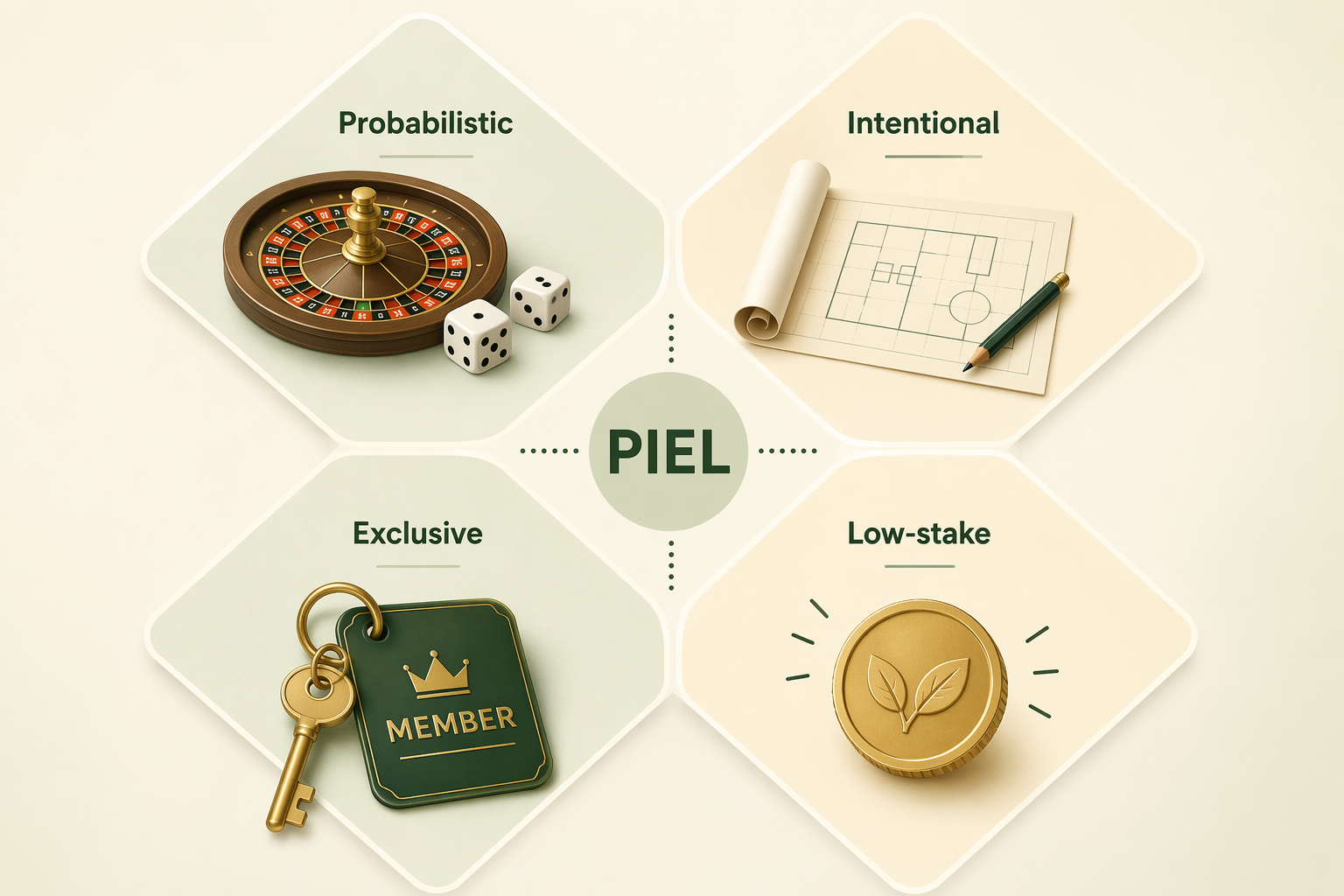
| PIEL condition | How it showed up in the Mystery Cake Pops |
|---|---|
| Probabilistic | A shopper knew there were three possible flavors but could not know which one they had selected before biting. |
| Intentional | The identical green coating and inclusion of dill pickle made the surprise feel designed rather than accidental. |
| Exclusive | The product was sold as a Member’s Mark Sam’s Club item, giving the moment a retailer-specific membership context. |
| Low-stake | At $17.74 for 14 pops, the cost came to about $1.27 per pop, keeping the risk small enough for playful trial.[1] |
Probabilistic: flavor roulette with known boundaries
The product did not create total uncertainty. It created bounded uncertainty. Shoppers were not wondering whether the item was edible, unsafe, or mislabeled. They knew the three possible outcomes: pineapple, blue raspberry, or dill pickle.[1] That boundary is what made the game socially playable.
Good mystery mechanics usually need that kind of container. If the range is too predictable, nobody cares. If the range feels too open, people start to suspect the brand is being careless. Here, the flavor roulette was narrow enough to explain in one sentence and odd enough to sustain a reaction.
Intentional: the surprise was engineered into the product
The identical green coating is doing more than aesthetic work. It removes the shopper’s ability to sort the box visually. Without that decision, the product creates a repeatable guessing moment every time someone reaches for a pop.
That matters because surprise marketing fails when the surprise feels incidental. If shoppers can look closely and solve the mystery before participating, the mechanic weakens. If the surprise seems like a production mistake, trust weakens. Sam’s Club’s format sat in a cleaner middle: the mystery was obvious, packaged, and intentional.
Exclusive: Member’s Mark made it a Sam’s Club-specific moment
The Member’s Mark branding gave the cake pops a specific retail home. That is not the same as true scarcity, and without Sam’s Club distribution data it would be sloppy to claim exclusivity drove the reaction by itself. But the membership retail context still changes how the product travels socially. It lets shoppers post the find as a club discovery rather than a generic snack sighting.
For social teams, that distinction is useful. People like sharing products that make them look early, observant, or in on the joke. A retailer-owned item gives them a place-based discovery to report: this is what I found at Sam’s Club.
Low-stake: the bite was cheap enough to risk
The per-pop economics helped. A 14-count box at $17.74 brings the individual pop to about $1.27.[1] A shopper might not gamble on a full-size dessert if one of the outcomes is dill pickle. A single bite-sized cake pop is different.
Low-stake risk is not just about price. It is about reversibility. If the pickle pop is terrible, the cost is a laugh, a grimace, and maybe one unfinished bite. That is exactly the sort of consequence people are willing to experience publicly.
The 2026 attention environment rewards small, debatable scenes
The Mystery Cake Pops landed in a social environment already trained to reward short arcs of tension and release. Hootsuite’s 2026 Social Media Trends report identifies “micro-drama” and “chaos culture” as attention drivers, and Deloitte projects $7.8 billion in micro-drama content revenue for 2026, according to the same trend context.[6]
A pickle cake pop is not high drama. That is the point. It borrows the structure of conflict without importing real reputational danger. Someone is about to get the bad one. Someone thinks the bad one might be good. Someone wants to see the face they make. The entire conflict can begin and end in a few seconds.
Research on polarizing personalities in influencer marketing also supports the broader principle that polarization can increase engagement and purchase intention.[7] That study is about influencers, not cake pops, so the application should stay modest. The transferable idea is that disagreement can be an engine, especially when the disagreement gives people a socially acceptable reason to comment.
The safer creative brief is not “choose a flavor everyone will love.” It is “choose a tension people will enjoy disagreeing about.” That could be flavor, texture, packaging, color, order of use, naming, or reveal format. The tension has to belong to the category. A pickle note in a playful bakery item can read as ridiculous fun. The same level of surprise in a product where customers expect precision or trust could read as disrespect.
Where AI helps, and where it cannot
AI tools enter this case after the human mechanism is clear. They are not magic virality machines. Their practical use is narrower and more valuable: identify candidate tensions, test whether the audience already has language for them, and monitor whether early reactions are playful or souring.
Tastewise, for example, offers food trend data and analytics around cake pops and broader food signals.[8] A food or retail team could use that kind of tool before launch to compare possible mystery directions: nostalgic candy flavors, sour profiles, savory-sweet combinations, regional flavors, or color-based misdirection. The output should not be treated as a prediction that a specific product will go viral. It is a way to reduce blind guessing before the product brief hardens.
Talkwalker and Brandwatch fit a different part of the process: social listening, sentiment analysis, and early trend detection. Used well, they can help a team see whether people are joking, recoiling, buying, remixing, or accusing the brand of trying too hard. That distinction matters in the first hours of a mystery drop because the same volume of comments can mean very different things.
A practical prelaunch process might look like this:
- Use food trend tools to build a short list of plausible surprise elements already connected to audience behavior, not just internal brainstorming.
- Check social listening data for existing language around those elements: disgust, nostalgia, dares, fandom, regional pride, or fatigue.
- Separate polarizing from merely disliked. A useful divisive feature has defenders.
- Prototype the reveal mechanic, not only the flavor or product feature. Ask what the shopper can film in the first five seconds.
- Monitor early reaction for tone shifts. Playful disagreement is useful; perceived deception needs a fast correction.
Predictive analytics can also help compare concepts before launch, but the marketer still has to make a judgment call. A model might surface rising interest in a flavor combination or detect that a phrase is gaining traction. It cannot guarantee that shoppers will understand the game, that the product will taste acceptable, or that the reveal will feel fair.
The biggest avoidable mistake is using AI to find the loudest possible irritant. Loud is not the same as usable. Sam’s Club’s pickle flavor worked as a load-bearing irritant because the product remained small, safe, and unserious. A brand selling baby food, supplements, financial products, or anything tied to health and trust would need a different kind of surprise entirely.
What other brands can actually borrow
The copyable part is the structure, not the pickle. A brand needs a bounded mystery, a reveal people can perform publicly, and one element strong enough to create disagreement without making customers feel punished.
For a snack brand, that might be a mystery pack where one flavor sits at the edge of the category but still has a believable fan base. For a beauty brand, it could be a mystery shade range only if the customer can see the risk as playful and reversible. For a retailer, it might be a limited bakery, deli, or seasonal item that turns discovery into a store-specific social post. In each case, the question is not whether the concept is bizarre enough. The question is whether the customer knows how to participate.
The guardrails are just as important as the mechanic:
- Keep the risk low. The more expensive, personal, or consequential the product is, the less tolerance customers have for mystery.
- Make the range of outcomes clear. Surprise works better when people understand what game they are entering.
- Choose a polarizing element with real defenders. If everyone hates it, there is no debate.
- Make the reveal feel fair. Hidden should not become misleading.
- Watch early sentiment for trust language. “I got tricked” is a different problem from “I can’t believe I tried this.”
Sam’s Club did not simply benefit from a weird flavor appearing in the bakery aisle. It packaged a small uncertainty that shoppers could resolve in public. The pickle mattered because it made the uncertainty worth sharing. AI-assisted trend analysis can help other teams find their own version of that tension, but the final test is still human: does the surprise invite people into the joke, or make them feel like the joke is on them?
References
- Sam's Club Mystery Cake Pops Have Surprising Flavor Dividing Shoppers — Woman's World — July 2026 — link
- This Sam's Club Mystery Dessert Has Adventurous Shoppers Running To The Bakery — The Takeout — link
- Sam's Club's New Cake Pops Are a Sweet Mystery, Dividing Patrons — Parade — link
- Sam's Club Just Dropped a Jaw-Dropping Version of a Fan-Favorite Bakery Item — Allrecipes — link
- Surprise Marketing — Psychology & Marketing — 2026 — link
- Social Media Trends 2026 — Hootsuite — link
- Does polarizing personality matter in influencer marketing? — Journal of Business Research — 2023 — link
- Cake Pop Trends Data & Analytics — Tastewise — link

Comments
Join the discussion with an anonymous comment.