
What Marketers Can Learn from the Mystery Cake Pops Campaign
The Sam's Club Mystery Cake Pops campaign went viral. This article explains why some mystery product campaigns succeed while others backfire, and offers a framework for brands considering the tactic.
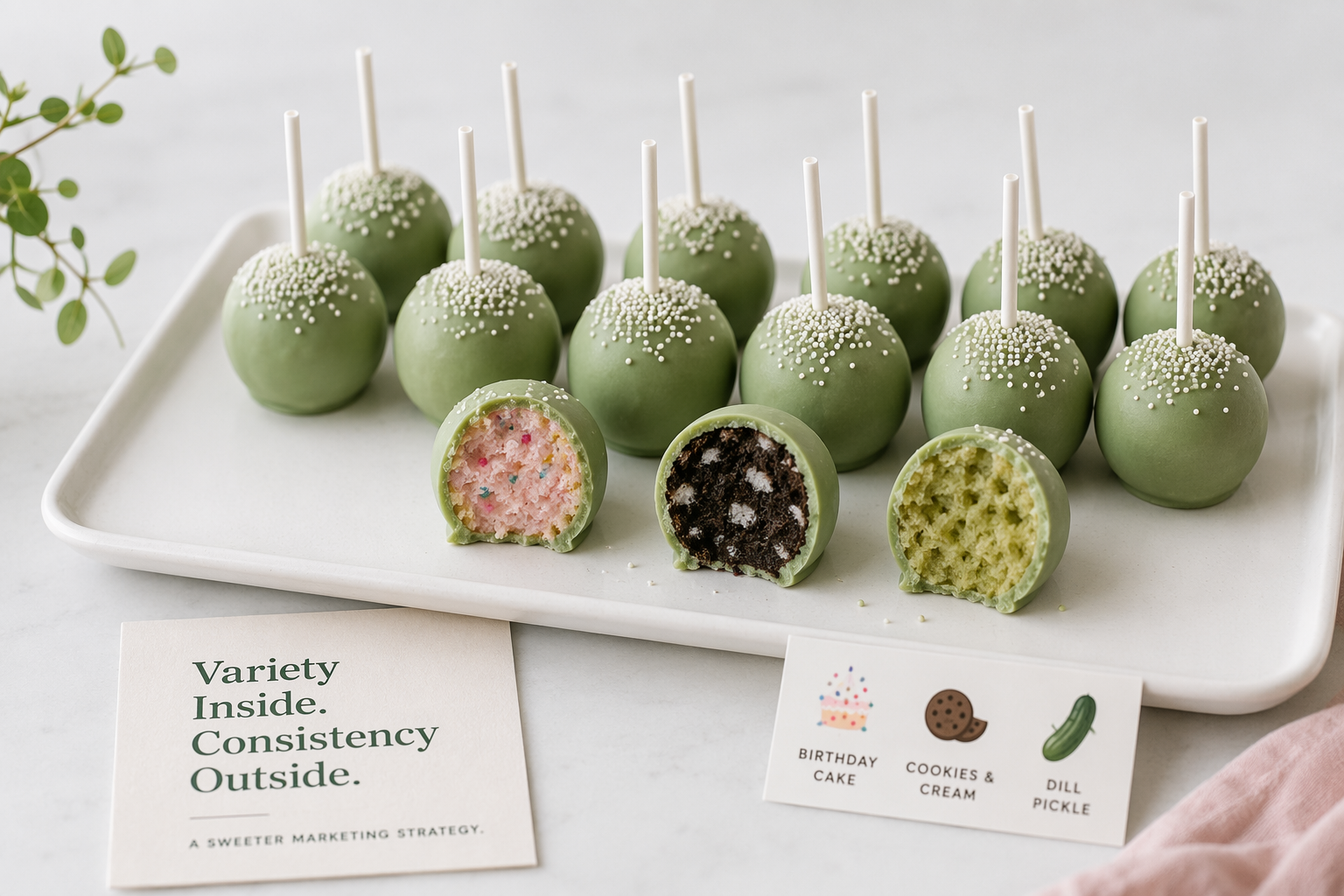
For shoppers wondering where to buy mystery cake pops, Sam’s Club is the live example marketers should study. A July 14 Instagram post from @samsclubmembers put Member’s Mark Mystery Cake Pops into the feed, and within a week the product had been picked up by Southern Living, Parade, The Takeout, Woman’s World, and Allrecipes.[1][2][3][4][5] The useful detail is not that people enjoy surprises. It is that this particular surprise was cheap enough, familiar enough, and strange enough that the wrong answer still felt like a snack, not a penalty.
Sam’s Club kept the reveal low-stakes
The pack was reported at $17.74 for 14 cake pops, putting the per-pop cost in a rough range of about $0.80 to $1.35 across sources.[4][5] The format did a lot of the work: two standard flavors, one wildcard flavor that was dill pickle, identical green shells on the outside, and a clean-ingredient note that said the pops were made without artificial colors, flavors, or preservatives.[1][5] That combination matters because it lets the shopper feel curiosity without paying premium money for a product that stops being useful if the reveal is not ideal.
The social behavior is built into the product design. Everyone can open the pack, compare what they got, and talk about it. The dill pickle pop is odd enough to share, but not odd in a way that makes the whole purchase feel like a mistake. That is the difference between a novelty and a trap.
The psychology matters, but it does not excuse bad odds
Mystery mechanics work because uncertainty keeps attention. People lean in when they do not know exactly what they will get, and the reveal becomes part of the value. That is why the format shows up again and again in food, collectibles, and other consumer categories where the product can still be enjoyed even if it is not the rare version.
The good examples have a shared structure. Chick-fil-A’s collectible cup campaign, described as the company’s largest marketing campaign in history, included Golden Fan Cup odds of 1-in-1,868, but every buyer still received a usable $3.99 cup.[6] Oreo’s mystery flavor contest offered a $50,000 prize for correctly guessing the flavor, which created engagement without turning the wrong guess into a loss state for the customer.[7] In both cases, the surprise sits on top of something people were already glad to receive.
When mystery stops feeling playful
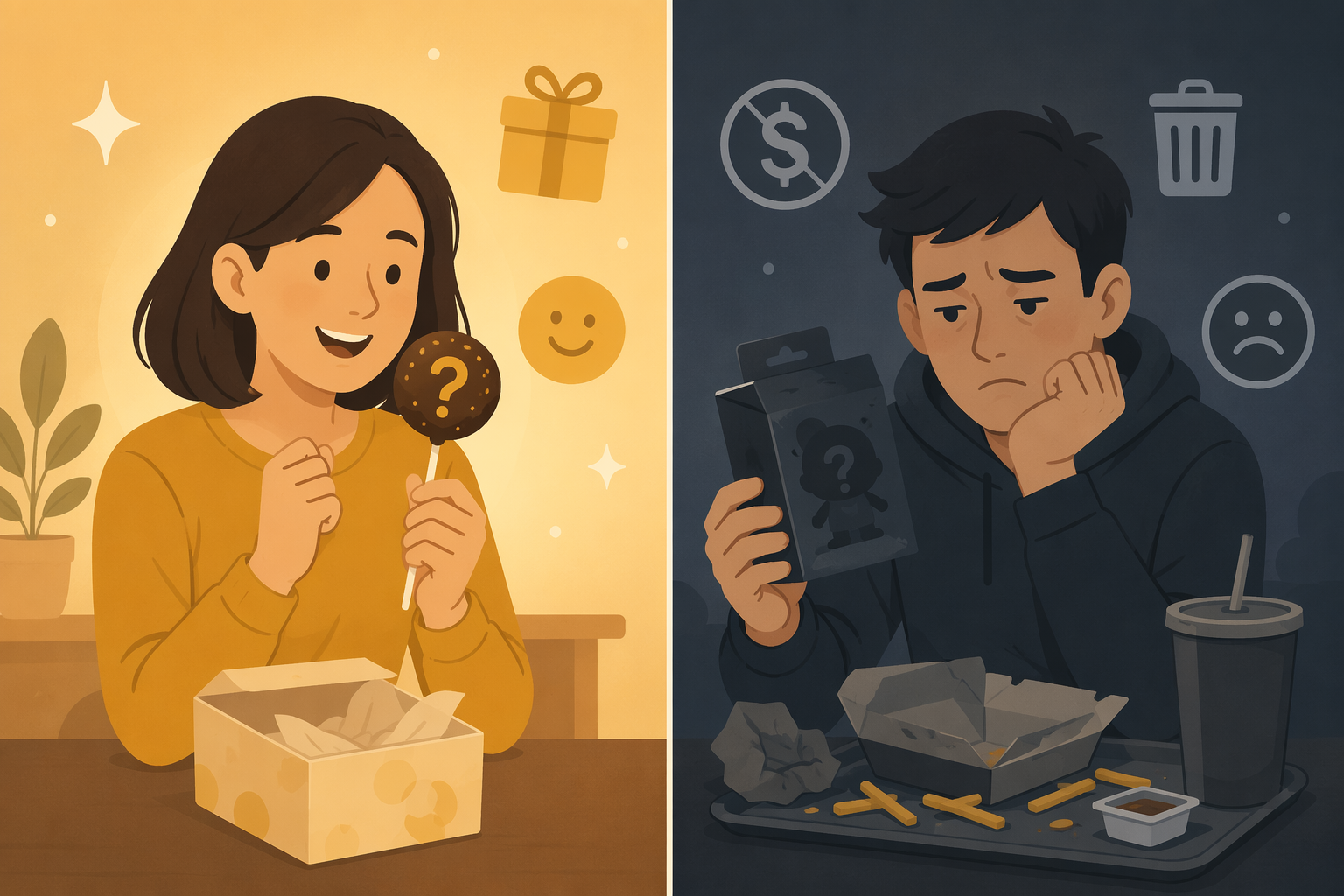
KFC China’s collaboration with Pop Mart is the cleanest warning sign. The campaign used 1-in-72 odds for a collectible figure tied to each meal, and one customer reportedly spent $1,500 on 106 meals chasing the rare item.[6] China’s Consumer Association publicly condemned the campaign for engineered food waste.[6] That is the point where the mechanic stops being a shareable joke and starts looking like a retail version of escalation: more spending, more product bought than needed, and a bad feeling attached to the brand instead of the prize.
Turkey Hill showed a different failure mode. Its mystery ice cream pitch backfired when customers felt the mystery was not a pleasant reveal but a trick about the product itself.[8] Once shoppers believe the brand has hidden the category or the real value, the surprise is no longer doing marketing work. It is doing trust damage.
That is why mystery marketing cannot be judged by the hook alone. The same mechanism can feel generous in one category and manipulative in another. A fun reveal is not the same thing as a fair reveal.
A simple filter before you launch the mechanic
- Start with baseline product satisfaction. If people would not buy the item without the mystery, the surprise has to carry too much weight.
- Check the downside cost. The worst possible outcome should still be usable, edible, collectable, or otherwise worth the price.
- Decide how transparent the odds need to be. If the rare item is the only thing giving the campaign value, the odds need to be legible.
- Measure waste risk. If the mechanic encourages overbuying, discarding, or chasing, the backlash can outweigh the buzz.
- Ask whether the reveal creates a shareable comparison or just a complaint. The best mystery campaigns invite reactions without making people feel fooled.
- Test trust impact. The mystery should deepen the product story, not make shoppers wonder whether the product itself is the joke.
That is the practical reason brands keep circling blind boxes and mystery drops: collectibility can be commercially powerful, but only when the customer still likes the ordinary outcome. The tactic packages uncertainty, not inevitability.
Sam’s Club worked because the green shell did not convert curiosity into punishment. The dill pickle pop could be funny, divisive, or even a favorite, but it was still part of a pack that looked like a normal purchase. That is the standard mystery marketing has to clear: every possible outcome should still feel like value.
References
- “Sam’s Club’s Member’s Mark Mystery Cake Pops” — Southern Living — link
- “Sam’s Club’s New Member’s Mark Mystery Cake Pops” — Parade — link
- “Sam’s Club Mystery Cake Pop Dessert Shoppers Are Running To The Bakery” — The Takeout — link
- “Sam’s Club’s Mystery Cake Pops Have a Surprising Flavor That’s Dividing Shoppers” — Woman’s World — link
- “Sam’s Club Mystery Flavor Cake Pops” — Allrecipes — link
- “Brands' blind-box strategy: Labubu, Le Creuset, Cava, LOL Surprise” — Marketing Brew — link
- “Oreo Challenges Cookie Lovers to Guess Mystery Flavor and Win $50K” — Food Dive — link
- “Mystery Box Marketing Effect” — Plastic Detox — link

Comments
Join the discussion with an anonymous comment.