
How the Kraft Heinz-Disney Deal Reshapes Partnership Marketing
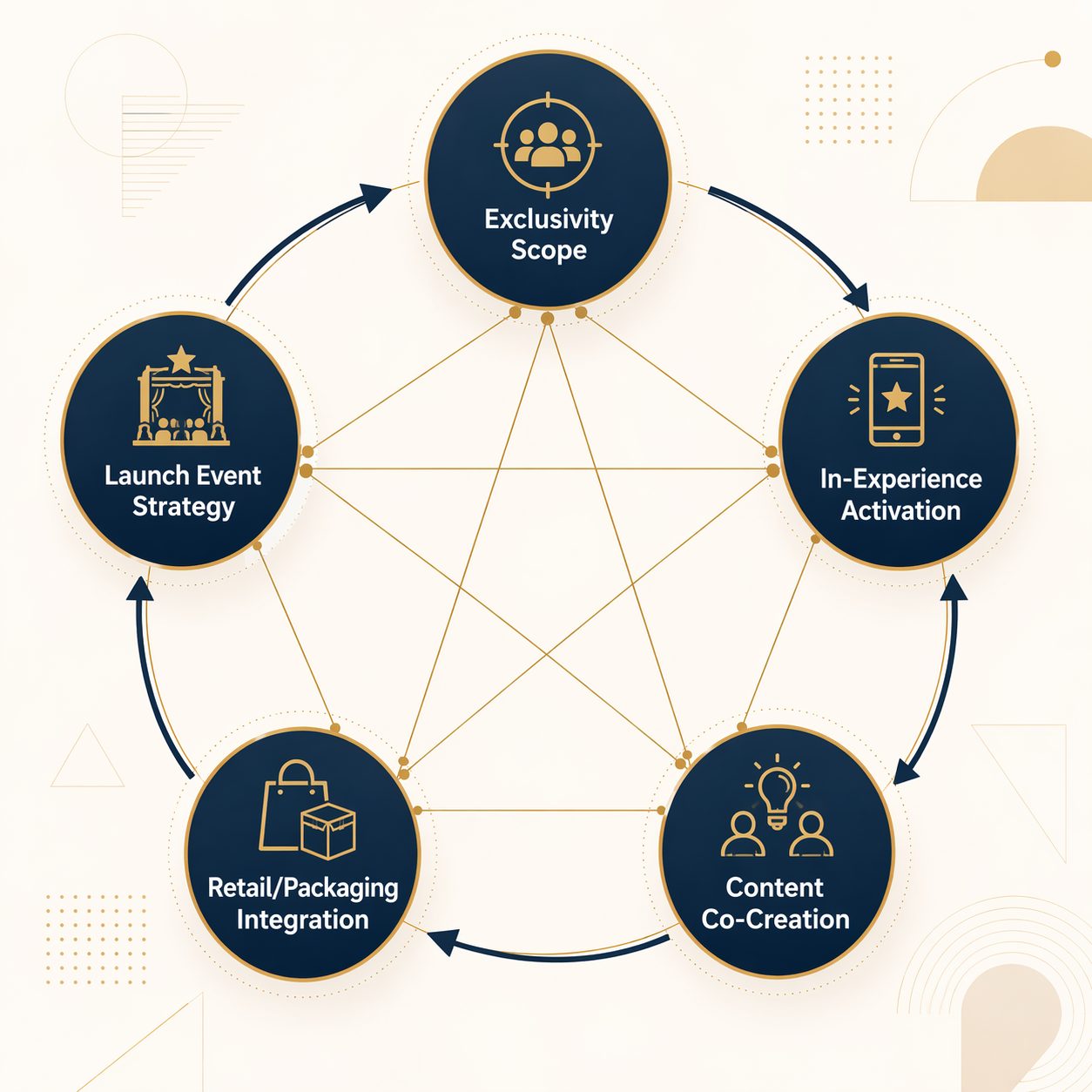
This article breaks down the five structural decisions that made the Kraft Heinz-Disney deal work — exclusivity scope, in-experience activation, content co-creation, retail packaging cross-pollination, and launch event strategy — giving CPG marketers a teachable framework for evaluating entertainment partnerships beyond surface-level logo placements.
Entertainment partnerships often look strong in a recap deck because the logo is famous, the announcement is glossy, and the mockups photograph well. The harder question is whether the deal changes what people can actually buy, eat, watch, visit, share, or remember. That is where the Kraft Heinz-Disney partnership marketing strategy becomes useful: not as a Disney-sized fantasy for every CPG brand, but as a clean case for reading the machinery underneath a cultural deal.
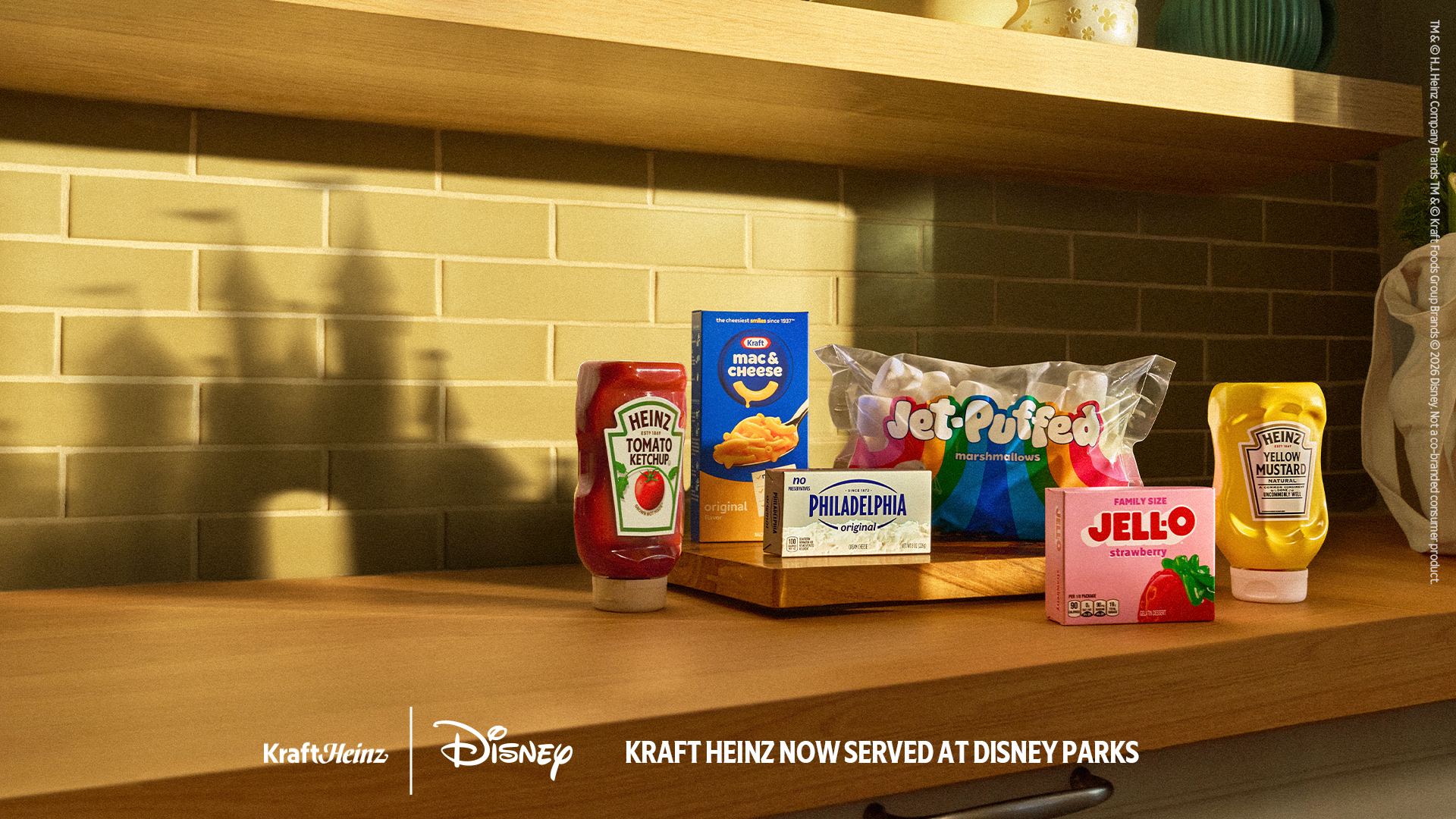
The compact version: in July 2026, Kraft Heinz and Disney announced a multiyear North American agreement that makes Kraft Heinz the exclusive provider of select condiments, macaroni and cheese, and cream cheese across Disneyland Resort, Walt Disney World Resort, and Disney Cruise Line. The same deal gives Kraft Heinz rights to use Disney characters and stories across 10 of its brands on packaging, with reported experiential concepts including ideas such as lightsaber ketchup dispensers, described by Nicolas Amaya as directional examples rather than locked execution plans.[1]
Chip & Co. added two details that matter for the marketing architecture: a D23 launch activation called the “Sauce Vault” and a streaming content co-creation component.[2] Those provisions move the deal away from a simple licensed-packaging program. They give the partnership multiple surfaces: the parks and cruise line, the grocery aisle, fan events, and content.
That is the useful read. The deal is not interesting because ketchup can wear mouse ears. It is interesting because the rights appear to be organized around five decisions that any CPG marketer can interrogate before signing an entertainment agreement: what exclusivity actually covers, where the product enters the lived experience, how content is created, how packaging and retail reinforce the venue moment, and how the launch creates a reason for fans to care now.
Start with the rights that change behavior
The first decision is the one too many sponsorship teams under-negotiate: exclusivity scope versus IP access. IP access lets a brand borrow characters, stories, and visual equity. Exclusivity changes the environment in which the product is consumed. Kraft Heinz appears to have both.
In the Disney agreement, the exclusive-provider language covers select condiment, mac and cheese, and cream cheese categories across Disneyland, Walt Disney World, and Disney Cruise Line.[1] That matters because the parks and cruise line are not just media channels. They are controlled consumption environments. If a family eats fries, a hot dog, a kid’s meal, a breakfast item, or a quick-service dish inside one of those spaces, the product presence can become part of the trip rather than an ad adjacent to it.
That does not mean every condiment packet becomes memorable. It does mean the brand has negotiated for proximity to behavior, not only proximity to attention. A marketer evaluating a similar deal should separate three layers that are often collapsed into one line item:
- Category exclusivity: which products are protected, and which substitutes can still appear?
- Venue exclusivity: where does the right apply — parks, hotels, cruise ships, theaters, stadiums, apps, or only a subset?
- Moment exclusivity: does the brand show up at ordinary usage moments, premium moments, character meals, limited-time menus, or only in back-of-house supply?
The Kraft Heinz-Disney deal, as reported, gives enough definition to evaluate those layers. It is not a vague “official partner of magic” claim. It names product categories and environments. That is the difference between a sponsorship that can be operationalized by foodservice, retail, content, and brand teams, and a rights package that leaves everyone admiring the same key art.
The comparison to Disneyland Paris is useful only because it shows how much broader the 2026 North American agreement is. The earlier Disneyland Paris arrangement was a narrower condiments-only partnership, while the current deal spans 10 Kraft Heinz brands, North American parks, Disney Cruise Line, packaging, streaming, and launch activation.[1][2] The framework here belongs to the broader 2026 structure.
Activation should be designed around the place, not pasted onto it
Once a product has the right to be present, the next question is whether the experience gives that presence a point. This is where the reported Disney concepts are more instructive as design signals than as news items to be overclaimed.
WDWMagic reported Amaya discussing experiential possibilities such as lightsaber ketchup dispensers and Cinderella Mac & Cheese-style ideas.[1] Those should be treated carefully. They are directional examples of how the brand might translate Disney stories into product interactions, not confirmed final installations. Still, they reveal the right instinct: the product should not merely sit under an IP wrapper; it should behave differently because of the world it has entered.
For CPG marketers, that distinction is operational. A character on a package can lift shelf visibility, but an in-experience activation asks different teams to coordinate: foodservice operations, park or venue design, legal approvals, character integrity, packaging supply, sanitation, staff training, and guest flow. That complexity is exactly why many brands avoid it. It is also why it can be more defensible than a seasonal label.
| Decision | Weak version | Stronger version |
|---|---|---|
| Product presence | The brand is named as a partner. | The product appears in ordinary and high-emotion consumption moments. |
| Creative use of IP | Characters are printed on packaging. | The product interaction is shaped by the story world. |
| Operational ownership | Brand team owns the announcement. | Brand, retail, foodservice, content, and venue teams share an execution plan. |
| Measurement logic | The recap counts impressions. | The team can identify which behavior the partnership was meant to create. |
The strongest activations usually make the product feel inevitable in the setting. A lightsaber-inspired dispenser, if executed, would not ask a guest to admire a condiment sponsor. It would turn a familiar condiment behavior into a Star Wars-flavored gesture. That is a small moment, but small moments are often where CPG brands earn memory.
Packaging becomes more valuable when it points back to an experience
The packaging side of the agreement is not secondary. Disney characters and stories are licensed across 10 Kraft Heinz brands, which gives the company a grocery-shelf surface for the same cultural partnership that appears in Disney environments.[1] That creates a two-way system if it is managed well: the park or cruise experience can make the package more meaningful, and the package can remind shoppers of the experience or the aspiration to have it.
This is where many entertainment deals either compound or collapse. If retail sees only a seasonal licensing opportunity, the store becomes disconnected from the venue. If the venue team treats grocery packaging as unrelated consumer products activity, the in-person experience loses a reinforcement loop. The Kraft Heinz structure at least gives the teams the raw material to connect them: multiple brands, Disney stories, controlled consumption locations, and launch programming.
A practical packaging brief for a deal like this should not start with “put the character on the front.” It should start with the role of the package:
- Is it a souvenir of a trip the shopper already took?
- Is it a pre-trip signal that brings the entertainment world into the pantry?
- Is it a collectible system across brands?
- Is it a retail display idea that connects to a streaming, event, or park moment?
- Is it meant to drive trial of a specific product, or deepen affinity for a brand already in the household?
Those choices lead to different creative work. A collectible pack system behaves differently from a limited-time flavor. A pre-trip pantry cue behaves differently from a post-trip keepsake. The worst version of a large IP deal makes all packages feel like interchangeable billboards. The better version gives each product a job inside the broader partnership.
Content co-creation gives the deal another route into culture
The streaming component should not be inflated into a prediction about viewership or ROI. The available reporting supports a narrower conclusion: the partnership includes a content co-creation element for streaming, giving Kraft Heinz and Disney another surface beyond parks, cruise, and retail.[2]
That matters because content can do a job that packaging and in-venue activation cannot. It can explain the world of the partnership, stage the product in a story, or create a reason for the retail and venue pieces to feel connected. But it only works if the terms allow actual co-creation rather than a brand cameo. A marketer should know, before signing, whether the brand is buying adjacency, integration, or a genuine creative role.
This is also where Todd Kaplan’s broader sponsorship philosophy becomes relevant. In AdWeek’s coverage of Kraft Heinz’s cultural playbook, Kaplan framed the ambition as “marketing that happens,” in contrast to sponsorship work that merely places a logo near someone else’s audience.[3] The phrase is useful because it raises the bar. A streaming tie-in should create something people can encounter as content, not just as an obligation embedded in a media buy.
The launch event turns rights into a fan-facing moment
A multiyear deal can still arrive flat if the launch is written only for trade press. That is why the reported D23 “Sauce Vault” activation deserves attention. D23 is not just an announcement venue; it is a fan context. Placing a sauce-centered activation there gives Kraft Heinz a way to introduce the partnership to people already primed to care about Disney worlds, collectibles, reveals, and insider access.[2]
The launch-event question is not “How do we make noise?” It is “Which audience should experience the partnership first, and what should they be able to do with it?” A press release can state the business terms. A fan activation can dramatize the behavior the brand hopes will travel: tasting, collecting, photographing, sharing, or noticing the product differently the next time it appears in a park or grocery aisle.
The “Sauce Vault” name itself points to a smarter launch logic than a step-and-repeat backdrop. It suggests discovery and access. That does not prove commercial impact, and the available reporting does not provide Disney-deal ROI. But it does show that the launch was designed as part of the architecture, not as decoration after the contract was signed.
The NFL comparison shows this is a model, not a one-off
The Disney agreement becomes more instructive when placed next to Kraft Heinz’s 2026 NFL work. Business Insider reported that Kaplan revamped the company’s sponsorship strategy around memorable stunts and moved away from ordinary logo-placement thinking.[4] Forbes described Kraft Heinz’s NFL deal as an attempt to build emotional connections at scale, and the company’s own release positioned Kraft Heinz as the NFL’s first-ever condiment partner.[5][6]
The parallel is not that football and Disney operate the same way. They do not. The useful commonality is structural: Kraft Heinz appears to be looking for partnerships where its products can enter existing rituals. In football, condiments belong to game-day eating. In Disney parks and cruises, condiments, mac and cheese, and cream cheese can belong to family meals, quick-service stops, themed food moments, and vacation routines. The IP is valuable, but the behavior is the anchor.
That is why “official partner” status alone is the wrong unit of analysis. A CPG brand should ask what ritual the partner already owns, whether the product naturally fits that ritual, and whether the deal gives enough control to make the fit visible. If the answer is no, a famous rights holder may still produce a handsome campaign and a weak business system.
The business backdrop explains the scale, not the payoff
It is tempting to read every big partnership as a turnaround proof point. The cleaner interpretation is more cautious. FoodNavigator reported that Kraft Heinz was preparing a $600 million investment tied to its U.S. turnaround and innovation push, giving context for why the company could support large, multiyear cultural partnerships across brands and channels.[7] Reuters later reported that Kraft Heinz beat quarterly sales estimates in Q1 2026, with sales of $6.05 billion versus estimates of $5.89 billion.[8]
Those facts make the strategy credible as part of a broader growth agenda. They do not prove the Disney deal worked. The agreement was announced in July 2026, and the available materials do not provide direct sales lift, household penetration, repeat purchase, park-level conversion, or brand equity results tied to the partnership. Treating the deal as an ROI case would overstate the evidence.
What can be evaluated now is the quality of the structure. On that basis, the deal is unusually teachable. It joins category presence, IP access, venue behavior, retail packaging, streaming content, and fan launch activation into one system. That is enough to judge the architecture even before performance data arrives.
A practical filter for smaller CPG brands
Most CPG brands cannot buy Disney-scale rights, and pretending otherwise turns a useful framework into executive theater. The lesson is not to copy the spend. It is to copy the order of questioning.
- Define the protected behavior before the protected logo. What consumption moment, shopping moment, or fan ritual can the brand credibly own?
- Negotiate the smallest exclusivity scope that still changes the environment. A regional venue, creator community, festival, or niche entertainment property may be more useful than broad but shallow rights.
- Make the product interaction do something the normal product would not do. If the partnership cannot change the use moment, it may only be a media buy in costume.
- Connect retail to the experience. The package should have a role beyond borrowed artwork, even if that role is as simple as a collectible, recipe prompt, QR destination, or limited-edition bundle.
- Launch where the partner’s most motivated audience already gathers. A smaller fan moment can be more valuable than a larger generic announcement.
The procurement-led version of this conversation will rightly ask whether each right is worth paying for. The growth-led version should ask a prior question: which rights are even capable of creating behavior? If a brand cannot activate exclusivity, cannot enter a real consumption moment, cannot connect the shelf to the experience, and cannot give fans something to do, the famous partner is carrying too much of the strategy.
The Kraft Heinz-Disney deal reshapes partnership marketing because it makes those decisions visible. It shows how entertainment IP can become lived brand behavior, retail reinforcement, and cultural momentum when the agreement is built to travel across environments. For everyone else, the useful move is not to chase the castle. It is to inspect the structure behind it.
References
- Kraft Heinz and Disney strike multiyear theme park deal, WDWMagic, July 21, 2026.
- Kraft Heinz and Disney Announce Major Multiyear Partnership Across Parks and Cruise Line, Chip & Co.
- From the Pantry to Game Day: How Kraft Heinz Keeps Iconic Brands at the Center of Culture, AdWeek.
- Kraft Heinz CMO revamped sponsorship strategy around memorable stunts, Business Insider, April 2026.
- Kraft Heinz Is Building Emotional Connections At Scale With NFL Deal, Forbes, March 19, 2026.
- Kraft Heinz Inks Breakthrough Deal With National Football League as First-Ever Condiment Partner, The Kraft Heinz Company, 2026.
- Kraft Heinz readies for $600M investment, US turnaround, innovation push, FoodNavigator, February 19, 2026.
- Kraft Heinz beats quarterly sales estimates, Reuters, May 6, 2026.

Comments
Join the discussion with an anonymous comment.